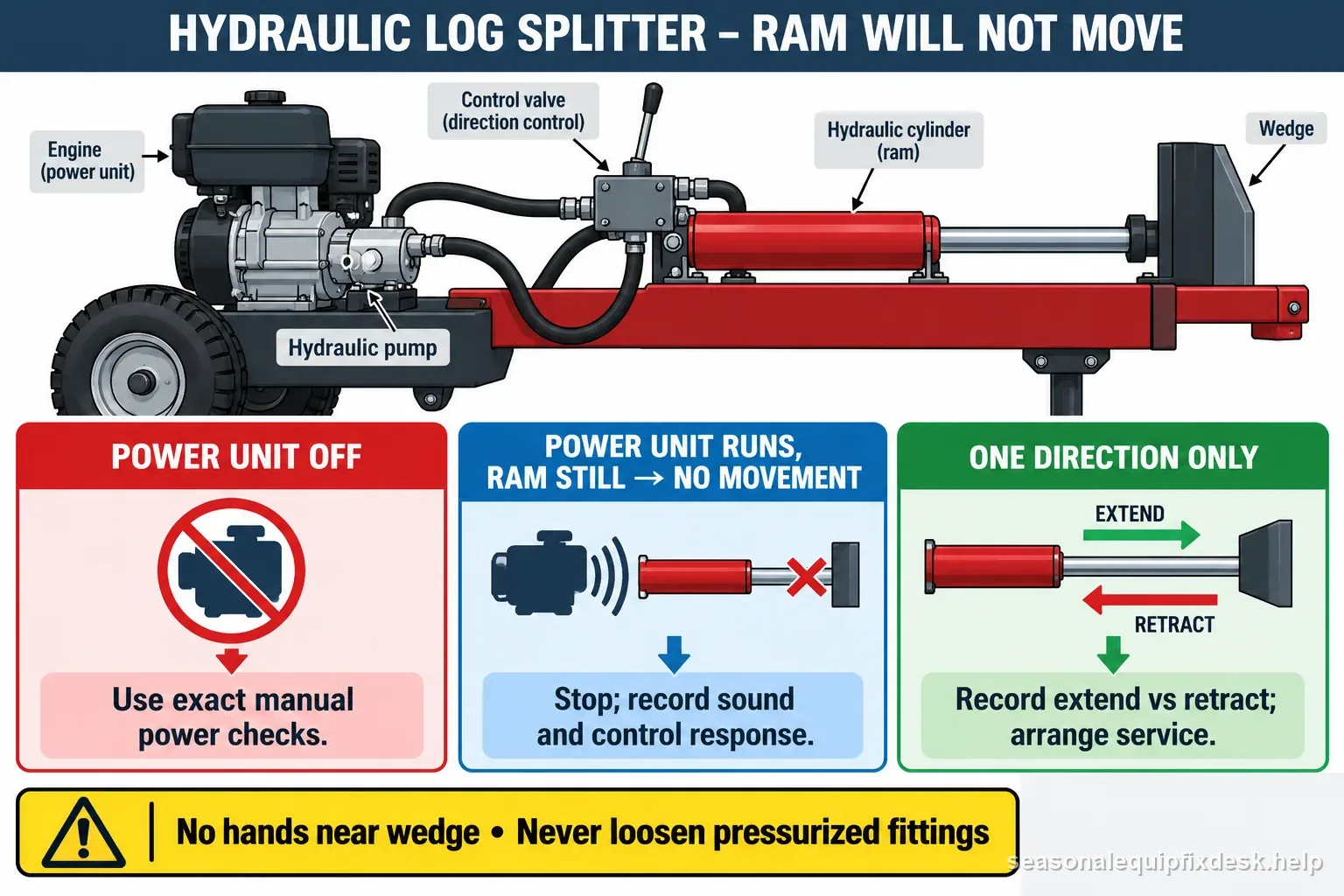
Quick answer: A log-splitter ram that will not extend or retract can be stopped by a drive problem, low hydraulic fluid, air or suction restriction, a control-valve fault, pump failure, or cylinder damage. Because hydraulic systems can store dangerous pressure, diagnosis should be observation-led. Never search for a pinhole leak with your hand, loosen a pressurized fitting, or place any body part in the wedge path.
A ram that moves but struggles only under a particular log has a different path from one that will not move. See the slow or weak splitting-force checks for load, fluid, and service boundaries.
If the ram travels normally without a log but slows when it meets a knotty or oversized round, compare that load symptom with the log splitter force-versus-speed diagnosis before suspecting a pump.
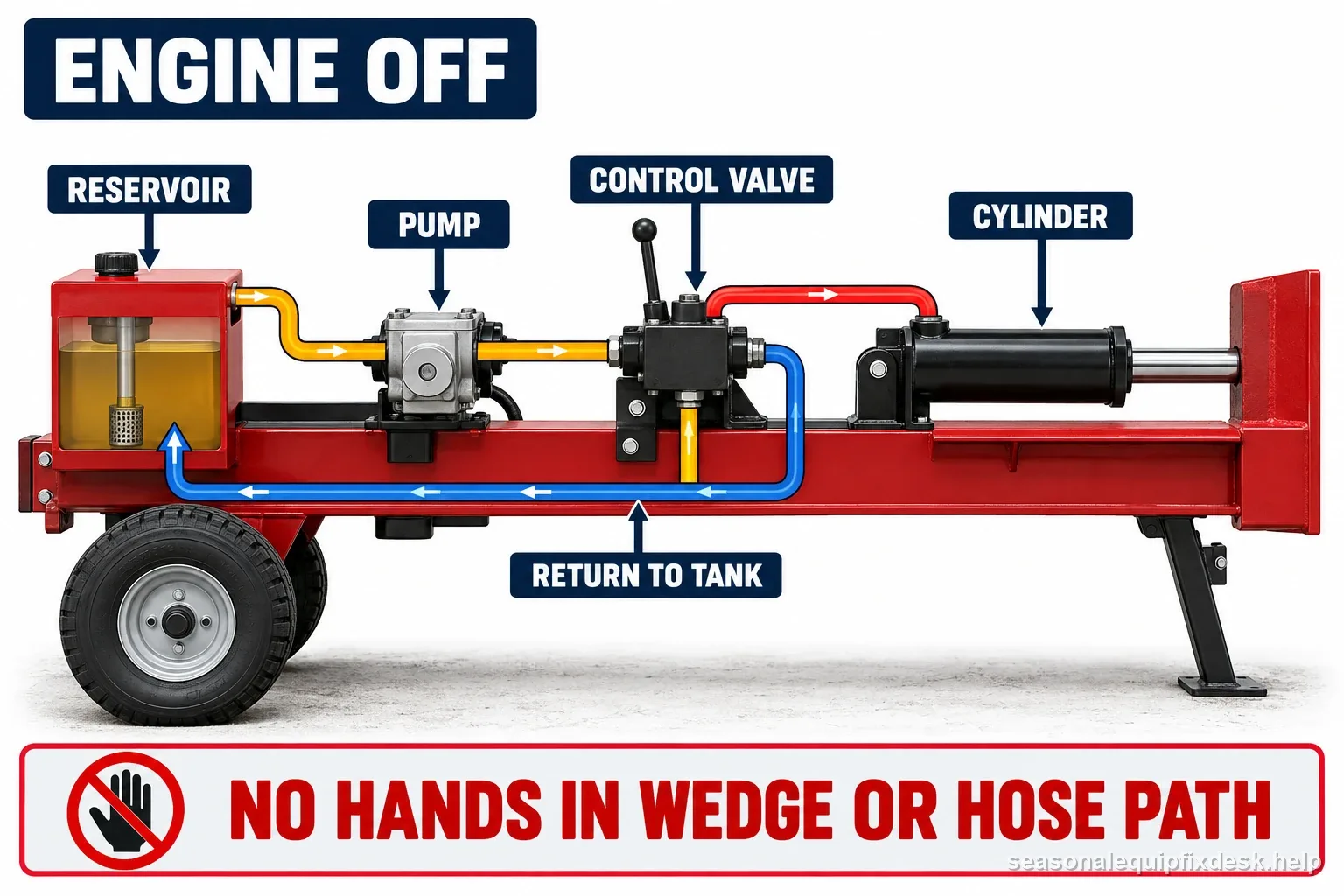
Before inspecting anything, clear the bed, stop the engine or motor, isolate electrical power on an electric model, and use the manual’s procedure to relieve stored hydraulic energy. A ram can move unexpectedly and hoses can remain pressurized after shutdown. Do not push the cylinder with a rod, loosen a fitting to test flow, or rely on the control handle as an energy-isolation device.
First decide whether the hydraulic pump is actually being driven
On a gas splitter, confirm the engine reaches its specified operating speed and the pump coupling is intact. On an electric splitter, verify normal motor operation and power supply without bypassing overload protection. A quiet pump because the drive coupling failed is a different problem from a pump that loads heavily but cannot move the cylinder.
If the engine stalls or the electric motor trips immediately when the control is moved, release the control and stop. Do not keep forcing the valve against a system that may be mechanically locked or hydraulically dead-headed.
Electric and gasoline splitters fail differently upstream: an electric motor may show a cord, switch, or overload problem, while a gas unit may have an engine or coupling issue. Do not apply a generic fuse, extension-cord, or warm-up fix across every design. Confirm the machine’s type and model first, and never bypass its two-hand controls.
Fluid level is meaningful only when checked the right way
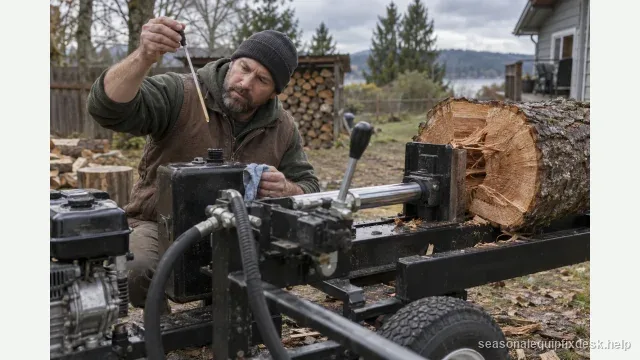
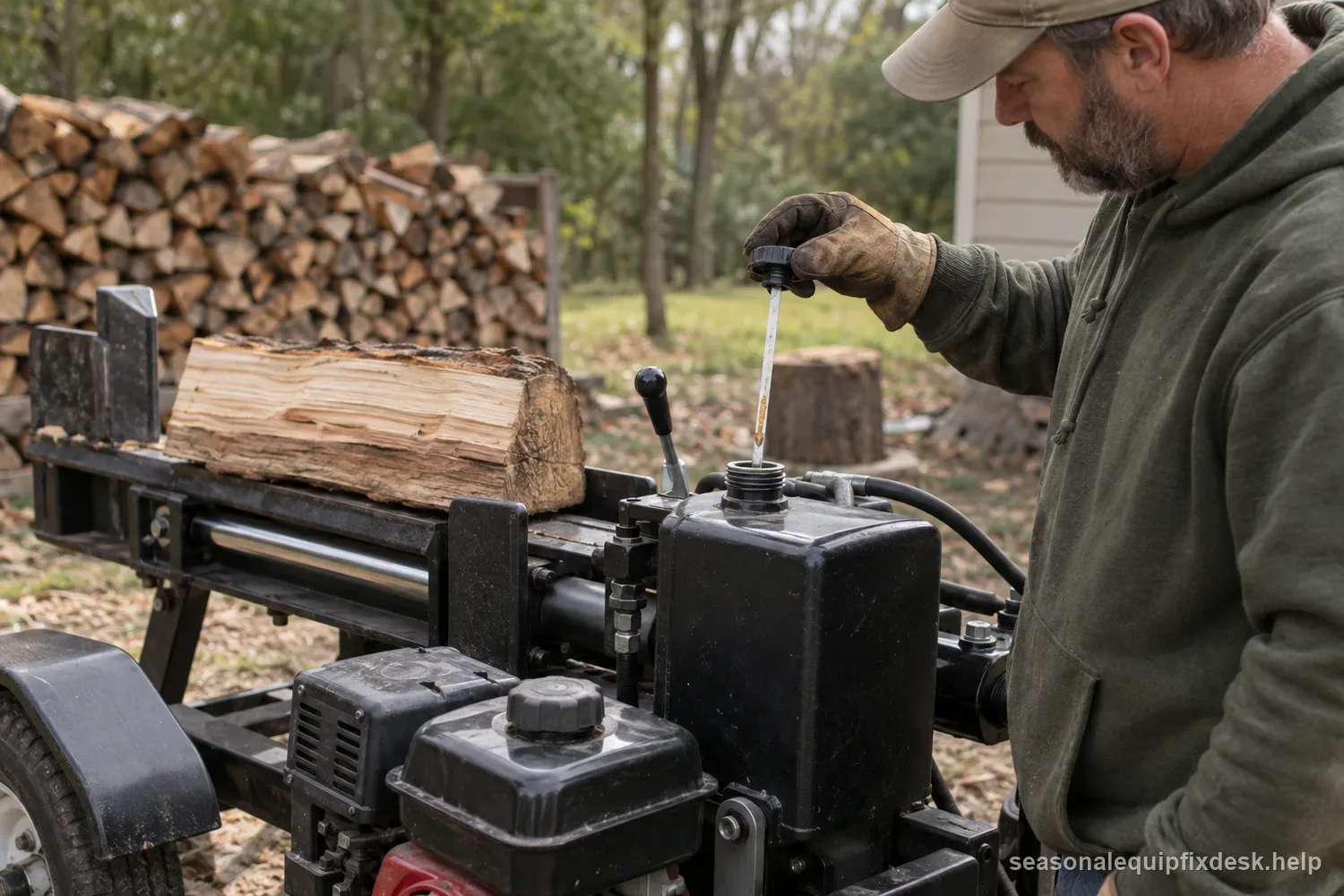
Use the owner's manual for ram position, machine orientation, fluid type, and temperature when checking the reservoir. Too little fluid can let the pump draw air; overfilling can cause foaming or overflow as the cylinder returns fluid to the tank. Do not add a generic "hydraulic oil" until the model specification is known.
If the level is suddenly low, find where the fluid went. A refill without investigating a new leak can hide a damaged hose, seal, fitting, or cylinder.
Look for suction-side problems before opening pressure-side plumbing
A blocked suction screen, collapsed hose, loose suction fitting, or aerated fluid can starve the pump. Symptoms can include whining, foamy fluid, jerky ram motion, or a ram that moves only when cold. Inspect external suction components with the machine shut down and pressure relieved as the manual requires.
Do not use a finger to test for suction or leakage. Hydraulic injection injuries can look small at the skin and still be medical emergencies.
The control valve should change the machine's sound and load
With the work area clear and following the operating procedure, note what happens when the valve is commanded to extend and retract. If the engine or motor load changes but the ram does not move, pressure may be building against a blocked path, failed cylinder, or stuck valve. If there is no change at all, the valve may not be shifting or the pump may not be producing flow.
Do not hold a manual control against the end of stroke longer than the manufacturer permits. Relief-valve operation generates heat and does not prove the system is healthy.
A ram stuck in one direction narrows the diagnosis
If the wedge extends normally but will not retract, concentrate on the retract side of the valve, cylinder, and hose routing rather than assuming the pump is universally weak. If it retracts but will not extend under load, compare no-load movement with actual splitting force. A cylinder that moves empty but stalls on wood may have a different fault from one that cannot move at all.
Never reach between the wedge and log to "help" a slow retract. Unexpected movement is exactly the hazard highlighted in multiple CPSC log-splitter recalls involving cylinder or rod failures.
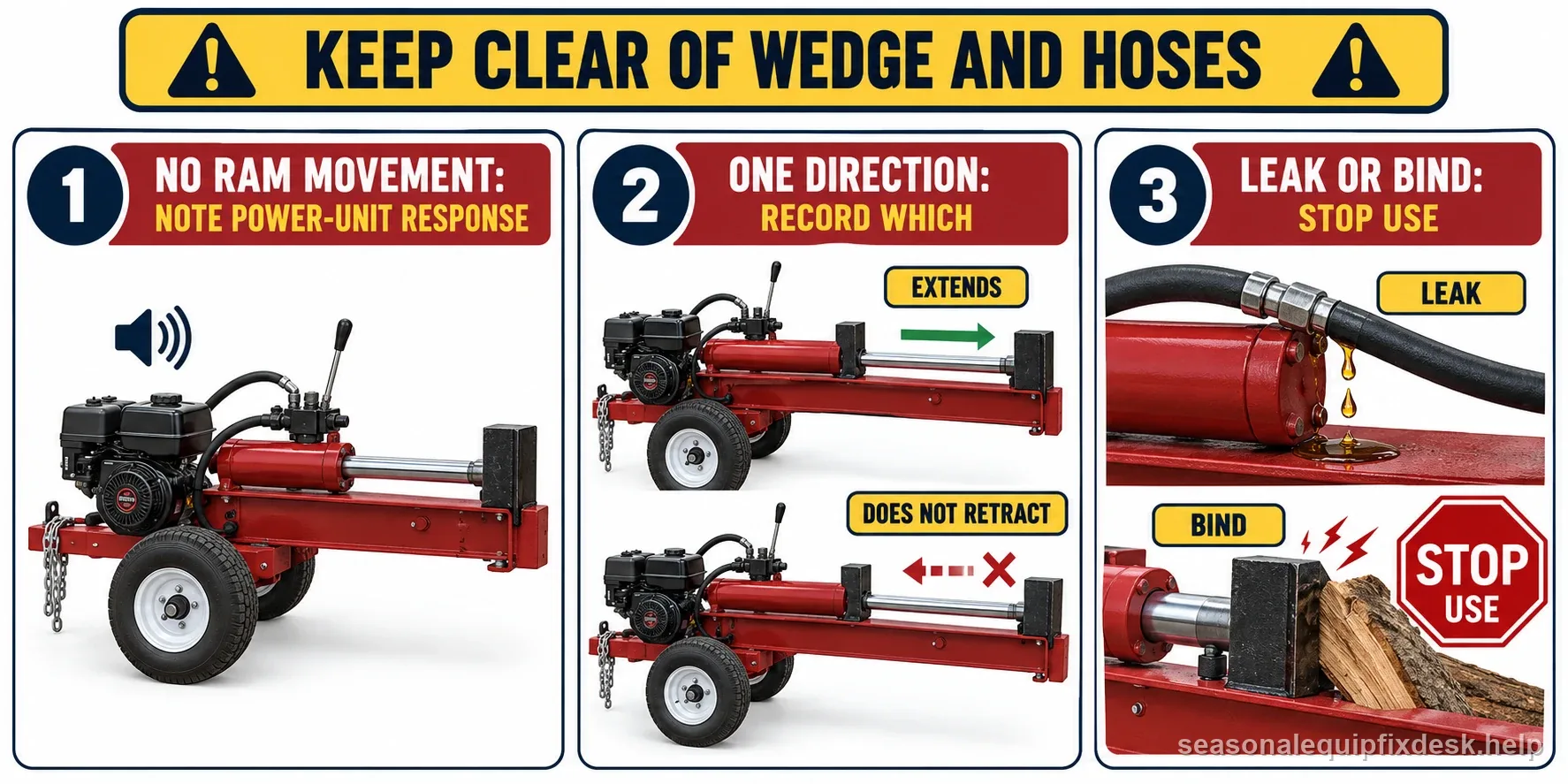
External leaks are a stop signal, not a place to tighten while running
Shut the splitter down and relieve pressure before inspecting fittings. Replace damaged hoses with properly rated assemblies. Do not wrap or clamp a high-pressure hose as a temporary repair. If fluid contacts skin under pressure, seek urgent medical evaluation even if the puncture looks minor.
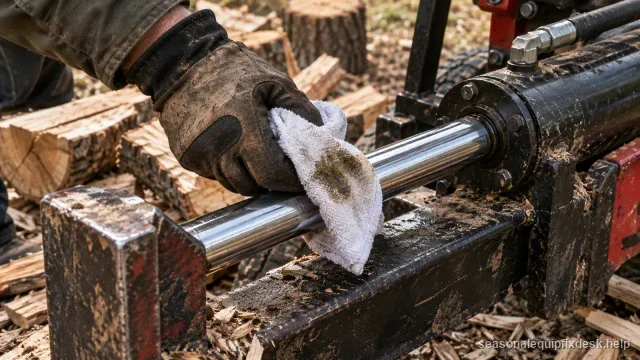
A leaking cylinder rod seal, bent rod, or damaged cylinder mount can require specialist repair. CPSC recalls show why cylinder integrity cannot be treated as cosmetic.
Internal pressure testing belongs to the service manual
A pressure gauge can separate pump, relief-valve, and cylinder faults, but only if connected at the correct test port with a gauge and hose rated for the system and with the specified valve sequence. Without that information, a gauge test can create a burst or injection hazard. Do not improvise tee fittings on a loaded splitter.
Competitor troubleshooting often tells owners to open a bleed valve, add a common oil grade, or push a stuck ram back manually. These steps are not universal: the manual determines whether bleeding is owner maintenance, which fluid is correct, where level is checked, and how stored pressure is released. If the specified procedure is unclear, stop and use an authorized service provider.
| Observed behavior | Record | Next safe path |
|---|---|---|
| Power unit does not run | Fuel or supply, switch position, model, event | Use the exact manual’s power checks. |
| Runs but ram stays still | Engine or motor sound, visible drive symptom, control response | Stop; use model-specific service information. |
| Moves only one direction | Extend or retract, stroke point, leaks, and oil condition | Keep clear and arrange hydraulic service. |
| Jerky movement or new leak | When it began and where fluid first appears | Shut down, isolate, and do not loosen a fitting. |
These observations narrow the service question; they are not permission to open a pressurized circuit.
Retest with no log before returning to splitting
After an external repair, cycle the ram through its approved range with the bed empty and all guards in place. Watch for smooth travel, abnormal noise, foam in the reservoir, drift, and leaks. Then perform a controlled split using wood within the machine's rated size and position.
If the ram hesitates, reverses unpredictably, or a repaired connection sweats fluid, stop and correct that condition before more load is applied.
Check recalls when the cylinder behaves strangely
If a cylinder rod separates, wedge movement becomes unpredictable, or the machine matches an older product with a known cylinder problem, check the model and serial number against CPSC recall records before attempting repair. A recall remedy can supersede ordinary troubleshooting.
Cold hydraulic oil can change speed without proving a failure
Hydraulic fluid becomes more viscous at low temperature. Some splitters move more slowly during a cold start and improve as the fluid reaches the operating range described by the manufacturer. That is not permission to warm the reservoir with an external heater or substitute thinner fluid. Use only the specified fluid and temperature guidance.
A useful comparison is whether both extend and retract are uniformly slow when cold, versus one direction remaining dead after the system has warmed normally. Uniform cold sluggishness can be a viscosity clue; a persistent one-direction failure still points back toward valve, hose, or cylinder behavior. Record ambient temperature when a seasonal complaint appears.
A leak can also show up as a ram that will not return; use the safe hydraulic leak-location checks before assuming a valve fault.
| Symptom | What it may indicate | Next safe step |
|---|---|---|
| Engine/motor does not run | Power, switch, overload, fuel, or engine branch | Use the correct manual; isolate electricity before checking the plug or switch |
| Power unit runs; no ram movement | Control, drive coupling, pump, or blocked hydraulic path | Stop sustained valve loading; note sound/load and model |
| One direction works; the other does not | Directional valve, hose route, or cylinder issue | Record which direction fails; do not loosen fittings |
| Jerky movement or foamy fluid | Air, suction restriction, cold oil, or low level | Check level only by the manual; inspect externally for leaks |
| Oil leak or ram moves unpredictably | Pressure, hose, seal, or cylinder hazard | Shut down, isolate, keep clear, and seek qualified service |