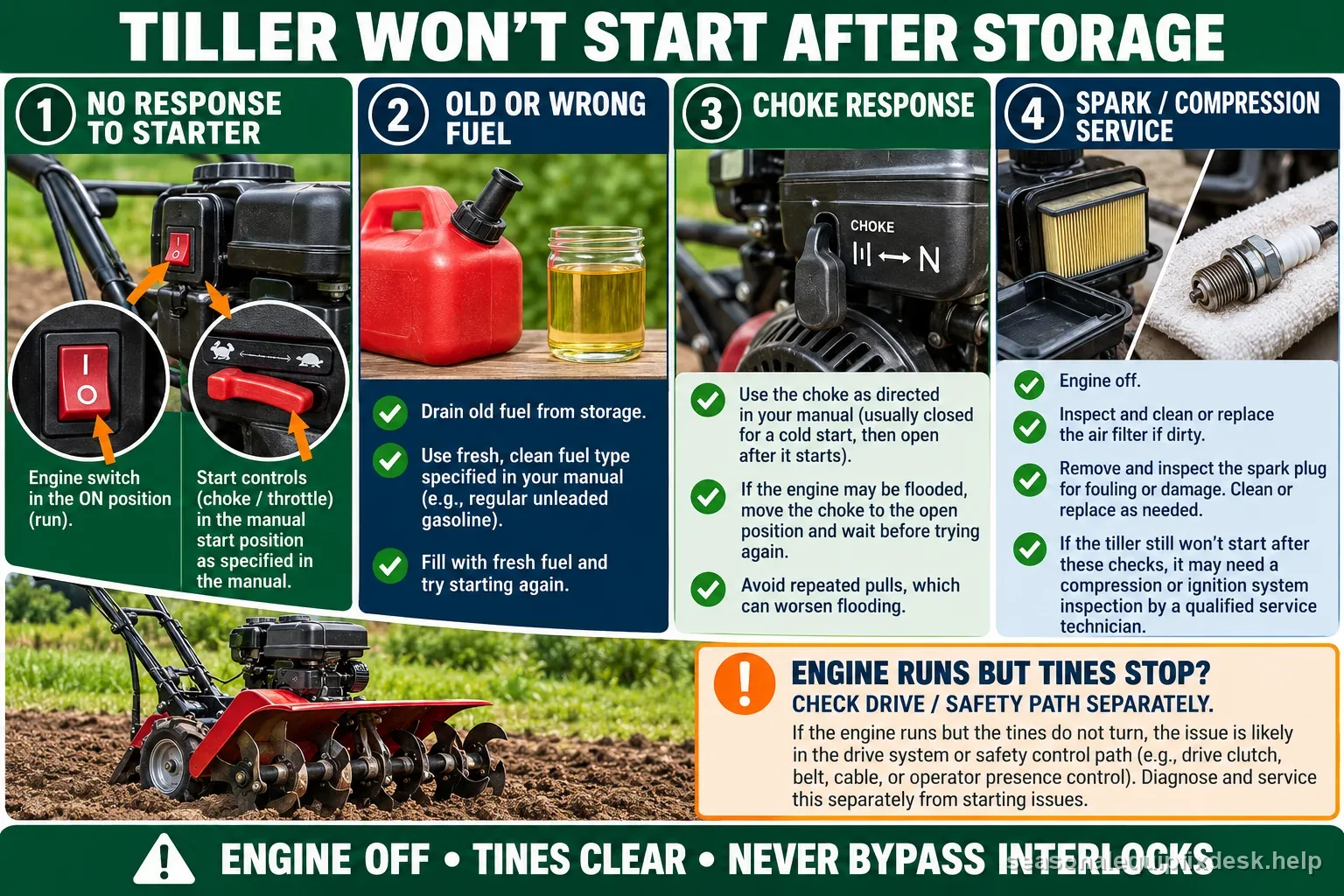
Quick answer: A tiller that will not start after storage is first an engine-starting problem, not a tine-drive problem. The tines can be rusted, belts can be loose, and transmission oil can be low, but none of those explains an engine that never fires unless they are physically preventing the engine from turning. Begin with fresh fuel, the exact choke and throttle procedure, oil level, air path, and spark.
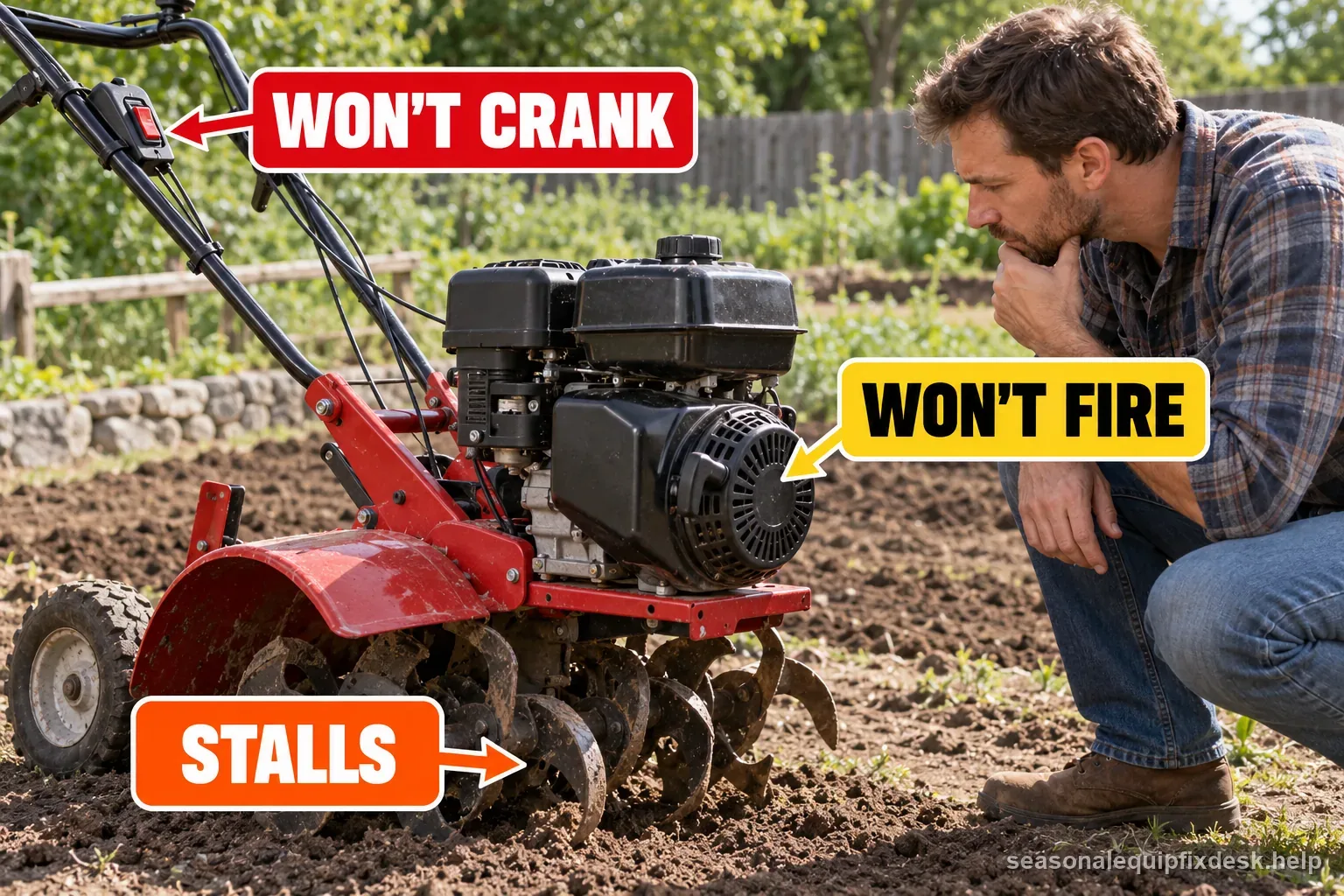
| Observation | First checks | Stop point |
|---|---|---|
| Starter cannot rotate engine | External obstruction and control state | Stop for hard lock or abnormal resistance |
| Cranks but never fires | Fresh permitted fuel, valve, switch, choke, plug | Keep spilled fuel away from spark tests |
| Starts, then dies | Fuel flow, tank vent, choke release, air path | Stop if fuel leaks or controls bind |
| Stalls only when tines engage | Inspect drive with engine off | Never reach near tines with ignition enabled |
Record what the engine does on the first pull or crank
Separate three symptoms: the engine does not rotate normally, it rotates but never fires, or it fires briefly and dies. A recoil rope that stops hard or a starter that cannot turn the engine is not the same problem as normal cranking with no combustion. Preserve that distinction before adding fuel, cleaner, or replacement parts.
Make sure the tiller is in the safe start configuration required by its manual, with tine and wheel controls disengaged. Do not defeat an interlock simply to make diagnosis easier.
- Record the first observed symptom and what changed beforehand.
- Check the external controls, supply, and visible obstruction first.
- Follow the component path that matches the symptom.
- Retest in a controlled condition and record what changed.
- Stop at the stated safety or service limit.
Spring fuel deserves suspicion before the carburetor deserves removal
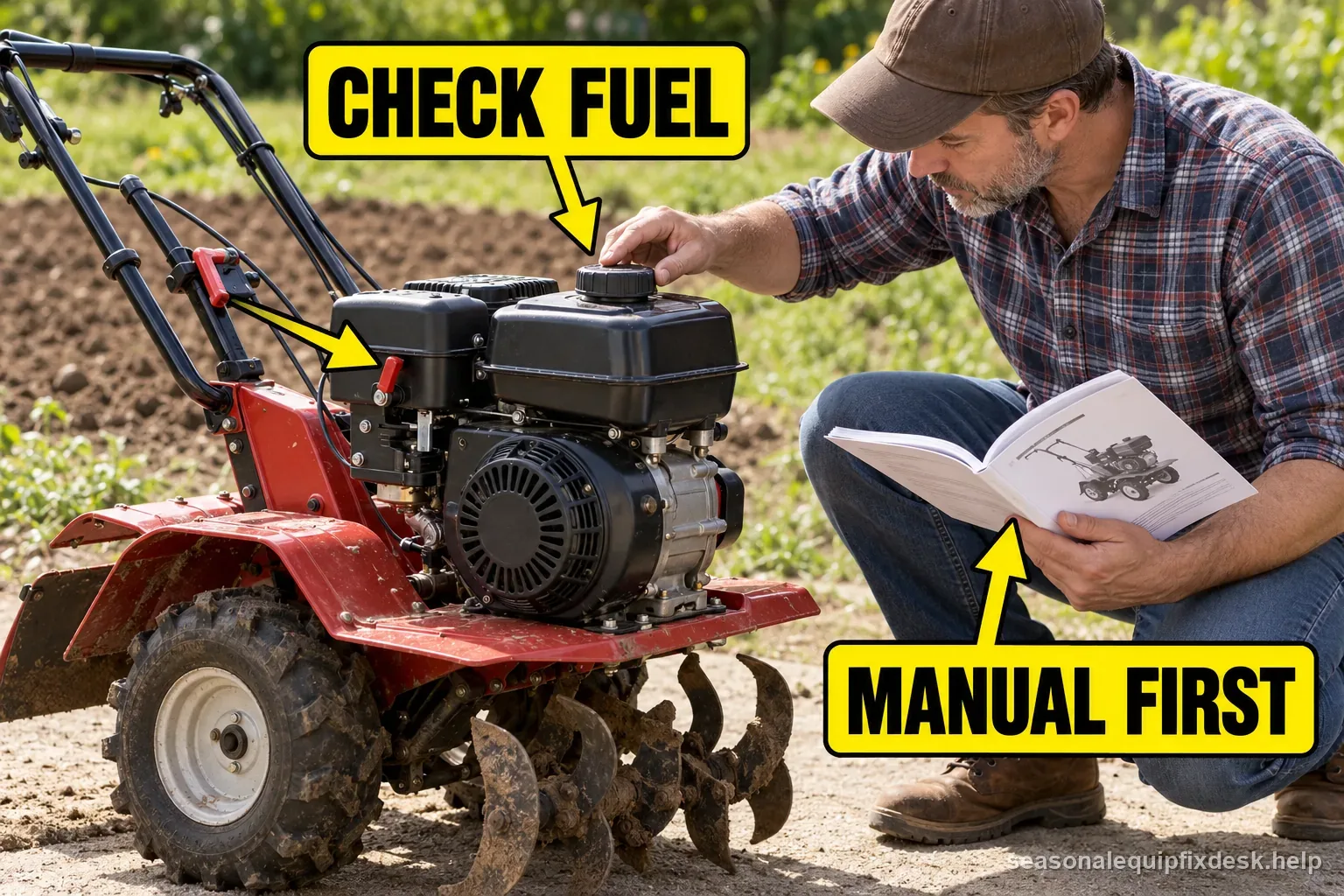
Troy-Bilt's current spring tune-up guidance begins with clean, fresh gasoline according to the engine manual. If fuel sat untreated through winter, drain or manage it according to that manual and local rules. Do not top off stale fuel with a little fresh gasoline and call the mixture new.
If the engine starts for a moment after priming or on choke but will not continue running, the carburetor's normal metering path becomes more suspicious. That is evidence, not permission to turn every mixture screw.
Use choke behavior to decide whether the mixture is too lean or already flooded
Follow the exact cold-start procedure. An engine that improves with additional choke after it has started may be running lean from restricted fuel flow or an intake leak. An engine that smells strongly of raw fuel, has a wet plug, or worsens with more choke may already be flooded.
Stop repeated priming once flooding is plausible. Use the engine maker's flooded-start procedure so you do not erase the original clue.
Check the air filter before blaming ignition
A filter packed with dust, oil, or rodent nesting can reduce air and change mixture. Inspect it in daylight and service it using the engine manual. Troy-Bilt includes air-cleaner service in its tiller maintenance schedule because tillers work in unusually dusty conditions.
Also inspect the intake opening and cooling screen for storage debris. Remove nesting material only with the engine disabled and cool.
Spark-plug condition can narrow the branch
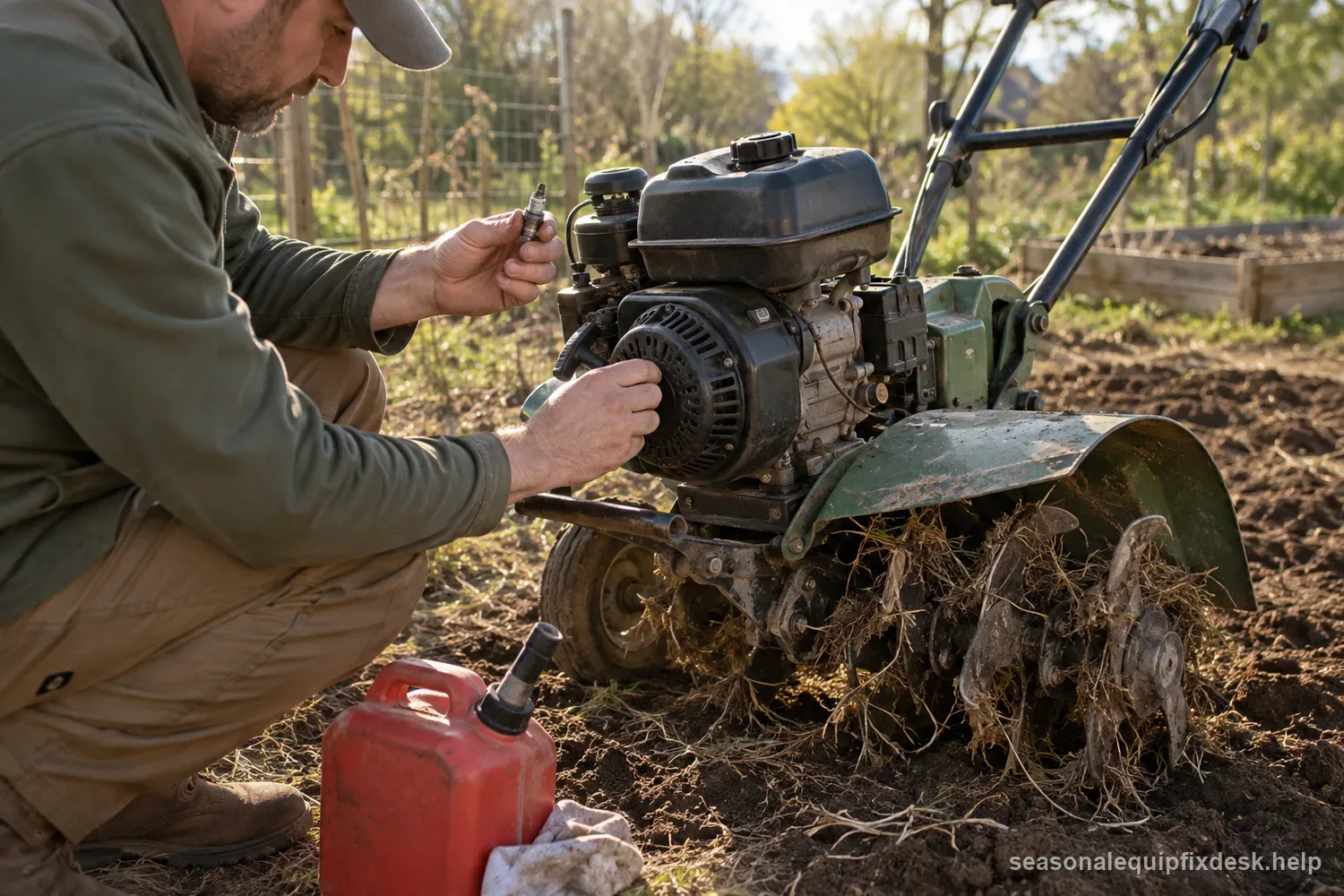
Disconnect the plug lead before service. Remove the plug and compare its condition with the engine maker's guidance. A wet plug after several normal start attempts tells you fuel is reaching the cylinder; a dry plug keeps fuel delivery high on the list. Replace a fouled, damaged, or overdue plug with the correct type and gap.
For an actual spark test, use an approved tester and procedure. Do not improvise an open spark near spilled fuel.
Only then decide whether the carburetor needs cleaning
Briggs and Stratton notes that stale fuel, dirt, and deposits commonly cause small-engine starting and performance problems. If fresh fuel reaches the carburetor, the controls are correct, the air filter is serviceable, and the engine has usable spark but still runs only on enrichment, carburetor cleaning is a reasonable next branch.
Clean only as far as the engine's design and service information support. Fixed-jet and emissions-controlled carburetors are not invitations to drill passages or invent screw settings.
Do not confuse an engine repair with a tiller recommissioning
Once the engine runs, the tiller still needs a separate spring check. Troy-Bilt recommends checking fasteners, engine oil, transmission gear oil, tire pressure, guards, tine wear, and lubrication points. A machine that starts is not automatically ready to cultivate soil.
With the engine off, inspect tines for damage and verify controls return normally. Test the drive first in an open area at shallow depth, not in hard ground where a control problem can turn into a sudden movement hazard.
When a no-start should stop being DIY
Stop if the engine cannot be rotated normally, fuel is leaking, compression seems mechanically abnormal, or diagnosis requires internal governor, valve, or ignition work beyond the owner manual. Also stop if a safety control will not disengage or return correctly. Bring the engine model and the first-start observations to service rather than a list of guessed parts.
Change one diagnostic condition at a time and preserve the original symptom. Repeated attempts can erase useful evidence or cross a stop condition.
A better storage note prevents the same spring mystery
At shutdown season, record the fuel strategy, oil service, and whether the engine was run after stabilizer was added. Tag any known tine, belt, or transmission issue separately. Next spring, you will know whether a no-start is truly new or the expected consequence of a maintenance item already deferred.
Honda’s tiller troubleshooting procedure treats fuel delivery and spark as separate checks and warns to dry spilled gasoline before any spark test. A tiller that fires and then stalls only when the tines engage needs a different branch from an engine that never fires.
If the engine starts but the tiller immediately stalls, shift the question
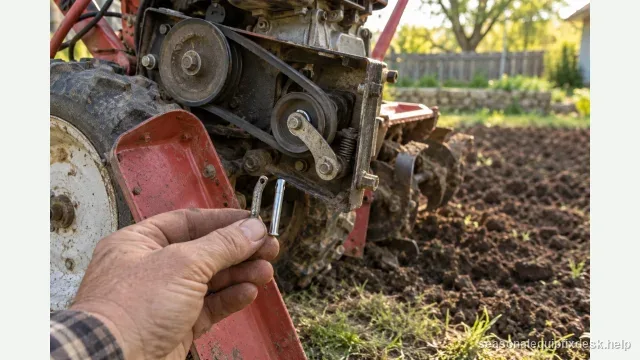
Once the engine proves it can start and idle, a stall that occurs only when the tine or wheel drive is engaged may belong to the equipment side rather than the carburetor. Shut the engine off and inspect for packed roots, wire, frozen bearings, a seized pulley, or a belt routed incorrectly after prior service. Do not reach around tines while the engine can start.
This distinction matters after winter because corrosion and debris can affect both systems at once. A carburetor may have needed fresh fuel, while a separate rusted drive component still overloads the engine. Fix and retest one system at a time so a successful engine repair is not blamed for a mechanical load that appears only under engagement.