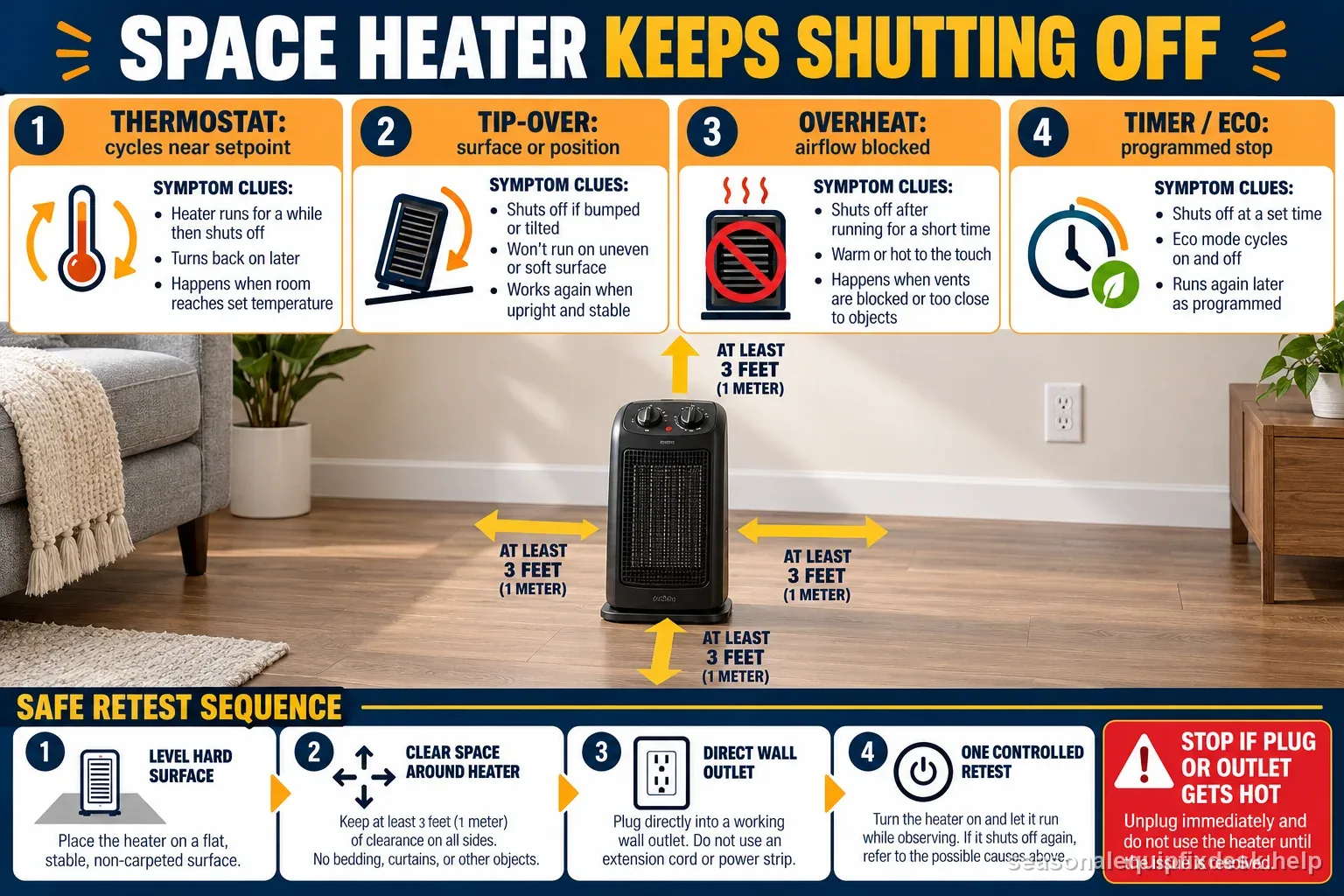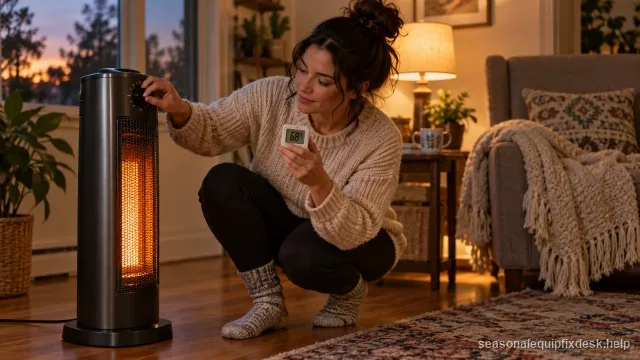
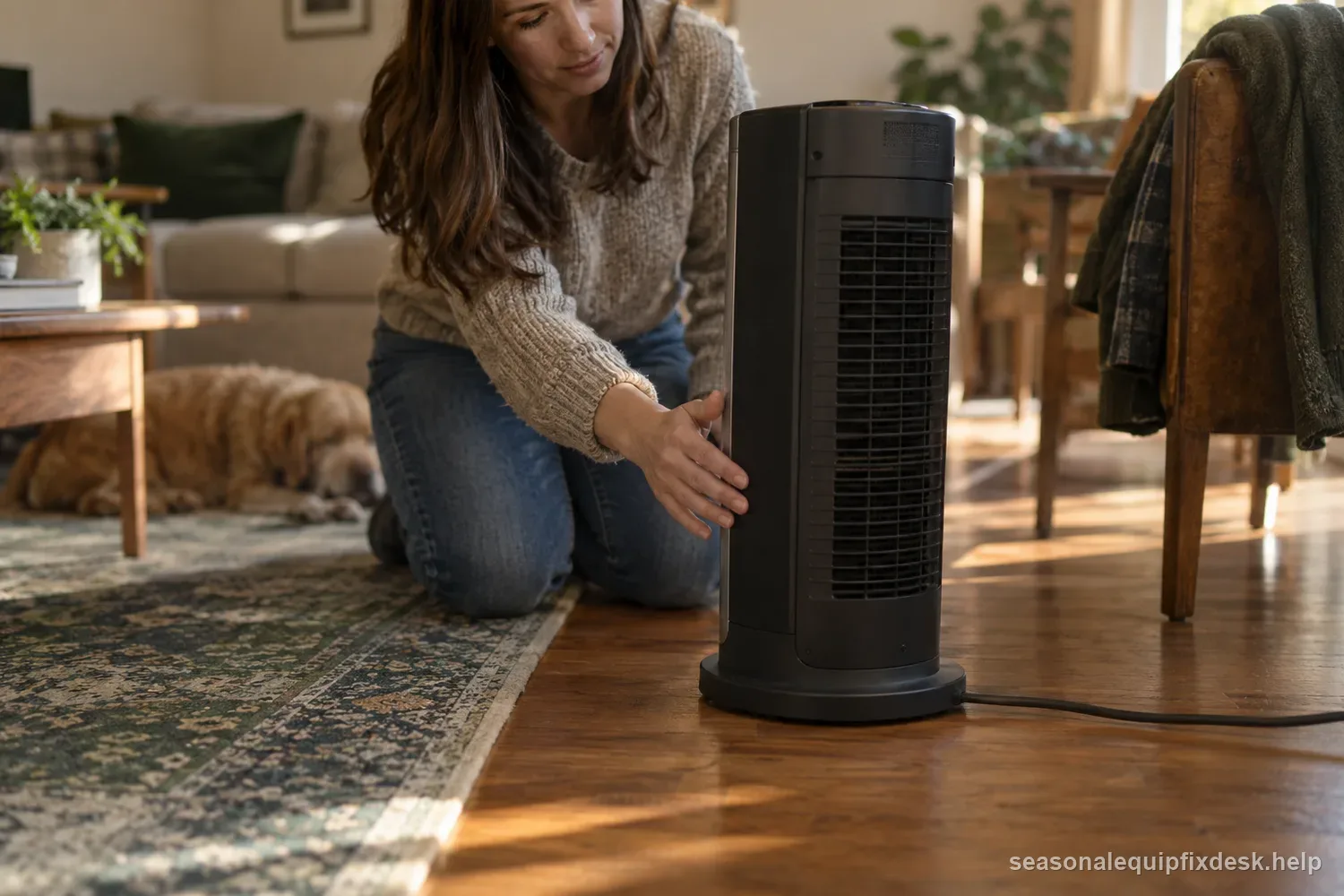
Quick answer: First determine whether the heater is shutting off normally at the thermostat setpoint or tripping a protection. A predictable off-on cycle as the room warms is different from a sudden shutdown followed by a long cooling period. Check placement, tip-over stability, intake and outlet blockage, plug and receptacle condition, and the operating mode before treating the heater as electrically failed.
| Pattern | Possible cause | Action |
|---|---|---|
| Cycles near setpoint | Thermostat | Compare room temperature |
| Stops after heating | Airflow or overheat cutout | Cool; clear external obstruction |
| Stops when nudged | Unstable surface or tip-over cutout | Place upright and level |
| Repeats, trips, or smells | Possible fault | Stop and seek service |
Normal thermostat cycling has a repeatable pattern
Set the heater on a hard, level surface with its clearances restored and choose a temperature well above the current room temperature for a short test. If the heater runs, warms the room, turns off near the selected target, and later restarts normally, that is control behavior rather than a fault.
Do not keep raising the setting simply to prevent all cycling. The thermostat is supposed to regulate output. The question is whether the off period corresponds to room temperature or to a protection event.
Tip-over protection can react to a surface that looks flat
Many portable heaters use a bottom switch or internal tilt sensor. Thick carpet, an uneven hearth, a loose caster, or a rocking table can let the switch open intermittently. Move the unplugged heater to a stable hard floor and verify that every foot is intact.
Never tape or hold a tip-over switch closed. A heater that cannot remain stable on its intended surface should be relocated or replaced.
Overheat shutdown usually points back to airflow
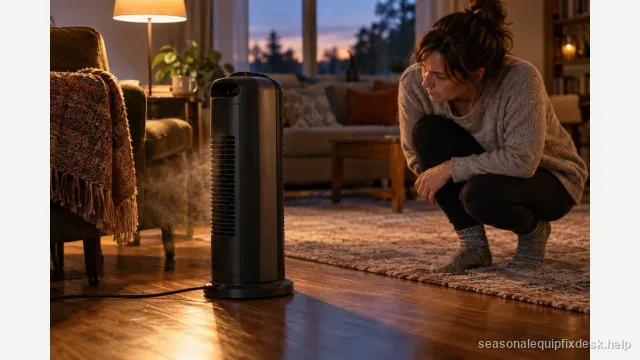
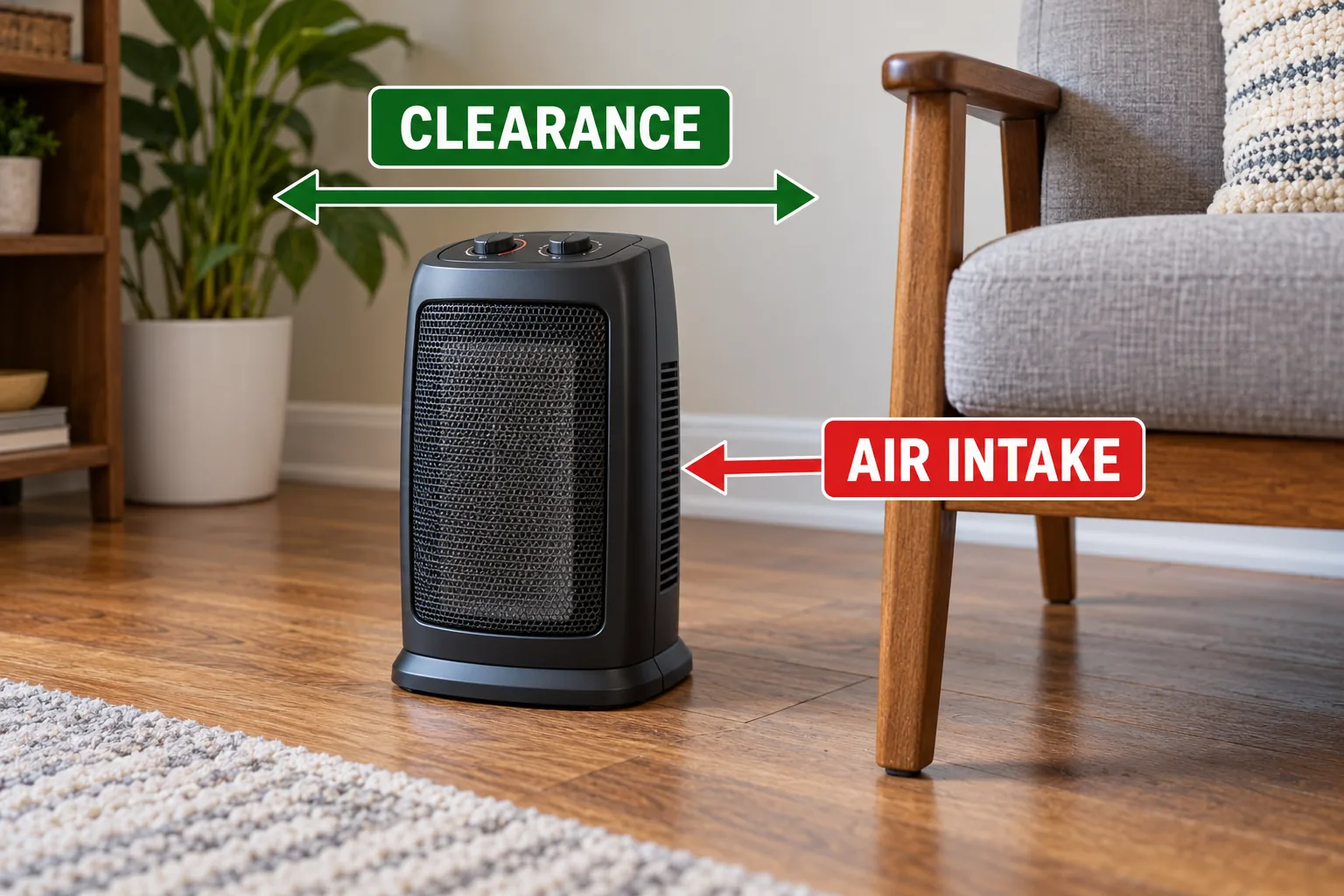
Unplug the heater and let it cool fully. Inspect the intake and outlet for dust, pet hair, fabric, or furniture blocking the air path. Clean only as the manual permits; do not remove fixed guards or insert tools through the grille. A restricted heater can recirculate hotter air internally until a thermal limit opens.
Also verify the heater has the clearance required by its instructions. CPSC advises keeping portable heaters at least three feet from combustible materials such as bedding, drapes, and furniture.
The power connection is part of the shutdown diagnosis
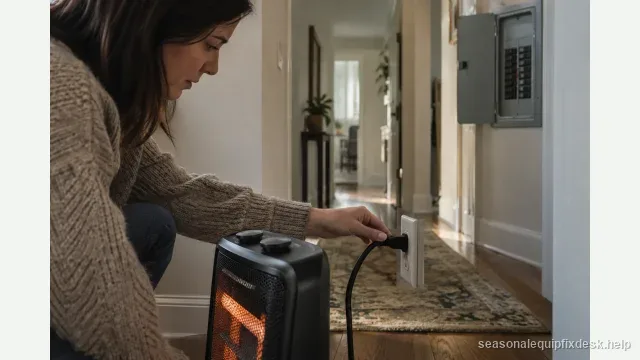
CPSC recommends plugging electric space heaters directly into a wall outlet rather than an extension cord or power strip. If the plug, receptacle, or wall plate becomes hot, discolored, loose, or gives off an odor, stop using that outlet and the heater until the connection is evaluated.
A loose receptacle can create resistance and heat without tripping the breaker immediately. Moving the heater to random outlets is not a substitute for correcting a damaged electrical connection.
Top-ranking guides emphasize overheat dust and timer settings, but shutdown timing is the useful discriminator: thermostat cycling follows room temperature, a timer follows its programmed duration, and a protection trip often needs a cool-down. Do not assume that every model resets the same way. Manufacturer manuals may distinguish a reusable thermal control from a one-time cutoff fuse that requires replacement.
| Shutdown pattern | Likely cause | First safe check |
|---|---|---|
| Turns off near the set temperature and restarts later | Normal thermostat cycling | Observe whether it follows the room temperature |
| Stops after a bump or on an uneven surface | Tip-over protection | Place on the level hard surface specified by the manual |
| Runs briefly then shuts off with blocked airflow | Overheat protection | Turn off, cool, and clear external intake and outlet |
| Stops on a schedule or Eco cycle | Timer or operating mode | Check the displayed setting before another retest |
Cooling time gives useful evidence
- Restarts almost immediately: check thermostat setpoint, timer, eco mode, or an intermittent tip-over input.
- Will not restart until it cools for several minutes: overheat protection or an internal thermal fault becomes more plausible.
- Entire outlet loses power: move to the branch-circuit/breaker diagnosis rather than heater controls.
- Display stays on while heat stops: a control or heating-stage issue may differ from a total power loss.
- Burning smell or melted plastic: unplug and retire the unit; do not continue a cycle test.
Dust cleaning should not become internal disassembly
Vacuum accessible exterior grilles with the heater unplugged and cool, or use the cleaning method specified by the manufacturer. Opening a portable heater exposes line-voltage wiring, heating elements, thermal cutoffs, and insulation that must return to exact positions. If normal external cleaning does not stop repeated overheat trips, service or replacement is safer than bypassing a thermal device.
Timers and eco modes can create “mystery” shutoffs
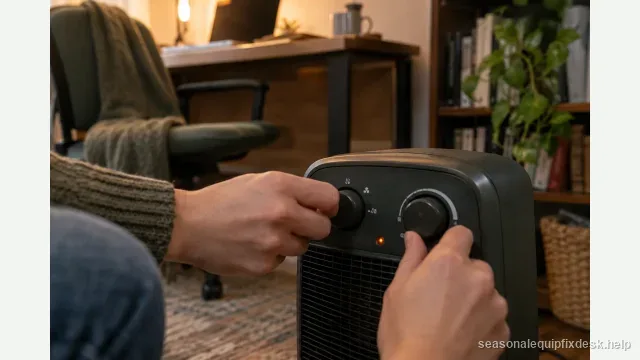
Check for an active countdown timer, sleep function, occupancy mode, or eco setting. Some controls intentionally turn the heater off for long periods. Clear the programmed mode according to the manual and run a simple manual heat test before buying a thermostat or switch.
A 20-minute controlled retest
- Unplug and cool the heater, then clean accessible air paths.
- Place it on a hard level surface with at least the manufacturer’s required clearances.
- Plug it directly into a sound wall receptacle with no extension or power strip.
- Choose a manual heat mode and a target above room temperature.
- Observe when it shuts off, whether the fan continues, how long it takes to restart, and whether the plug or outlet becomes abnormal.
Repeated shutdown after clear airflow, a hot or damaged plug/outlet, smoke, melting odor, or a tip-over switch that will not work normally requires the heater to remain unplugged until inspected or replaced.
When a repeated shutdown is no longer a DIY problem
Stop using the heater if the cord or plug is damaged, the receptacle overheats, a thermal cutoff appears to trip despite clean unrestricted airflow, the unit smells burned, or operation requires defeating a tip-over or overheat device. CPSC also advises turning portable heaters off when sleeping or leaving the room; troubleshooting should always be attended.
Room airflow can fool both the thermostat and the overheat system
A heater beside a cold window, HVAC supply, closed curtain, or furniture gap may experience a very different temperature from the center of the room. Cold air on the thermostat can make it run longer, while restricted hot discharge can trip the internal limit. Move the unplugged heater to a manufacturer-approved open location and repeat the same manual setting before concluding the thermostat is defective.
Also watch whether the fan stops with the heat or continues during cooldown. Some heaters intentionally keep the fan moving after the element switches off. That behavior can be normal and helps remove stored heat. A complete sudden blackout, by contrast, points more strongly toward tip-over input, power loss, or a protective shutdown.
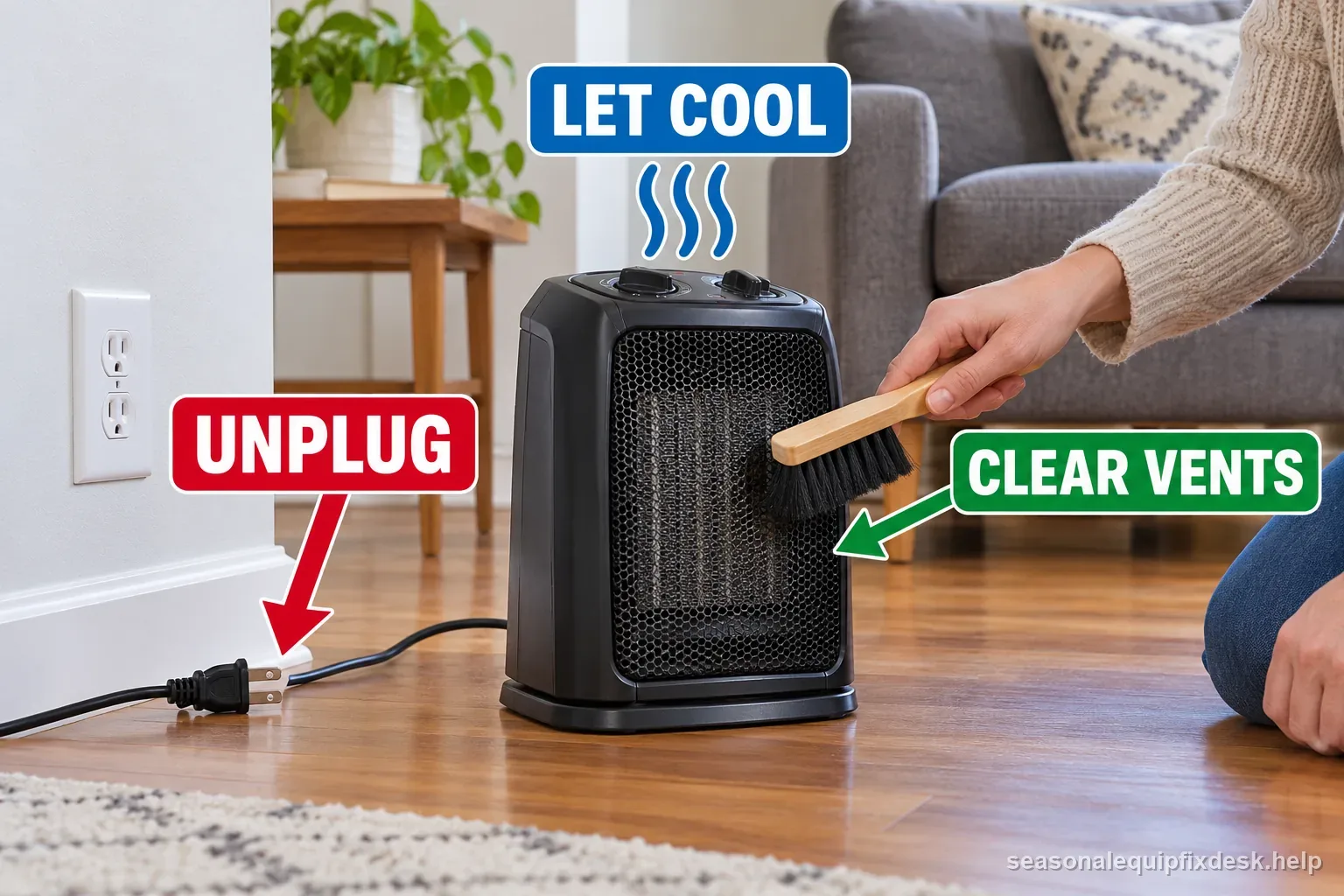
Frequent cycling after storage deserves an odor-and-dust check
A small amount of dust odor at first seasonal use may clear, but visible smoke, persistent burning smell, crackling, or discoloration is not a break-in condition. Unplug the heater. External dust can be cleaned as the manual allows; internal heat damage is a replacement or service decision.
If the fan keeps running after heat cuts out, use the no-heat checks for a space heater with a running fan to separate a cooldown cycle from a failed heating stage.
| What happens before it stops | Likely behavior | Next check |
|---|---|---|
| Turns off near the chosen room temperature, later restarts | Normal thermostat cycling | Compare target setting and room temperature; do not defeat the thermostat |
| Stops after a predictable countdown | Timer, sleep, or eco schedule | Review the exact model’s display and timer setting |
| Stops after tipping or rocking | Tip-over switch responding to unstable placement | Unplug; inspect feet and place upright on the specified hard level surface |
| Runs, then stops and restarts only after cooling | Overheat protection, airflow restriction, or internal fault | Unplug, cool, clear only accessible airflow, then follow the manual |
| Outlet loses power, plug heats, odor or smoke | Electrical or fire hazard | Stop use and arrange electrical/appliance service |