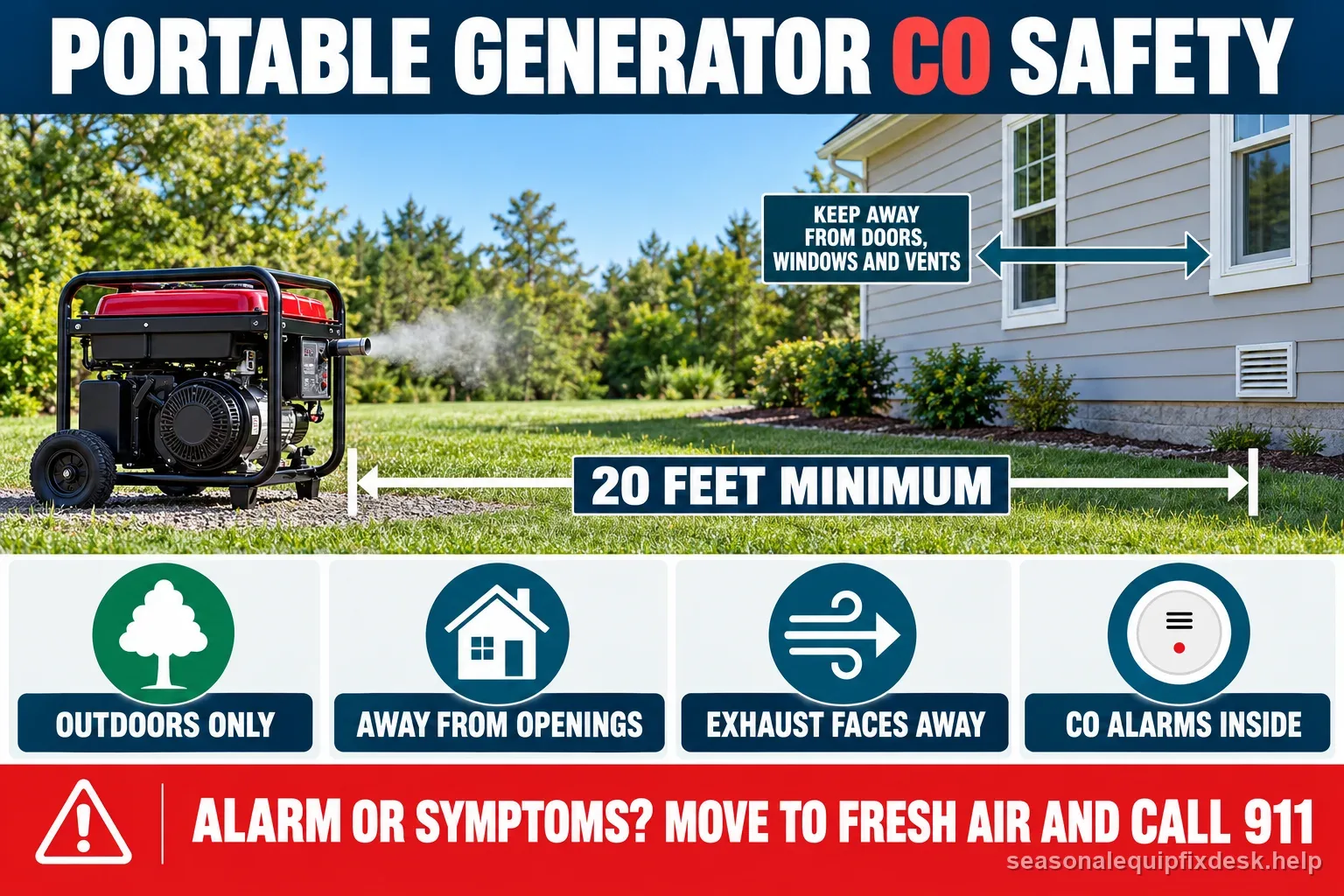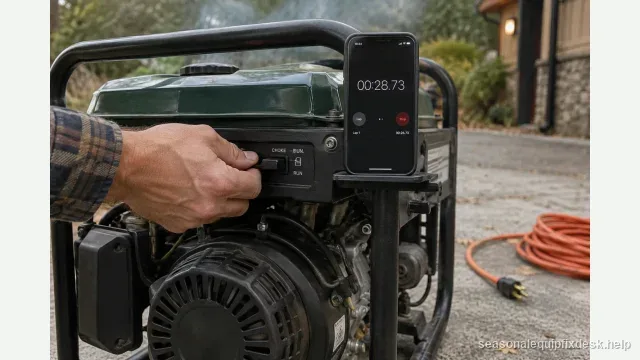

Quick answer: A portable generator is an outdoor combustion appliance. CDC and CPSC guidance says to operate it outdoors at least 20 feet from the home, away from doors, windows, and vents, with exhaust directed away from occupied buildings. A garage, carport enclosure, basement, shed, crawlspace, or “open garage door” is not a substitute for outdoor placement. Working carbon-monoxide alarms are a backup layer, not permission to move the generator closer.
This article is deliberately different from a generator troubleshooting guide. Carbon monoxide cannot be seen or smelled, and a generator that runs perfectly can still create a lethal exposure if placed badly. The correct diagnostic question is not “does the engine sound normal?” but “where can the exhaust go from this exact location?”
| Location or setup | Safety status | What to do |
|---|---|---|
| Inside garage, basement, shed or home | Never use, even with doors open | Move the unit fully outdoors |
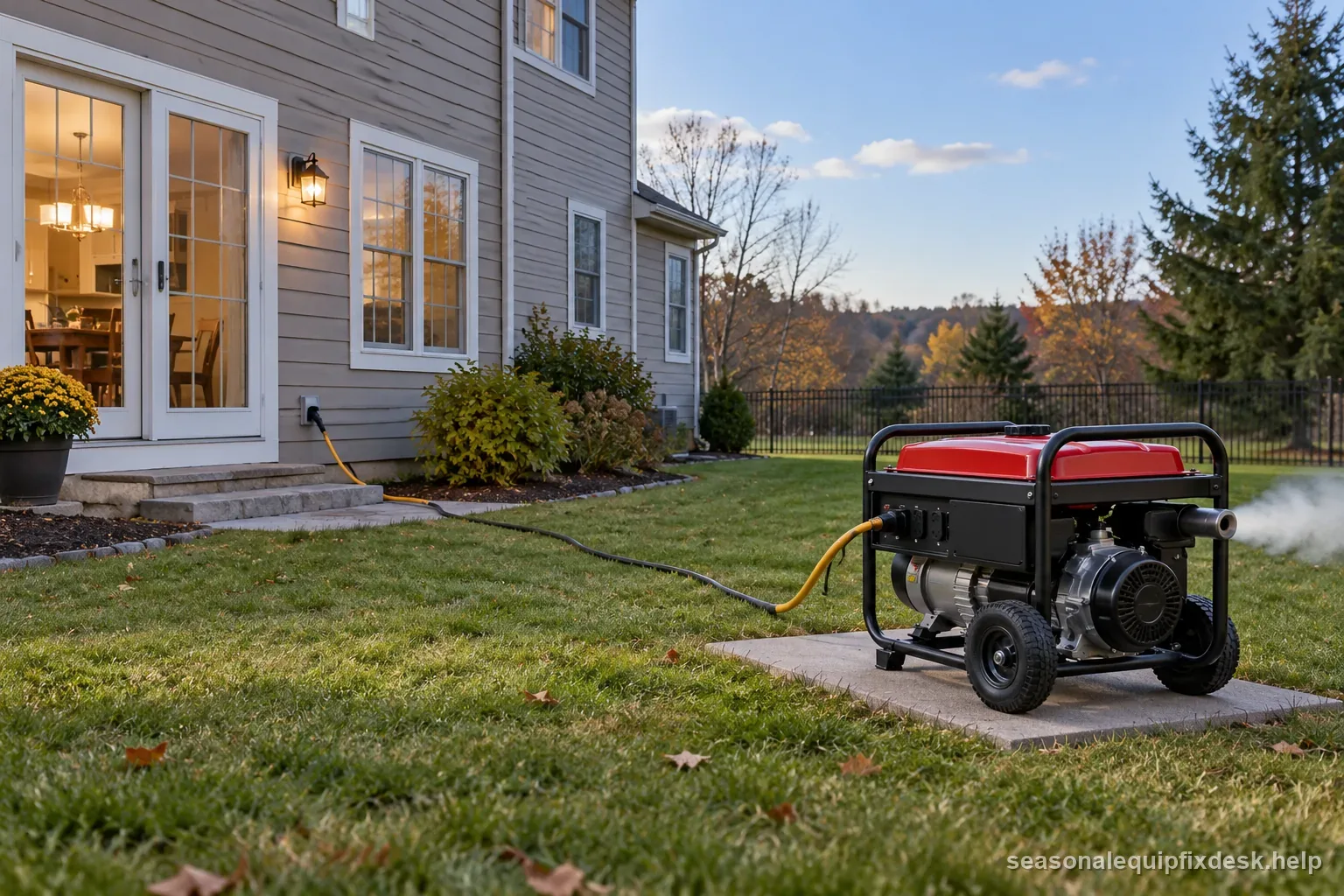
| Outdoor spot less than 20 feet from home | Too close under CPSC/CDC guidance | Choose a location at least 20 feet away |
| Outdoor, 20+ feet, exhaust toward an opening | Still unsafe direction | Aim exhaust away and assess openings/wind |
| Outdoor, separated, exhaust away, alarm powered | Minimum planning conditions met | Follow the generator manual and keep the setup dry |
| CO alarm or symptoms occur | Emergency; distance is no longer the immediate task | Evacuate to fresh air and call for help from outside |
Pick the operating spot before the storm, not after the lights go out
Walk the property in daylight and identify a stable outdoor location that preserves the 20-foot separation from the home and keeps exhaust pointed away from openings. Include basement windows, garage doors, fresh-air intakes, dryer vents, crawlspace openings, and neighboring occupied structures in the review. An opening does not have to be directly beside the generator to become an exhaust path.
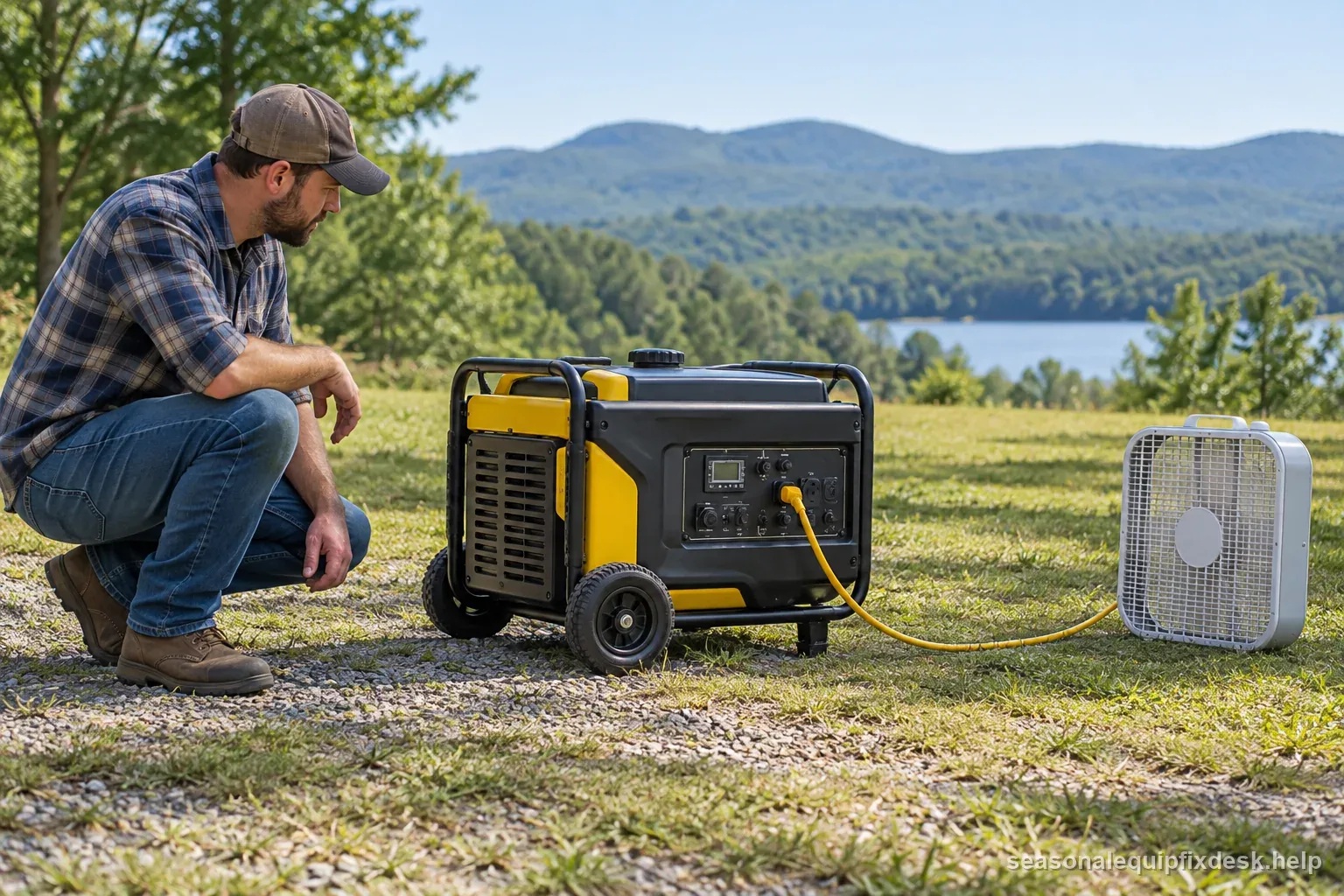
The site also has to work electrically. Plan heavy-duty outdoor-rated cords that reach without forcing the generator toward the house. If a safe location requires cords longer than your equipment instructions allow, solve the electrical design before the emergency rather than shortening the CO distance during the outage.
An open garage is still the wrong combustion space
Both CDC and CPSC warn against running portable generators inside a home or garage even when doors or windows are open. Exhaust can accumulate faster than natural airflow removes it, and changing wind can push CO through the building. The same principle applies to other partly enclosed spaces where exhaust can collect.
Do not create a “weather tent” that converts an outdoor generator into an enclosed exhaust source. Rain protection must follow the generator maker’s instructions and preserve required ventilation and clearances. Never run the generator wet or place improvised covers where they can contact hot exhaust components.
CO alarms are the second barrier, not the first
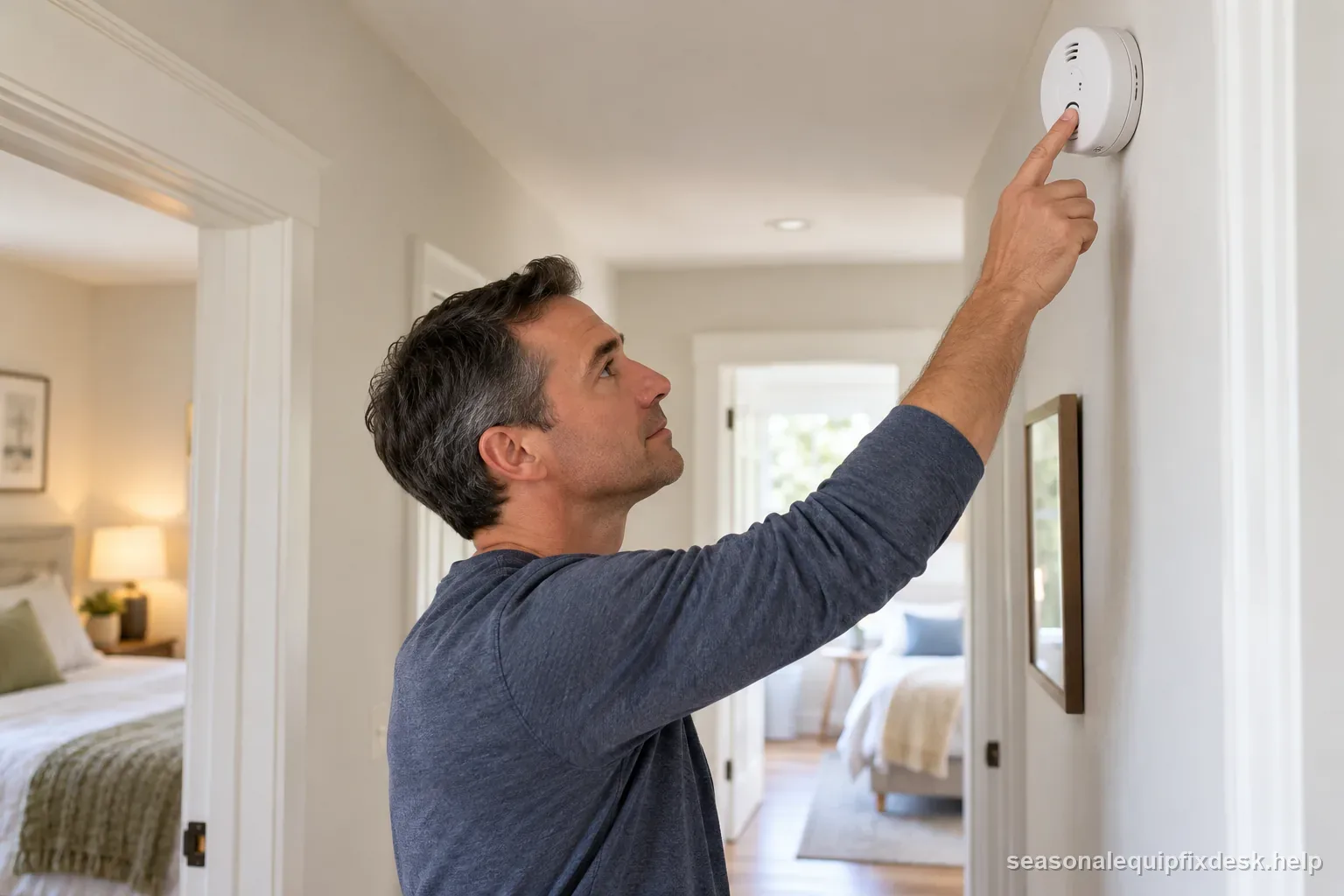
Use battery-powered or battery-backup CO alarms in the home. CPSC recommends alarms on every level and outside sleeping areas, and CDC specifically recommends a working CO detector when using a generator. Test the alarms and replace batteries or expired units according to their instructions before storm season.
If an alarm sounds, do not silence it and continue troubleshooting the generator. Move people to fresh air and follow emergency guidance. CPSC lists symptoms such as headache, dizziness, weakness, nausea, vomiting, sleepiness, and confusion; suspected CO exposure is an emergency, not a ventilation experiment.
Exhaust direction matters even at a good distance
Face the exhaust away from the home and other occupied structures. Wind can shift, so periodically look at the site rather than assuming the first setup remains safe all night. Do not place the generator where a fence corner, wall recess, porch, or dense enclosure traps exhaust and redirects it toward windows or doors.
If the only dry spot on the property sends exhaust toward an opening, that is not a reason to accept the compromise. Change the power plan, use a manufacturer-approved outdoor weather solution, or relocate loads. The safety constraint comes before convenience.
Route power without creating shock or backfeed hazards
For direct appliance use, follow the generator manual and use properly rated outdoor extension cords. Keep connections out of standing water and inspect cords for cuts, crushed insulation, hot plugs, or loose contacts. Do not run a generator or connected appliance in wet conditions contrary to manufacturer instructions.
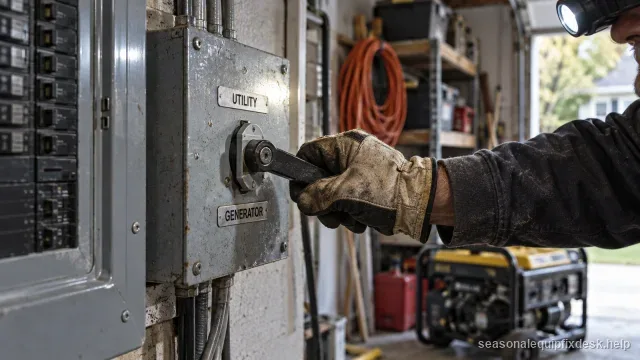
Never energize house wiring by plugging a generator into a wall receptacle. Supplying building circuits requires an approved transfer method installed for that purpose. Backfeeding can endanger utility workers, neighbors, and occupants and can damage equipment when utility power returns.
Refuel only after the engine and exhaust have cooled as directed
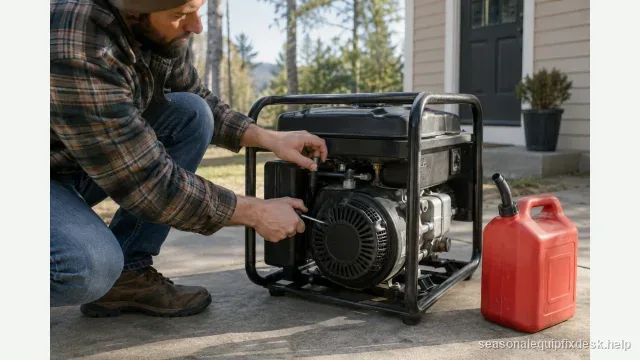
CO is not the only generator hazard. Gasoline and hot engine parts add fire risk. Shut the unit down and follow the manufacturer cooling/refueling procedure before adding fuel. Store fuel in approved containers and away from ignition sources; do not bring fuel cans indoors simply to keep them near the generator.
A long outage also changes the human-factors risk. Fatigue makes it easy to move the generator closer, forget an open window, or refill a hot unit. Write the placement and refueling rules into the outage plan so the safest setup does not depend on remembering details at 2 a.m.
Use a five-point start check every time the generator is moved
- Generator is outdoors and at least 20 feet from the home.
- Exhaust faces away from windows, doors, vents, and occupied structures.
- The location is dry and ventilated according to manufacturer instructions.
- CO alarms inside the home are powered and tested.
- Cords or transfer equipment reach safely without moving the generator closer.
Repeat that check after refueling, after strong wind or weather changes, and any time someone relocates the unit. A generator moved six feet for convenience is a new safety setup and should be treated as one.
- Move everyone outside to fresh air immediately.
- Call emergency services from outside; do not re-enter to investigate.
- Do not restart until responders have cleared the space and the exhaust setup is corrected.
What to do if anyone feels sick or a CO alarm activates
Do not spend time trying to determine whether the generator “really caused it.” Get people to fresh air and follow emergency instructions; CPSC advises calling 911 when CO poisoning is suspected. Shut the generator down only if that can be done without delaying escape or re-entering a contaminated area.
After the emergency, do not restart until the placement, alarm function, and exhaust path have been corrected. The absence of smell proves nothing about CO. Safe operation is established by location, separation, exhaust direction, and working detection—not by how the air seems to feel.