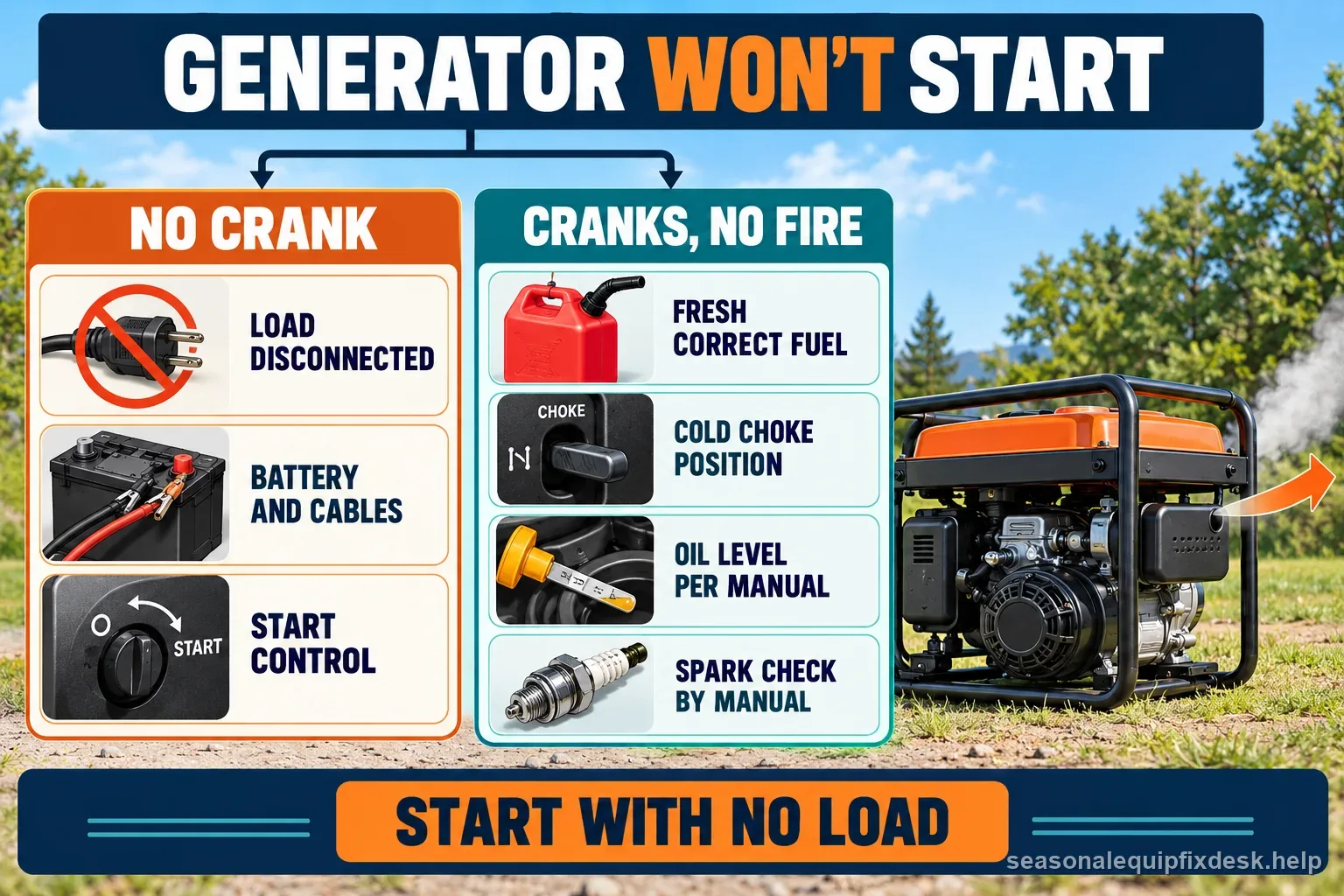
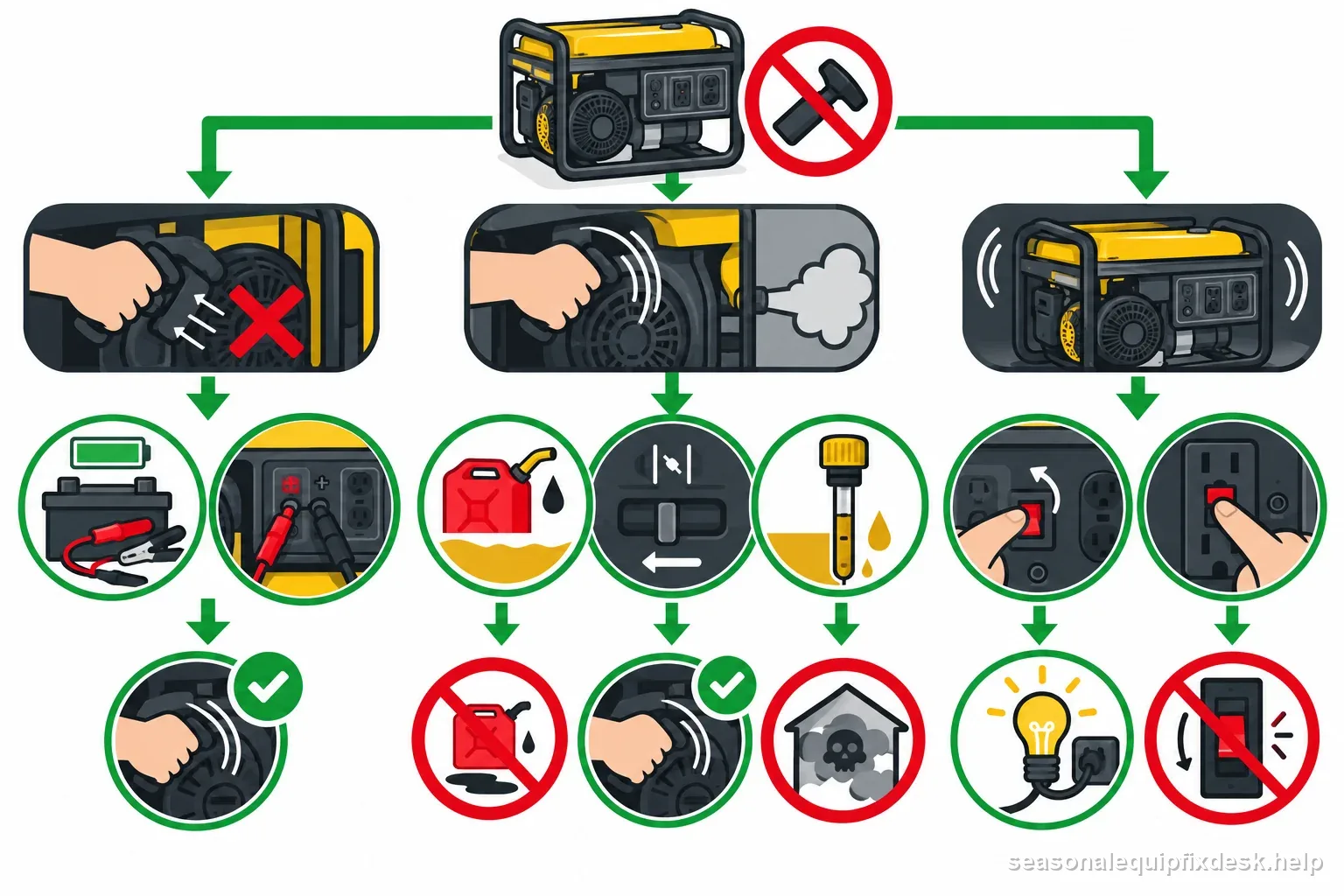
Quick answer: Before pulling the carburetor apart, separate a generator that will not crank from one that cranks at normal speed but will not fire. Electric-start battery/cable problems live mostly in the first branch. Fuel, choke, oil shutdown, spark, and carburetor delivery dominate the second. Starting under load should not be part of either test.
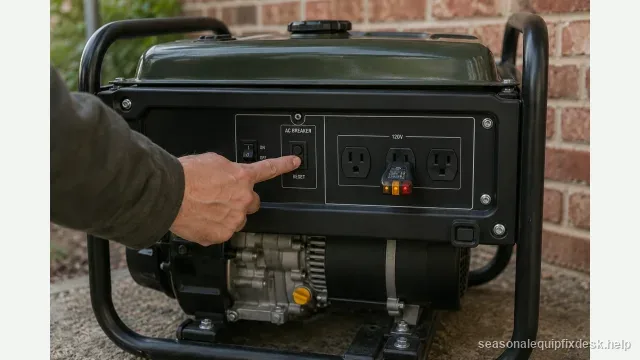
Once the engine runs normally but connected equipment remains dark, use the portable-generator output guide to test the outlet path safely.
Run all portable-generator diagnosis outside. CDC guidance says generators belong outdoors more than 20 feet from doors, windows, and vents, with a battery-powered or battery-backup CO detector in the home. Never move a generator into a garage because rain, cold, or troubleshooting is inconvenient.
| What happens | Likely branch | Safe first observations |
|---|---|---|
| No crank or a click | Electric start circuit | Switch position, battery state, visible cable condition |
| Cranks but will not fire | Fuel, choke, oil protection, spark | Fuel age, manual choke setting, oil warning, plug history |
| Runs but no output | Breaker, GFCI, overload, outlet/load | Identify the actual indicator before one manual-directed reset |
Do not remove covers, bypass a low-oil sensor, or handle a hot spark plug. Stop for a fuel leak, damaged insulation, smoke, or repeated protection trips.
No crank: diagnose the starter system before the engine
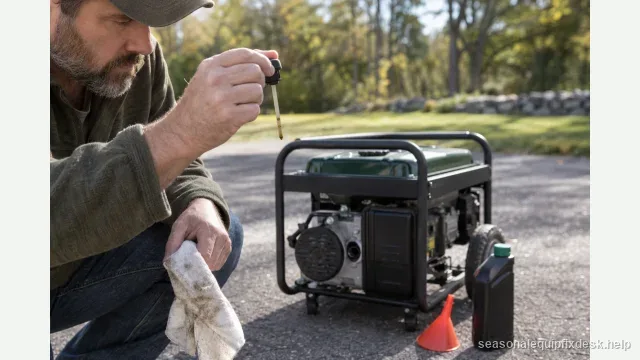
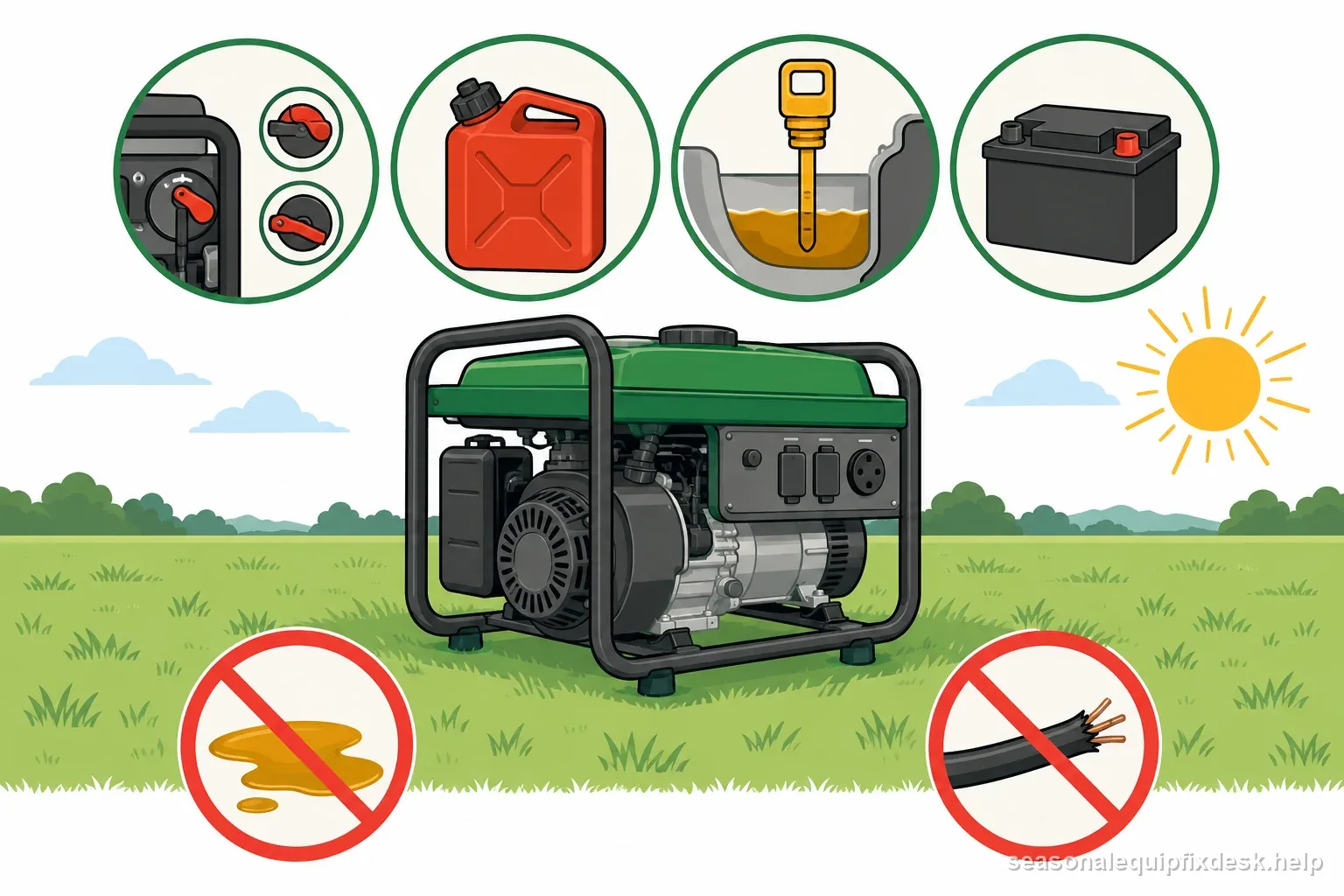
If an electric-start generator gives a click, slow crank, or no starter response, remove connected loads and verify the run/start switch and any battery disconnect exactly as the manual specifies. Inspect battery terminals for looseness or corrosion and measure/charge the battery according to the model procedure. A weak battery can create a false fuel diagnosis because the engine never reaches normal cranking speed.
If the recoil starter also will not rotate the engine normally, stop treating the battery as the main problem. Mechanical resistance, a seized accessory, or internal engine trouble requires a different branch. Do not keep holding an electric starter against a locked engine.
Cranks but never fires: copy the manufacturer’s basic order
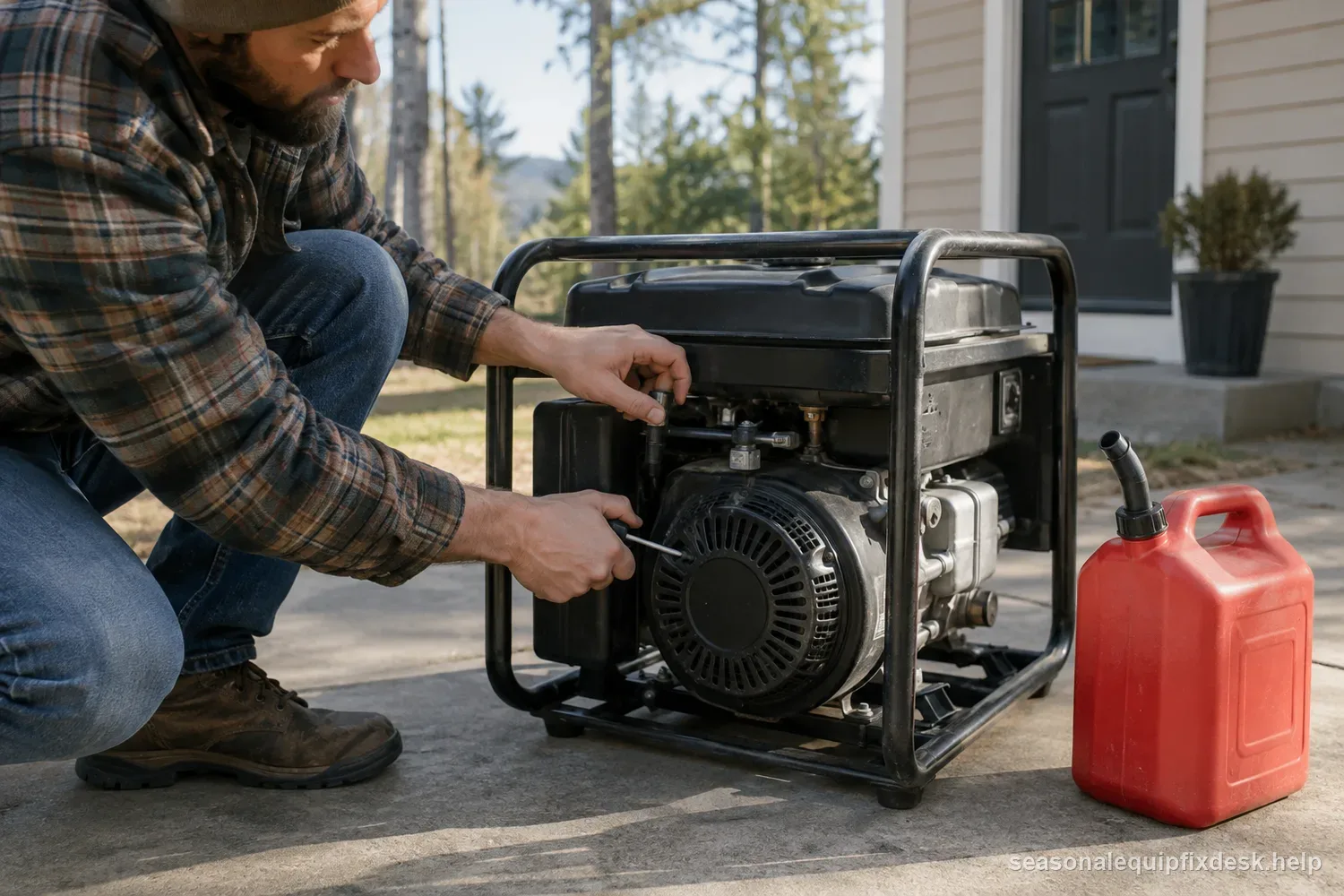
Generac’s current portable-generator no-start checklist covers fuel supply/type, oil level, choke and switch settings, spark plug and air filter, and electric-start issues. Honda generator manuals use a similarly disciplined flow: fuel in tank, enough engine oil, spark-plug condition/spark, then whether fuel reaches the carburetor. That sequence is useful because each check answers a distinct question.
Fuel quantity is not the same as usable fuel
Confirm the correct fuel type for the exact generator. Gasoline that sat for months can lose volatility and leave deposits; a propane machine can have a full cylinder but a closed valve, frozen regulator condition, empty selected cylinder, or incorrect connection. Do not introduce starting fluid unless the manufacturer explicitly permits it.
For gasoline units, note whether fuel reaches the carburetor only using the model’s documented drain or service method. Fuel leakage near a hot engine, spark plug, or improvised spark test is a fire hazard.
Oil protection can look like an ignition problem
Place the generator on a level surface and check engine oil with the dipstick procedure in the manual. Low-oil protection is designed to prevent engine damage; it is not a switch to bypass for diagnosis. Overfilling can also cause running problems, so correct the level rather than simply adding oil whenever the engine will not start.
If the control panel has a low-oil indication, record whether it appears while cranking. A legitimate oil alert provides a reason to correct oil level. A persistent alert with correct oil is a service clue—not permission to disconnect the sensor and run through the warning.
| Observed clue | Likely branch | Useful next check |
|---|---|---|
| Starter does not turn the engine | Battery, cables, or start control | Disconnect loads and follow the starting-system manual |
| Engine cranks but does not fire | Fuel, choke, oil protection, or ignition | Follow the manufacturer’s order one check at a time |
| Starts only with choke left on | Fuel delivery or mixture path | Use the model fuel-system procedure; avoid random adjustment |
| Indicator reports oil or fault | Protection shutdown | Read the code and manual before clearing or retrying |
Choke position should change between cold start and running
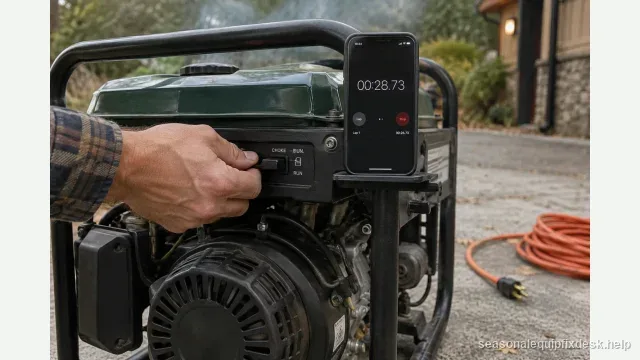
Cold carbureted engines often need enrichment to start, then less choke as they warm. Generac’s 2026 choke guidance specifically discusses machines that start with choke but shut down when moved to RUN, along with flooding, stuck choke controls, and dirty carburetors. If the engine fires only on full choke, treat that as fuel-metering evidence rather than proof the choke should stay closed forever.
A warm engine may need a different choke setting from a cold one. Repeatedly cranking with excessive choke can wet the plug and erase the original symptom.
Spark-plug evidence has two parts: condition and ignition
Inspect the plug for damage, fouling, and correct gap where the manual allows. A wet plug can indicate fuel is reaching the cylinder; a dry plug after normal cranking points back toward delivery. If the manufacturer calls for a spark test, follow its approved procedure and keep spilled fuel completely away from the test area.
Do not replace the ignition coil just because the plug is old. First distinguish a bad plug from no spark and from a fuel problem. That is the advantage of a test order instead of a parts list.
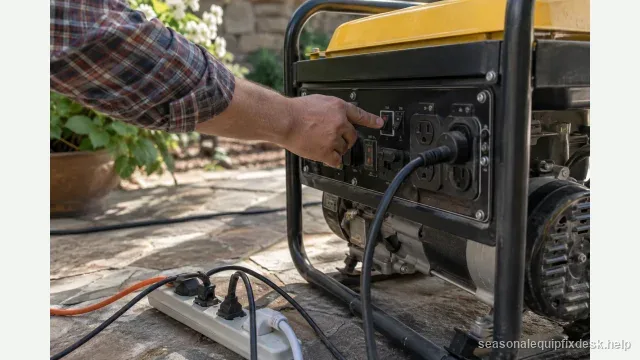
Start with zero electrical load
Unplug appliances and extension cords before starting. Let the engine stabilize and move the choke to RUN as directed before adding a load. A generator that starts normally unloaded but stalls when a particular appliance is connected is no longer a pure no-start problem; shift to overload, appliance, cord, or power-quality diagnosis.
- Outdoor location and CO precautions
- Switch/choke positions per manual
- Fuel age and visible condition
- Oil warning or level observation
- Crank/no-crank and output indicator
- Any stop condition
A compact first-attempt log
- Generator outdoors at safe distance; no loads connected.
- Record no-crank versus normal crank.
- Confirm fuel selection/supply and level-ground oil reading.
- Use the exact cold- or warm-start choke procedure once.
- If it cranks but does not fire, inspect plug condition and fuel-delivery evidence per the manual.
- If it still does not start after those documented checks, stop before live electrical or internal engine work and use an authorized service path.
Do not backfeed house wiring with a male-to-male cord or improvised connection during testing. A no-start generator is frustrating; creating electrocution and fire risk to energize a house is far more serious.
The most useful service note is concise: “electric starter cranks normally, correct fresh fuel, oil at specified level, fires only with choke” or “no crank on electric start, recoil turns normally.” Those statements preserve evidence instead of reporting a pile of replaced parts.
Storage history changes the odds
A generator that ran correctly before sitting for months deserves a different prior probability from one that failed suddenly during a storm. Record how long the fuel has been in the tank, whether the fuel valve was closed for storage, whether the carburetor was drained, and whether a stabilizer was used according to its label. Generac currently recommends draining portable-generator fuel for storage longer than 30 days on applicable machines. That history does not prove a clogged carburetor, but it tells you whether stale-fuel deposits are a sensible next branch.
If the machine failed in the middle of a run instead of after storage, preserve that distinction. Sudden shutdown followed by a no-start can involve oil protection, ignition, overheating, or fuel supply interruption; it is weaker evidence for “old gas” than a first start after a long layup.