Quick answer: If a portable generator repeatedly speeds up and slows down, protect everyone from carbon monoxide first. Then remove connected loads using the manual’s shutdown procedure and note whether the engine steadies with nothing connected. Check only external owner items such as fuel-valve position, control setting, blocked air openings, and maintenance history. Continuing surge, fuel leak, abnormal exhaust, an overload warning, or unstable output is a stop-and-service condition. Do not adjust a governor, carburetor screw, gas regulator, or electrical panel.
Some sound changes are normal. An economy or idle-control mode may lower engine speed at light demand and raise it when a load appears. An appliance motor also draws extra startup power for a short time. Repeated hunting under a steady load, engine bogging, warning lights, or sensitive appliances cycling is different. Record what switches on when the sound changes instead of diagnosing by ear.
Make the site safe before troubleshooting
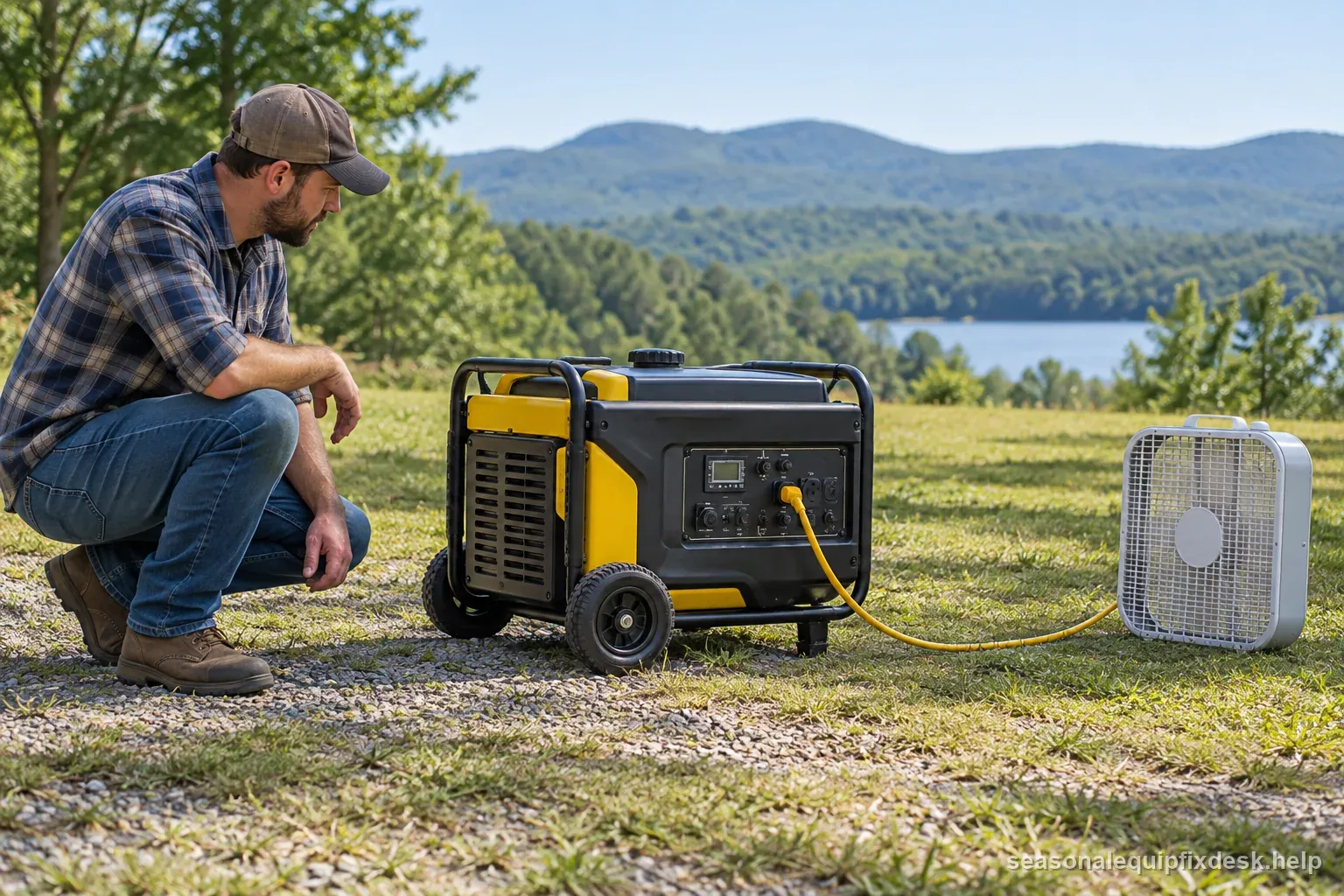
Run a portable generator outdoors, far from doors, windows, vents, and other openings, following its manual and public safety guidance. Never operate it in a home, garage, shed, crawl space, or partly enclosed porch. Carbon monoxide is odorless and can be fatal. Use working CO alarms inside and direct exhaust away from people and buildings. If anyone develops headache, dizziness, nausea, weakness, or confusion, get to fresh air and call emergency services.
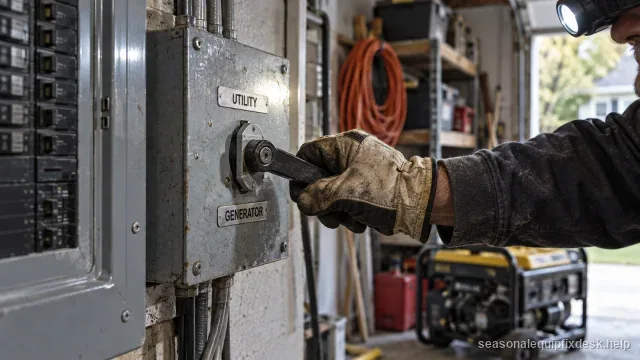
Keep the unit dry and on a stable outdoor surface. Do not refuel a hot or running engine. Do not touch exposed wiring, defeat a breaker, plug a generator into a wall receptacle, or connect it to house wiring without a correctly installed transfer arrangement. If flooding, fuel leakage, damaged cords, sparks, or a strong exhaust odor is present, leave it off and get qualified help.
Separate load response from an engine fault
List each connected appliance, its running watts, and any starting watts from its actual label or manual. Motors such as refrigerators, pumps, and air conditioners can require brief startup power above their running demand. Summing only running watts may miss the startup peak. Honda’s power-management guidance recommends accounting for both and starting high-demand appliances at different times.
Example: a generator rated for 3,500 running watts is powering a pump labeled 900 running watts and 1,800 starting watts. The pump may fit by itself, but adding a 1,700-watt heater can exceed continuous output once both are operating; if the pump starts as the heater is on, the brief combined demand may be higher still. This is illustrative only. Use the actual generator continuous and maximum ratings and the labels for your appliances; do not treat a surge rating as continuous capacity.
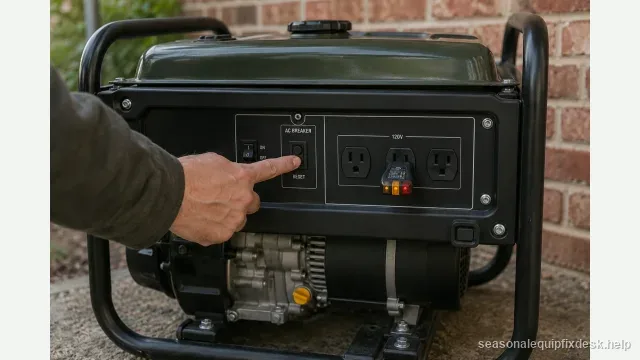
If the manual allows the test, shut down and unload the generator as directed, then restart it without appliances. Never start under load if the manufacturer warns against it. After the documented warm-up, add one compatible load at a time using properly rated cords. Stop if the engine bogs, hunts repeatedly, trips a breaker, or reports overload. Do not keep resetting a breaker to force operation.
Check only external controls and maintenance items
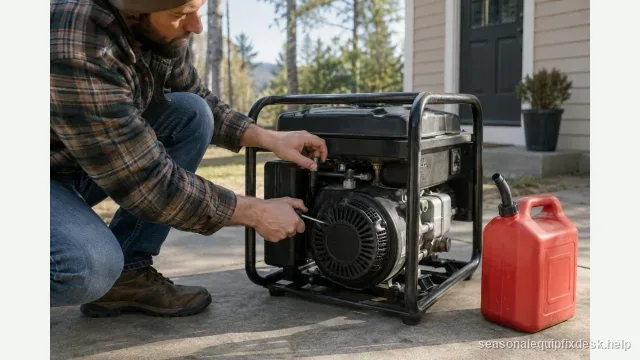
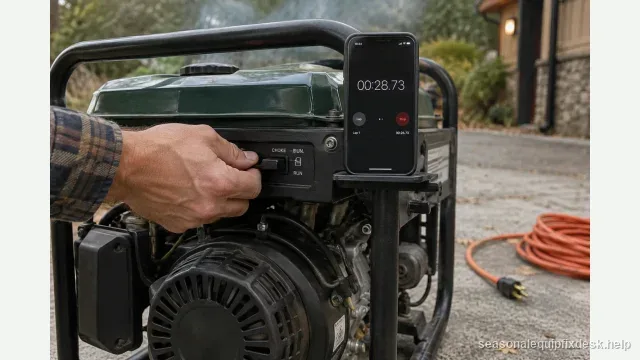
Confirm the fuel valve is fully positioned as the manual specifies, the choke matches engine temperature, and any economy switch is set as recommended for the connected load. A partly closed valve or choke left on can make an engine run poorly. Do not turn a governor or carburetor screw to smooth the sound: those adjustments can affect output frequency and voltage and require model-specific service data.
With the engine stopped and cool, look at external air openings for leaves, snow, dust, or a tarp blocking airflow. Do not remove a recoil housing or reach into the cooling fan. Check oil on level ground using the correct dipstick method; low oil can trigger protective shutdown, while overfilling is not a cure. Record fuel age and storage history. Stale gasoline can contribute to rough running. Use only the fuel type and owner procedure specified for your unit.
| Observation | Possible direction | Safe next step |
|---|---|---|
| Speed rises briefly as an appliance starts | Expected response to starting demand | Check actual starting watts and model guidance |
| Stable unloaded; hunts as devices connect | Demand may exceed capacity | Unload safely; add only compatible appliances one at a time |
| Surges with no load connected | Fuel, airflow, maintenance, or engine-control fault | Check external owner items, then request service |
| Overload warning or repeat breaker trip | Excess demand or equipment fault | Stop and disconnect per manual; do not keep resetting |
| Fuel leak, sparks, smoke, or CO alarm | Immediate hazard | Move away and seek emergency or qualified help |
Use a safe diagnostic sequence
- Confirm outdoor placement, working CO alarms, dry conditions, and intact cords.
- Record indicator lights, engine sound, connected equipment, and what changed before the surge.
- Follow the manual to unload or shut down; do not pull a load connector under conditions prohibited by the manufacturer.
- Check only visible airflow, control positions, fuel age, and oil level by the owner manual.
- If the engine steadies unloaded, compare the appliance labels with the generator’s continuous and starting capacity.
- If hunting persists unloaded or an alert repeats, stop and arrange service.
Do not deliberately apply a load that may exceed the rating to reproduce the fault. A known working small appliance may be used only if the manual permits it and the unit has no active safety warning. Do not measure internal voltage or frequency unless the manufacturer explicitly identifies an external owner test and you can do it safely. Unstable output can harm connected electronics even when a fan continues to turn.
Examples: normal response versus a service issue
Example 1: brief speed rise at compressor startup. A refrigerator compressor starts, the engine note rises for a moment, then settles. No warning appears and the generator remains within documented capacity. The owner records the event and checks the appliance’s starting watts. A short, load-linked change may be normal; it is not a reason to adjust the governor.
Example 2: hunting with every load removed. After the manual’s safe unloading and restart process, the generator still speeds up and slows down. The owner notes fuel age, choke position, service date, and any display code, then stops. Persistent unloaded hunting needs a technician because mixture, governor, fuel delivery, and engine condition require model-specific diagnosis.
When to stop and request repair
Stop for fuel or exhaust leak, unusual smoke, strong fuel odor, repeated overload indication, recurring breaker trips, flickering power, mechanical knocking, or a surge that continues unloaded. Do not keep running because one small appliance appears to work. Never use an improvised cord or connect a generator directly to home wiring. Service an internal alternator, regulator, governor, or carburetor through a qualified dealer.
Give the dealer the model and serial, fuel type and age, oil level, outdoor conditions, whether the symptom occurs unloaded, connected appliance ratings, warning text, and maintenance history. Generac’s portable-generator guidance identifies fuel, choke, airflow, and overload as useful owner-level clues, while directing persistent problems to service. The exact owner manual remains the authority. Keep loads disconnected until the cause is clear.
Make the record concrete. For example: “At 10:14 a.m. the engine ran steadily with no appliances; at 10:20 a.m. a pump with a 900-watt label was connected and the engine bogged; no overload light appeared; the fuel was filled last season.” Those details distinguish a load-linked event from a symptom that occurs at idle. They are observations, not a reason to repeat an unsafe overload test. Do not estimate an appliance’s draw from its size or sound; read its nameplate and the generator’s continuous and maximum ratings.