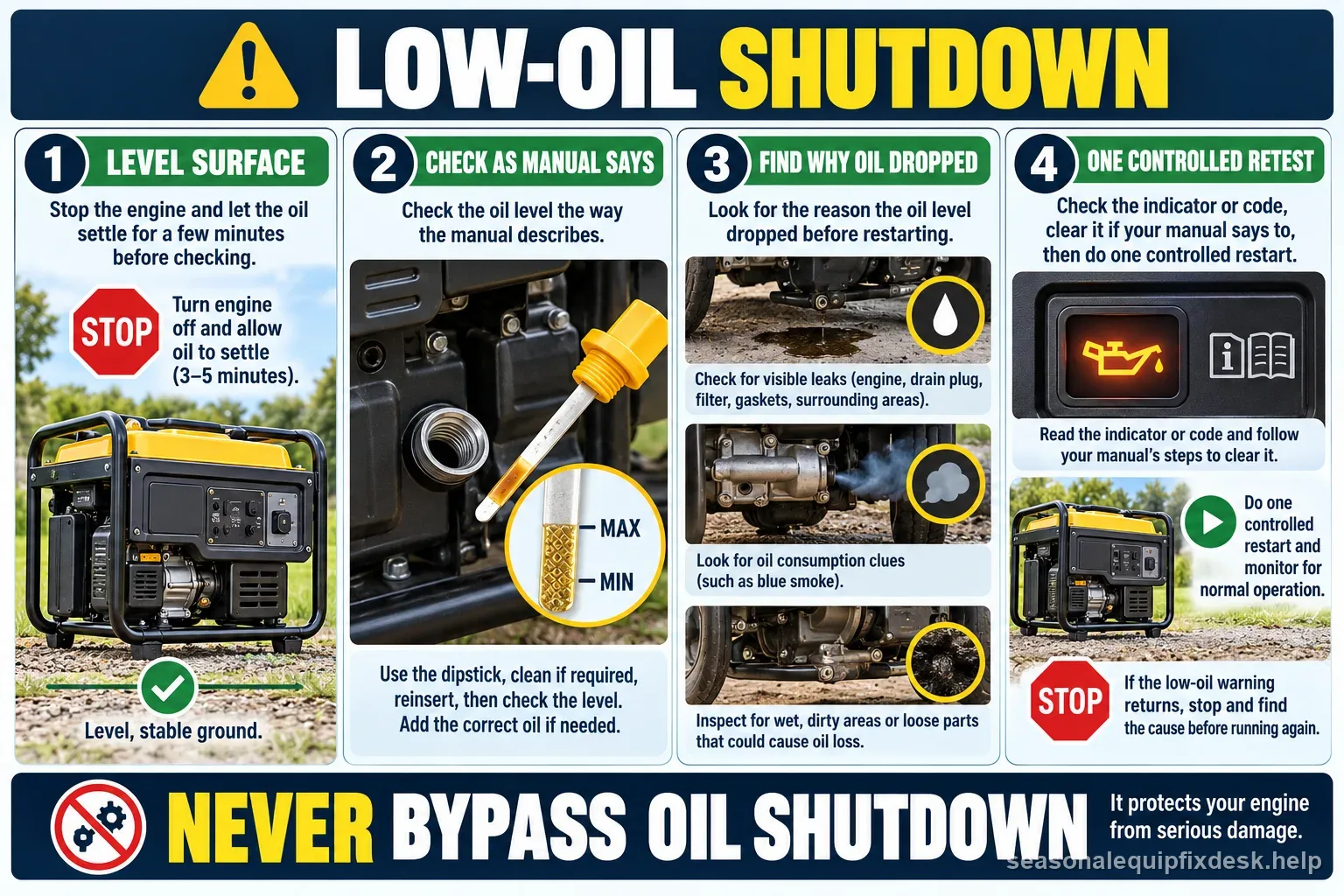
Quick answer: Treat a low-oil shutdown as a protection event until the engine proves otherwise. Put the generator on a level surface, stop it, let the oil settle, and check the level exactly as the owner’s manual describes. If the level is truly low, correct the oil quantity and look for the reason it became low. If the level is correct yet the warning returns, do not defeat the sensor; the next job is to separate slope or oil-movement effects from a sensor, wiring, pressure, or engine problem.
The warning name matters. Some portable generators use an oil-level switch, while standby equipment may report low oil pressure. Those are related but not identical systems. A generic internet jumper test can turn an engine-protection circuit into an engine-damage risk, so the safe diagnosis stays on the owner side until the model’s service procedure says otherwise.
First prove the oil level under the conditions the manual expects
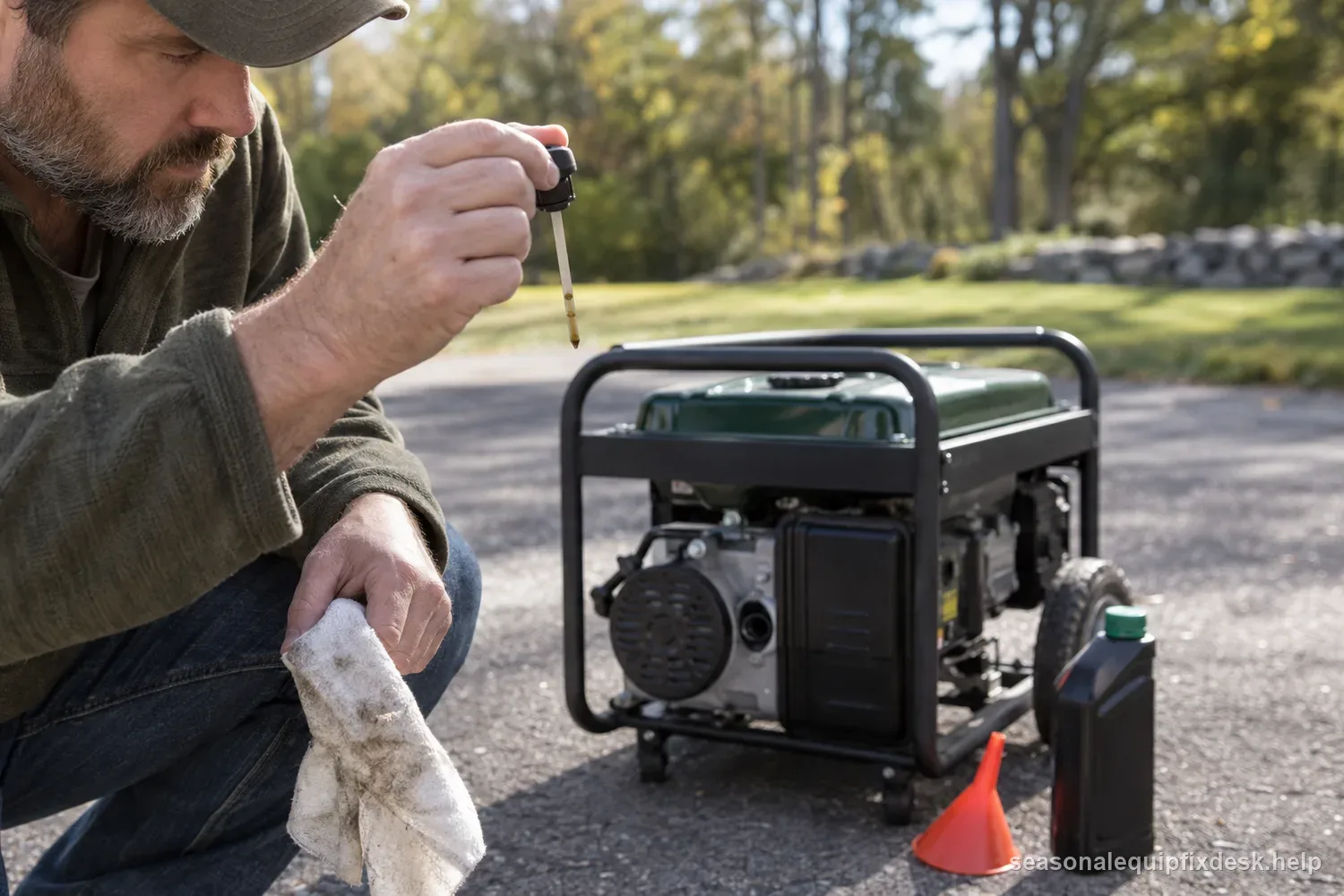
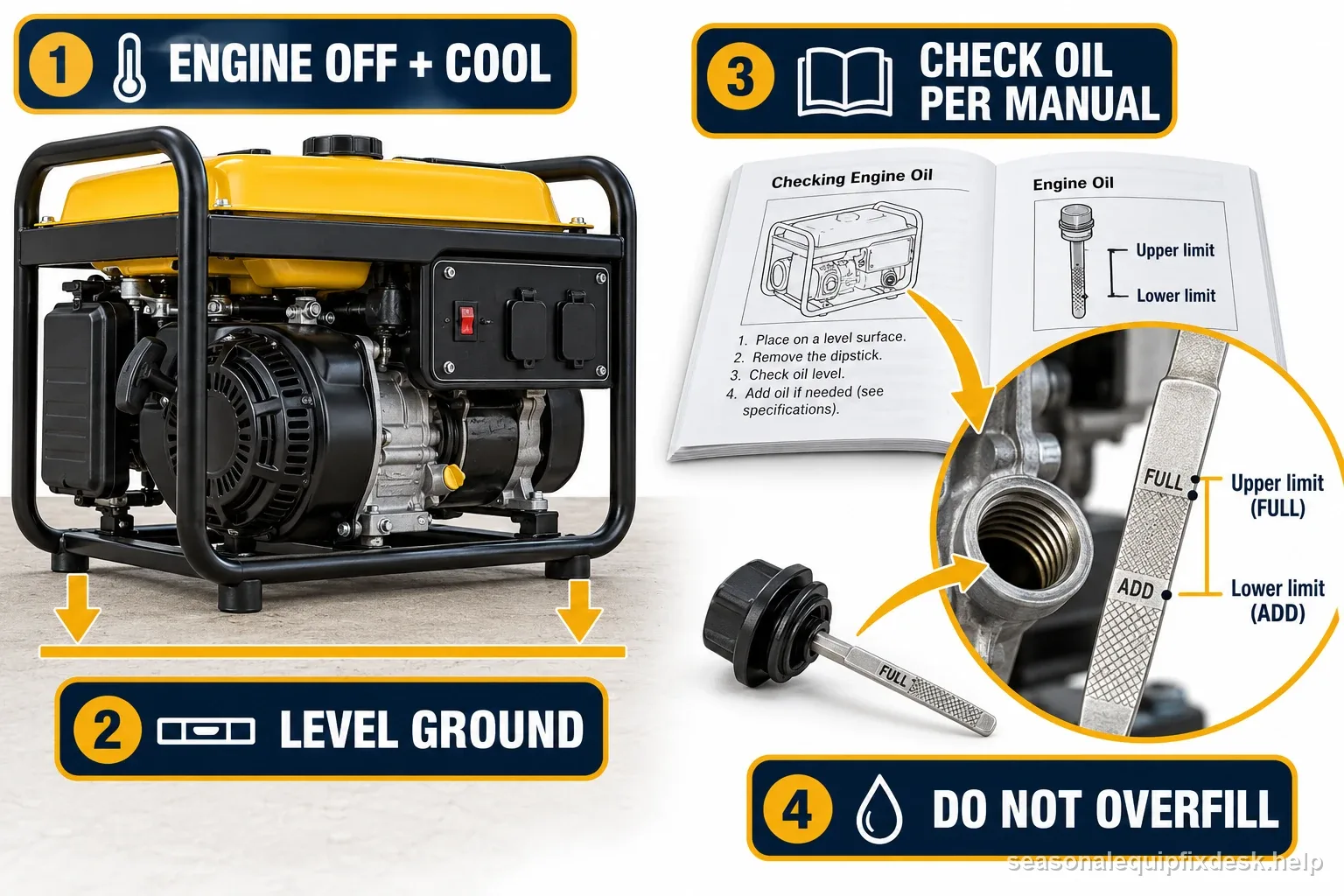
Move the machine to firm, level ground and shut it down. Wait long enough for splash oil to drain back into the crankcase, then use the dipstick or filler-neck method specified for that engine. Do not assume that oil visible on a tilted dipstick means the quantity is correct. Honda documents that its Oil Alert system can stop a generator when the oil quantity is low and that operating on a slope can also make the protection activate.
If oil was recently changed, recheck the exact capacity and the model-specific checking method. Overfilling is not a fix for a sensitive shutdown and can create its own problems. Use the viscosity and service category required for the ambient temperature rather than adding a heavier oil simply because the warning appeared during hot operation.
- StopTurn the generator off, disconnect loads, and let the engine settle/cool as the manual directs.
- LevelMove it to firm, level ground and use the exact dipstick method for that model.
- SignalRecord the exact light, display, or controller code; reset only as documented.
- EscalateIf correct oil and level placement do not resolve it, arrange service; do not bypass the protection.
A low reading needs a leak-or-consumption explanation
If the crankcase is actually low, add only enough correct oil to restore the specified level, then inspect before restarting. Look around the drain plug, filler area, filter if equipped, crankcase seams, and the floor or transport tray for fresh oil. A machine that repeatedly loses oil should not be treated as “normal sensor behavior.”
Also review the last service. An underfilled oil change, a loose drain plug, a damaged sealing washer, or oil spilled during transport can all explain a sudden first shutdown. On an older engine, blue exhaust smoke, oily deposits, or a level that continues to fall between checks points toward consumption rather than an electrical sensor fault.
Shutdown timing tells you whether motion is part of the clue
Write down when the engine stops. A generator that trips immediately on a slope, while being moved, or after the frame settles differently deserves a level/tilt check before electrical diagnosis. A unit that runs normally for twenty minutes and then reports low oil despite a verified stable level has a different pattern. The event timing is more useful than repeatedly clearing the light.
Record the shutdown pattern without repeating it
Timing can help a technician, but it does not prove the cause. Note the conditions from the event that already happened; do not force another shutdown to gather more data.
| What happened | Record | Safe next step |
|---|---|---|
| Warning appeared after moving or on a slope | Location and whether the machine was level | Check on firm, level ground using the manual procedure. |
| Warning returned with correct oil | Exact light or code and time until shutdown | Stop and arrange model-specific sensor or pressure diagnosis. |
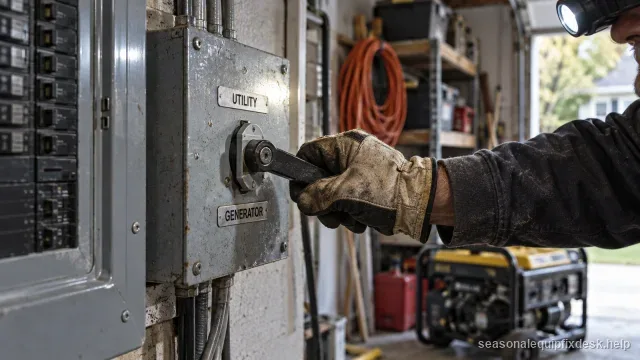
| Alarm appeared on standby exercise | Controller message and event history | Keep utility/transfer-switch work with qualified service. |
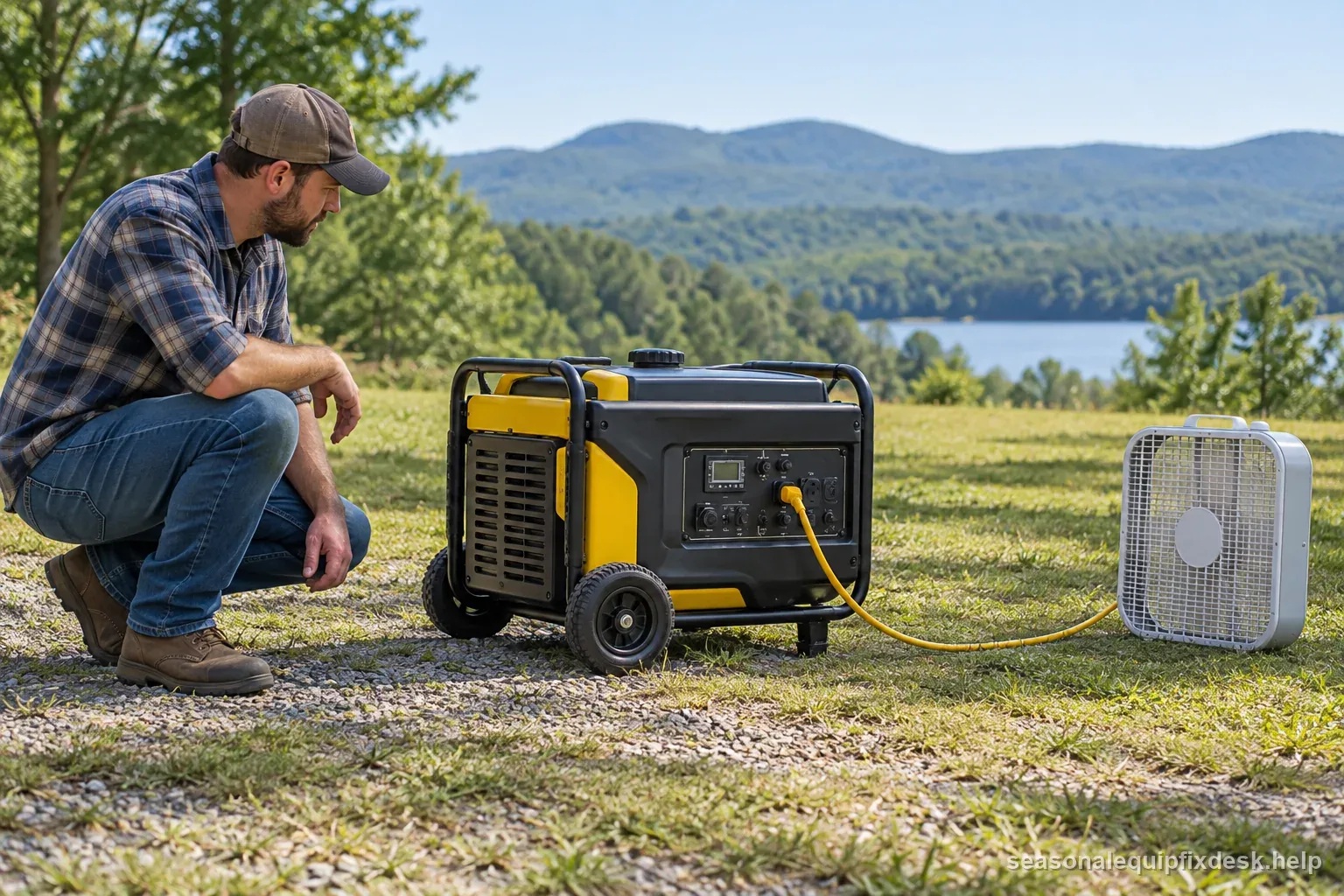
Do not perform the diagnostic while carrying electrical load if the machine can be tested unloaded. Disconnect appliances, move the portable generator outdoors to a safe operating location, and reproduce only the engine symptom first. This keeps an electrical-load stall from being mislabeled as an oil-protection shutdown.
| Evidence | Oil-level shutdown pattern | Oil-pressure alarm pattern |
|---|---|---|
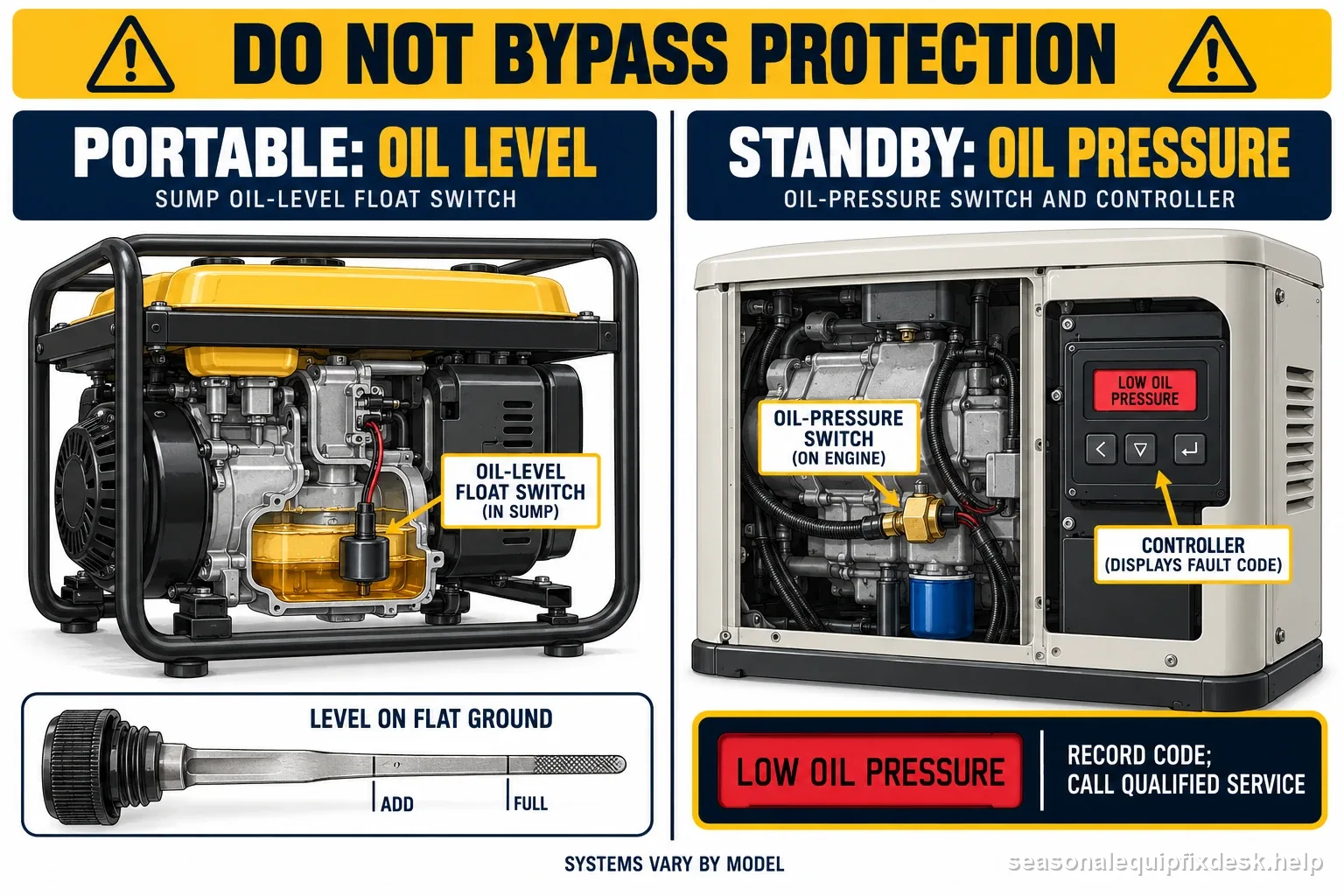
| Common equipment | Sump-level float switch on many portable engines | Oil-pressure switch and controller on some standby systems |
| Owner check | Check level on firm, level ground per engine manual | Record controller code; do not attempt live pressure checks |
| If it repeats with correct oil | Sensor, wiring, or engine condition needs service | Actual pressure, sensor circuit, or lubrication fault needs service |
Read the indicator, code, and controller message before clearing it
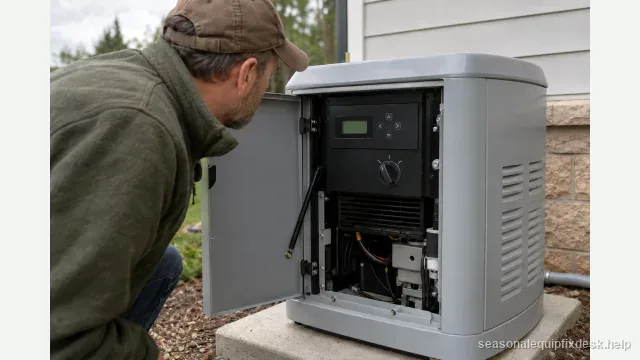
On equipment with a display, record the exact code or wording. Generac, for example, uses a LOW OIL PRESSURE alarm on home standby products and advises basic oil checks before further service. A red alarm, a blinking oil indicator, and a simple engine stall are not interchangeable evidence. Photograph the screen if the event is intermittent.
If the controller stores event history, compare the timestamps with exercise runs, utility outages, maintenance, and oil changes. A warning that appears only on automatic exercise after service may lead you toward a maintenance or sensor issue; a warning that follows a real drop in level keeps the focus on the engine and oil system.
A correct oil level does not justify bypassing the shutdown
Once correct oil quantity and level ground are proven, owner-level inspection can include accessible connectors for obvious looseness, chafing, corrosion, or oil contamination if the manual permits access. Do not bridge a switch, ground a sensor lead, or leave a protection input disconnected so the engine will keep running. The purpose of the system is to stop the engine before inadequate lubrication causes damage.
On a pressure-sensing standby generator, a persistent alarm with the oil level correct can involve the sensor, wiring, actual low oil pressure, or an internal lubrication problem. Determining which one may require pressure measurement or controller diagnostics. That is the point to use the manufacturer service procedure or an authorized technician rather than guessing at a switch.
| What you find | Action | Why |
|---|---|---|
| Oil reads low after settling on level ground | Correct the level per manual and look for the cause | A low reading can reflect leakage or consumption |
| Visible oil leak, smoke, or unusual noise | Stop and arrange service | Repeated starts can worsen damage |
| Warning returns on one controlled retest | Stop; do not keep restarting | The protection event remains unresolved |
| Standby controller shows pressure alarm | Use the standby model’s service procedure | It is not the same as a portable low-level switch |
Retest with one controlled start, then stop if the warning returns
- Verify oil level on level ground and reinstall every cap, dipstick, cover, and connector that was disturbed.
- For a portable generator, operate outdoors in its safe location with no appliances connected.
- Start it using the normal procedure and watch the oil indicator or controller during warm-up.
- If it remains stable, add a modest known-good load only after the engine is running normally.
- If the oil warning returns with the level still correct, shut down and preserve the code, timing, and level reading for service.
A successful test is not “the light stayed off after I unplugged the sensor.” It is a normal start and run with the protection circuit intact, correct oil at the specified level, no active leak, and no recurring alarm. That standard prevents a nuisance symptom from being solved by removing the safeguard that protects the engine.
When the low-oil complaint is no longer a homeowner diagnosis
Stop using the generator if the level falls again, a leak is visible, the engine knocks, oil pressure is in question, the warning persists with correct level, or the manual requires live electrical or pressure testing. For a standby unit, transfer-switch and utility-connected work add electrical hazards and should remain with qualified service personnel.
Bring the model and serial number, oil type used, actual level-check method, alarm code, whether the unit was level, and how long it ran before shutdown. Those details let a technician distinguish a true lubrication problem from a level-switch or controller fault without repeating unsafe bypass experiments.