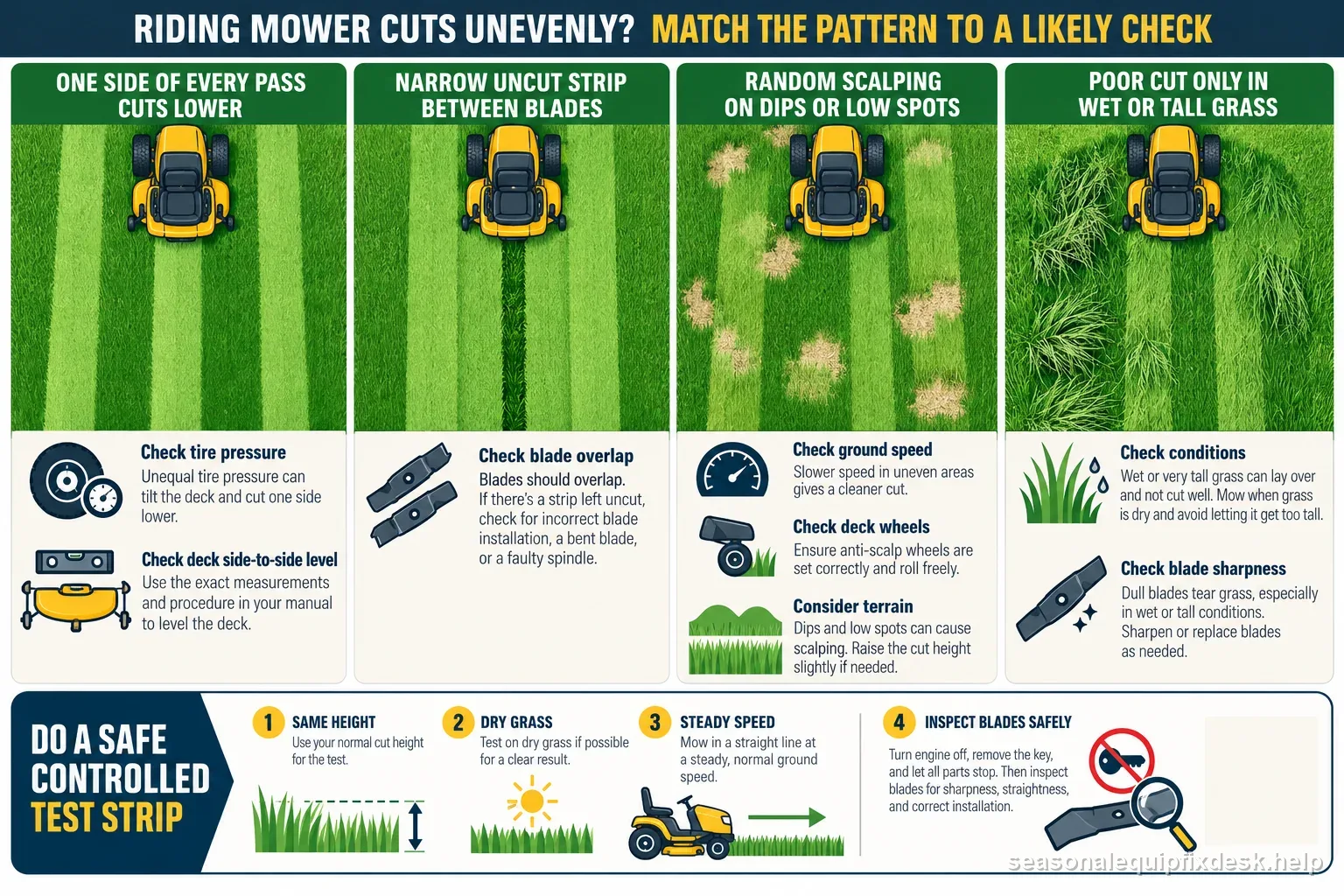
Quick answer: Do not level the deck until you know what the lawn pattern is telling you. A mower that leaves one side consistently low, a narrow uncut stripe, random scalps on bumps, and a washboard finish in wet grass are four different complaints. Start with tire pressure and blade condition, then measure the deck only if the pattern still points to geometry.
Uneven cutting accompanied by a new shake deserves a stop-and-inspect response. See the mower vibration guide for impact, blade-balance, and spindle clues.
Husqvarna’s support material puts wet grass, blade condition, tire pressure, deck leveling, and anti-scalp setup in the troubleshooting picture. The useful lesson is that “uneven cut” is not one fault; the grass itself is your test strip.
| Visible lawn pattern | First branch to inspect | Do not adjust first |
|---|---|---|
| Same side is low on flat passes | Cold tire pressures, then deck geometry | Hangers before tire pressure |
| Thin uncut strip between blade paths | Blade match, orientation, spindle spacing, speed | Global deck height |
| Scalps only on crests or dips | Cut height, terrain, anti-scalp setup | Side-to-side leveling on uneven ground |
| Clumps or ragged finish in wet/tall grass | Dryness, deck buildup, travel speed, blade sharpness | Deck linkage before mowing conditions |
Use the pattern as a clue, not a substitute for the exact operator manual. Lock the mower out before touching the deck; never reach beneath a raised deck unless it is supported exactly as the manual specifies.
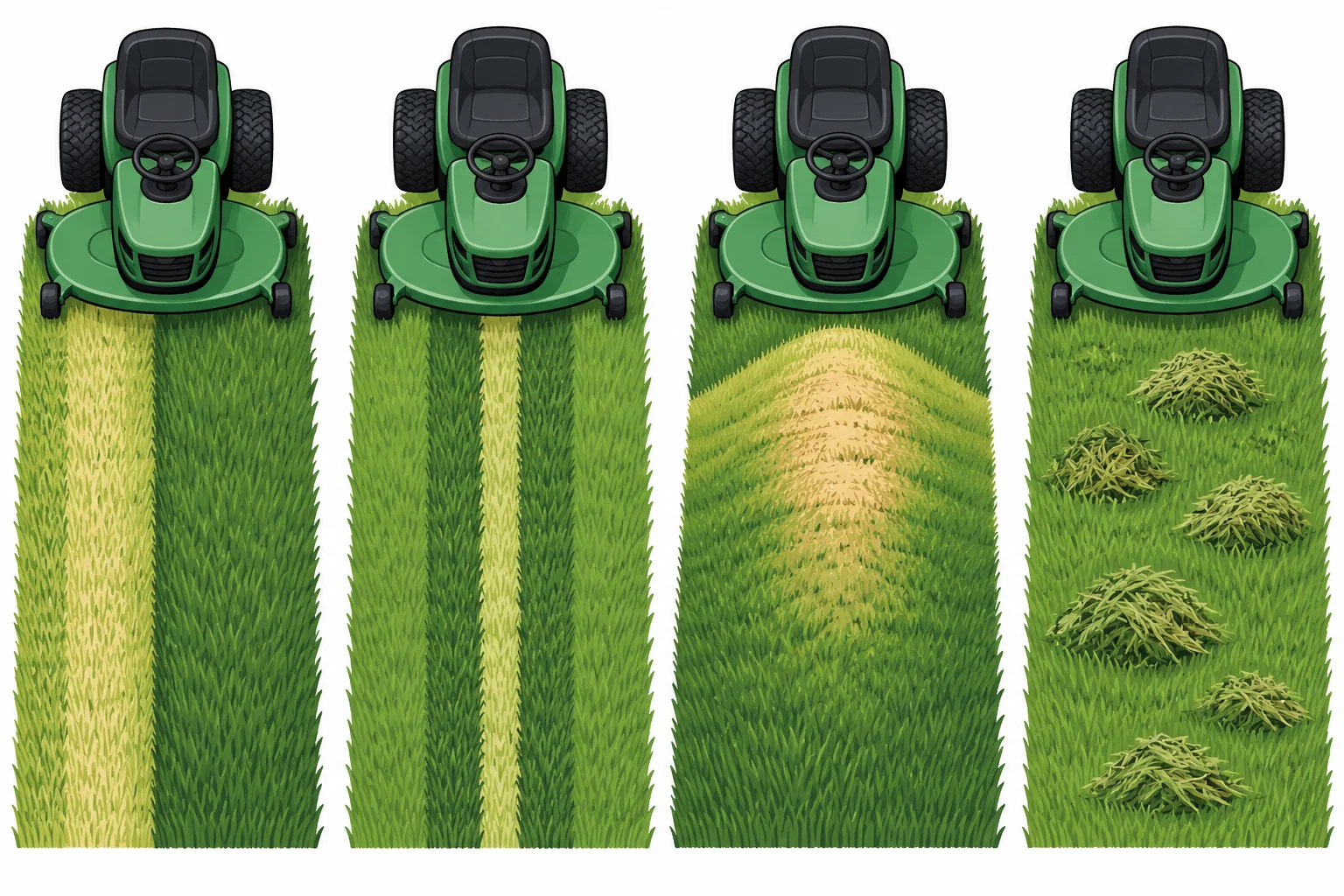
Pattern 1: one side of every pass is lower
When the same deck side cuts lower on flat ground in both travel directions, check the chassis before adjusting hangers. Unequal tire pressure can tilt the entire mower. Measure cold tire pressure and set it to the value specified on the tire or in the model documentation. A few PSI of side-to-side difference can change deck height enough to show in the lawn.
Then inspect whether one deck hanger, lift link, gauge wheel bracket, or deck shell is visibly bent or loose. Only after the mower sits correctly on equal tires should side-to-side deck measurement mean anything.
Pattern 2: a narrow strip of grass survives between blades
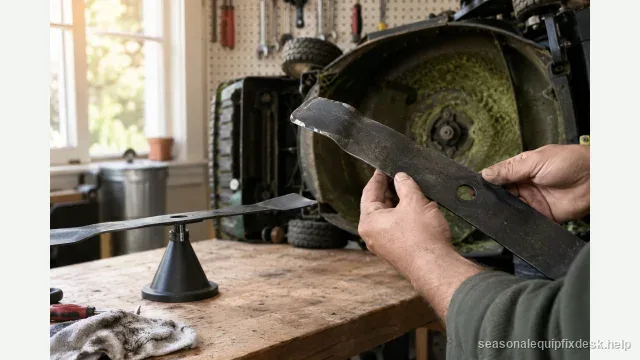
A consistent uncut strip is more suggestive of blade reach, blade damage, wrong blade installation, spindle position, or excessive speed than general deck level. Shut the mower down, remove the key, isolate ignition, and inspect blade part numbers, orientation, tips, and cutting edges. Bent or mismatched blades can change overlap even when the deck shell measures level.
If blades were recently sharpened, confirm they are balanced and reinstalled with the correct side facing the deck. A blade that is upside down can move air poorly and cut badly without looking dramatically different from above.
Pattern 3: random scalping on hills and dips
Random scalps that move around the yard are often terrain interaction rather than a deck that is globally too low on one side. Husqvarna advises checking tire pressure and anti-scalp wheel position, and notes that rough terrain, very low cut height, and excessive ground speed contribute to scalping. Slow down and raise the deck one setting before touching level adjustments.
Anti-scalp wheels are not intended to carry the mower deck continuously like caster wheels. Set them according to the operator manual for the selected cutting height. A wheel that is too high cannot protect the deck over a crest; one set too low can ride the ground and distort the intended deck position.
| Pattern on the lawn | First branch | Useful retest |
|---|---|---|
| Same deck side cuts lower in both directions | Tire, chassis, or deck geometry | Check specified tire pressure and level procedure |
| Narrow stripe survives between blades | Blade overlap, damage, or spindle | Inspect only with ignition isolated and blade stopped |
| Scalping appears over low spots | Terrain and deck-wheel setup | Repeat on similar ground before changing height |
| Poor cut only in wet or tall grass | Conditions, sharpness, or ground speed | Retest on dry grass at a steady pace |
Pattern 4: the lawn looks worse only when wet or overgrown
Wet grass clumps under the deck, changes airflow, bends instead of standing upright, and can discharge unevenly. Tall grass also asks each blade to remove too much material in one pass. Before mechanical adjustment, let the lawn dry if possible, raise the deck, reduce travel speed, and make a second pass at the final height rather than trying to remove the entire growth at once.
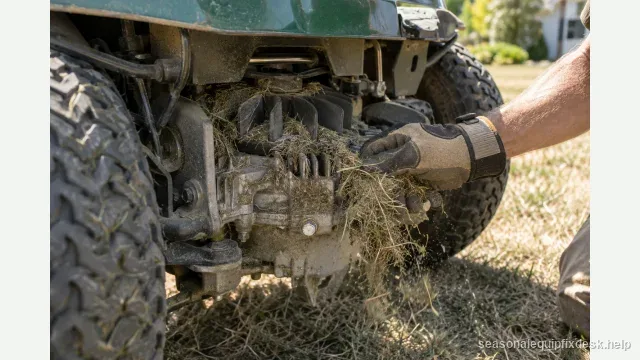
Packed material under the deck can create an airflow imbalance that looks like a blade or level fault. Clean only with the machine disabled and follow the manual for safe deck access. Do not reach under a deck because the engine is “off”; ignition must be isolated and stored rotational energy must be gone.
When deck leveling is actually the right next move
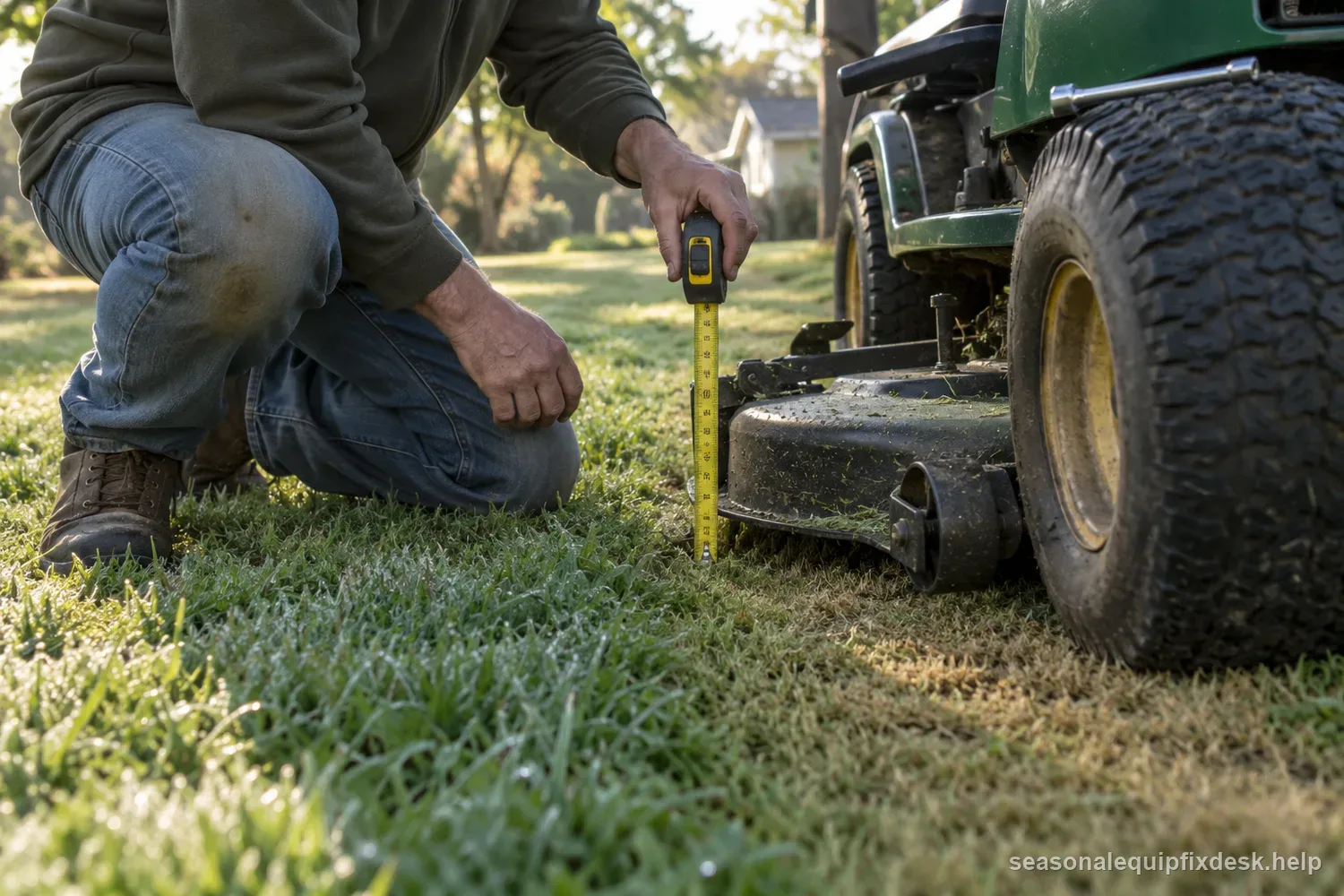
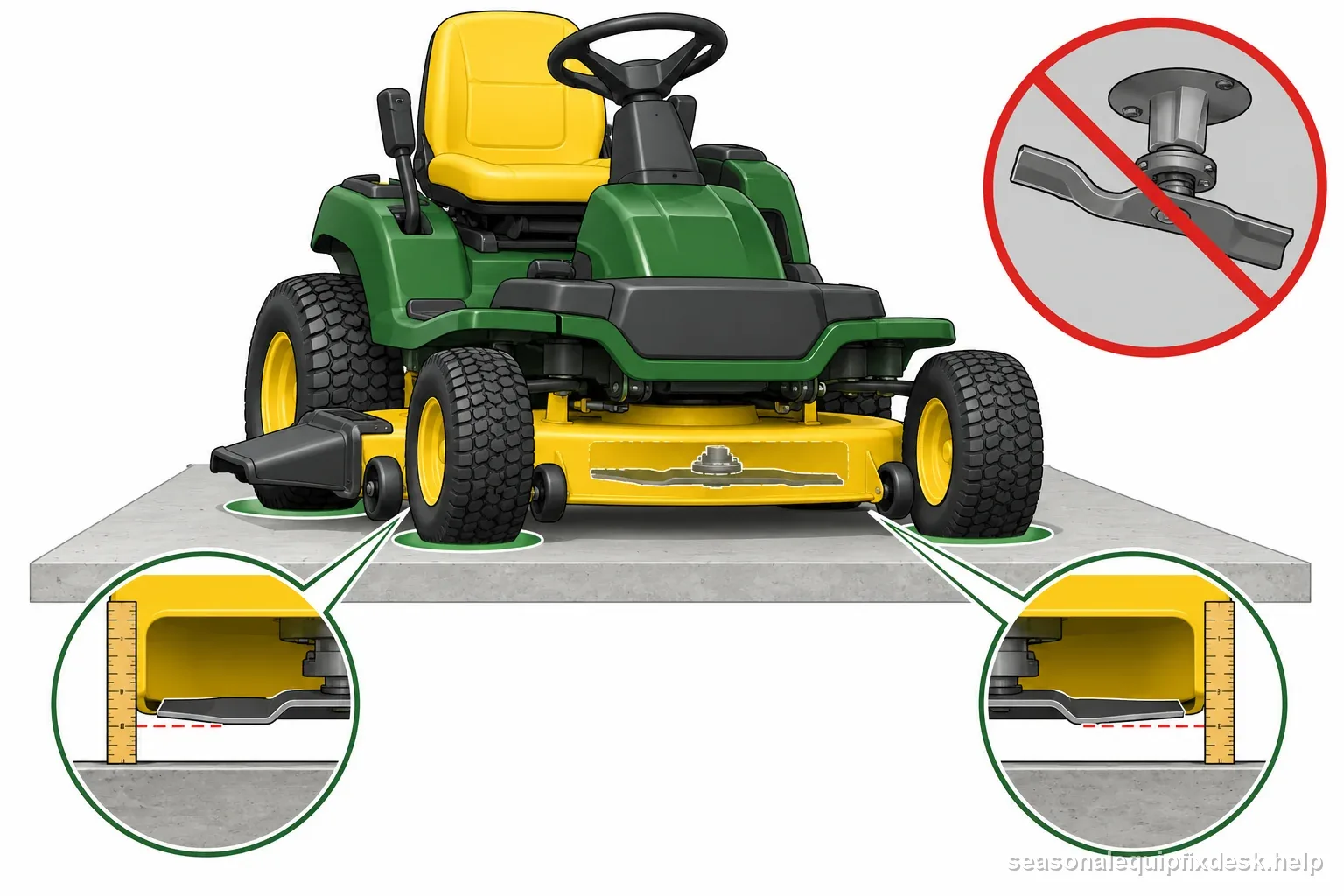
Choose a truly flat surface, set tire pressures first, orient blades as the manual instructs for measurement, and measure blade-tip height—not a random point on the deck shell. Side-to-side and front-to-rear specifications differ by model. Some decks are designed with a specific front pitch rather than perfectly level front-to-back.
Husqvarna provides separate side-to-side and front-to-back leveling procedures. Use the exact sequence because adjusting one linkage can influence another dimension. Record the measurements before turning nuts so you can tell whether the change actually moved the deck in the intended direction.
Spindle play and bent hardware show up under load
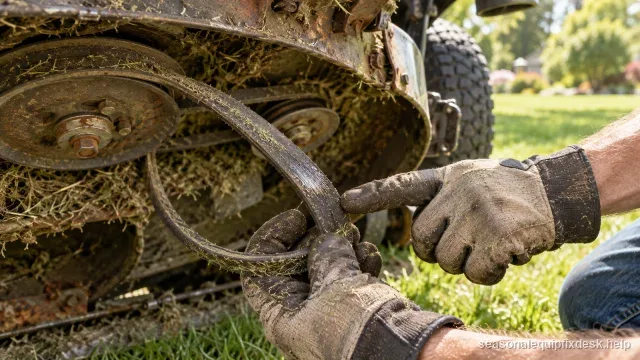
With the blade safely immobilized and ignition isolated, check for abnormal spindle play, a loose blade fastener, cracked mounting area, or obvious shaft damage after a strike. A spindle that lets a blade tip change height as it rotates can produce a repeating ridge or scallop that no deck-level adjustment will cure.
If the mower hit a stump, rock, or buried object immediately before the cut changed, prioritize blade and spindle inspection. Do not compensate for impact damage by lowering the opposite side of the deck.
Use a controlled lawn strip to prove the fix
- Choose a dry, reasonably flat section of turf and mark the original problem direction.
- Mow one pass at moderate speed with the deck at a normal height.
- Turn around and mow an adjacent pass in the opposite direction.
- Compare whether the low side follows the machine, stays with the terrain, or disappears at lower speed.
- Only change one setup item before repeating the strip: tire pressure, blade correction, deck level, or mowing condition.
- Surface and grass condition
- Cut height and travel speed
- Tire pressure before measurement
- One adjustment or correction made
- Pattern on the next test strip
- Any bent or loose component needing service
A quick interpretation guide
- Same mower side always low: tire/chassis/deck geometry.
- Thin center stripe: blade reach, damage, installation, spindle, or speed.
- Scalps only on crests: cut height, anti-scalp setup, speed, terrain.
- Clumps and ragged finish only wet: airflow and mowing condition first.
- Pattern began after an impact: blade/spindle inspection before adjustment.
The best correction is the one that removes the exact pattern without creating a new one. If accurate tire pressure, known-good blades, and model-specific leveling still leave a repeating ridge, the deck shell, spindle mounting, or lift structure may need a dealer inspection.