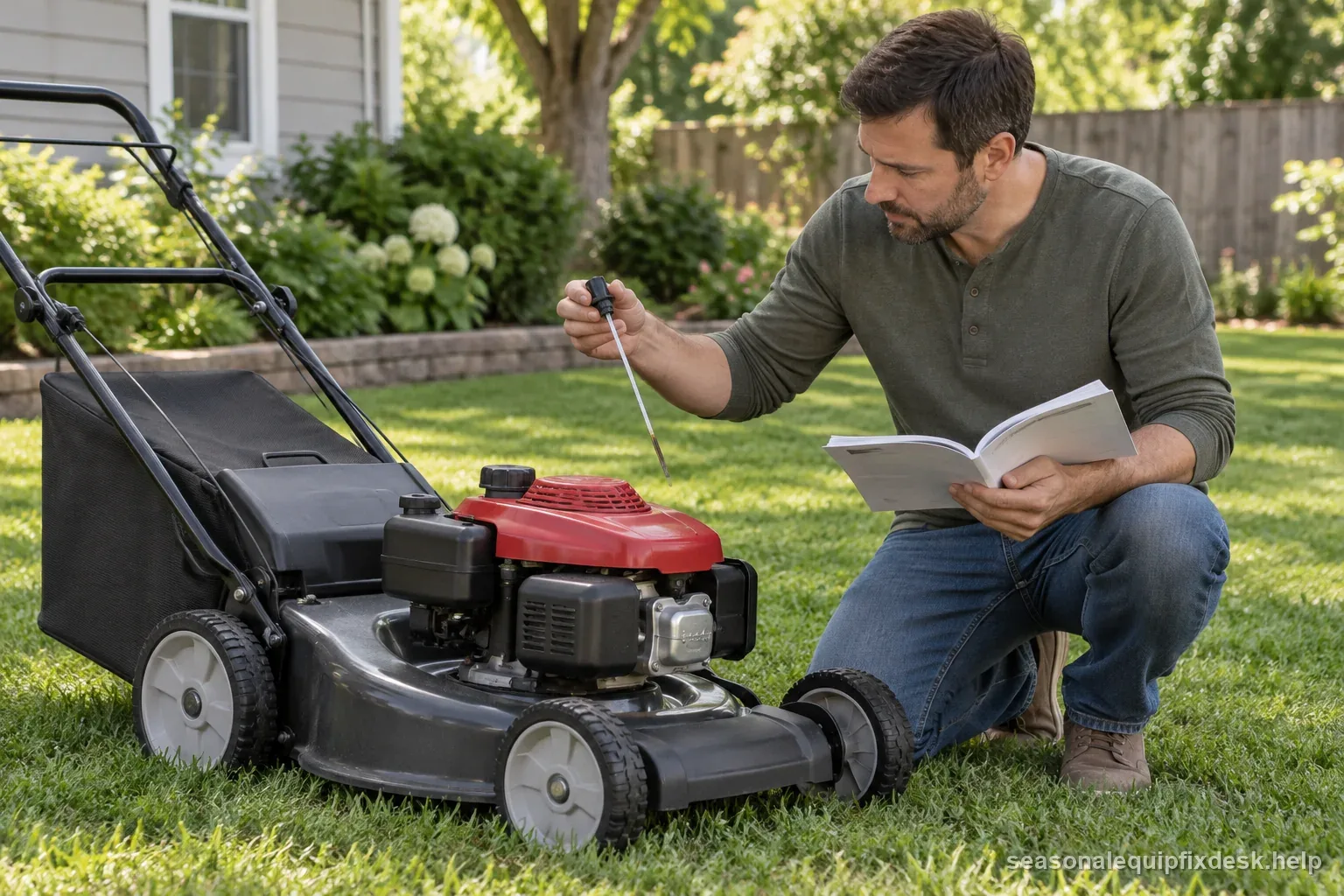
Quick answer: White or blue exhaust from a small air-cooled mower engine often means oil is getting where it burns. Recent side-tilting, operation on a steep slope, an overfilled crankcase, or an incorrect oil grade can contribute, but smoke alone cannot identify a failed part. Switch off, let the mower cool outdoors, set it level, and check the oil exactly as the engine manual specifies. Do not mow through heavy smoke or open the engine to inspect rings, valves, or the breather.
Color is only a clue. A small puff after a mower was tipped to clear clippings may fade as displaced oil burns away, while continuous smoke can signal overfill or an internal issue. Briggs & Stratton lists overfilled oil, incorrect oil grade, operating at an angle, a restricted breather, crankcase air leaks, worn cylinder parts, and tilting as possible causes. The right first check depends on engine model and the event just before the smoke.
Stop first and make the mower safe
Disengage the blade, stop the engine, and move away from the hot exhaust. Let it cool in an open outdoor area. Never operate a gasoline mower in a garage, shed, or enclosed place; exhaust contains carbon monoxide. Keep children and pets away. If fuel is leaking onto a hot surface, there are flames, or you smell strong fuel, do not restart or handle it—move away and seek appropriate help.
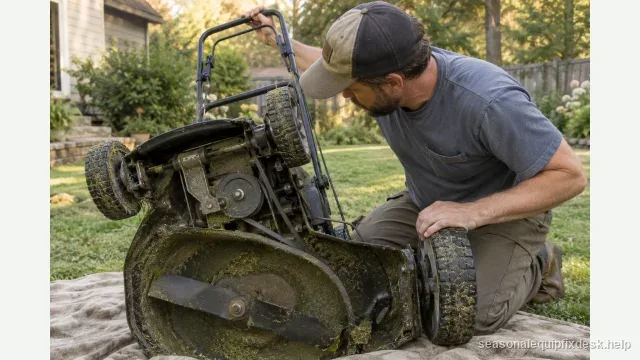
Do not tip the mower again to reproduce the smoke. Tilting can move oil into the air cleaner, carburetor, cylinder, or exhaust depending on design and orientation. Briggs & Stratton says that when its engines need to be tilted, the spark-plug side should face upward or muffler side downward. That direction is not universal across all makes. Follow the exact mower and engine manuals, and never assume a generic diagram applies.
Record the timeline and engine model
Write down whether smoking began after tipping, adding oil, operating on a slope, or routine mowing. Note whether it is a short puff or a steady plume at idle and under load, whether power drops, and whether oil is visible around the filter housing or muffler. Record the engine model number from its label because the mower brand alone may not identify the oil capacity or service procedure.
Also note how long the mower was on an incline. Briggs & Stratton identifies operation above 15 degrees as a possible contributor for applicable engines. This is not a slope rating for every mower. Use the operator manual for terrain limits; never test a hill to discover the machine’s angle threshold. If the ground is steep enough that footing or mower control feels uncertain, stop mowing.
Check oil on level ground
With the engine cool and off, place the mower on flat ground. Follow the dipstick procedure in the engine manual: some designs require threading the dipstick in; others require resting it on the opening. Wipe, insert as directed, remove, and compare the level with the marked range. Check grade and capacity for the exact engine. Do not overfill to “make sure”; excess oil can be carried into the intake or combustion chamber.
If the level is above full, do not run the engine to burn off the excess. Remove oil only with a method the owner manual explicitly permits, using a catch container and preventing spills. If no owner method is given, have a shop correct it. If the level is low, look for visible leakage and add only the specified oil. A rapidly falling level or fresh leak is a stop condition because insufficient lubrication can damage the engine.
Inspect only accessible air-filter clues
After cooling and isolating the spark-plug lead if the manual requires that for service, look for oil on the outside of the air-filter housing or a wet filter visible through an owner-access cover. Do not start the engine with its filter or cover removed. A paper element soaked with oil may need replacement; a foam element has a model-specific cleaning and oiling method. Never squeeze oil into a filter unless the manual says to. If inspection requires removing a guard or fuel component, stop and request service.
Look externally for a fresh oil leak, damaged cover, or visibly kinked breather hose, but do not disconnect hoses or blow compressed air into them. A breather fault can cause smoke, but internal crankcase pressure and valve parts are not guess-and-check repairs. Use a listed owner check when available; otherwise preserve the clue and leave the assembly closed.
| Pattern or history | Possible cause | Owner-level response |
|---|---|---|
| Brief puff after tipping | Oil may have migrated into intake or exhaust | Return upright, check oil/filter by manual, monitor only if manual permits |
| Started after an oil refill | Overfill or wrong grade | Check level and specified oil; do not run above the full mark |
| Continues with correct level | Breather, seal, cylinder, or other engine fault | Stop and arrange small-engine service |
| Smoke with leak, knock, or power loss | Potential lubrication or internal damage | Shut down; do not restart for another test |
| Black smoke or raw-fuel odor | May indicate rich fuel rather than oil burning | Do not apply oil-smoke advice; follow model manual or service |
Retest only after a safe correction
- Confirm the mower is outdoors, cool, level, and has no fuel spill.
- Check dipstick method, oil type, and filter installation using the exact manual.
- Reinstall every cover and reconnect any owner-isolated lead only after the machine is assembled.
- Start by the normal operator procedure in a clear area, with discharge pointed away from people.
- Stop immediately if smoke persists, grows heavier, returns under load, or appears with a leak, knock, or lost power.
Do not use a universal “run it for five minutes” rule. Engine design and the amount of oil displaced differ. Follow a restart interval only if the exact manual provides one. If smoke is heavy or continuous, or the manual is silent about restarting after the event, call a qualified small-engine technician rather than running the engine to see what happens.
Two examples where the timeline matters
Example 1: a brief puff after cleaning. A mower was tipped to remove grass and produced a small white-blue puff at the next start. The owner shuts it down, lets it cool, checks the tilt direction in the manual, and confirms the oil level is within range with no leak. The manual allows normal operation after returning upright. If the smoke fades promptly and does not return, the tip may explain it; the owner still records the event and stops if it recurs.
Example 2: continuous smoke after an oil change. The mower smokes each time after a refill and the dipstick shows above full. The owner does not mow to “burn it off”; they check the specified capacity and grade and arrange an approved correction. If smoke remains afterward, the next step is service for a possible breather or internal fault, not carburetor adjustments.
After an oil correction, recheck the level using the exact dipstick position and reading method; a mower parked on a slope can give a misleading reading. Wipe the exterior only after the engine is cool and do not let oil reach the muffler. If a paper filter was soaked, replace it with the listed element rather than washing it. These small details help prevent a repeat smoke event from a simple overfill while keeping the internal engine closed.
When a technician should take over
Arrange service for persistent smoke, oil returning to the filter housing, a damaged breather tube, repeated smoke after every tip, a sudden oil-level drop, leakage, knocking, or power loss. Cylinder, ring, valve, crankcase, and breather diagnosis may need model-specific tools. Do not remove the muffler, carburetor, head, or engine cover to look for the source.
Give the technician the engine model, oil grade and amount added, dipstick reading, slope or tipping history, filter condition, and whether smoke faded or continued. Briggs & Stratton directs owners to the exact engine manual and an authorized dealer if uncertain. A clear timeline helps avoid replacing a filter for an internal fault—or dismantling a healthy engine after a one-time tilt-related puff.
Compare the oil with the engine maker’s recommendation, not simply the mower’s age or the oil left on a shelf. Briggs & Stratton says the grade depends on engine and temperature; another brand may specify a different grade or service interval. Do not mix oils or add treatment to suppress smoke. If you are unsure what is in the crankcase, record the container label and ask a dealer how to correct it. A small amount of oil spilled onto a hot muffler can also smoke after service, but a fresh leak still needs attention. Never wipe a hot engine or restart it to see if a spill burns away.
Check the mower operator manual as well as the engine manual. The mower manual covers blade controls, safe slopes, and how the machine may be positioned for maintenance; the engine manual covers oil grade and dipstick method. These are separate instructions. If they conflict or do not cover the task, stop and contact the maker. Photographing the model labels and noting when smoke starts gives a service provider more useful information than describing it only as “white smoke.”