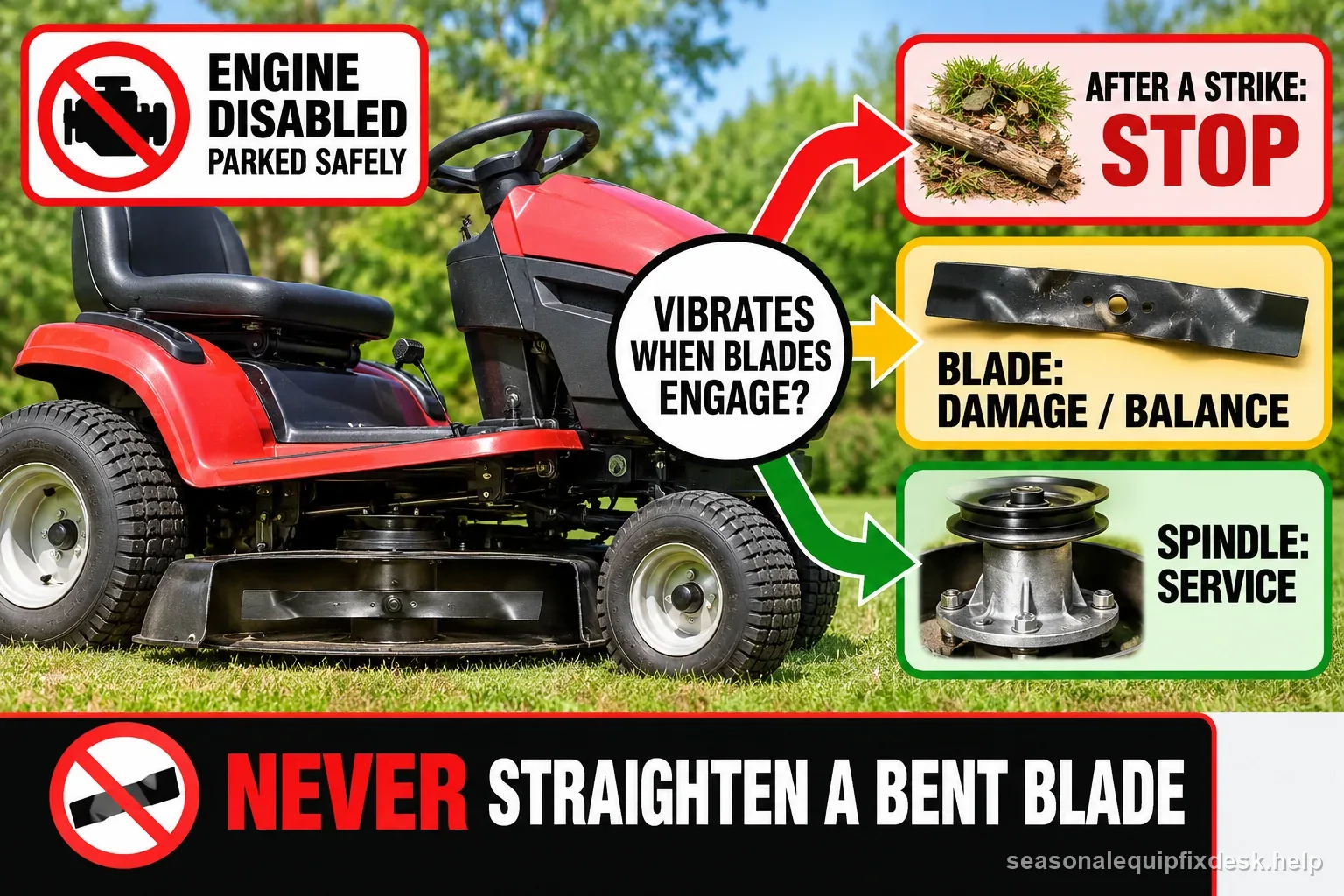
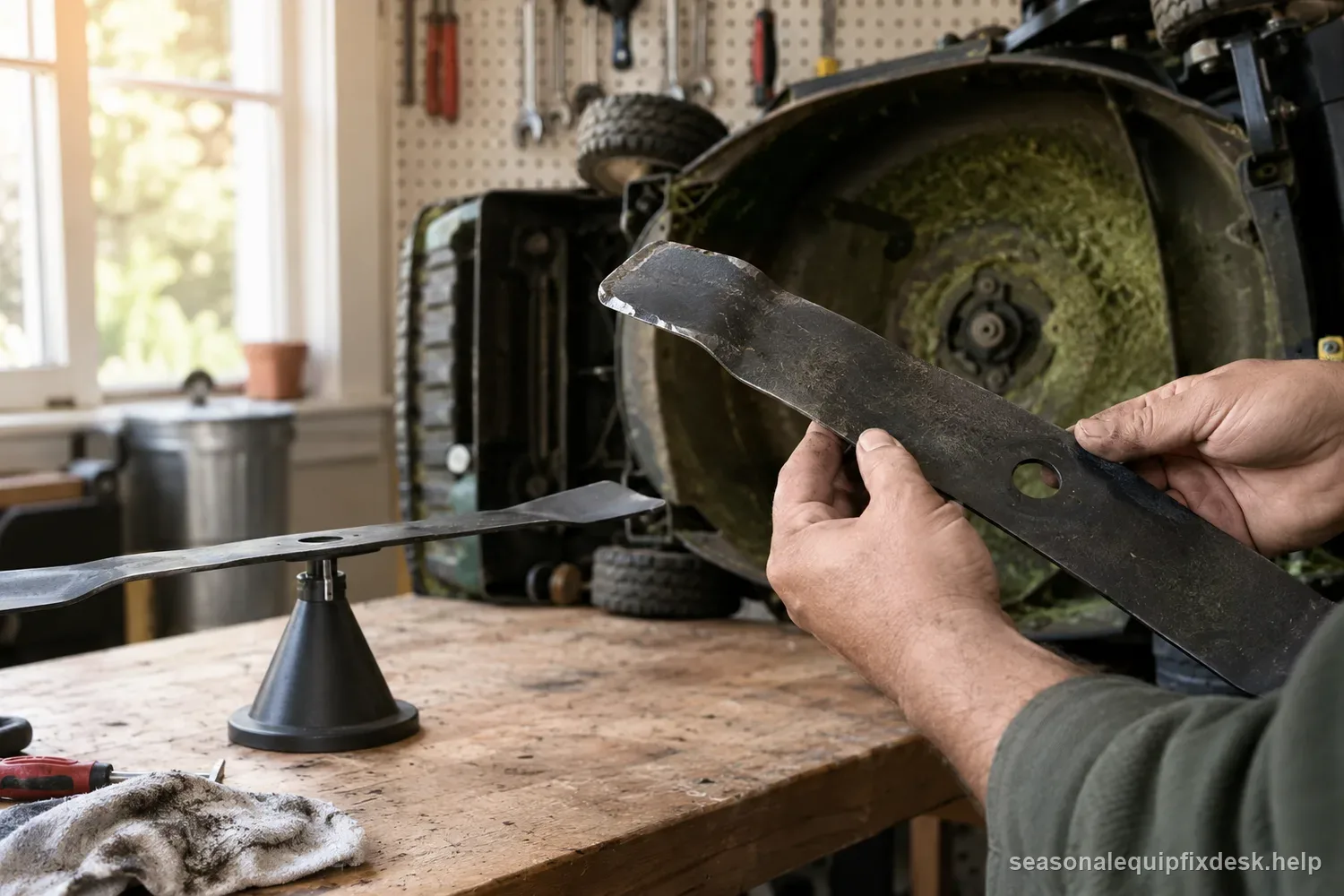
Quick answer: If the mower is smooth with the blades off and begins shaking the moment the blades engage, the timing is the diagnosis. Focus on the rotating deck system—blade damage or imbalance, loose blade hardware, spindle trouble, packed debris, belt/pulley damage, or PTO engagement—not on engine tune-up parts that are present in both conditions.
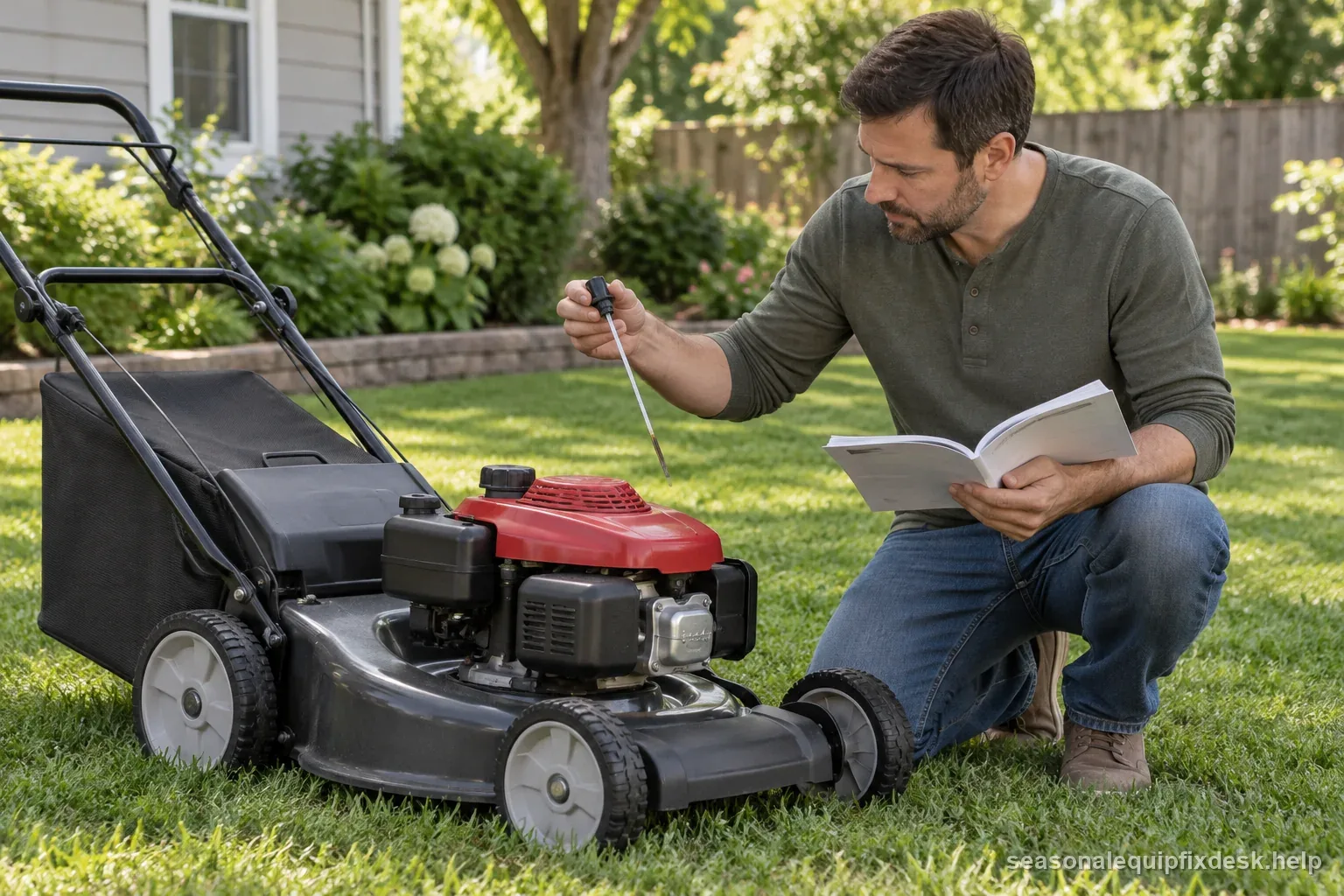
If your push mower will not start, start with the control bar and an open outdoor setup before checking fuel or the air filter. The push mower won’t start guide separates a hard-to-pull rope from an engine that cranks but never fires.
Stop using the mower if the vibration is severe. Husqvarna’s current support ties excessive vibration to damaged or incorrectly installed blade assemblies and also advises cleaning the underside of riding-mower decks. A bent blade or loose rotating part can become a projectile hazard if you keep “testing” it at full speed.
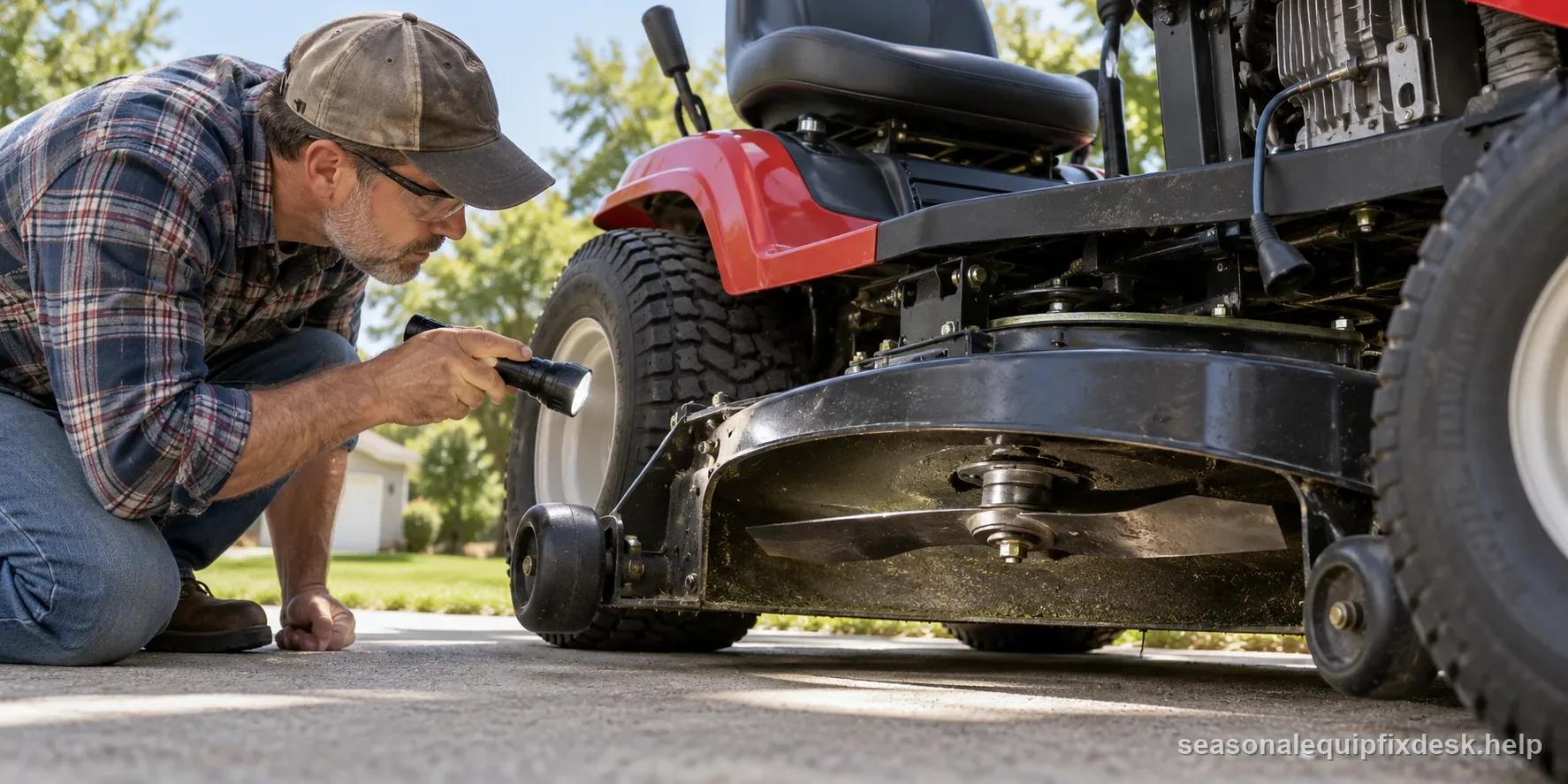
The engagement boundary is your most valuable clue
Run the engine only long enough in a clear outdoor area to confirm the symptom boundary. If it idles and drives smoothly with the PTO/blades off, then vibration appears immediately at engagement and disappears when disengaged, you have localized the complaint. If the engine itself shakes even with blades off, stop using this article as the only diagnosis because the fault may be engine- or chassis-related.
| Clue | Most likely path | Next safe check |
|---|---|---|
| Shakes as soon as blades engage | Blade, adapter, spindle, belt or PTO load | Shut down and inspect blade condition and deck hardware |
| Started after striking an object | Bent blade, spindle shaft or deck damage | Do not restart; arrange blade/spindle inspection |
| Started after sharpening or replacement | Imbalance, wrong blade, orientation or clamping | Verify part and installation against the model manual |
| Only under tall or wet grass | Excessive cutting load may expose another fault | Stop if severe; reduce load only after the deck passes inspection |
| Vibrates with blades disengaged too | Engine, mount, chassis or drivetrain fault may be involved | Use a separate engine/chassis diagnosis |
After any blade strike, assume damage until inspected
A rock, root, curb, wire, or hidden stump can bend a blade or damage a spindle without making the mower stop completely. Shut down, remove the key, disconnect the spark-plug lead or battery power as appropriate, and wait for all movement to stop. Support the machine according to its manual before accessing the deck.
A sudden vibration after striking a rock, root, or other object is a reason to stop the blades and engine, remove the key, and isolate the ignition or battery according to the manual before looking underneath. Do not straighten or reuse a bent blade. Husqvarna identifies damaged blades and incorrect blade balance as common vibration causes and directs replacement of damaged parts; a bent spindle or bearing fault needs service. Husqvarna’s vibration guide notes blade damage and balance as distinct checks.
Inspect for missing or mismatched blades, a bent blade tip, loose mounting hardware, and fresh impact marks only with all motion stopped. If the blade assembly looks correct but vibration appears only when the clutch engages, stop and have the spindle, pulley, and belt path checked instead of repeating the test. The deck-belt guide separates belt slip from cutting-assembly damage.
Compare blade tips, cutting edges, and lift wings. Look for cracks, missing pieces, obvious bending, and heavy nicks. Do not straighten a bent mower blade for reuse. If the model manual or manufacturer directs blade balancing or dealer replacement, follow that procedure.
Blade balance matters even when the blade looks straight
Sharpening removes metal. If substantially more material comes off one end, the blade can be visually straight yet dynamically unbalanced at mowing speed. Husqvarna notes that blades need balancing after sharpening. Also check that replacement blades are the correct part and installed in the correct orientation; a mismatched pair on a multi-blade deck can create a new vibration after an otherwise routine service.
Do not use washers, improvised weights, or random grinding to “balance” a blade on the mower. The safer path is proper blade service or replacement.
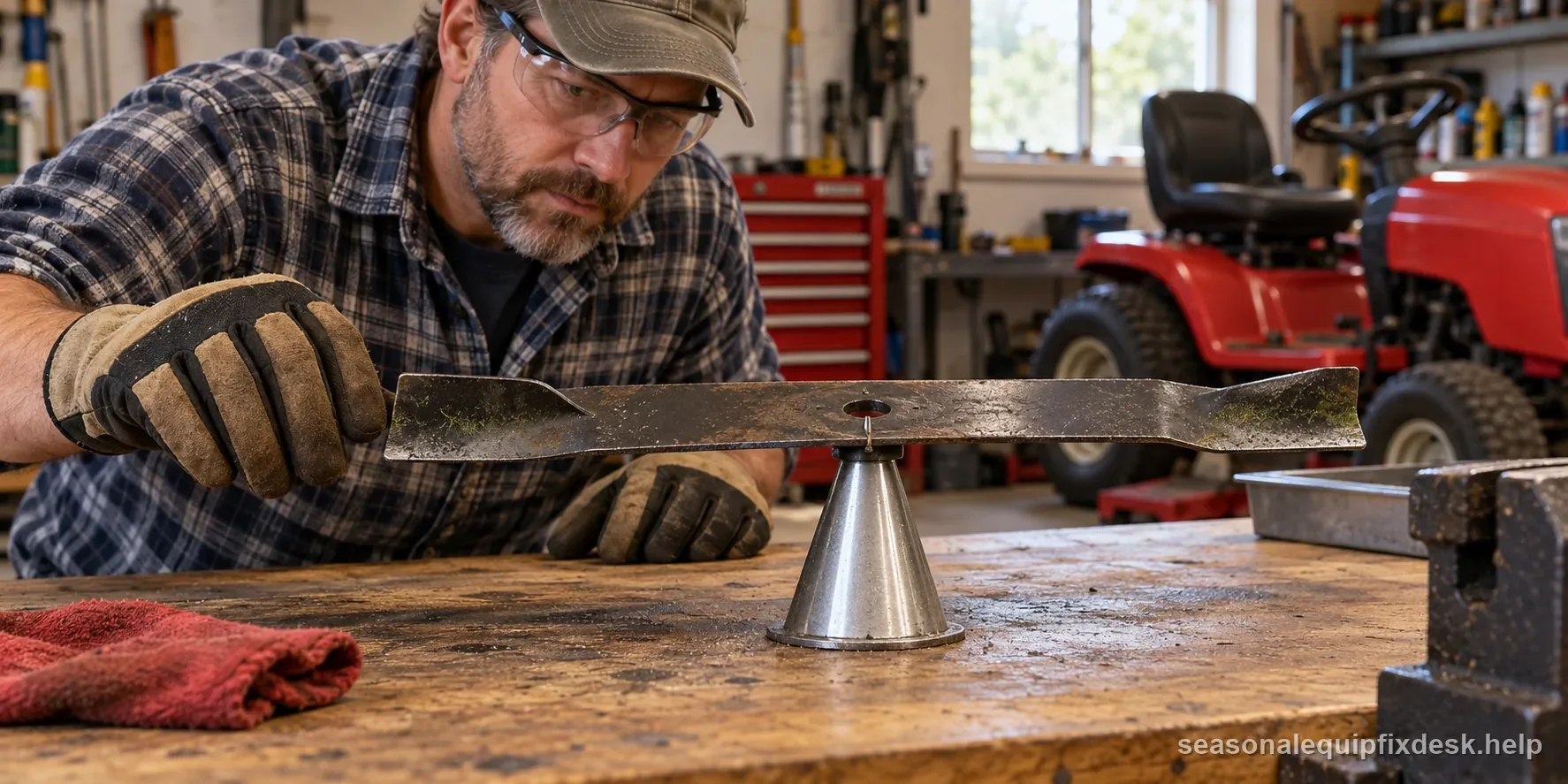
Loose hardware leaves witness marks
Inspect blade fasteners, spindle mounting bolts, pulley fasteners, deck hangers, belt guards, and any accessible PTO hardware with the machine disabled. A loose component often leaves shiny fretting marks, red/brown dust, elongated holes, or a repeated clunk as direction changes. Tighten only to the torque and method specified for the model.
If a blade bolt repeatedly loosens, do not simply apply stronger threadlocker. Wrong hardware, damaged threads, incorrect washer orientation, or a deformed mounting surface may be preventing proper clamping.
Packed grass can create a lopsided rotating load
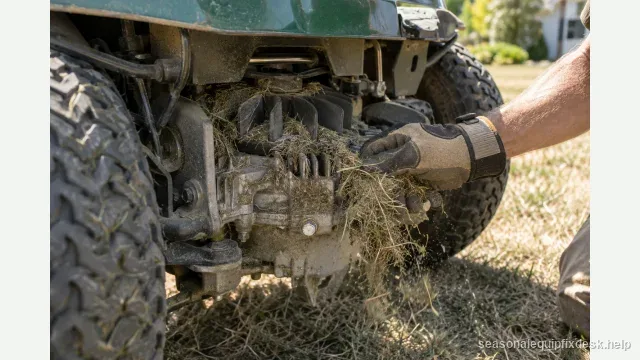
Wet grass and debris can pack heavily under one side of the deck or around a spindle pocket. On some riding mowers, manufacturer troubleshooting specifically begins with cleaning the deck underside. Remove buildup with ignition isolated and the deck safely supported; never reach into a deck that could move or rotate.
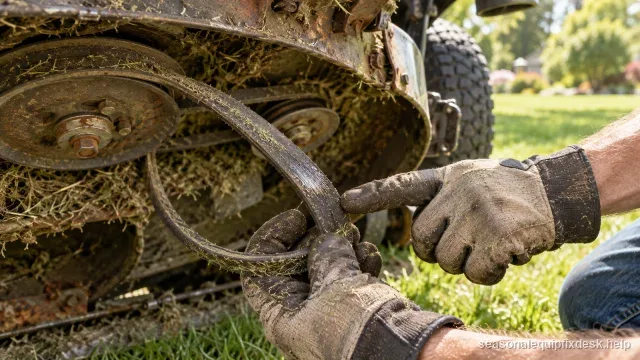
After cleaning, inspect the belt before reassembly. Grass packed into a pulley groove can displace a belt, while a belt with chunks missing, burned edges, or an exposed cord can pulse as it travels around the deck.
Spindle diagnosis: feel and sound with the belt unloaded
Where the model procedure allows belt removal, rotate each spindle by hand with blades safely handled and ignition isolated. Compare resistance, roughness, noise, and side play. One spindle that feels gritty, catches at one point, or visibly rocks while the others are smooth is meaningful evidence. A bearing can vibrate badly under blade load before it becomes obviously seized.
Do not confuse normal pulley movement allowed by a tensioner with bearing play in the spindle shaft itself. Compare like components and use the service manual if the distinction is unclear.
PTO and belt problems have a different rhythm
On riding and zero-turn mowers, a damaged deck belt, eccentric pulley, failing idler bearing, or PTO clutch can transmit a cyclic shake as speed rises. Watch for a vibration that changes with engagement speed or a belt that visibly flaps after correct tension is applied. Do not observe exposed belts with guards removed while the engine is running.
If the machine uses a blade-brake clutch or cable-operated engagement rather than an electric PTO, inspect its linkage and spring condition according to the manual. A partially engaged mechanism can make the belt slip and chatter instead of reaching stable speed.
A hard blade strike, cracked or visibly bent blade, loose rotating assembly, metallic knock, or strong new shake is a stop condition. Do not remove guards or run the deck open to watch parts move.
A staged retest reduces risk
- Reinstall guards and confirm every blade and pulley fastener disturbed during inspection is secure.
- Move to a clear outdoor area and run the engine with blades off. Confirm the baseline is smooth.
- Engage the blades briefly at the procedure specified by the model. If severe vibration returns immediately, disengage rather than “letting it smooth out.”
- If engagement is smooth, mow a short light-grass strip before entering heavy growth.
- Reinspect for heat, belt dust, loosening, or a new sound after shutdown.
What not to do with a vibrating mower
- Do not keep mowing after a blade impact because “it still cuts.”
- Do not compensate for vibration by lowering engine speed below the mower’s intended blade-operating range.
- Do not weld, straighten, or add weight to a damaged blade.
- Do not bypass guards or interlocks to watch the deck run.
- Do not assume every vibration is a blade; prove the blades-off versus blades-on boundary first.
If a known-good blade set, clean deck, correct belt path, and tight accessible hardware do not remove a blades-on vibration, spindle, pulley, or PTO service is the sensible next step. Bring the detail that matters most: whether the vibration starts instantly at engagement, only under grass load, or only after the deck warms.
For the matching drive or fuel symptom, see a one-side drive fault that is separate from blade vibration.