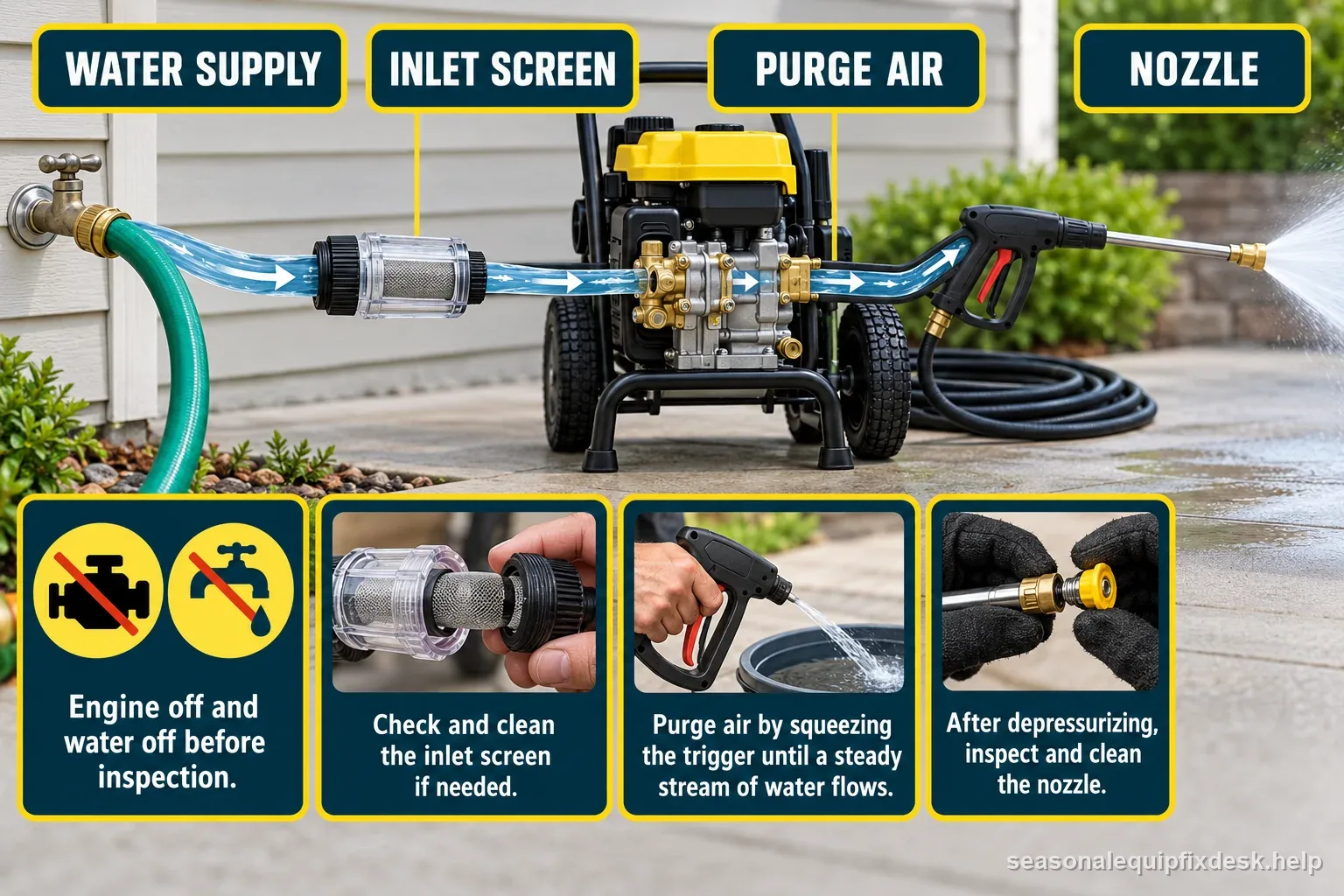
Quick answer: When a pressure washer runs but the spray has little or no force, begin on the water side. A pump cannot create useful pressure without adequate inlet flow, and a low-pressure detergent nozzle can make a healthy machine look broken. Briggs and Stratton's current troubleshooting sequence starts with engine speed, nozzle selection, inlet screen condition, leaks, nozzle obstruction, and adequate water supply before it condemns the pump.
| What you observe | Likely branch | Safe first check |
|---|---|---|
| No water from gun | Supply, kinked hose, inlet filter, trapped air | Water on and steady through the system before starting |
| Steady flow but weak force | Wrong/worn nozzle, attachment leak, pump control | Correct clean pressure nozzle and visible leak check |
| Pulses or drops as you spray | Air, unstable inlet, restriction, valve/pump issue | Use the pulsing guide; do not run dry |
Turn the machine off and release trigger pressure before removing a nozzle or cleaning a screen. Never touch a suspected high-pressure leak; even a pinhole jet can injure skin.
| Observation | Possible meaning | Next step |
|---|---|---|
| Weak flow while off | Supply, hose, or inlet restriction | Correct water supply first |
| Normal flow, weak spray | Nozzle, wand, or setting | Check nozzle by model procedure |
| Pulses after air purge | Supply variation or pump issue | Recheck inlet; then consult manual |
| Water or oil leak | Seal or connection fault | Shut down and identify fluid |
Decide whether the complaint is no flow or low pressure
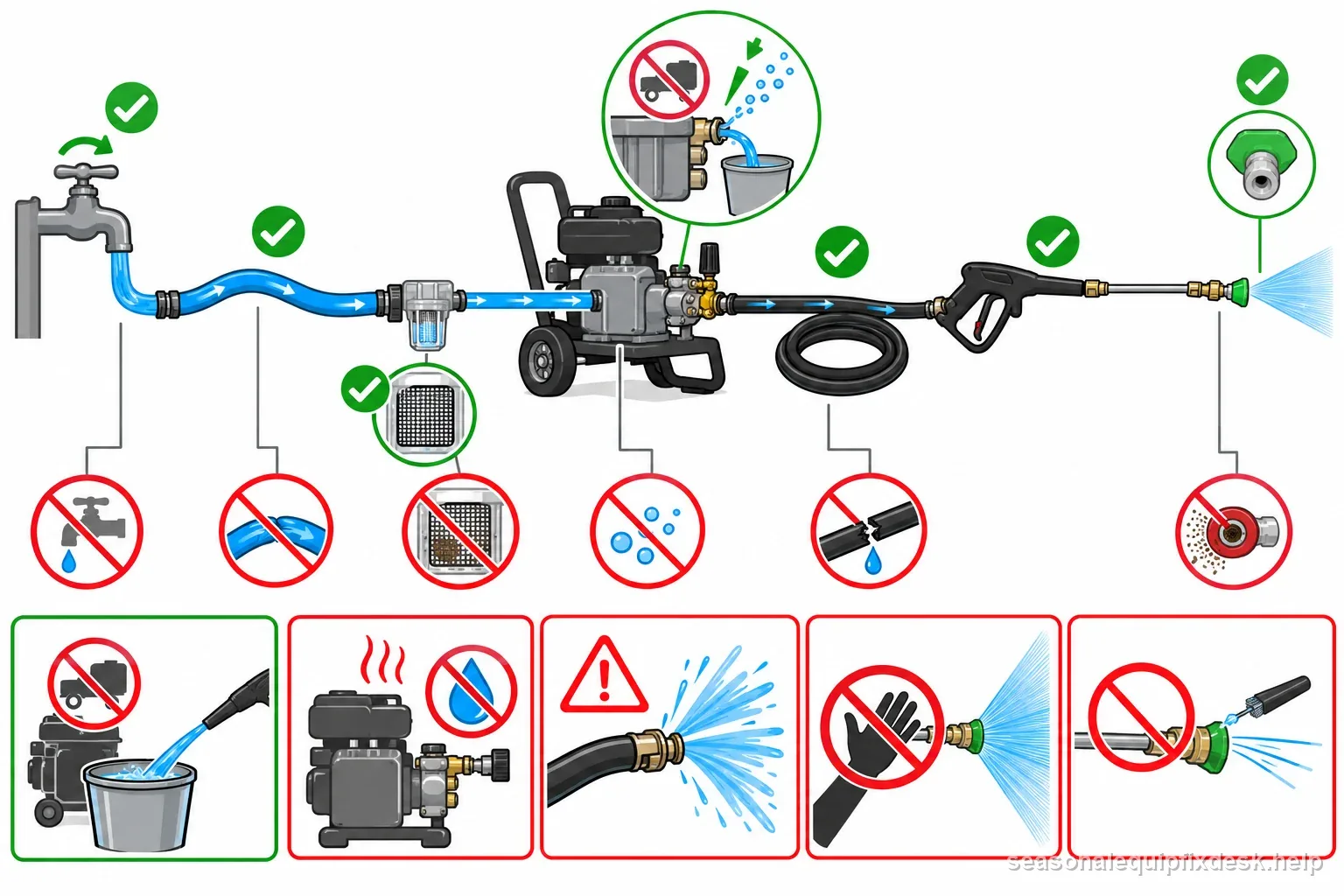
With the machine off, water supply connected, and trigger held as the manual directs, note whether a steady stream reaches the gun. No water or a weak dribble points upstream toward the faucet, garden hose, inlet screen, or a severe restriction. A strong unpressurized stream that never becomes forceful after startup points farther downstream toward nozzle selection, accessory restriction, unloader behavior, or the pump.
Do not run a pump dry to see whether it "catches." Water lubricates and cools many pressure-washer pumps, and dry running can convert a simple supply problem into pump damage.
Prove the garden-hose supply before touching the machine
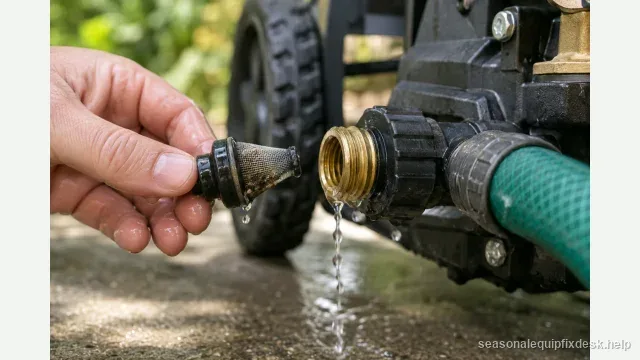
Open the faucet fully, unkink the hose, and clean the inlet screen. If the washer manual specifies a minimum inlet flow or pressure, measure against that number rather than guessing from how the hose looks. Briggs and Stratton currently gives 20 psi and 4 gpm as a minimum for certain of its pressure washers, with higher requirements for POWERflow+ models; those figures are brand-specific examples, not universal targets.
Also respect the maximum inlet-water temperature in the product manual. Briggs lists supply water over 100°F as a low-pressure troubleshooting item on its machines. Hotter is not better if the pump was designed around a cooler source.
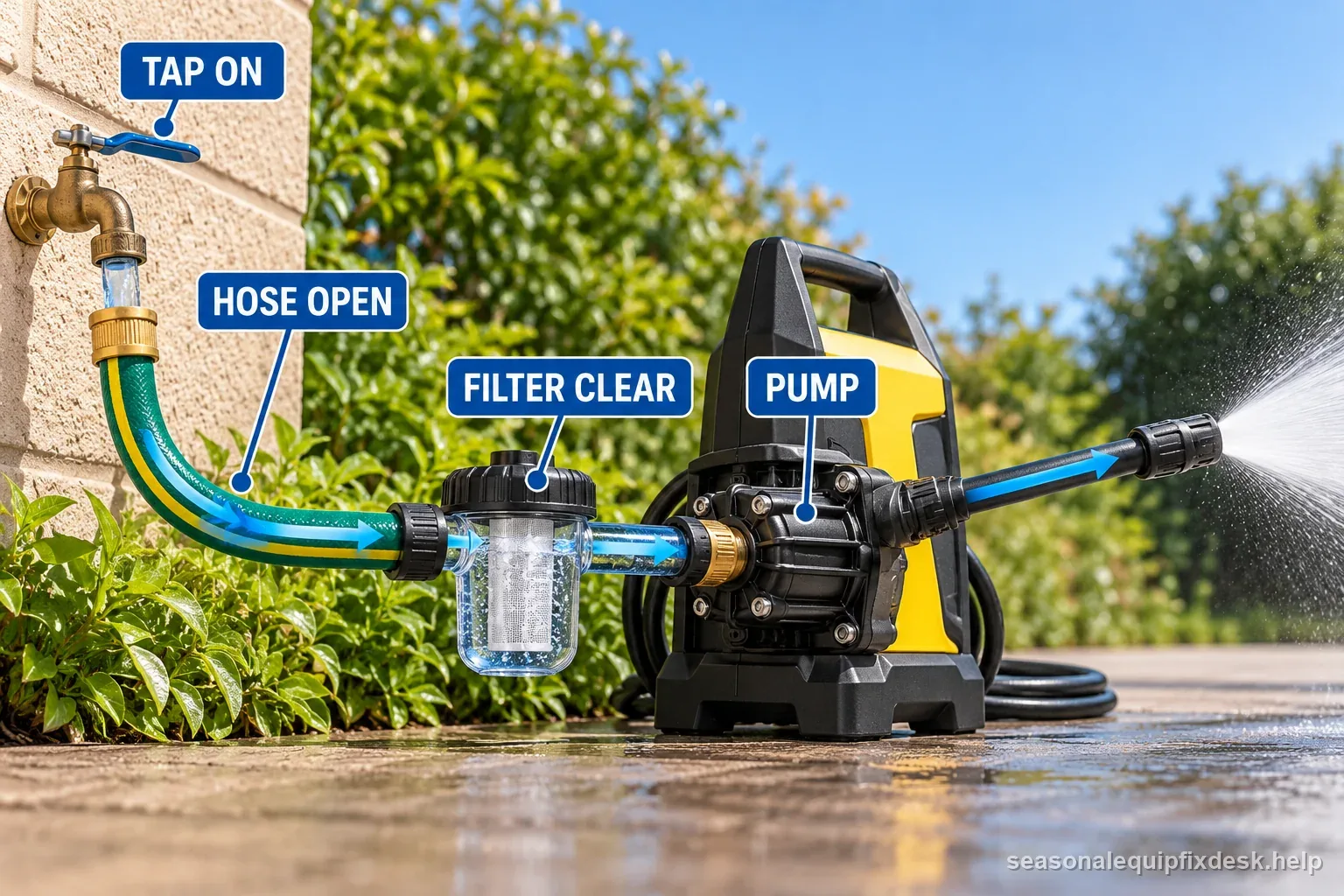
Purge air before interpreting a pulsing or weak spray
Air trapped in the hose and pump can delay stable pressure. Follow the model's priming procedure with the engine or motor off where specified, hold the trigger until water exits without sputtering, then connect the correct nozzle and start the machine. Kärcher likewise advises running without the lance on applicable units until air clears from the gun.
If pressure appears after purging and stays stable, there may be nothing wrong with the pump. If it returns only after every short pause, investigate inlet leaks, a collapsing supply hose, or an upstream connection that lets air enter.
Verify that the installed nozzle is actually a pressure nozzle
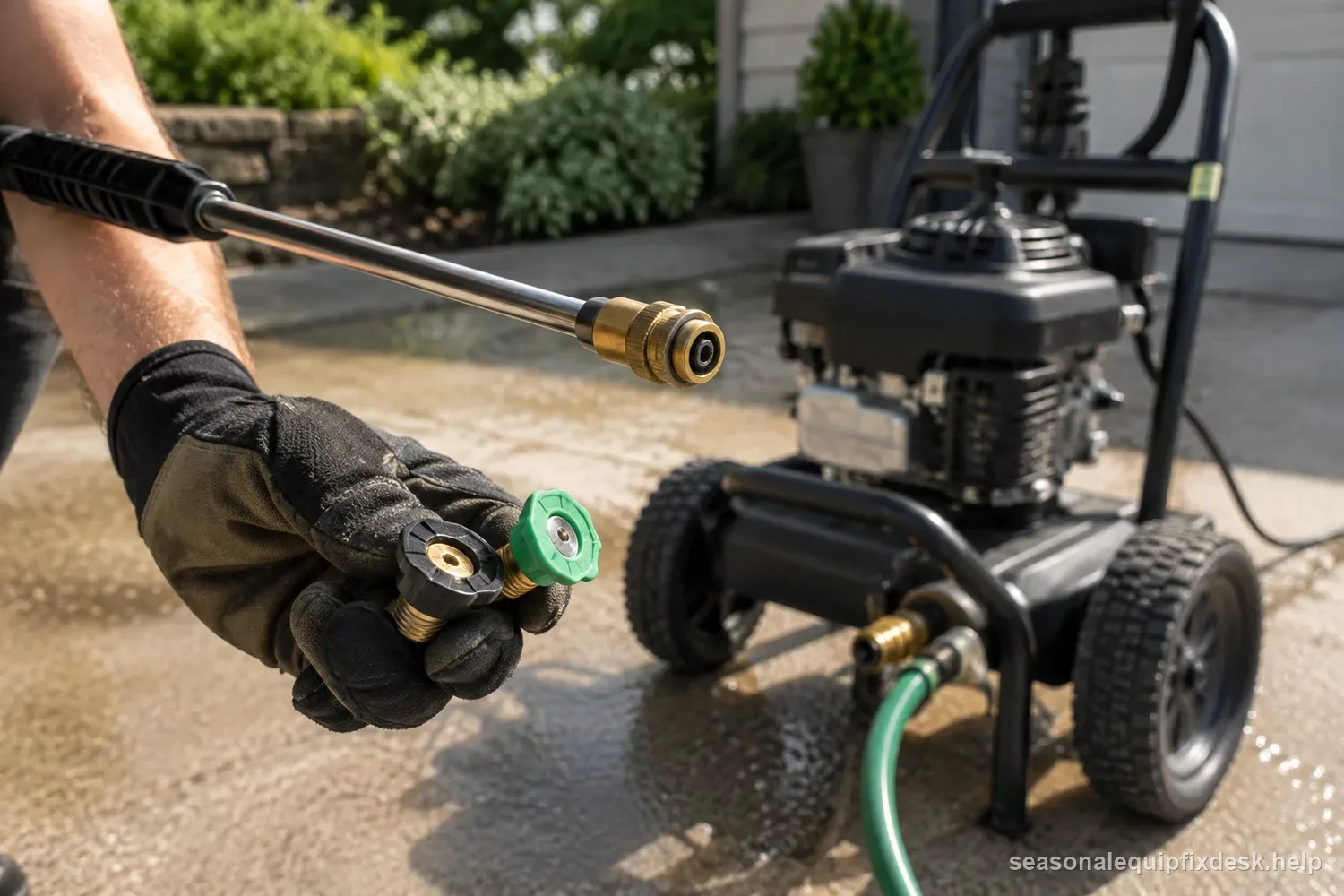
Detergent or soap settings intentionally reduce pressure. Check the nozzle color or adjustable-wand position against the manual. Then inspect the nozzle orifice for mineral scale or debris. Shut the machine down and relieve pressure before removing a tip. Use the maker's nozzle-cleaning tool; enlarging the orifice with a drill bit destroys the calibrated restriction and can permanently reduce cleaning pressure.
If the nozzle is damaged or its orifice has eroded, replace it with the specified size. A nozzle that is too large can mimic a weak pump because the system cannot build its designed backpressure.
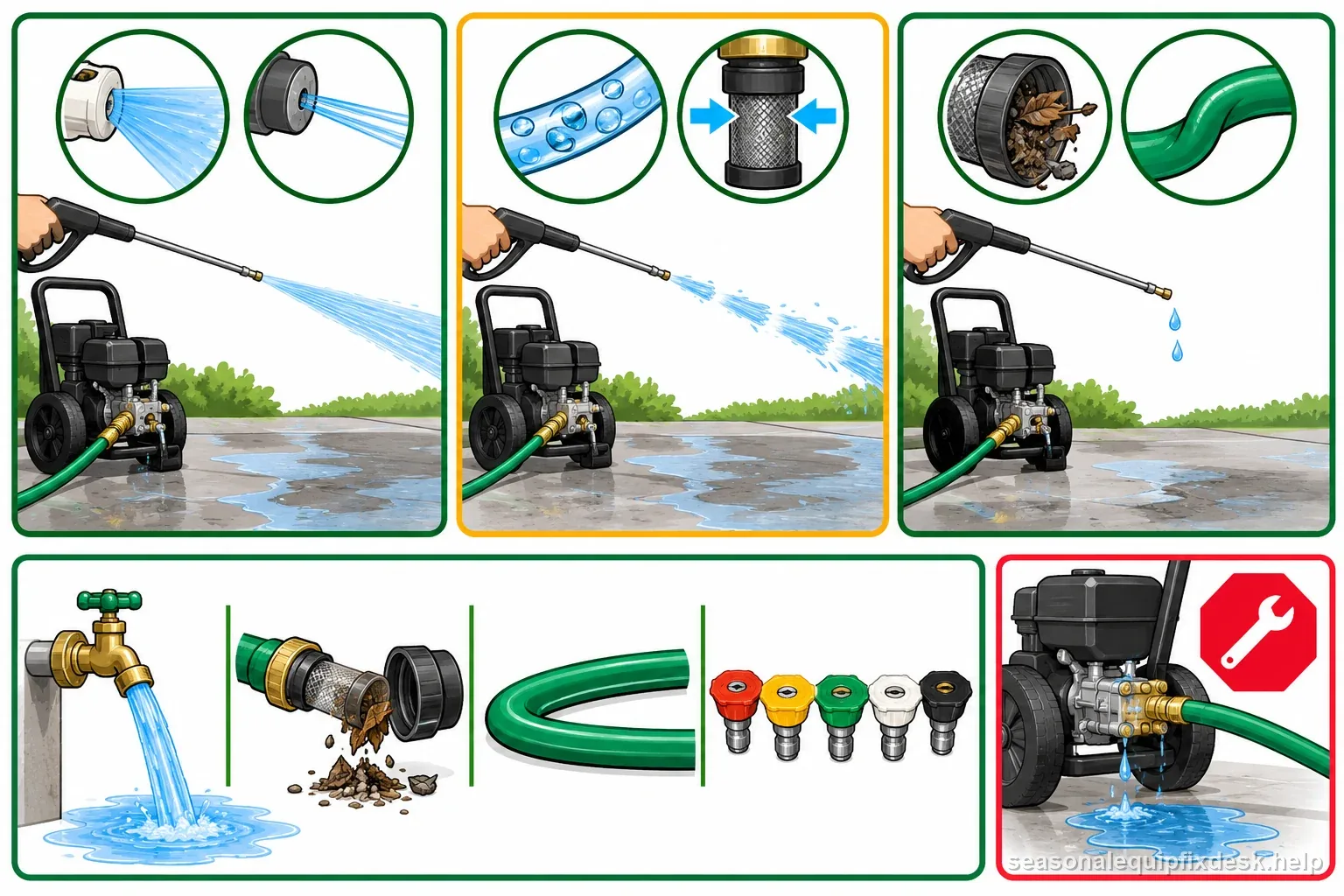
Leaks tell you where pressure is escaping
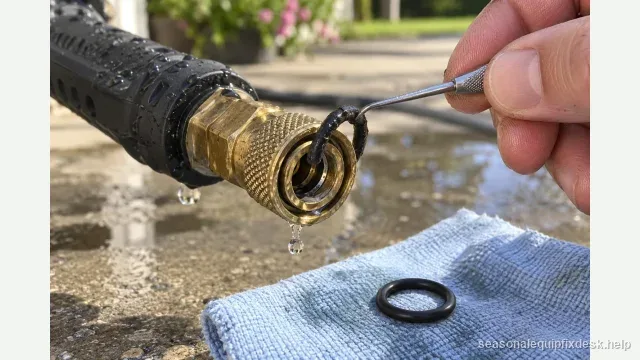
Inspect the high-pressure hose, quick-connect O-rings, gun, lance, and pump fittings with the machine off and pressure relieved. A visible leak downstream of the pump is not just wasted water; it can prevent the system from reaching normal pressure. Replace damaged O-rings or accessories with rated parts rather than wrapping high-pressure fittings with improvised material.
Never put a hand over a suspected pinhole in a pressurized hose. High-pressure fluid can penetrate skin. Shut down, relieve pressure, and inspect only when safe.
- Confirm steady water supply at the inlet before startup.
- Purge air and check the nozzle using the model procedure.
- Look for visible hose or fitting leaks without touching a suspected jet.
- Use the machine manual before pump-side adjustments.
Separate an attachment restriction from an internal pump fault
Once supply, air purge, nozzle, and leaks are known good, use the manufacturer procedure for isolating the pump. Briggs describes a test on certain machines with the high-pressure hose removed: with water connected, engine speed should noticeably increase discharge pressure and distance at the pump outlet. If the pump produces a strong increase there but not through the assembled hose and gun, an attachment restriction is more likely.
Do not improvise this test on a design whose manual does not permit it. Electric units, axial-cam pumps, and integrated hose reels can have different safe procedures. The point is to isolate sections, not to defeat fittings.
| Observed output | What it suggests | Next decision |
|---|---|---|
| Supply flow is weak | Inlet restriction or source limit | Verify the model’s water requirement |
| Steady stream, low force | Nozzle, leak, or pump control | Check approved nozzle and visible fittings |
| Pressure repeatedly pulses | Air or unstable feed | Recheck priming and source stability |
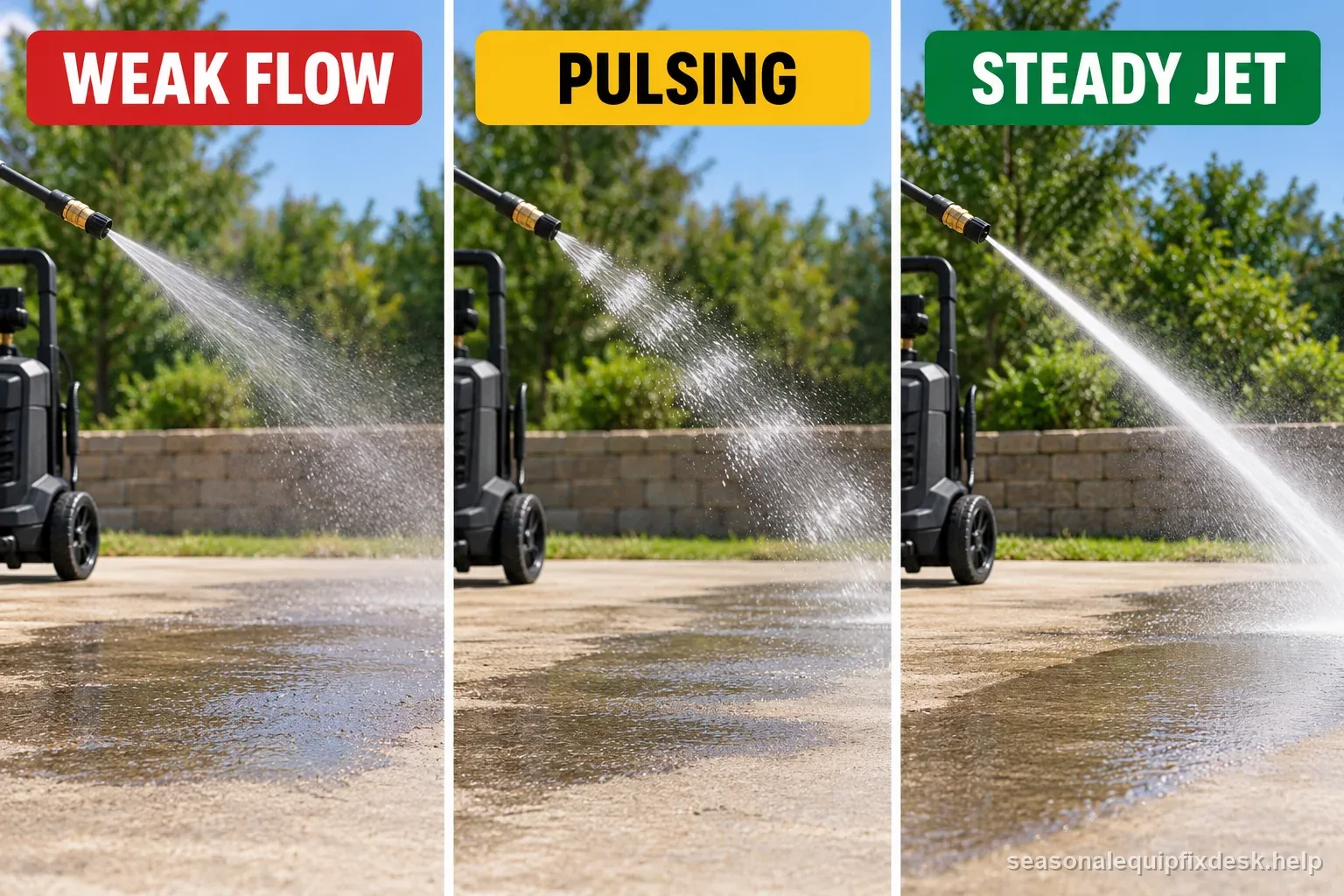
Unloader and valve faults belong after external checks
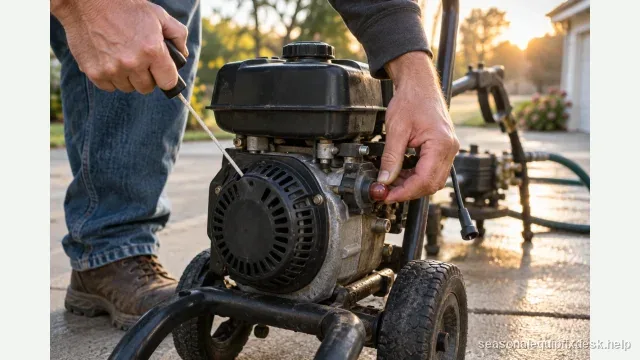
An unloader that sticks open can recirculate flow instead of sending full pressure to the gun. Worn check valves or seals can also reduce output. Those faults usually require model-specific pump service data. Randomly turning an unloader adjustment screw is not a harmless experiment because pressure settings affect pump loading and safety.
If the unit leaks from the pump casing, oil and water mix, or manufacturer support directs internal valve work to a service partner, stop there. Kärcher specifically directs users to service for leaking pressure or suction valves and stuck overflow-valve conditions.
Classify output: no flow points to supply or obstruction; weak spray to nozzle, leak, or pump; surging to water feed, air, or pressure control. Simpson advises shutoff before inlet checks and purging air through hose and trigger before restart. Use your manual.
Do not assume every washer needs the same household water supply. Simpson specifies at least 5 gallons per minute at 20 PSI for the products covered by its article and manuals, but the required supply depends on the machine. Check the nameplate and owner's manual; if a well or long hose cannot keep up, a pump cannot make up the missing inlet flow. Likewise, a correct nozzle size and wand setting are model-dependent. A detergent tip or low-pressure setting can make a healthy machine seem weak.
Before cleaning a nozzle or screen, switch the machine off, close the water source, and release trapped pressure using the manual's method. Stop if a high-pressure hose, fitting, gun, or pump casing leaks. Once supply, air, and nozzle checks are verified, repeated pulsing or low output belongs with manufacturer support or a qualified service center, not an adjustment screw turned by guesswork.
- Supply tap fully open and flow stable
- Garden hose and inlet filter condition
- Air purge performed per manual
- Nozzle type and condition
- Visible hose/gun leaks
- Pump noise, vibration, or stop condition
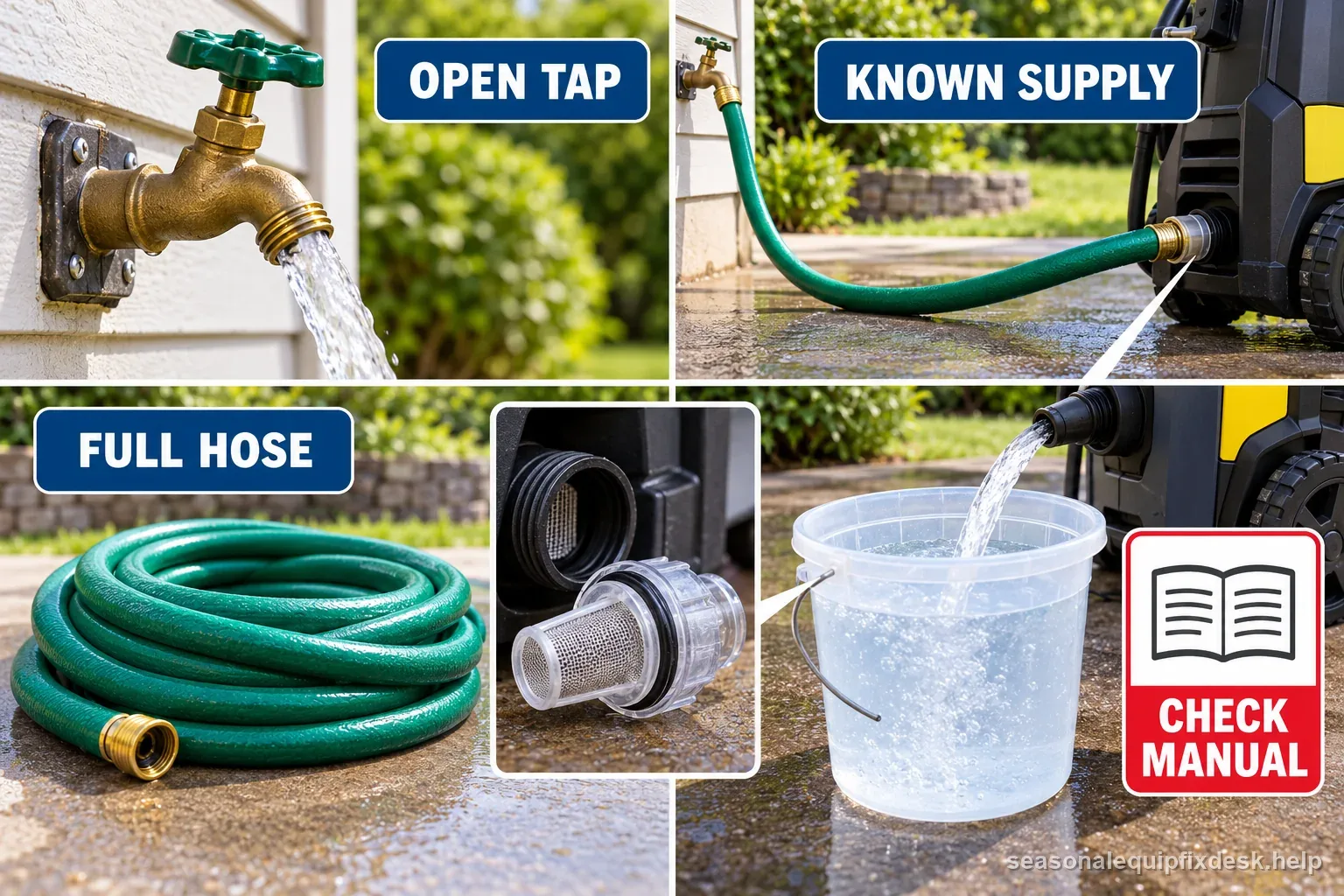
Two worked supply-to-output examples
These logs are illustrative. Follow the exact model manual and do not treat the values as universal requirements.
Example 1: inlet flow is below a model requirement
A Briggs & Stratton model manual lists 20 PSI and 4 GPM for the applicable washer. A sample flow-meter check reads 21 PSI and 3.8 GPM. Pressure clears the stated minimum, but flow does not. Check the water source and restrictions before considering a pump fault. These numbers apply only to the models named by the maker.
Example 2: supply checks pass but output stays weak
A second washer meets its own manual's inlet limits. The owner clears the screen, purges air, confirms the specified pressure nozzle, and finds no visible leak, but the spray remains weak. The owner stops before opening the pump and asks the maker which isolation test is approved for that model.
Retest on one known surface before calling it fixed
After reassembly, use a correct pressure nozzle, adequate water supply, and a short test with the engine at the specified operating speed. Pressure should build promptly and remain stable while the trigger is held. Release the trigger only for the interval permitted by the manual; leaving some pumps in bypass for too long can overheat them.
Record what restored pressure: clearing the inlet screen, purging air, changing the nozzle, replacing a leaking O-ring, or isolating a failed pump. That record is more useful next season than a vague note that the washer "needed cleaning."
A washer that runs normally but sprays weakly follows the engine-no-start versus pressure-fault distinction only after the engine starts.
Water dripping at the pump may be the inlet or hose path rather than a pressure fault; use the leak-location checks before testing spray pressure.
For the matching drive or fuel symptom, see a pressure washer that surges after inlet-flow checks.