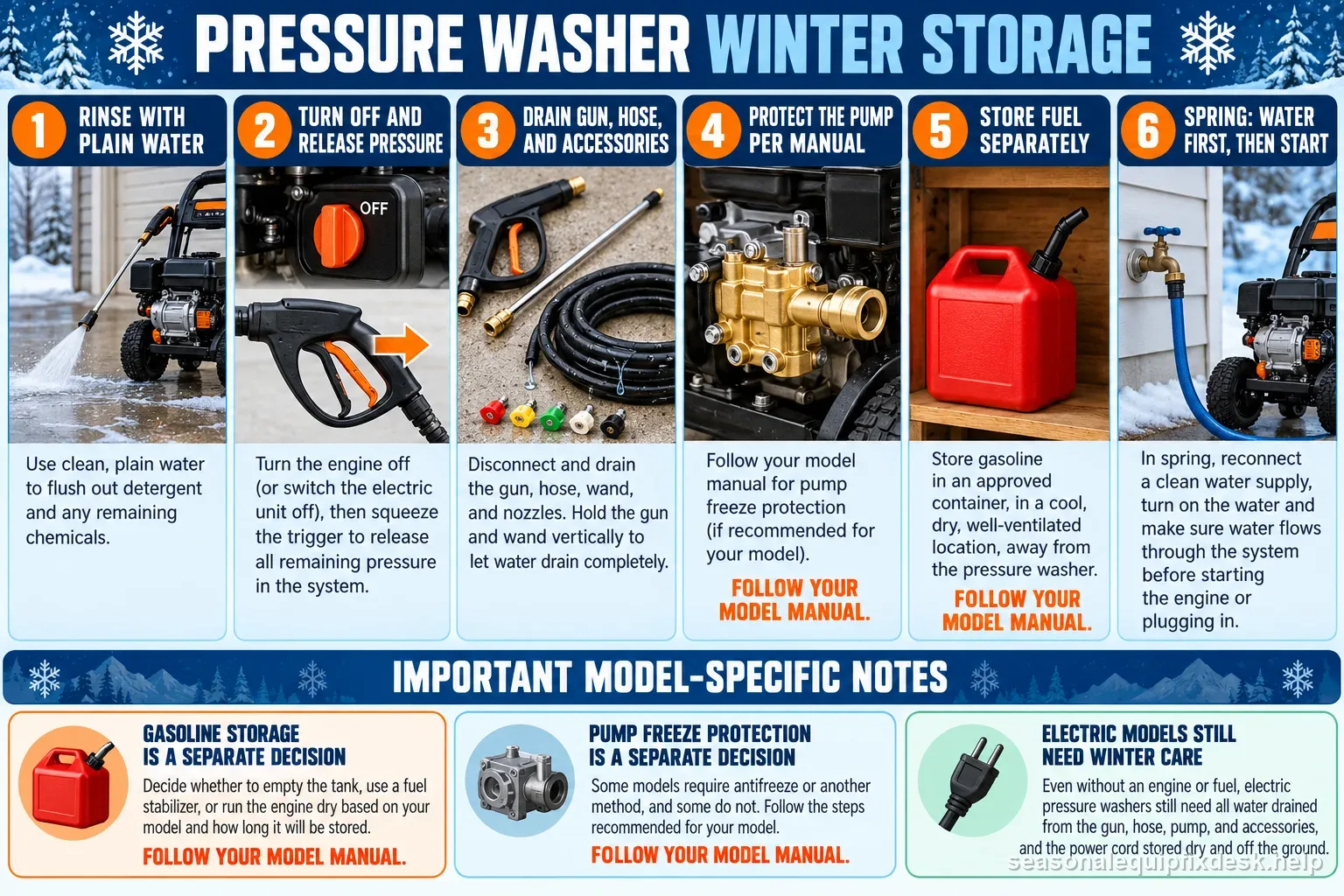
Quick answer: Winter storage is not just "drain the hose." Water can remain in the pump, gun, hose, detergent circuit, and fittings after the visible stream stops. Freezing water expands and can crack pump bodies, valves, manifolds, or accessories. The correct plan is to remove or protect trapped water, deal with fuel separately on gas machines, and store the unit dry where freezing is unlikely.
| System | Storage check | Model-specific limit |
|---|---|---|
| Water path | Flush detergent; drain hose, gun, lance, fittings | Visible stream does not prove pump is empty |
| Pump | Use maker’s frost-free or pump-saver method | No dry running or substitute antifreeze unless directed |
| Gas engine | Follow its separate seasonal fuel procedure | Do not mix treated-fuel and drain-dry plans |
| Spring startup | Inspect, connect water, purge air, then test | Stop for cracks, leaks, or unstable pressure |
Finish the last wash with plain water
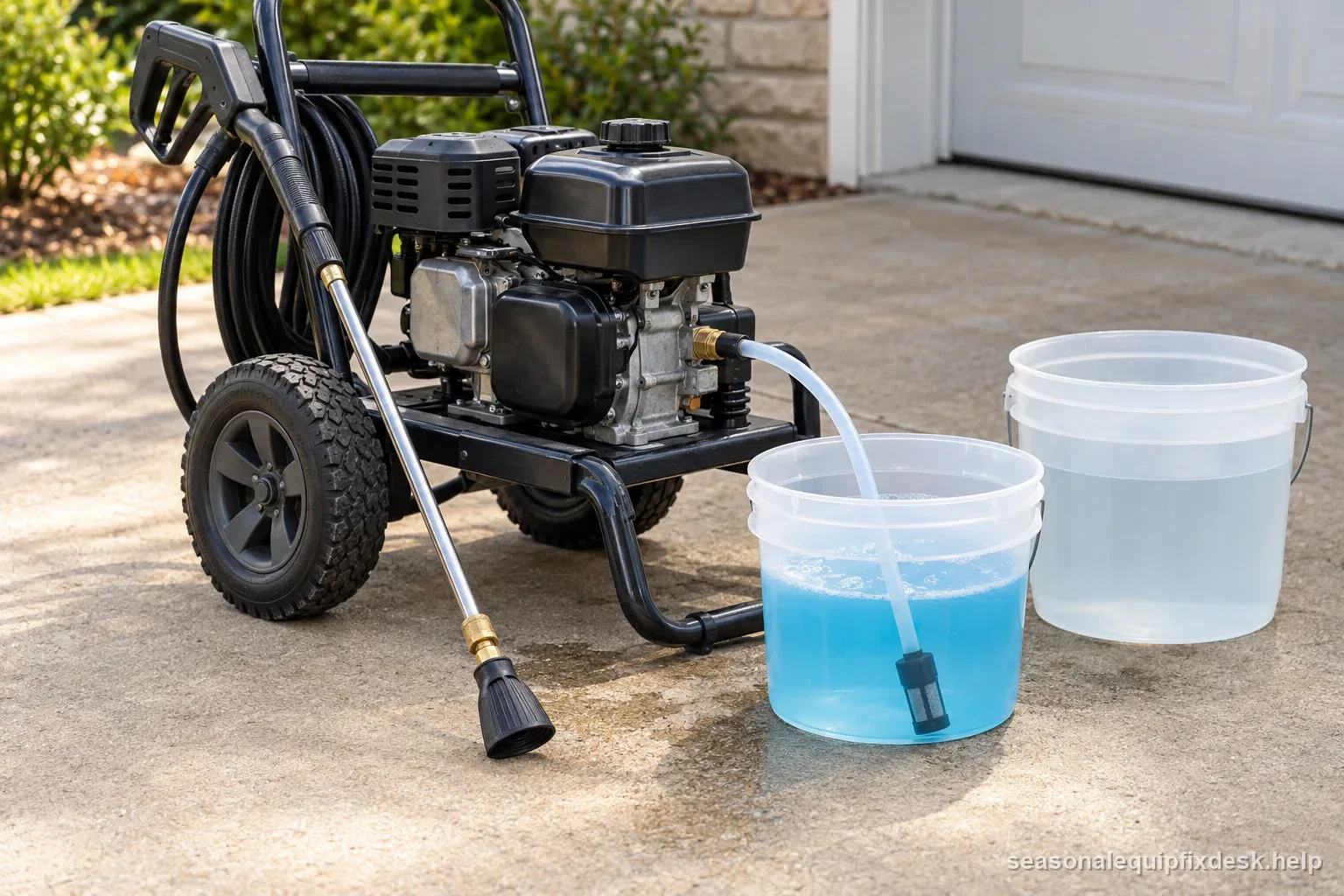
If detergent was used, follow the product procedure to flush the detergent path with clean water. Residual chemical can dry in a siphon tube, injector, or valve while the machine sits. Rinse accessories separately and let exterior surfaces dry before packing them into a closed bin.
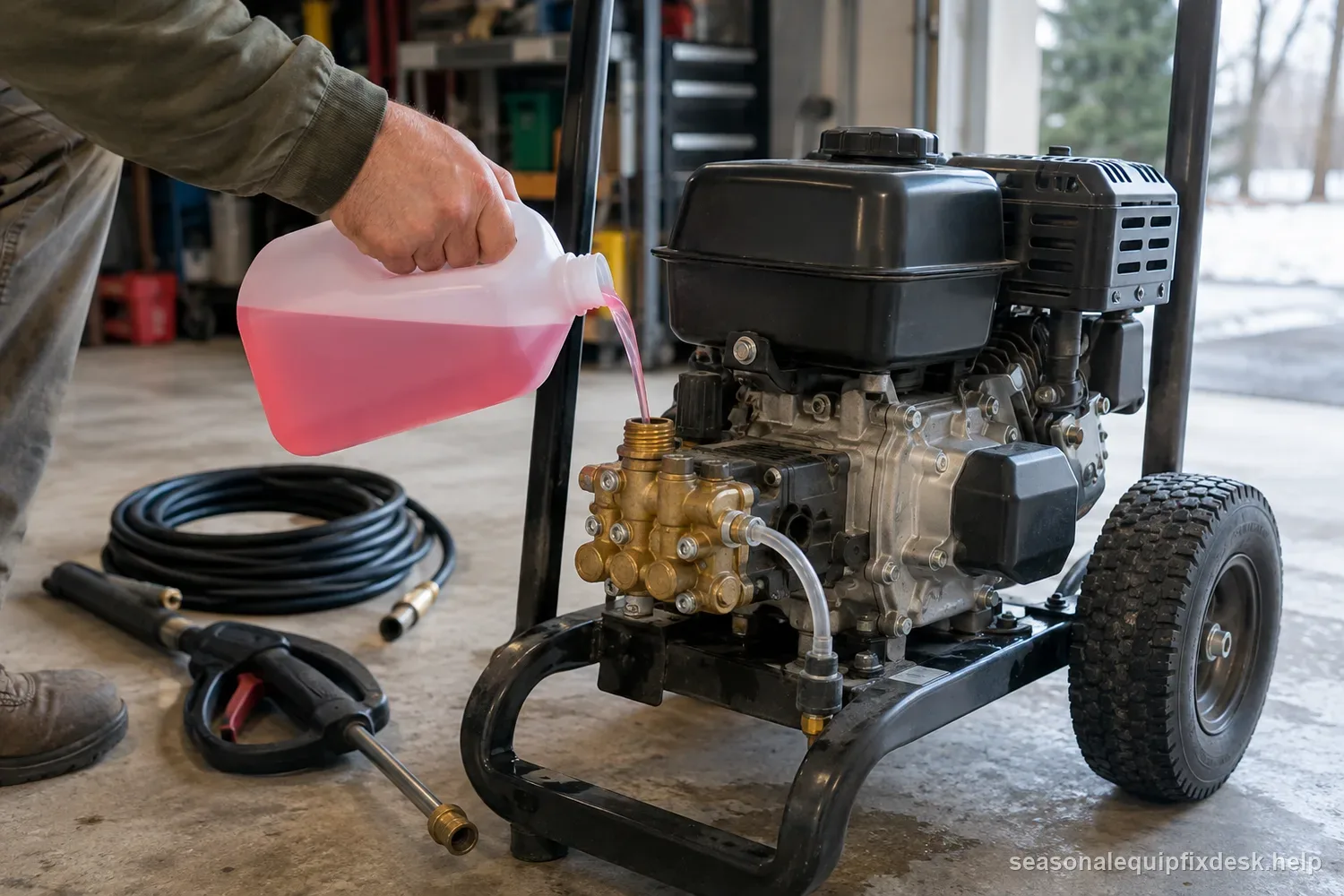
Do not use automotive antifreeze, random solvents, or household chemicals in the pump unless the manufacturer explicitly approves them. Pressure-washer pump protectants are formulated for this use; model instructions take priority.
Relieve pressure before disconnecting anything
Turn the machine off, shut the water supply, and squeeze the trigger until stored pressure is relieved. High-pressure fittings can remain energized after the engine or motor stops. Disconnect the high-pressure hose only when the system is safe.
Coil the hose without sharp bends and inspect it for exposed braid, flattening, or blistering. Winter is a good time to replace a damaged hose because a pinhole that opens next spring can become an injection hazard.
Drain the gun and hose as components, not as one lump
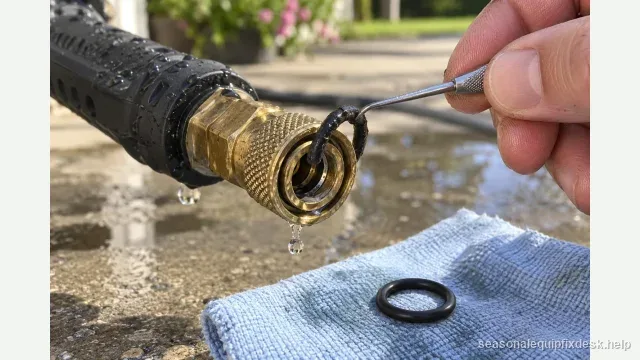
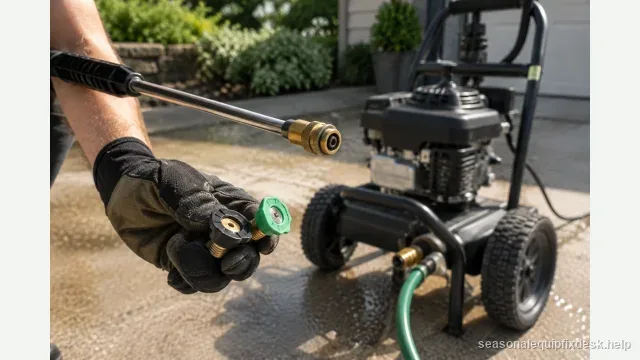
Disconnect the garden hose, gun, lance, tips, and high-pressure hose according to the manual. Let each drain from both ends. Move the gun trigger while disconnected if the manual permits so trapped chambers can empty. Keep nozzles in a clean holder rather than loose where dirt can enter the orifice.
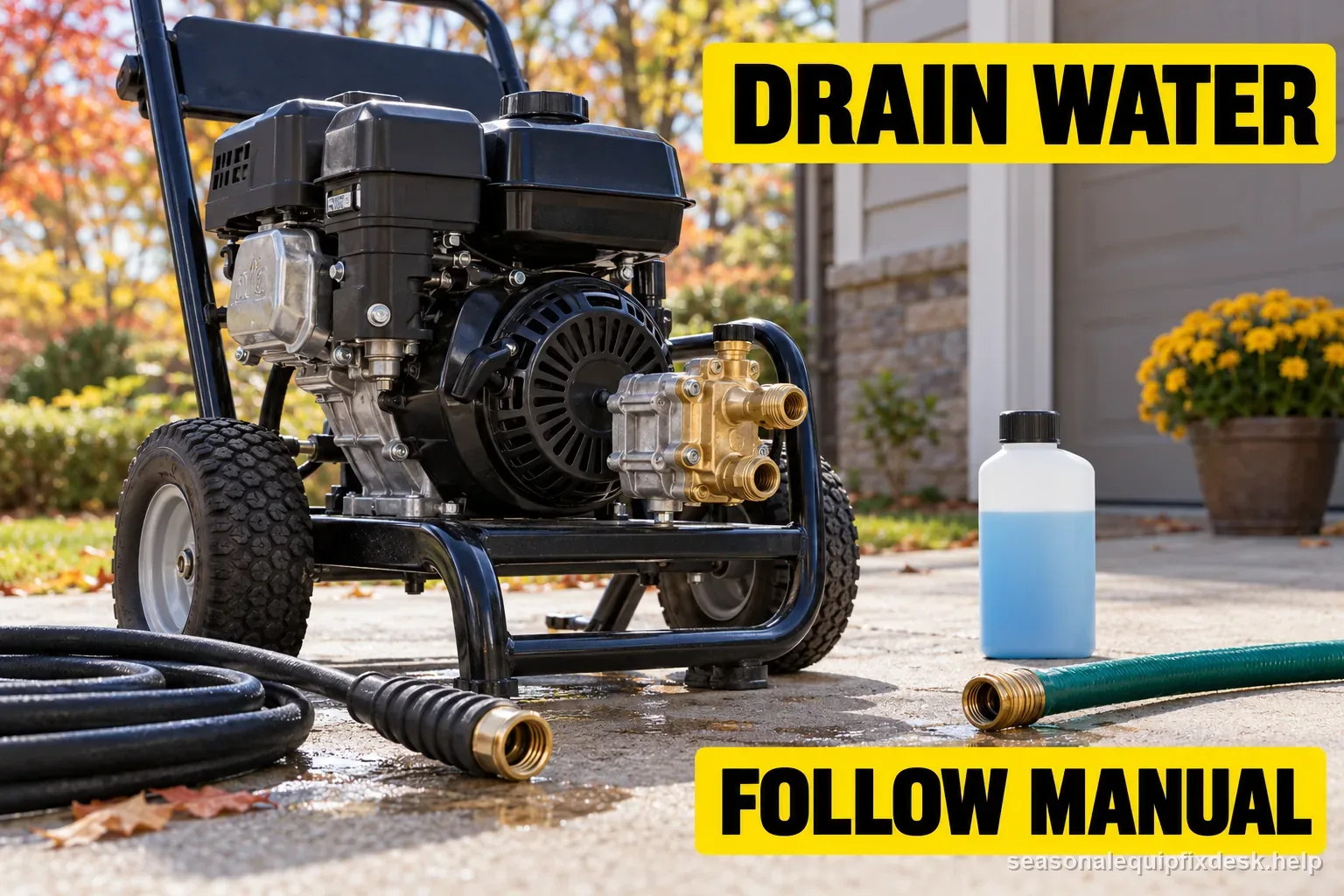
A hose that feels empty can still hold low spots of water if coiled tightly. Store it where freezing cannot trap and expand that water against closed fittings.
The pump is the part that deserves model-specific protection
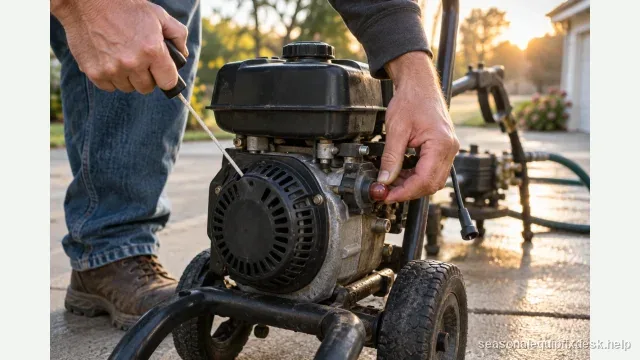
Some manufacturers provide a pump-saver or winterizing procedure that draws protective fluid through the pump. Others specify indoor frost-free storage and draining. Follow the exact procedure for your pump design. Kärcher's current support material specifically treats winter-proofing as a distinct maintenance task rather than assuming ordinary draining is enough.
Never start a pressure-washer pump dry to "blow out" the remaining water unless the manual explicitly instructs that method. Running without water can damage pump surfaces faster than it clears them.
Gasoline storage is a separate decision from pump winterization
For gas-powered washers, follow the engine maker's storage plan. Briggs and Stratton currently describes a treated-fuel strategy using stabilizer circulated through the fuel system, while also noting a drain-and-run-dry option when stabilizer is not used or for certain alcohol-containing fuel situations. Other manufacturers may specify something different.
Do not mix those strategies halfway. Adding stabilizer to fuel that is already badly stale does not make it fresh again, and draining only the tank while leaving untreated fuel in the carburetor can still cause spring starting problems.
Electric units still need freeze and cord care
An electric pressure washer has no fuel system, but it still has water passages and electrical components. Dry the cord and plug, inspect for cuts or overheated pins, and store the cord loosely. Keep the unit upright if the manual requires it, and do not place it where roof leaks or floor water can soak the motor housing.
Choose a storage location for temperature, not convenience
A detached shed can be dry and still freeze hard. If the pump cannot be fully winterized according to the manual, move the machine to a frost-protected location. Keep gas-powered equipment away from ignition sources and never store fuel next to a furnace, water heater, or appliance with a pilot light.
Protect quick-connects from dirt with their caps or a clean cover. Corrosion and grit at a coupler can cause the first pressure leak of spring even if the pump survived winter perfectly.
Spring startup should be a water-first inspection
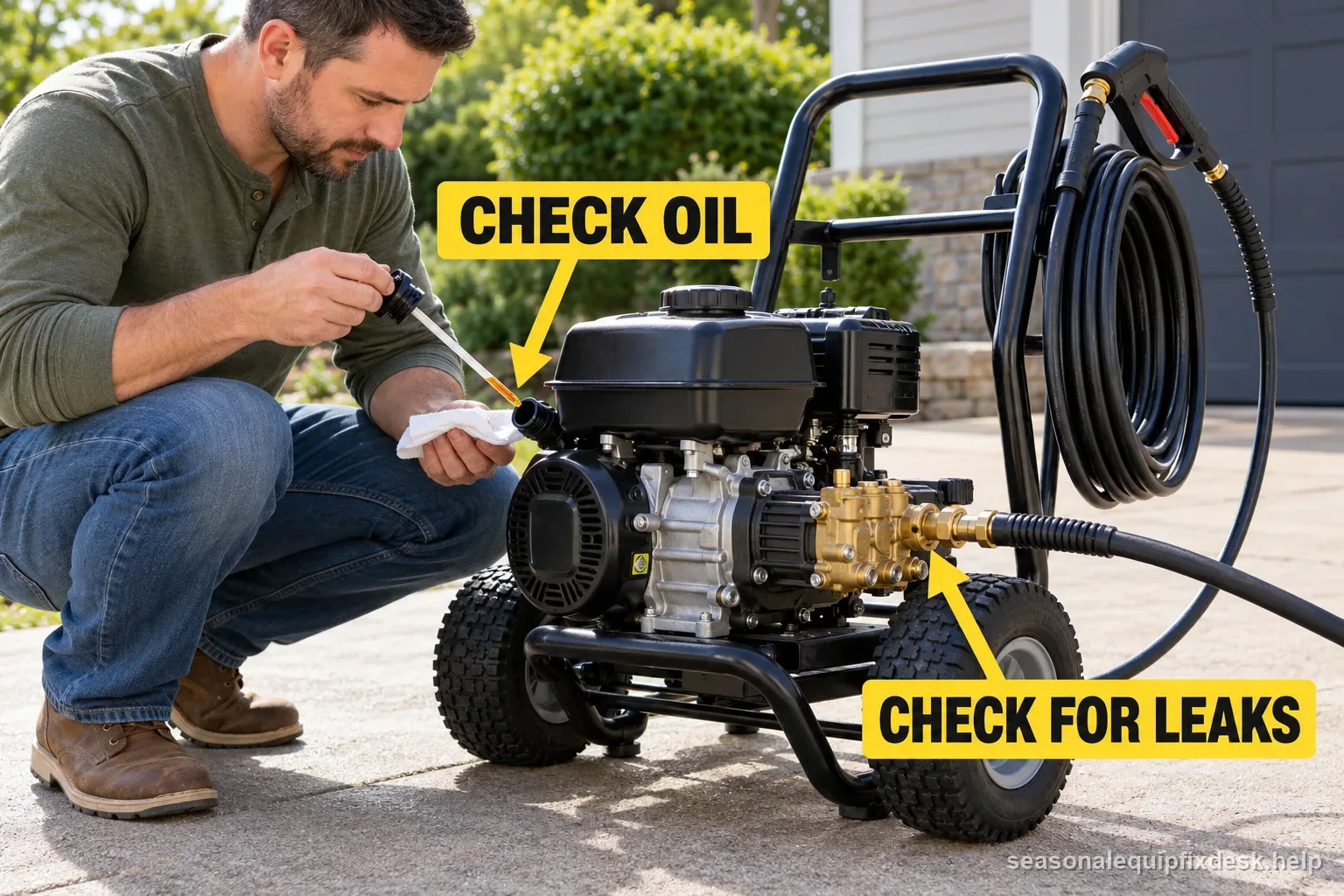
Before starting the engine or powering an electric unit, inspect the pump, hose, gun, and fittings for cracks or frost damage. Connect water, open the supply, and purge air according to the manual. A leak discovered at garden-hose pressure is much safer to address than one discovered after the pump loads.
Only after water flow is stable should you perform the normal startup. Watch for pulsing, oil or water leaks, and pressure that fails to build. Those can be delayed signs of winter damage.
- Initial symptom and conditions
- Controls, settings, and supply checked
- Inspection finding before adjustment
- Single change made and result
- Any stop condition or unresolved fault
Write down the storage method you actually used
Attach a tag noting whether fuel was stabilized or drained, whether pump protectant was used, and which accessories were removed. Six months later, that record prevents the common spring mistake of treating the machine as if it were stored by a different method.
Manufacturer directions differ on whether to briefly run water out of the pump or use a protector. Follow the exact model manual, keep the unit away from freezing temperatures, and never substitute automotive antifreeze or an improvised dry-run method.
Do not forget the detergent injector and removable accessories
Detergent systems can hold a small amount of liquid even after the main water path seems empty. Remove the detergent container or siphon tube as the manual allows, rinse it, and let it dry. A check ball or injector that sits all winter with dried soap can create a spring complaint that looks like a pump problem even though high-pressure washing still works.
Surface cleaners, turbo nozzles, foam cannons, and extension wands also need to drain separately. Store small tips where their calibrated orifices cannot collect grit. If an accessory contains bearings, seals, or its own water channels, follow that accessory's winter instructions instead of assuming the main washer procedure covers it.
If a leak appears after storage, check the pressure-washer pump and connection leak branches before running the unit.