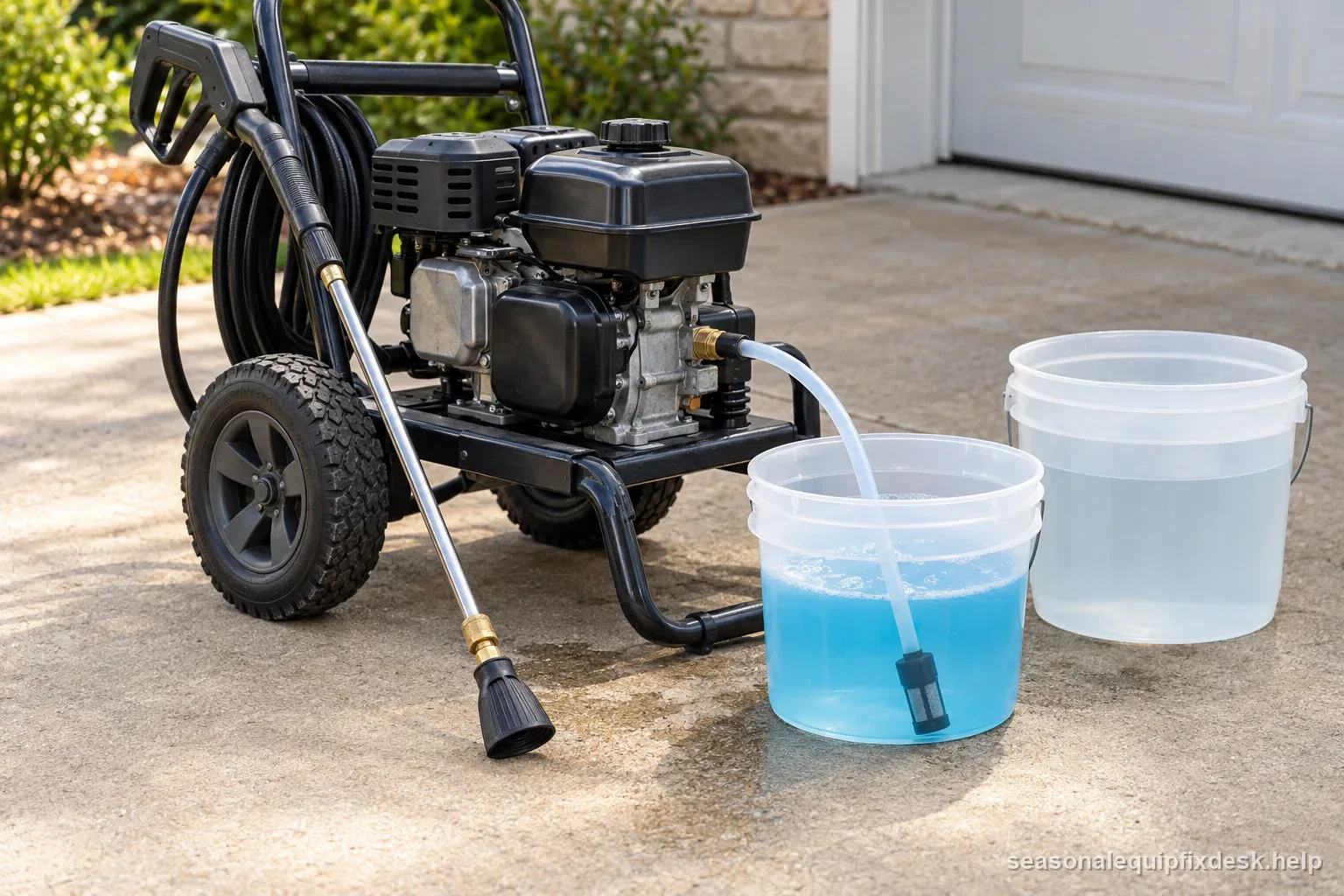
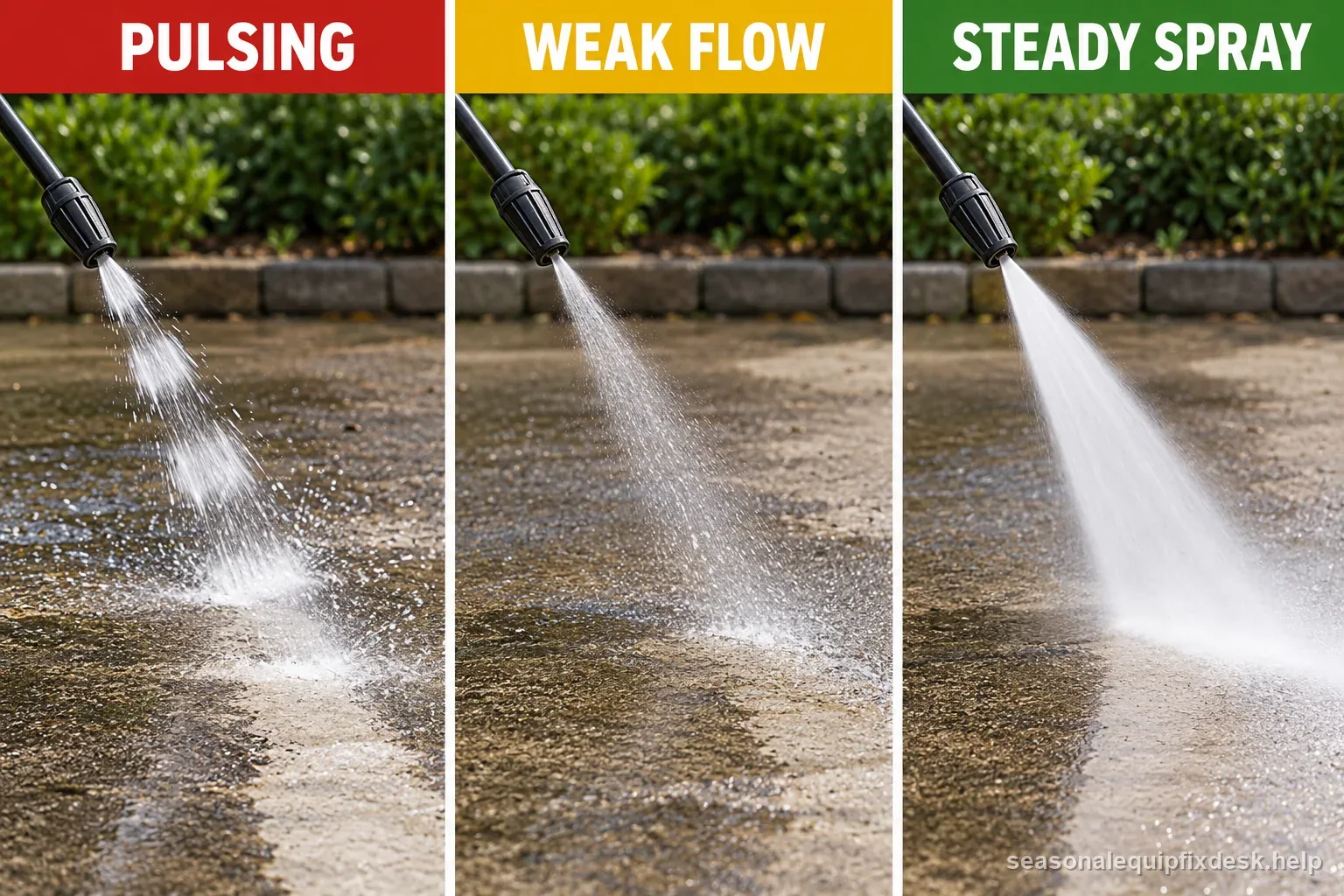
Quick answer: A pressure washer that repeatedly rises and falls in pressure is often being starved of water or repeatedly ingesting air. The pattern matters: a machine that pulses from the first second of operation is different from one that runs steadily until the trigger is released and pulled again. Start by making the inlet flow boringly consistent before diagnosing the unloader or pump.
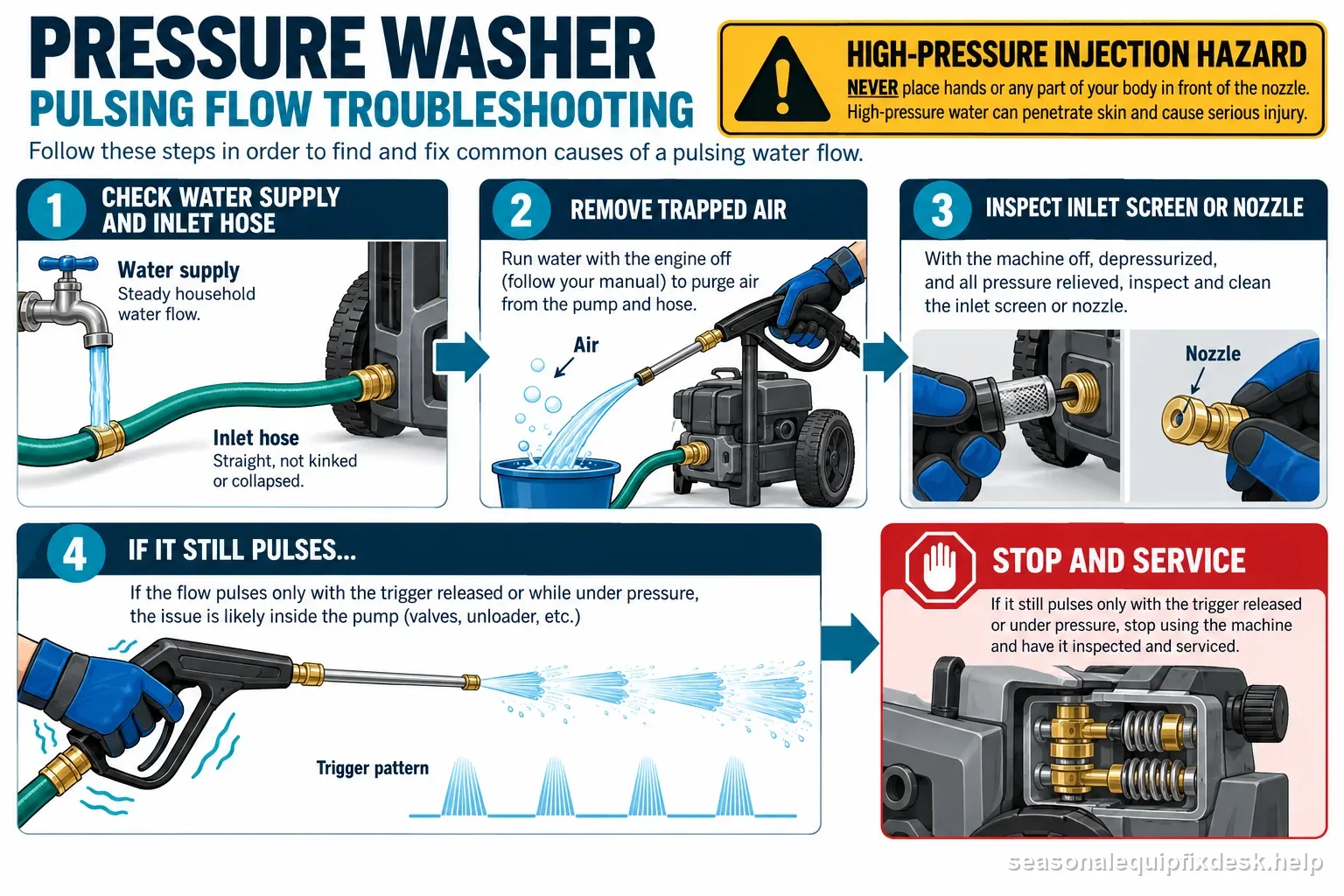
Before treating a weak or pulsing spray as a pump failure, verify the garden-hose supply, purge air, and check the nozzle. The pressure washer no-pressure guide keeps those external checks ahead of model-specific pump service.
| What cycles | Possible path | Owner-level evidence |
|---|---|---|
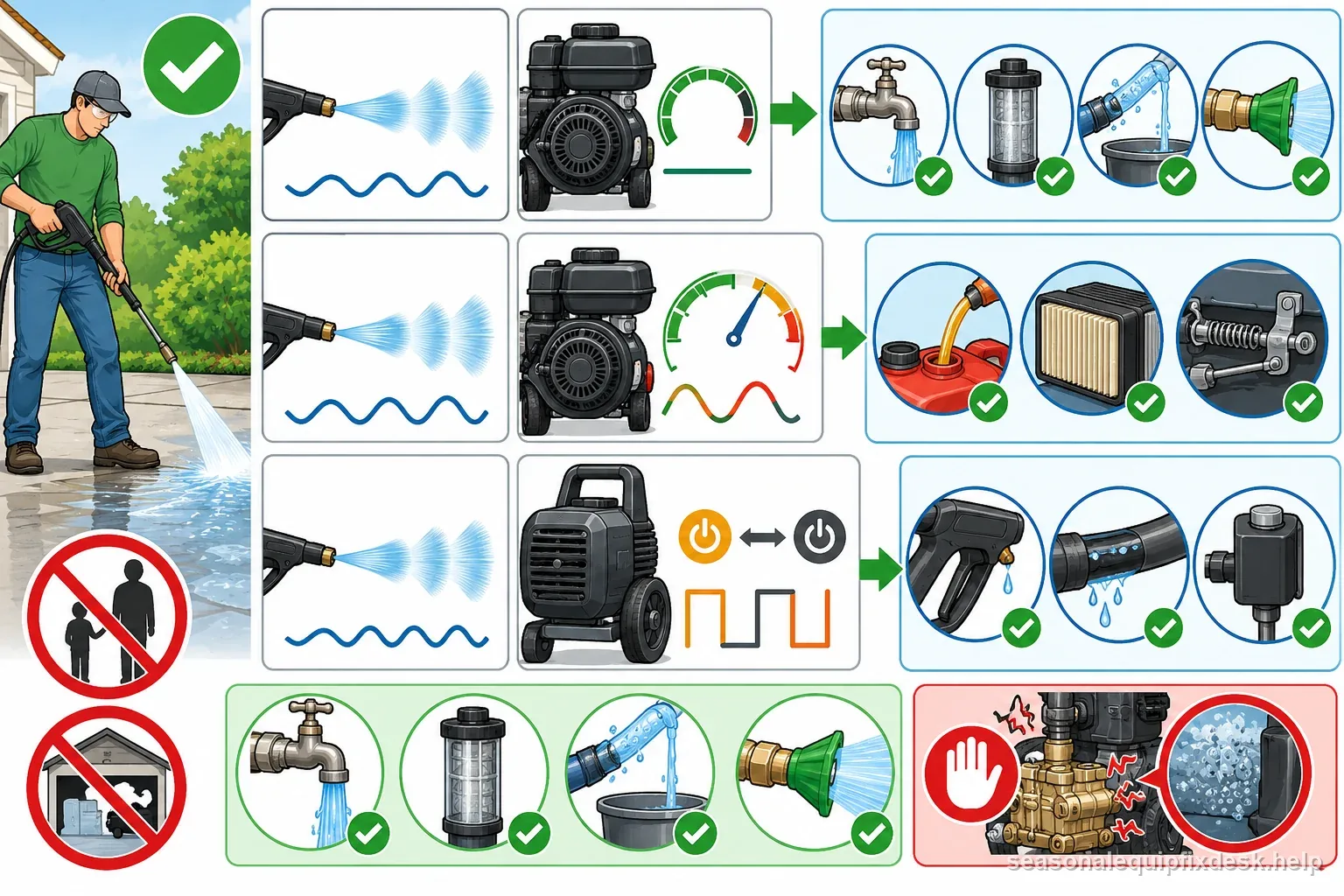
| Spray pulses; engine steady | Inlet flow, air, nozzle, unloader, pump valves | Tap, hose, filter, or nozzle changes the pulse |
| Gas engine speed also changes | Fuel, governor, or changing pump load | Listen for RPM change with spray |
| Electric motor cycles | Leak, air, pressure switch, or power | Observe motor timing, not spray alone |
| When it pulses | Possible direction | Safe next step |
|---|---|---|
| From first spray; engine speed steady | Supply, trapped air, inlet screen, or nozzle | Stop, depressurize, then check one external item at a time |
| Only with one accessory | Accessory restriction or mismatch | Shut down; compare only with manual-approved standard setup |
| Engine RPM changes too | Engine fuel/governor or changing pump load | Separate engine fault; use service if not resolved externally |
| Knock, severe vibration, leak, or hose damage | Potential pump or pressure hazard | Stop immediately; keep clear and arrange service |
Turn off and depressurize before checking the inlet screen or nozzle. Stop prolonged operation for knocking, gravelly pump noise, severe vibration, cavitation, or a high-pressure leak.
Watch the rhythm before changing anything
Hold the trigger and note whether the pulse is rapid, slow, or tied to engine speed. If the engine itself hunts in step with the pressure, fuel or governor behavior may be contributing on a gas unit. If engine speed stays steady while the spray alternates strong and weak, the hydraulic side deserves priority.
A pressure washer that is smooth with the hose disconnected from a restrictive accessory but pulses with a surface cleaner attached may simply be mismatched to that accessory. Keep the test configuration simple.
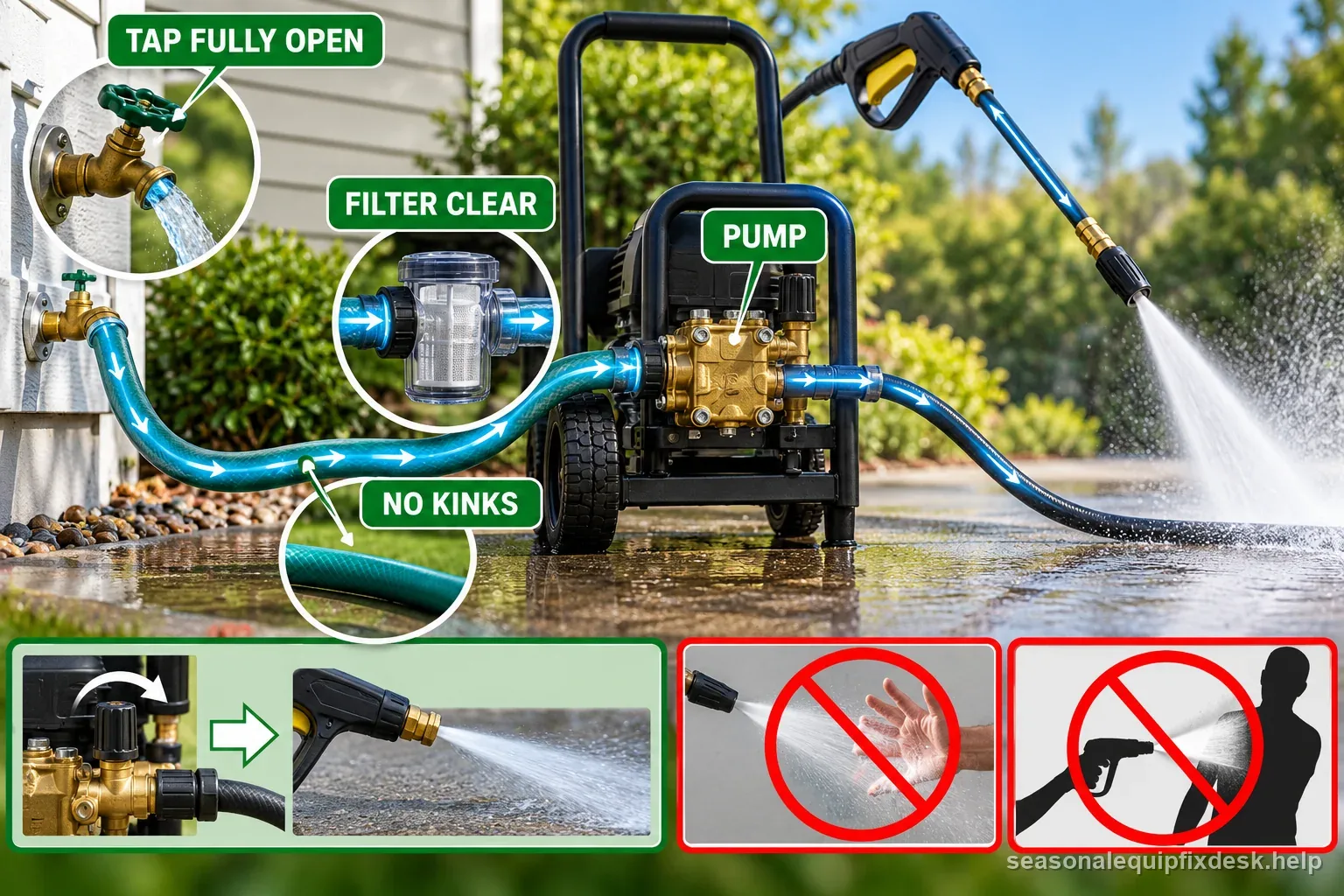
Inlet starvation can look like a bad pump
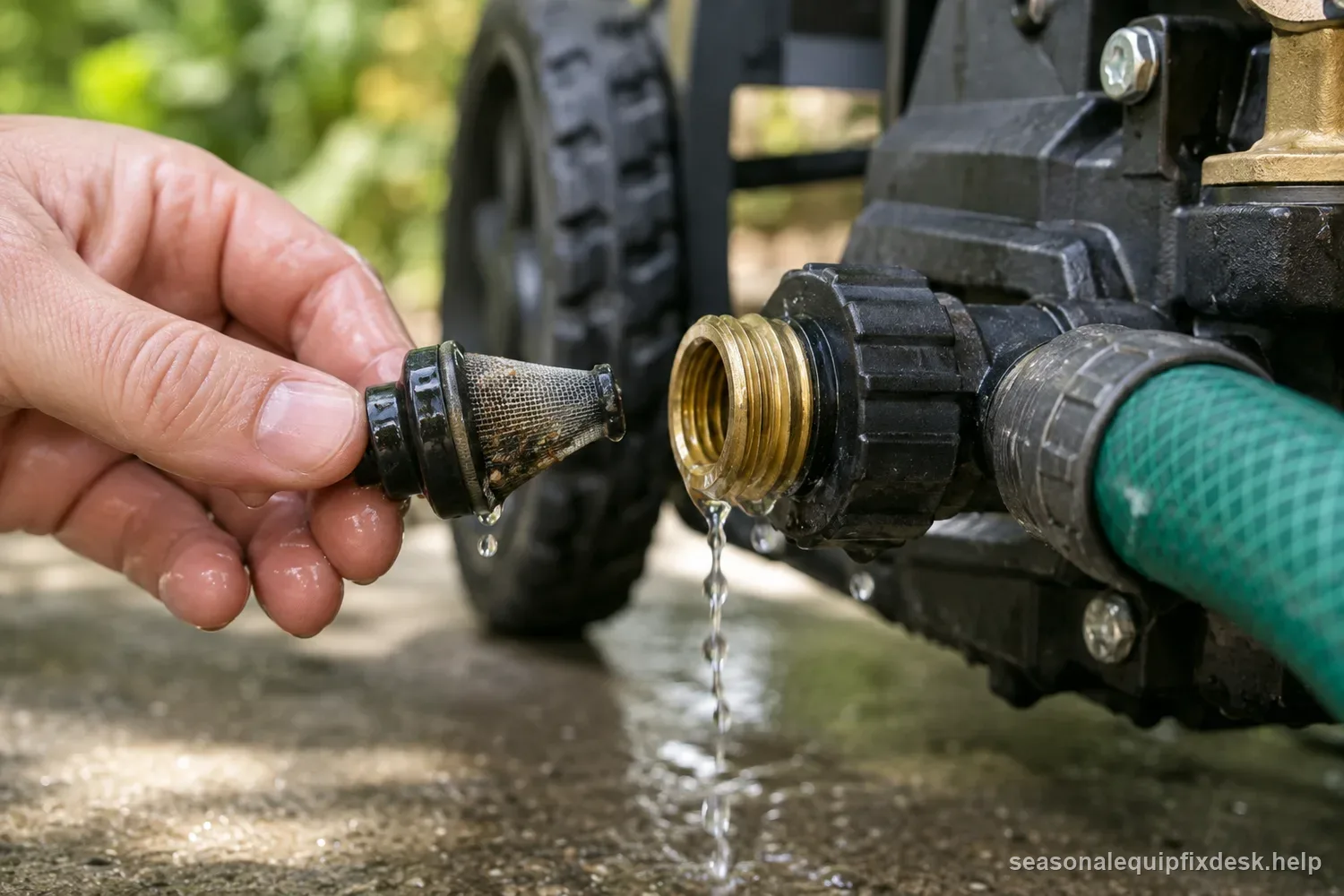
Use a fully open water source, a hose of the size and length allowed by the manual, and a clean inlet screen. Remove kinks and quick-connects that visibly collapse or restrict flow. If the supply barely meets the machine's requirement, a neighbor opening another valve or a long soft hose warming in the sun can push the pump into intermittent starvation.
Briggs and Stratton tells users troubleshooting low pressure to verify supply flow and pressure before moving inward. The same logic is even more important with surging because the pump is repeatedly receiving enough water and then not enough.
Air leaks on the suction side may not leak water outward
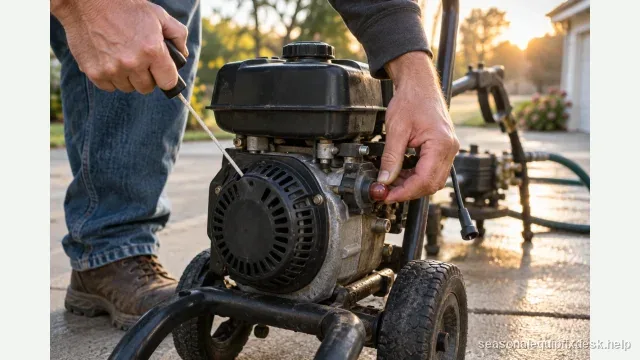
An inlet connection can draw air without producing an obvious puddle. Inspect the hose washer, inlet coupling, filter housing, and any suction adapter for a poor seal. Then purge the system according to the manual until flow from the gun is bubble-free before starting the motor or engine.
If the machine smooths out after a long purge but resumes pulsing later, check whether the inlet hose is collapsing, the source flow is fluctuating, or the connection is drawing air again.
A partially blocked nozzle creates a different pulse
Mineral flakes, sand, or detergent residue can partially obstruct the nozzle. Shut the machine down, turn off water, squeeze the trigger to relieve trapped pressure, and remove the nozzle only after the system is safe. Clean it with the supplied tool. Kärcher's troubleshooting guidance specifically points to cleaning the nozzle and verifying adequate water when the unit sputters or cycles.
Do not substitute a random nozzle size as a test. An undersized orifice can raise system pressure; an oversized one can reduce it. Use the exact range specified for the machine.
Check for a leak that opens only under pressure
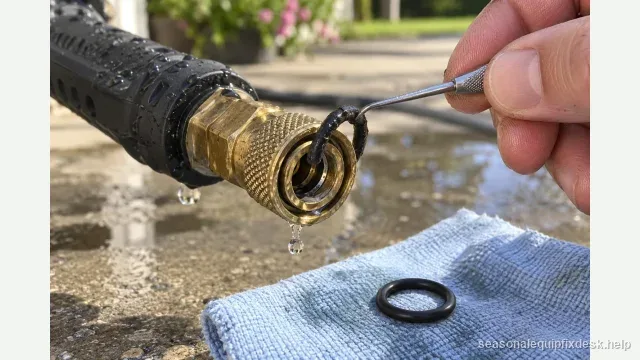
A worn O-ring can look dry with garden-hose pressure and spray only when the pump loads. Watch the gun, lance, hose ends, and pump connections from a safe position while operating. If a leak appears, shut down and relieve pressure before touching it.
A hose that balloons, has exposed reinforcement, or has a pinhole should be replaced, not patched. A damaged high-pressure hose is a safety issue as well as a performance issue.
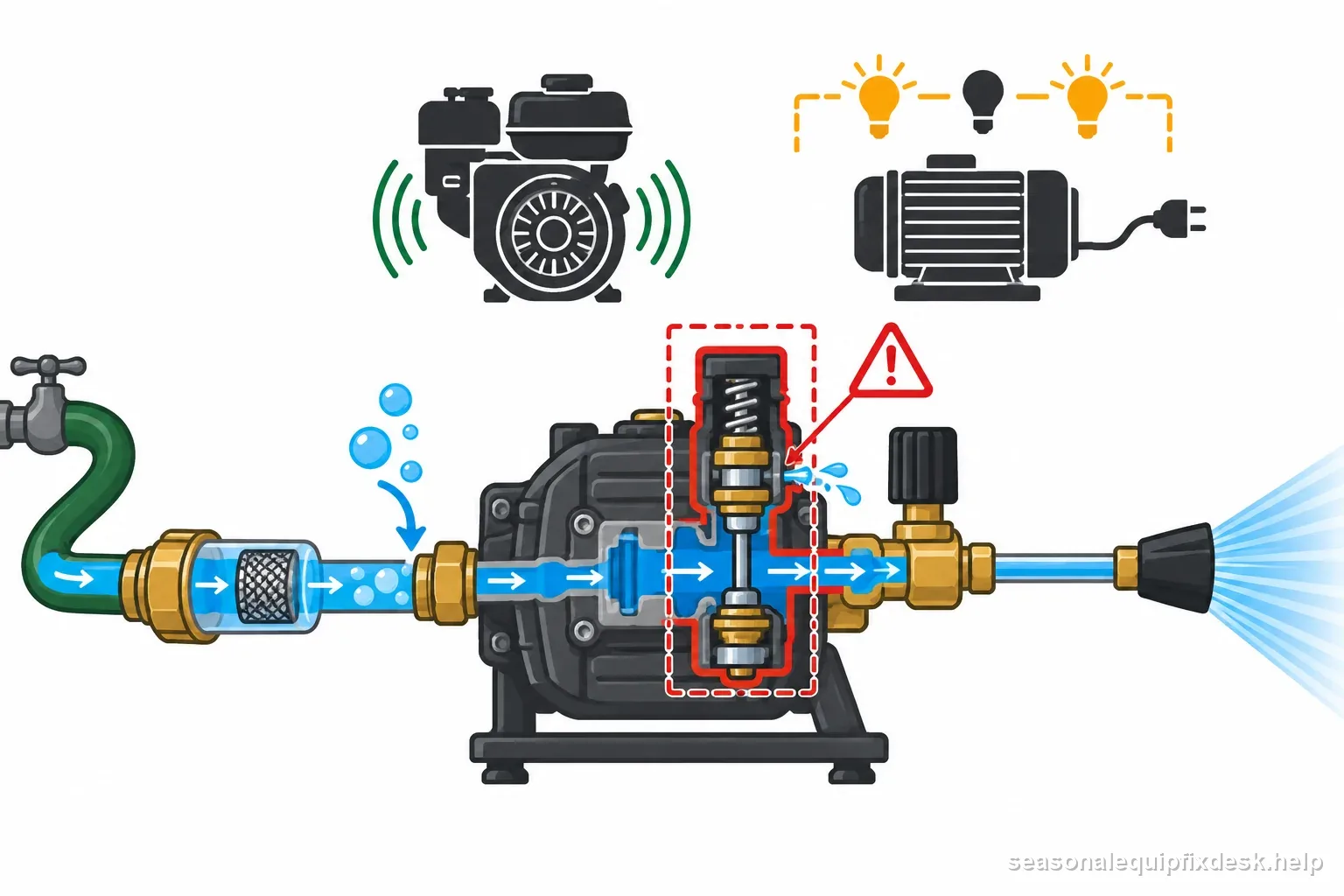
| When the pulse occurs | First branch | Safe owner check |
|---|---|---|
| At startup, then settles after purge | Trapped air or inlet flow | Follow manual purge sequence |
| Only with one nozzle/accessory | Restriction or accessory flow demand | Test only after shutdown and pressure relief |
| With trigger released or recurring under load | Pump control, valve, or unloader | Stop repeated operation and request service |
| With leak, knocking, or hose damage | Potential pressure hazard | Shut down and keep clear |
Do not disconnect a pressurized hose or put a hand near the spray stream.
Trigger-off behavior can expose unloader hunting
If pressure is stable while spraying but the machine cycles strangely when the trigger is released, the bypass or unloader system may be sticking. Conversely, if it pulses only while the trigger is held and all inlet checks are good, worn pump valves or seals may be failing to maintain flow under load.
Do not hold the unit in bypass longer than the manual allows while diagnosing it. Pump water can heat rapidly in bypass, and heat can create a second symptom that did not exist at startup.
Compare the pulse with the trigger state. A pulse that disappears after a manual-approved air purge points toward trapped air or a restricted inlet; a pulsing spray that remains with a clean nozzle and steady supply may involve a pump valve or unloader. A machine that only pulses when a surface cleaner or other accessory is attached may be reacting to that accessory’s flow demand. Test one configuration at a time and record the nozzle, hose length, and water source.
Before inspecting a nozzle or fitting, stop the engine or disconnect power, turn off the supply, and relieve pressure using the exact manual sequence. Never reach toward a suspected high-pressure leak or loosen a pressurized connection. If the pump knocks, the hose is damaged, or pulsing persists after the owner checks, stop and arrange service; pressure adjustment screws are not a safe way to mask an internal fault.
Do not tune around a worn pump
Some pump assemblies allow unloader service; others are sold as non-serviceable modules. Do not increase pressure adjustment to hide pulsing. If internal pressure and suction valves, pistons, seals, or the overflow valve are suspected, use model-specific specifications or service. Kärcher explicitly routes leaking pressure/suction valves and stuck overflow valves to service partners.
Seasonal prevention is mostly about clean water and dry storage
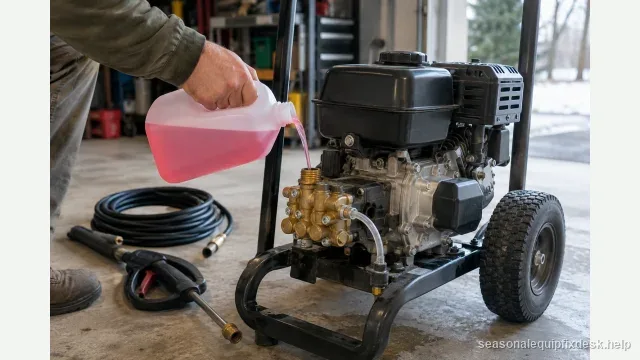
Flush detergent paths with clean water when required, keep the inlet filter clean, protect couplers from grit, and winterize before freezing weather. Pumps that spend winter with trapped water can develop valve or seal damage that shows up next spring as pulsing rather than a total no-pressure failure.
Unplug electric models or stop gas engines and relieve pressure before external checks. Confirm steady water supply and purge air as the manual allows. Do not run the pump dry or search for a high-pressure leak by hand; stop for knocking, cavitation, severe vibration, or a damaged hose.
- Pressure-only, gas RPM, or electric motor cycling
- Tap, hose, and filter checked
- Air purge per manual
- Correct clean nozzle fitted
- Optional accessories removed for retest
- Any leak, knock, vibration, or service boundary
Two worked bucket examples show how to compare flow
Only measure water from the hose with the washer disconnected; do not run the pump dry or use a bucket test as a reason to keep operating a pulsing unit. Compare a result with the exact manual’s minimum supply requirement; there is no universal pass value for every washer.
Worked example 1: If a 10 L container fills in 2 minutes, divide 10 by 2 to get 5 L/min. Record the same tap, hose, and fittings used at the machine, then compare that figure with its manual.
Worked example 2: If the same 10 L container takes 3 minutes, 10 ÷ 3 = about 3.3 L/min. That is lower than the first observation, but it does not by itself diagnose the pump; check whether a valve, kink, filter, or hose setup changed and use the model’s stated requirement.
If the engine will not fire, isolate that symptom first with the pressure-washer engine starting checks before diagnosing a pulsing spray.
Water around the pump can come from an inlet, a pressure connection, a relief outlet, or the pump body; the safe leak-location guide distinguishes those paths.