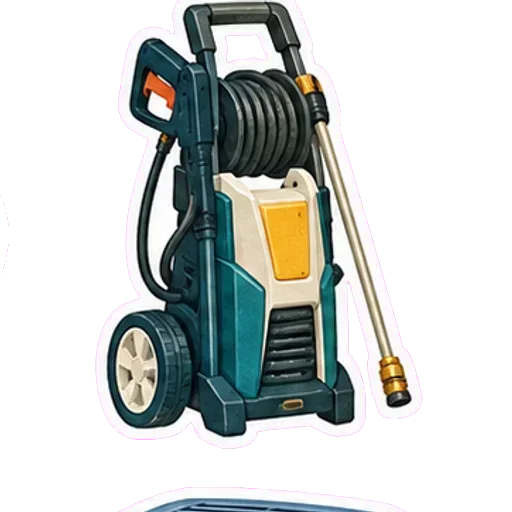
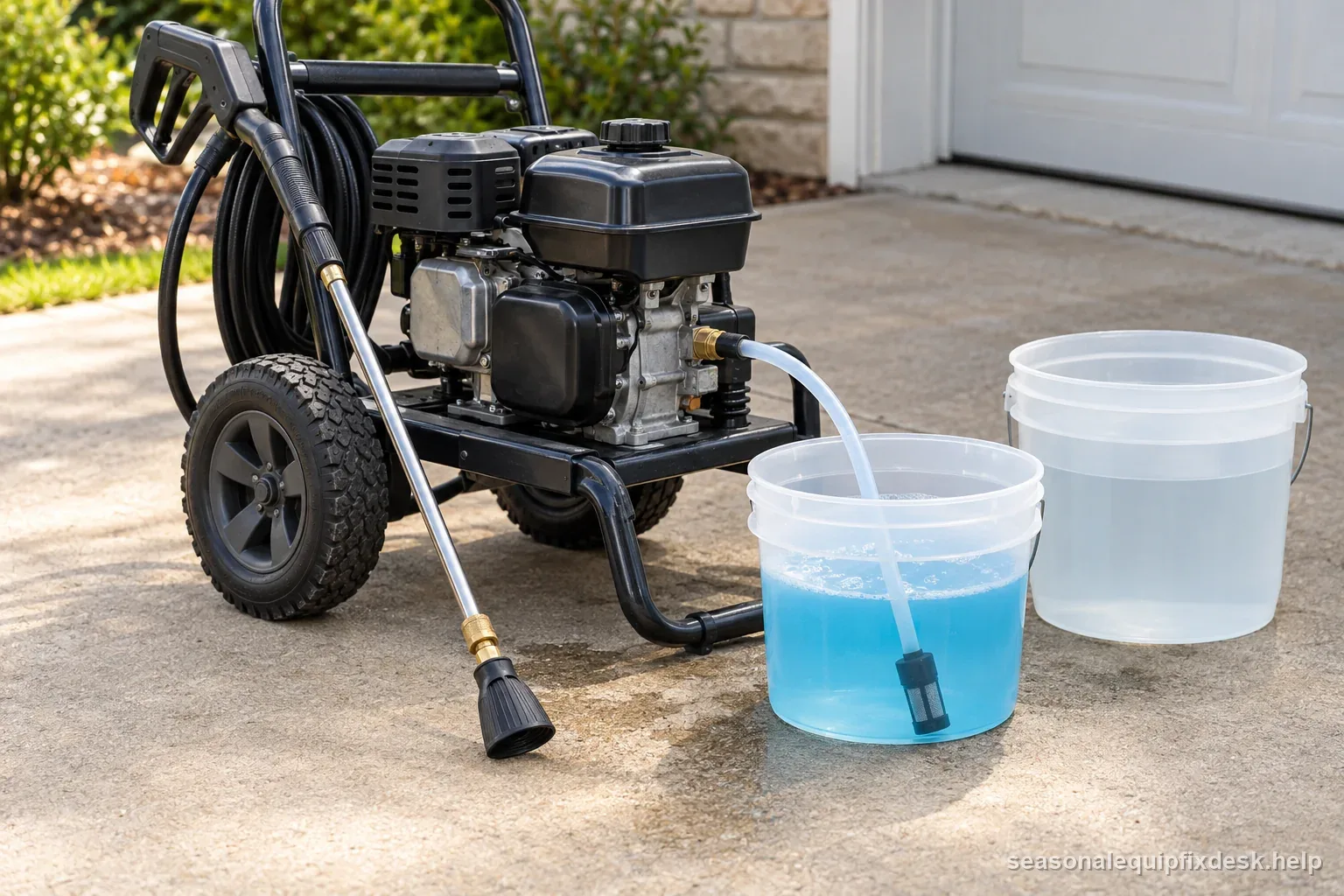
Quick answer: If a pressure washer sprays water but does not pull detergent, confirm that it is in its low-pressure soap mode. On many downstream-injection models, this means installing the black soap nozzle; a high-pressure tip will not create the suction needed to draw solution. Check that the pickup filter is submerged, the hose is not kinked, and the solution is approved and mixed as its label directs. Shut down and release pressure before touching hoses or nozzles. Never use bleach or flammable solvent.
Detergent systems vary. Some washers use an onboard tank, some an external pickup hose, and some electric models use a different injector layout. The exact owner manual determines nozzle, soap valve, dilution, and rinse procedure. A fitting shown in one diagram may not exist on another machine, so do not connect loose tubing based on a generic photo.
Confirm the nozzle and soap setting
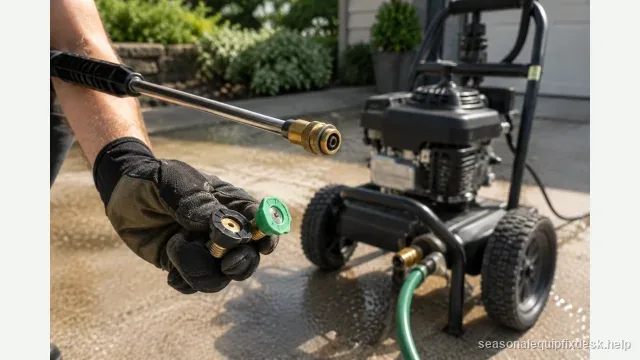
Turn the machine off and release trigger pressure using its manual before changing tips. Identify the maker-designated soap nozzle, commonly a black low-pressure tip on Simpson gas models. Do not expect a high-pressure red, yellow, or green tip to siphon detergent. Simpson explains that the soap injection on covered models needs its low-pressure black nozzle.
Check for a detergent selector, adjustable nozzle, or tank control and set it only as the manual shows. If there is a tank, confirm its cap and pickup are installed properly. If there is a siphon hose, ensure the filter end is below the solution surface. Do not remove pump fittings or loosen high-pressure connections to search for an injector barb.
Inspect the pickup path with the engine off
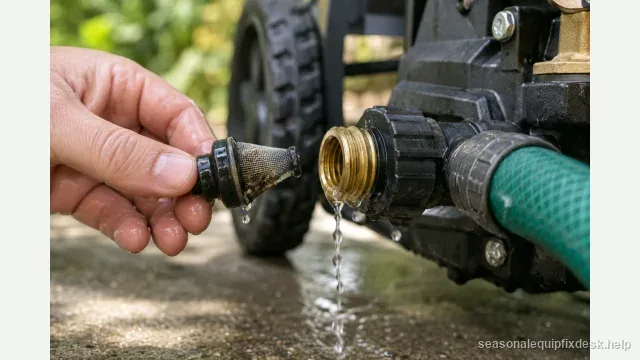
With the washer stopped, cool, and depressurized, inspect the visible detergent tube for a kink, pinch, crack, or loose connection. Straighten a simple kink without stretching the hose. Check the pickup screen for visible dirt and clean or replace it only by the manual’s procedure. Do not poke a wire through the injector or force debris inside.
Keep the filter at the bottom of the bottle or bucket. A floating filter pulls air instead of liquid; a hose that is too short or folded may also interrupt suction. If the detergent is thicker than water, follow the product label and washer instructions for dilution. Simpson says to use washer-safe detergent and notes thick solutions may need dilution. Adding extra concentrate to compensate for weak flow can make pickup harder and damage components.
Use the soap system in the correct order
- Place the washer outdoors on a stable surface and connect the water supply as directed.
- With the engine off and pressure released, attach the model’s low-pressure soap tip or select its soap setting.
- Put the pickup filter fully into an approved solution and keep the hose unkinked.
- Start the washer by the owner manual and squeeze the trigger from a stable stance until soap reaches the nozzle.
- Apply the solution according to its label, away from people, pets, electrical equipment, and surfaces it could damage.
- Flush the pickup tube and injector with clean water using the manual’s low-pressure procedure.
Never point the washer at skin, animals, windows, wiring, or fragile surfaces. High-pressure water can penetrate skin and cause serious injury. Use eye protection and keep both hands on the gun when instructed. Do not clear an injector or screen while the engine is running or the hose is pressurized.
| Observation | Likely owner-level cause | Next step |
|---|---|---|
| Water sprays; no soap | High-pressure nozzle or soap mode not selected | Power down, release pressure, fit the manual’s soap tip |
| Filter floats above solution | Pickup draws air | Submerge the screen fully |
| Hose is folded or pinched | Flow restriction | Stop and straighten the visible hose |
| Screen has visible dirt | Clogged pickup filter | Clean or replace per the manual |
| Correct setup still will not siphon | Injector buildup or failed part | Stop and contact manufacturer service |
Check the water supply and product label
Many downstream injectors need the specified water flow and low-pressure mode. Confirm the garden hose is fully connected, the faucet is open, and supply meets the washer manual’s requirements. Do not run with a restricted faucet or an undersized hose and assume the injector is blocked. If the machine also pulses or loses pressure, troubleshoot its water flow separately before diagnosing soap pickup.
Read the detergent label for surface compatibility, dilution, dwell time, and rinsing. Never use bleach, pool chemicals, or flammable solvents unless the exact machine manual explicitly permits a product; Simpson specifically says never to use bleach in its soap system because of hazardous mist and component damage. Do not mix chemicals. Direct runoff away from storm drains, plants, and waterways according to product instructions.
Flush after each use
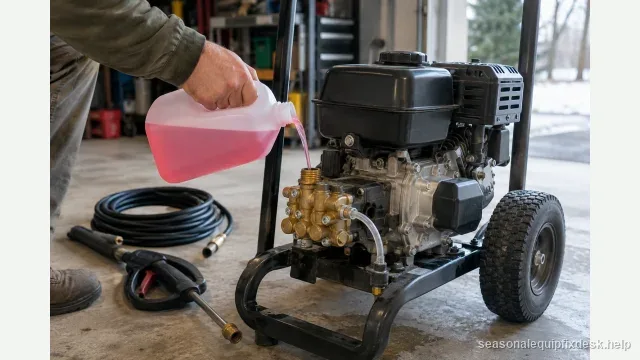
When the job ends, replace detergent with clean water and draw it through the low-pressure setting for the time given in the manual. Simpson says residual soap can dry in a compact injector passage and restrict it later. Do not run the pump dry or leave it in bypass longer than the maker allows. After flushing, shut the washer down and store it by the seasonal instructions.
If soap has already dried in the hose, do not use solvent or a stronger cleaner to dissolve it. Follow the manufacturer’s cleaning procedure. If the screen, hose, nozzle, and solution are correct but a clean-water flush does not restore pickup, the injector may be dirty internally or have a failed part. Internal repair can require pressure-system precautions and should go to authorized service instead of improvised probing.
Examples that narrow the problem
Example 1: the high-pressure tip is installed. Clear water comes from the gun, but soap does not. The owner shuts down, releases pressure, and confirms a high-pressure tip is installed. The manual identifies the low-pressure soap tip. Once it is fitted and the pickup filter submerged, detergent flows. No pump disassembly was needed.
Example 2: no soap with the correct setup. The owner uses the specified soap nozzle, submerged filter, straight tube, and approved detergent at label dilution. A fresh-water flush does not help. They record the model and stop for service instead of removing the injector or forcing a wire through a passage.
When to stop troubleshooting
Stop for a leaking high-pressure hose, cracked fitting, damaged gun, fuel leak, engine smoke, unusual pump noise, or solution leaking from an unintended connection. Turn off the engine, close the water supply, and release pressure as instructed before external inspection. Never hold a leak with your hand. A small high-pressure leak can inject fluid beneath skin; seek urgent medical care for a suspected injection injury.
If hose, screen, nozzle, dilution, and manual setting are correct but soap still will not siphon, arrange service. Provide the washer model, nozzle used, detergent and mixture, pickup type, and whether it was flushed after use. This gives a technician useful owner-level evidence without turning a simple symptom into an unsafe pump repair.
Note whether the symptom appeared immediately or only after storage. A washer that stopped drawing after detergent was not followed by a clean-water flush may have dried residue; one that never drew from the first use may have a setup mismatch. Compare hose routing with the diagram for that model and confirm its selector position. Do not borrow a tank, injector, or nozzle from another brand to test a theory. Timing and setup notes let the service provider check the correct owner-accessible path before opening an injector or pump.