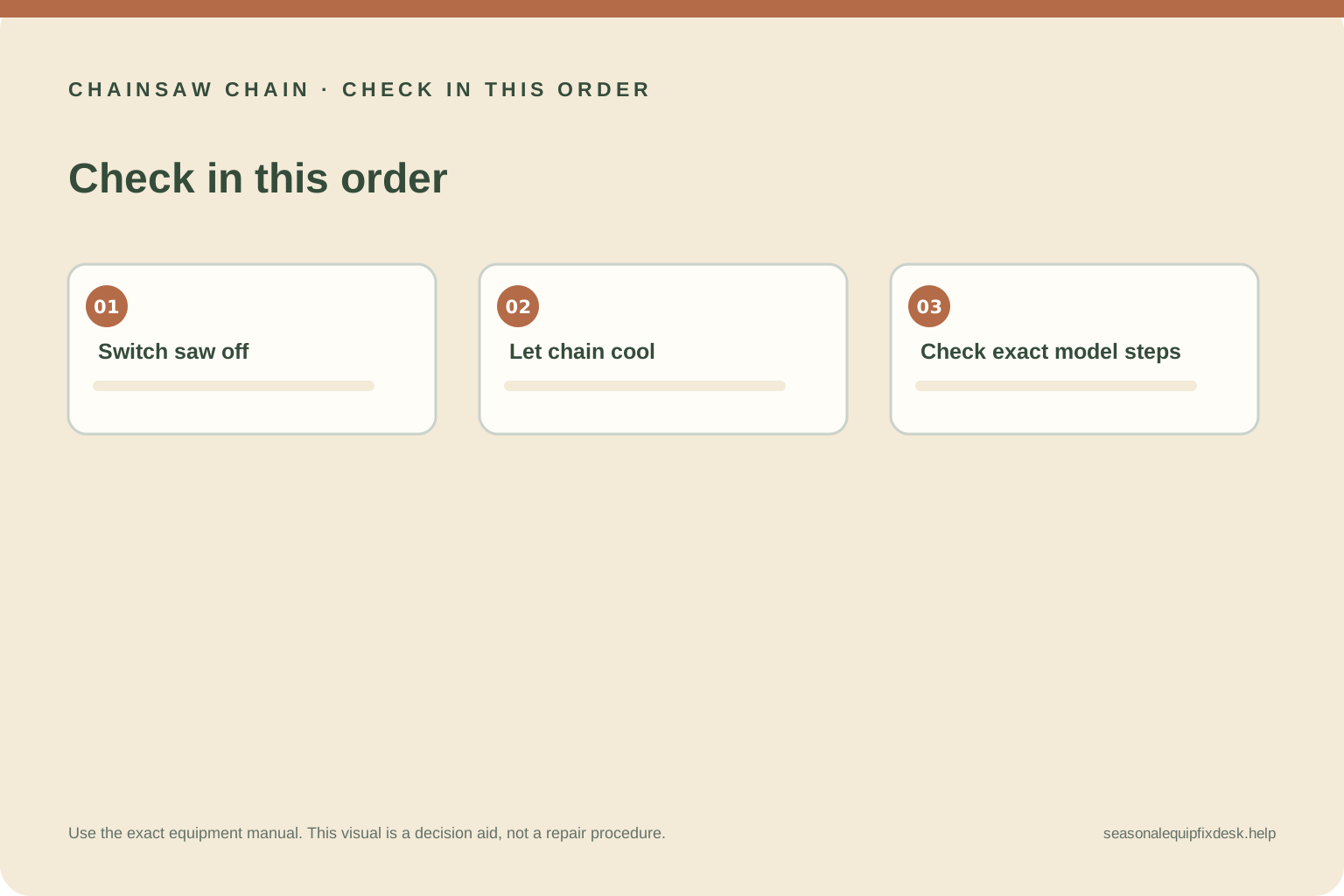
Quick answer: Switch the saw off and do not force a chain brake that will not release. Let the chain cool, keep the bar pointed away from people, and check whether the clutch cover was removed while the brake was engaged. Some Husqvarna models have a specific reset procedure for that situation, but the brake is spring-loaded and the process varies. If the guard is jammed or damaged, stop and contact an authorized dealer.
The chain brake is a safety device, not a troubleshooting lever to cycle repeatedly. A saw with an engaged or defective brake should not be started or used for cutting. Keep hands away from the chain and brake band; even with the engine off, the mechanism can be under spring tension. Remove jewelry, keep the area clear, and follow the exact operator manual.
First identify what happened
Write down the saw make and model, whether it is gas or battery-powered, what happened just before the brake stuck, and whether the bar, chain, or clutch cover was removed. Note if the brake guard moves at all, whether the chain is hot, and whether the cover fits flush. Do not pull harder to make the cover sit flat. That can damage the brake band, cover, or linkage.
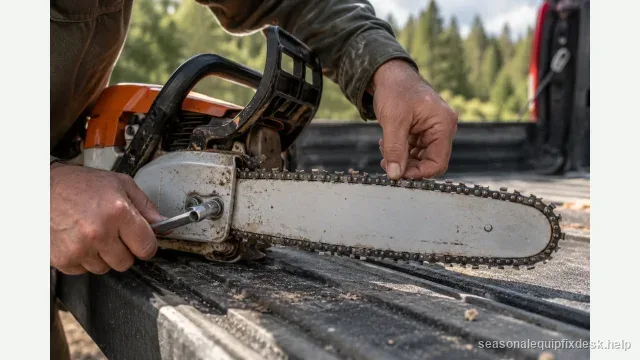
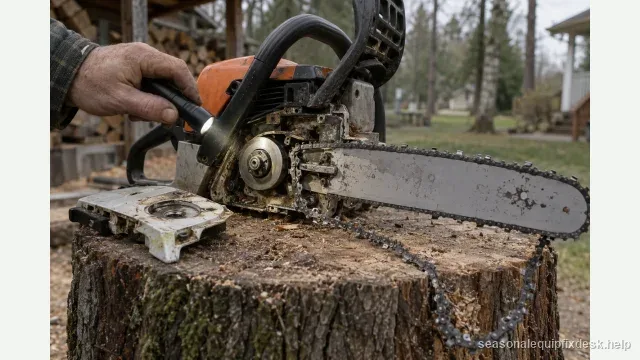
A brake can be engaged intentionally during a kickback event, triggered while handling the saw, or left engaged during service. Husqvarna’s support guidance notes that removing a clutch cover while the brake is engaged can leave the brake mechanism in a position that prevents reassembly. That instruction is specific to the covered models; it does not establish a universal procedure for every brand.
Do not test the brake by running the saw
Never start the engine to see whether the chain moves, rev the saw against an engaged brake, or hold the throttle while moving the guard. Do not run an electric saw with the chain brake stuck or bypass an interlock. The brake is intended to stop chain movement under specified conditions; improvised tests can overheat or damage components and expose the operator to a moving chain.
Also avoid gripping the chain, pulling it around by hand, tapping the guard with a hammer, spraying lubricant into the brake mechanism, or prying between the cover and saw body. Those actions can conceal a broken part without restoring safe operation. If the saw was dropped, pinched in wood, or involved in a kickback, tell the service dealer before anyone resets it.
Separate an accidental engagement from a stuck mechanism
| What happened | What it may mean | Safe next step |
|---|---|---|
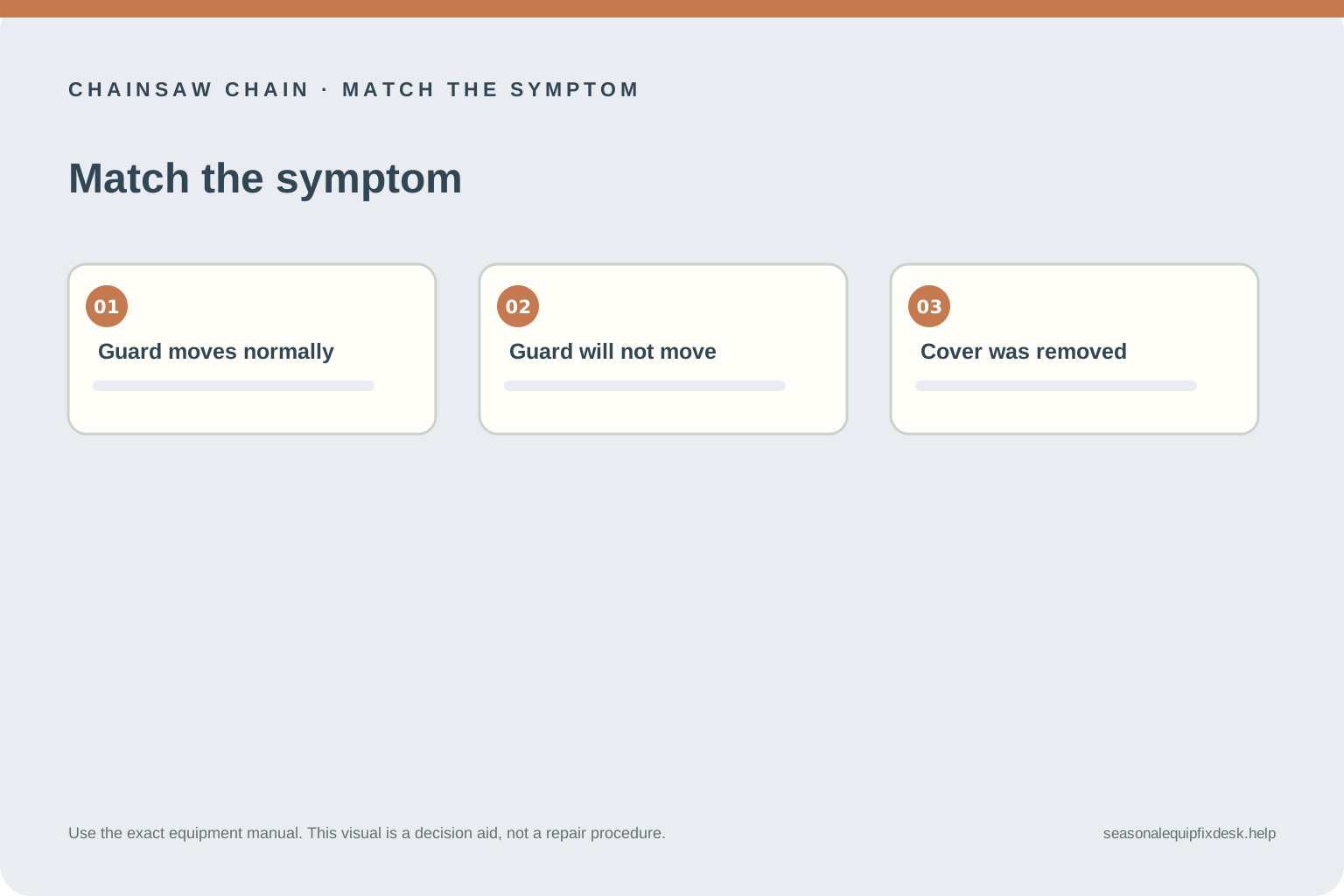
| Guard moved during handling | Brake may simply be engaged | Use only the release method in the operator manual |
| Clutch cover removed with brake on | Brake band may be set for removal | Use the brand and model reset guide or dealer |
| Guard will not move or looks cracked | Possible jam, damage, or spring fault | Do not force it; arrange service |
| Brake does not stop chain in a proper test | Safety function may be compromised | Stop use and have the saw inspected |
If the clutch cover came off while the brake was engaged
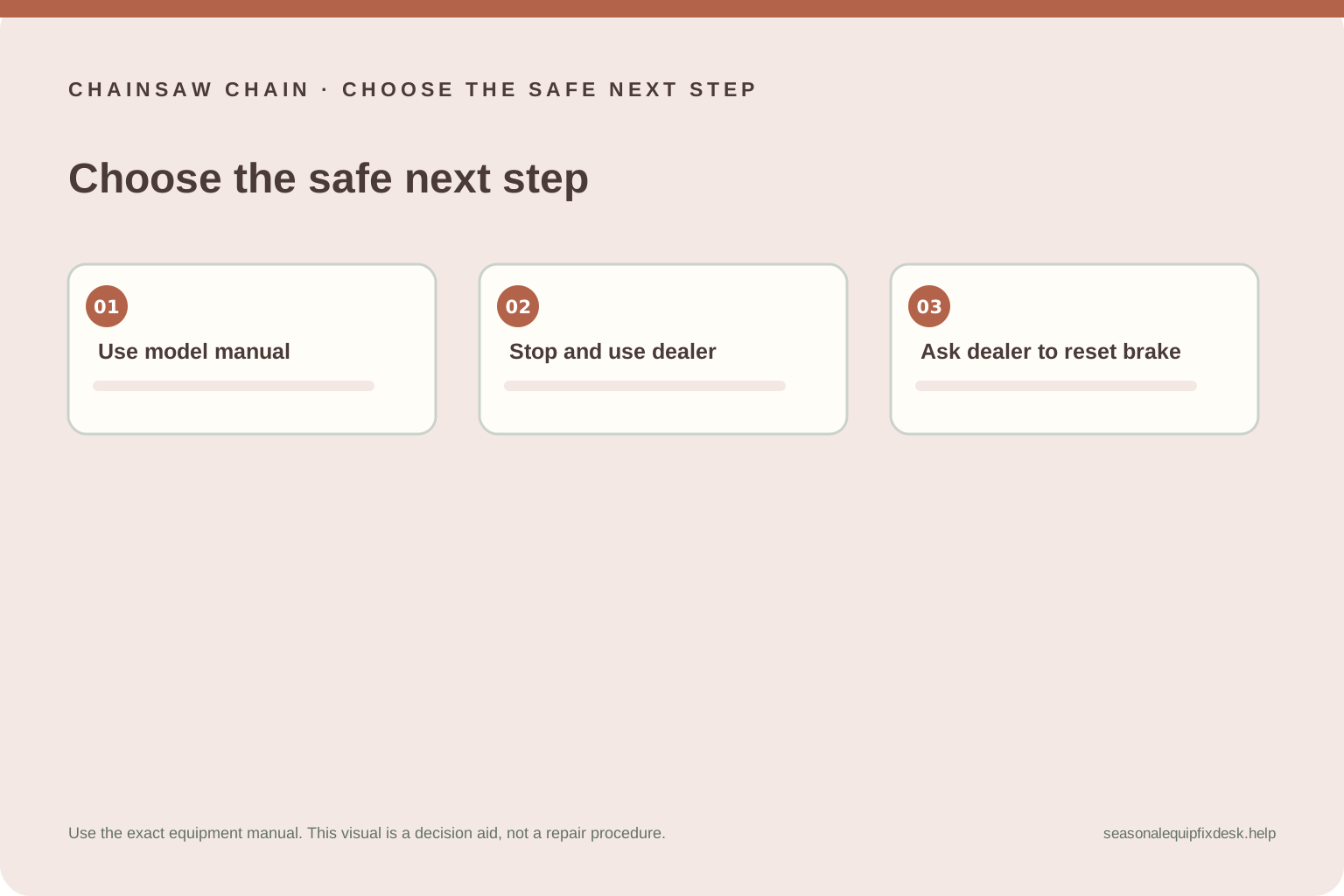
Stop and open the manual for the exact saw before continuing. Husqvarna publishes a model-dependent brake reset guide that warns the brake is under tension and calls for protective gloves. Its steps are not an invitation to disassemble an unfamiliar saw. If the model is not covered, the cover is distorted, the brake band is outside its intended track, or you are unsure which part is under spring force, put the saw aside and contact a dealer.
Do not mix parts from different models or use a generic video as a substitute for the current manual. If the maker’s instructions permit a reset, follow the sequence exactly and keep fingers clear of the brake band and moving linkage. Stop if the cover will not align without force, a spring or band appears displaced, or the hand guard still binds afterward.
Inspect only what the manual identifies as a user check
With the saw off and the brake untouched, look for external cracks, missing fasteners, packed debris around the guard, or a cover that has been installed incorrectly. Remove debris only from accessible outer surfaces using the method in the manual. Do not remove the clutch cover to “see inside” unless the manual describes that as an owner task and the brake has been safely released.
After any permitted reset or reassembly, perform the brake function check only as the exact manual prescribes, in a safe work area with required protective equipment. Husqvarna’s startup guidance specifies a model-specific check and says the chain should stop immediately during the procedure. If the chain does not stop as specified, do not cut. A professional inspection is required before returning the saw to service.
When to stop and what to tell the dealer
Arrange service for a guard that is cracked, loose, bent, jammed, or difficult to move; a brake band that is displaced; a cover that will not seat; or a chain that fails the manual’s stop check. Stop immediately after a drop, kickback, pinch, or unusual grinding noise. Do not cut wood until the brake works exactly as specified.
Give the dealer the model and serial number, whether the clutch cover was removed, what position the guard was in, and whether the saw was hot or involved in a kickback. Mention any attempted reset and parts changed. That history helps distinguish a standard model-specific reset from a damaged spring, band, hand guard, or linkage. Keep the saw off and transport it with the bar cover installed if the maker’s instructions allow.