Quick answer: A saw that starts and idles but dies when the throttle opens has already passed part of the no-start test. It can ignite fuel and run at low demand. The failure appears when airflow and fuel demand rise, so fresh premix, air-filter restriction, fuel supply, tank venting, exhaust restriction, and load on the bar/chain become more useful branches than replacing a starter or repeating the cold-start sequence.
Do not tune carburetor screws first. A restriction or air leak can make a mixture adjustment appear to help while the real fault remains. Preserve the original response—rich burble, sharp lean fade, instant stall, or only-in-the-cut bog—before changing settings.
Listen to the transition from idle to throttle
A saw that blubbers and struggles to clear can be over-rich or unable to move exhaust. A saw that revs for a moment, then sharply fades may be starving for fuel or pulling extra air. An engine that revs normally in free air but collapses only in wood may have a dull chain, insufficient bar oil, pinch, or another cutting-load problem rather than a pure carburetor fault.
Make the comparison safely. The chain brake and starting controls must be used as designed, and a cutting test should happen only after tension, chain condition, bar lubrication, and all covers are correct. Do not hold a poorly lubricated chain at full speed simply to see whether the engine will bog.
| What happens | Likely branch | Safe next observation |
|---|---|---|
| Rich burble, struggles to clear | Fuel mixture or exhaust restriction | Confirm choke is fully in run; inspect filter and cool spark-arrestor per manual |
| Sharp fade as throttle opens | Fuel starvation or unmetered air | Check fresh correct mix, visible line damage, and service clues for an air leak |
| Runs briefly, fades, then recovers after sitting | Tank venting, fuel delivery, heat-related ignition | Record time-to-failure and hot/cold behavior; do not run with cap loosened |
| Revs unloaded but dies in wood | Cutting load, chain sharpness, bar lubrication, pinch | Inspect bar/chain and use appropriate wood only after safe setup |
| Hanging or racing idle | Possible lean air leak or throttle linkage fault | Stop use; seek model-specific service rather than adjusting mixture |
Fresh correct premix is the fastest high-value reset
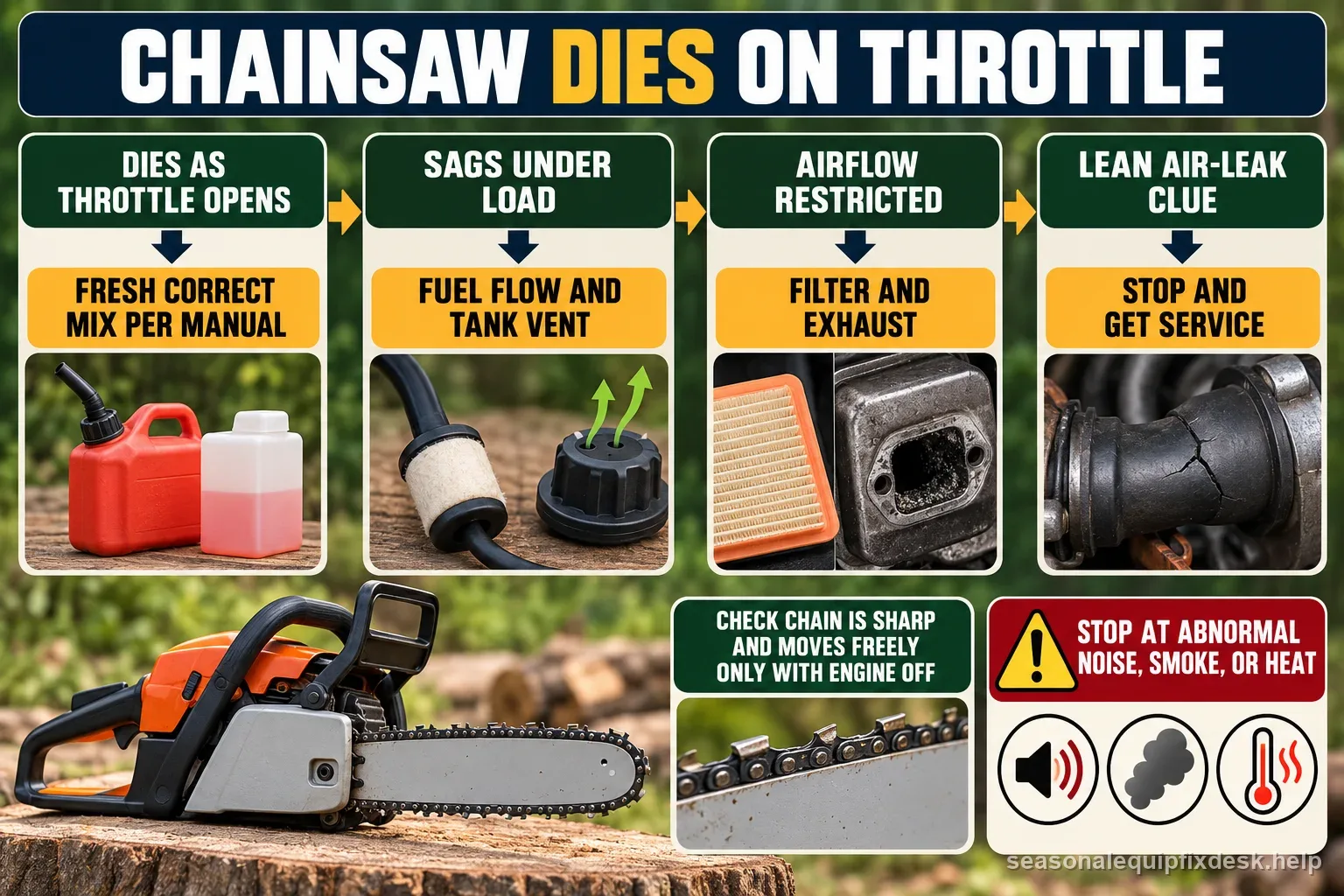
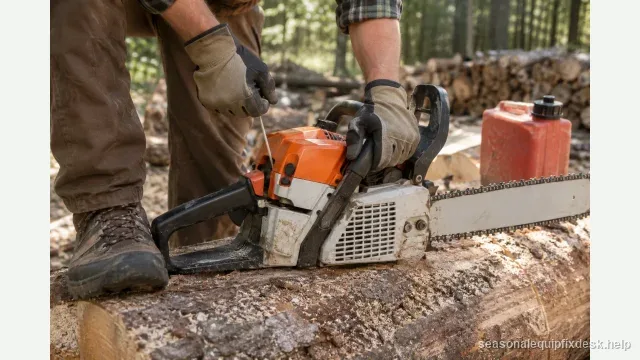
Husqvarna’s full-throttle troubleshooting begins by confirming fresh, correctly mixed fuel. If the tank contains unknown or old premix, replace it according to the manual before judging carburetor behavior. A two-stroke engine can idle on a compromised mixture and still fail when throttle demand increases.
Measure mix accurately and use the oil/fuel specification for the saw. Do not “add a little extra oil for safety”; an incorrect ratio changes combustion and deposits and can make diagnosis harder. If fuel age and ratio are known good, move on rather than repeatedly draining a system that has already passed that check.

Air filter and exhaust restriction create different clues
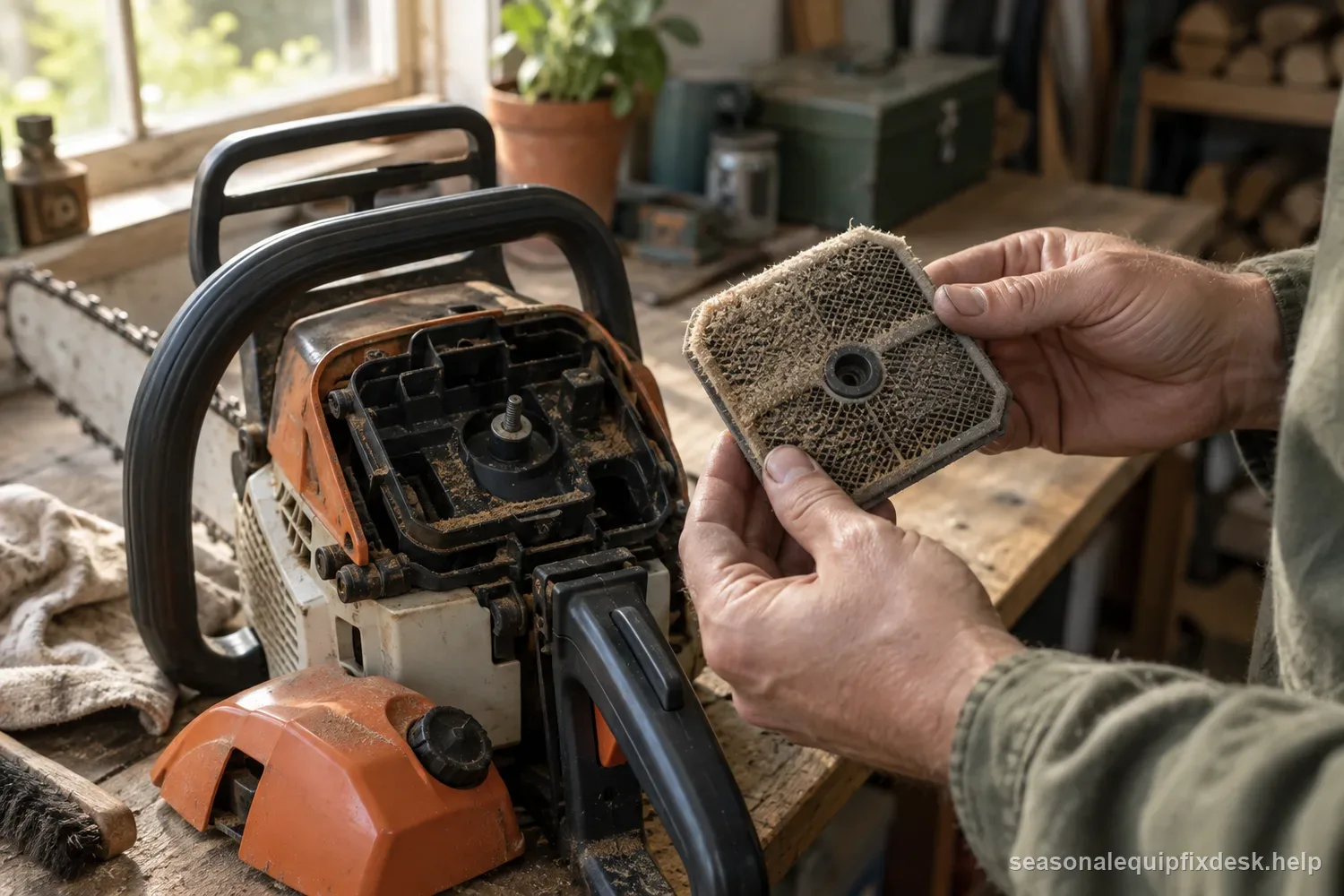
A heavily loaded air filter restricts intake and can make the engine run rich or lose power. Inspect and service the filter using the manufacturer’s method; do not run the saw without it as a diagnostic shortcut in dusty conditions. If throttle response improves only with a contaminated filter disturbed, the service result still needs confirmation with the correct filter installed.
Husqvarna also points to a restricted spark-arrestor screen as a cause of power loss. Let the muffler cool and follow the model cleaning/replacement procedure. Do not drill the screen, remove emissions components permanently, or run the engine with a hot exhaust system exposed.

Competitor pages often jump from a throttle stall to carburetor disassembly or a high-speed screw adjustment. That skips the safer evidence: fuel age and mix, filter condition, exhaust restriction, tank-vent behavior, and whether the fault happens only under cutting load. Do not tune H/L screws by sound or remove filters and screens as a normal workaround.
Fuel starvation often appears only when demand rises
The pickup filter and flexible fuel line may pass enough fuel for idle but not enough for sustained throttle. Inspect accessible lines for cracks, hardening, collapse, or wetness and verify the filter is not restricted. If the air-purge bulb never draws fuel normally, that observation belongs in the fuel-supply branch.
A tank-vent problem can imitate a weak fuel pump. If the saw runs for a while, fades, then recovers after sitting, note the timing. Do not operate with the fuel cap loosened as a normal workaround. Tank-pressure tests and vent replacement should follow the exact model procedure because fuel vapor and leakage are fire hazards.
A lean air leak is more serious than a dirty jet
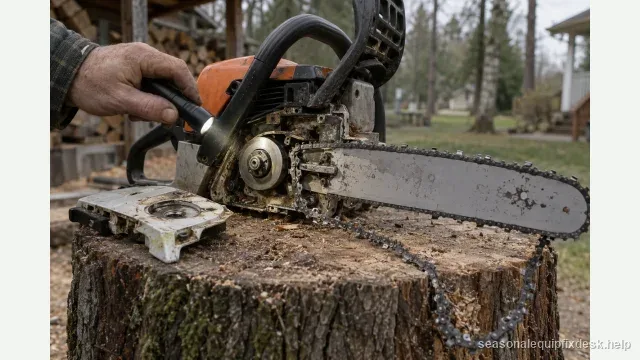
Crank seals, intake boots, impulse lines, and carburetor mounting leaks can add unmetered air. A saw that races, hangs at high idle, tunes inconsistently, or becomes leaner as it warms deserves service rather than richer screw settings. Running a two-stroke engine lean can increase temperature and damage the piston/cylinder.
If the saw requires a mixture adjustment after basic maintenance, use the manufacturer’s service specification and tachometer procedure where required. High-speed mixture settings are not a safe “turn until it sounds right” exercise on modern saws.
Separate engine power loss from a chain that is making the engine work too hard
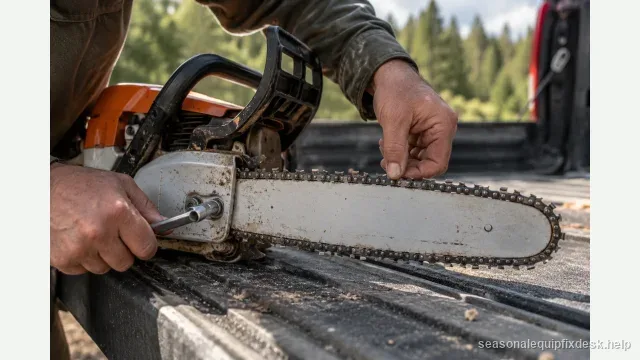
Husqvarna’s cutting-power guidance specifically includes dull chain and inadequate bar/chain lubrication. A sharp, correctly filed chain should feed without excessive pushing. If the bar smokes, the chain is dry, or cutting requires heavy pressure, correct the cutting system before condemning engine fuel delivery.
Also look for a bar pinched in the kerf or a chain that is too tight. If the engine accelerates normally with the cutting attachment free but dies under abnormal mechanical drag, the engine may be responding correctly to excessive load.
Do not loosen the fuel cap while running, run without the air filter, drill/remove the spark-arrestor screen, or turn H/L screws by sound. Stop for a hanging idle, suspected air leak, fuel leak, or hot lean-out.
Use run time and temperature to narrow intermittent throttle stalls
- Dies immediately on first throttle from cold: start enrichment or fuel-metering transition deserves attention.
- Runs strongly for a minute, then fades: fuel supply, venting, heat, or ignition breakdown rises in probability.
- Revs cleanly unloaded but bogs only in wood: chain sharpness, oiling, bar friction, and cut technique need inspection.
- High idle hangs after throttle release: stop and investigate a possible lean condition or linkage problem.
Record which pattern you have before disassembly. A service technician can pressure-test fuel/air systems far more effectively when the symptom has not been blurred by random carburetor adjustments.
Retest with the saw mechanically ready, then stop at the first abnormal sign
After service, reinstall the correct filter, covers, bar, chain, and spark-arrestor components. Verify chain tension and visible lubrication, then use a short clean-wood cut rather than a long high-load test. The repair passes when throttle response is clean, idle returns normally, and the saw cuts without excessive pushing or overheating.
Stop and seek service for hanging/racing idle, suspected intake or crank-seal leak, repeated hot lean-out, fuel leakage, damaged muffler components, or a saw that still dies on throttle after fresh fuel, clean air/exhaust paths, and a free correctly lubricated cutting system. Those faults need model-specific pressure, ignition, or carburetor testing.