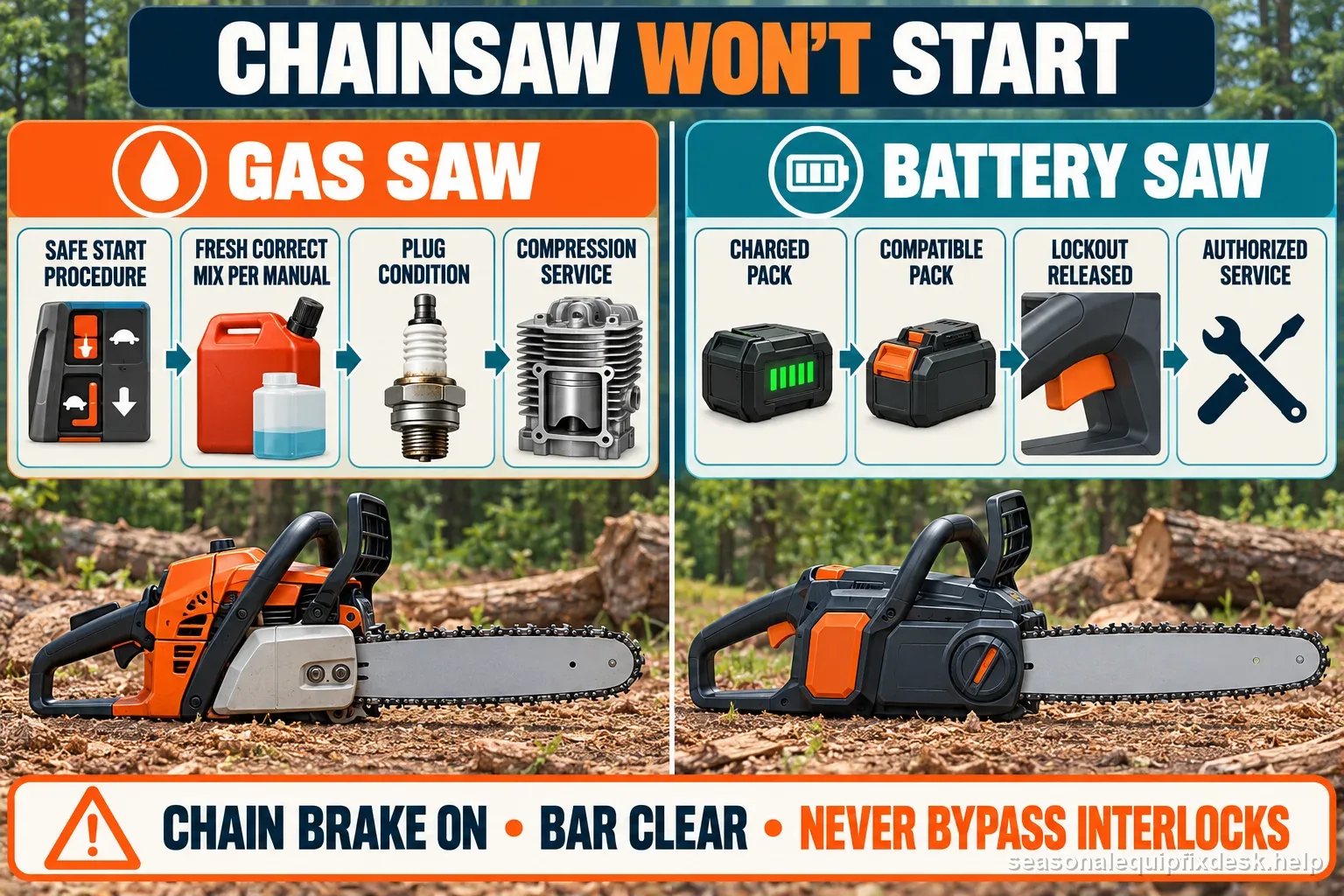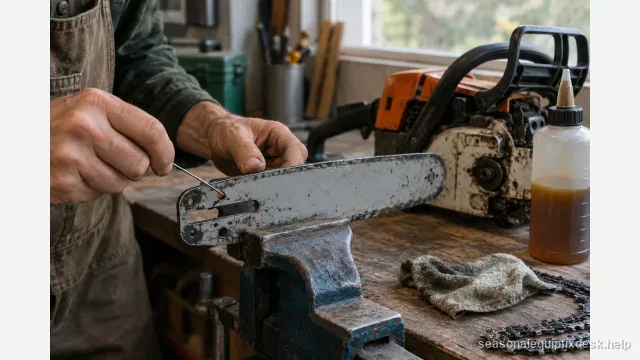
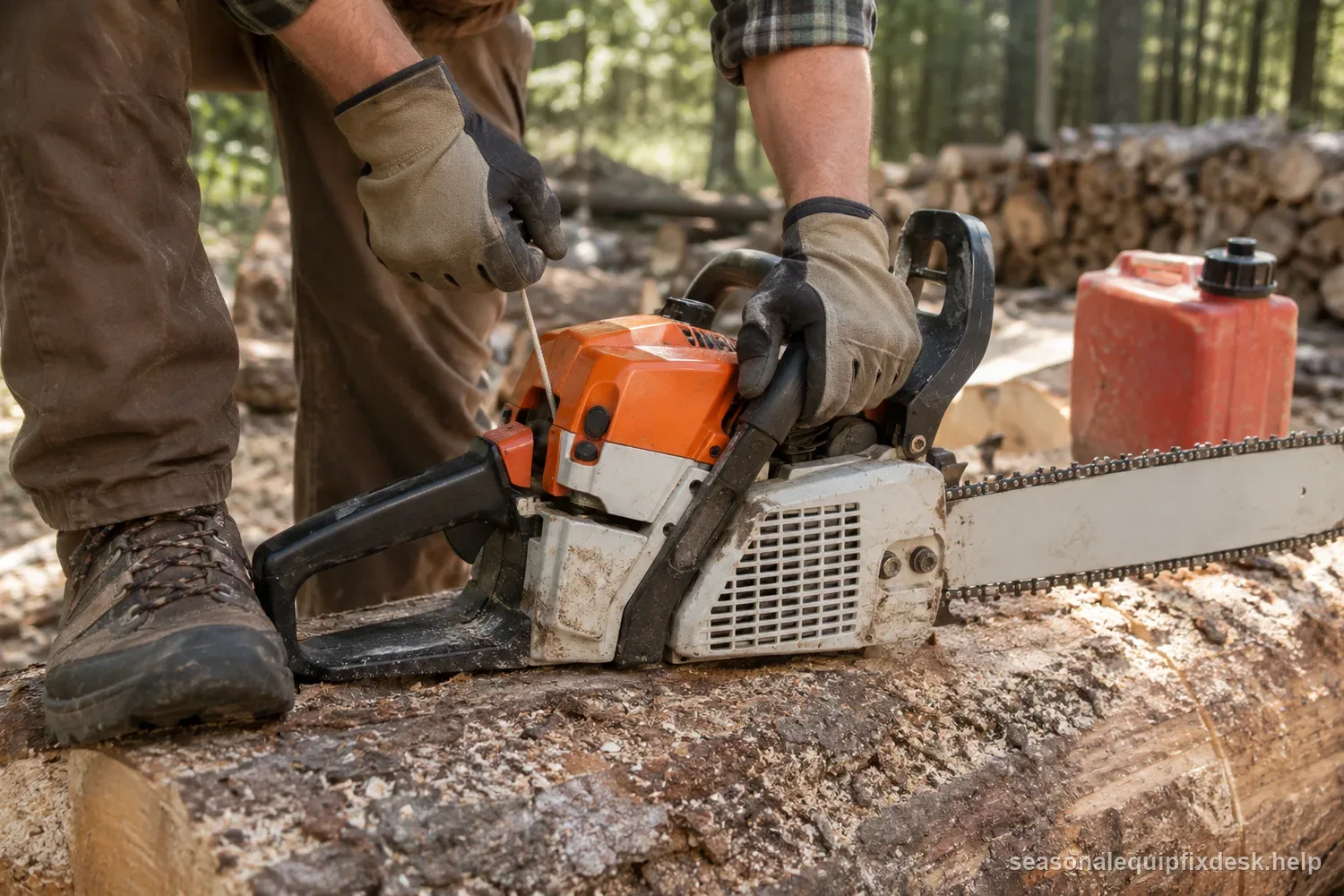
Quick answer: Start by identifying the power system. A gasoline chainsaw that will not fire needs a safe start-procedure, fuel-delivery, ignition, and compression path. A battery saw needs a charged compatible pack, correct battery seating, start controls/interlocks, chain-brake state as specified by the model, and a cutting system that is free to move. Mixing those branches is how a simple no-start turns into unnecessary carburetor or battery purchases.
Before any test, put the saw on stable ground, engage the chain brake when the starting procedure requires it, keep the chain clear of objects, and wear the protective equipment specified by the manufacturer. Do not drop-start a saw or defeat the trigger lockout, brake, or other safety control just to learn whether the motor can run.
| Observed start symptom | Diagnostic branch | Stop condition |
|---|---|---|
| Gas saw will not fire | Model starting steps, fuel freshness, dry/wet plug clue | Fuel leak, damaged controls, or unsafe ignition test |
| Battery saw silent | Compatible charged pack, seating, start interlock | Pack damage, heat, or exposed wiring |
| Starter rope stops abruptly | Possible fluid lock or mechanical resistance | Do not force the rope or pull plug on a hot saw |
Keep the chain brake engaged during starting when the owner manual directs it, stabilize the saw exactly as specified, and never defeat a chain brake or interlock to make a test easier.
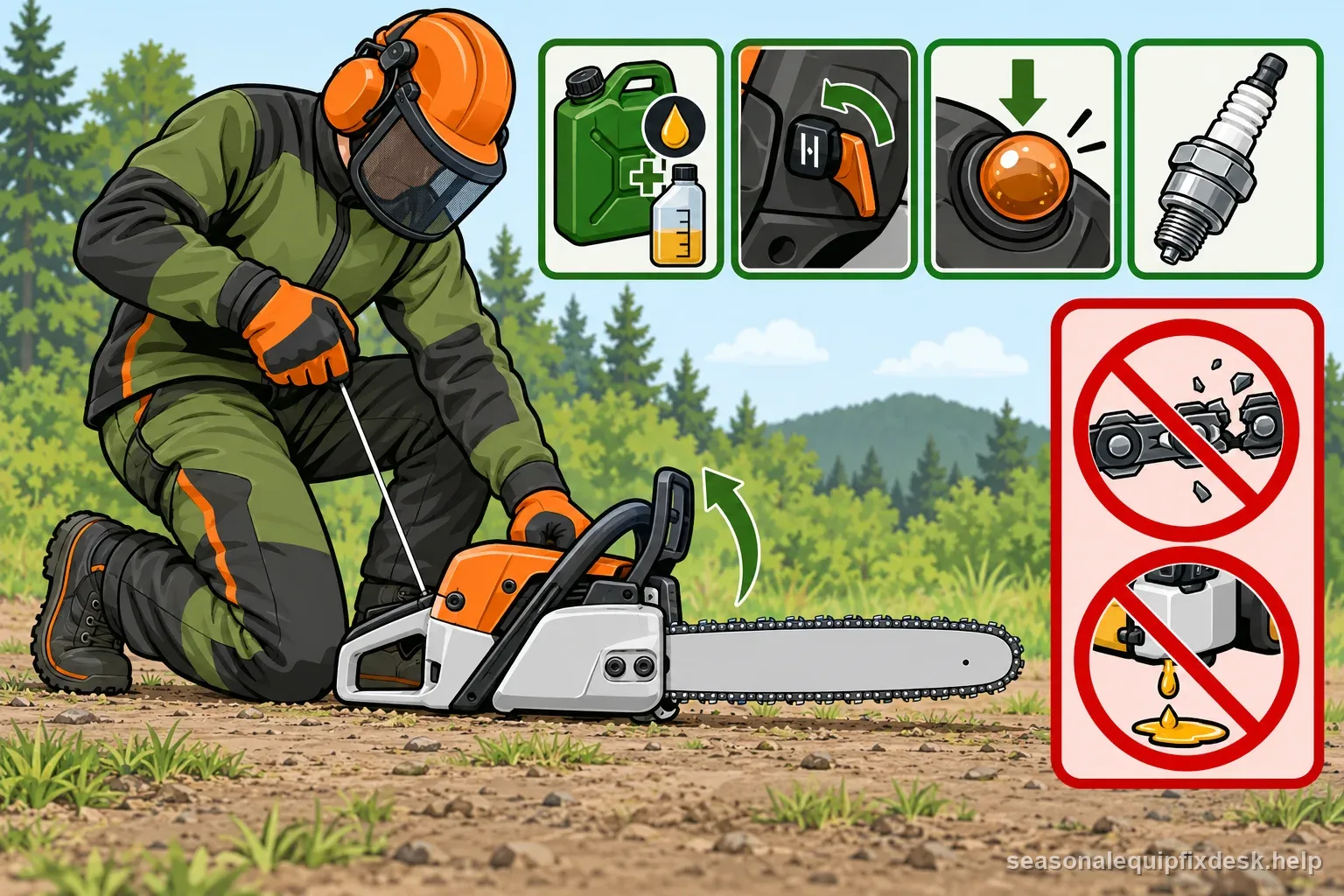
Gas saw: prove the starting sequence before opening the fuel system
Husqvarna’s petrol-saw guidance starts with the chain brake engaged, then uses the model’s choke/air-purge procedure for a cold engine. The exact controls vary, so follow the operator manual rather than applying a remembered primer count from another saw. A warm engine generally needs less enrichment; excessive choke on a hot engine can flood it.
Pay attention to whether the engine ever “pops,” briefly fires, or remains completely dead. A brief fire proves that ignition and combustion happened at least once and moves the diagnosis toward mixture and continued fuel delivery. No response at all keeps start-control, fuel, spark, and compression branches open.
A dry plug after cranking points toward fuel delivery
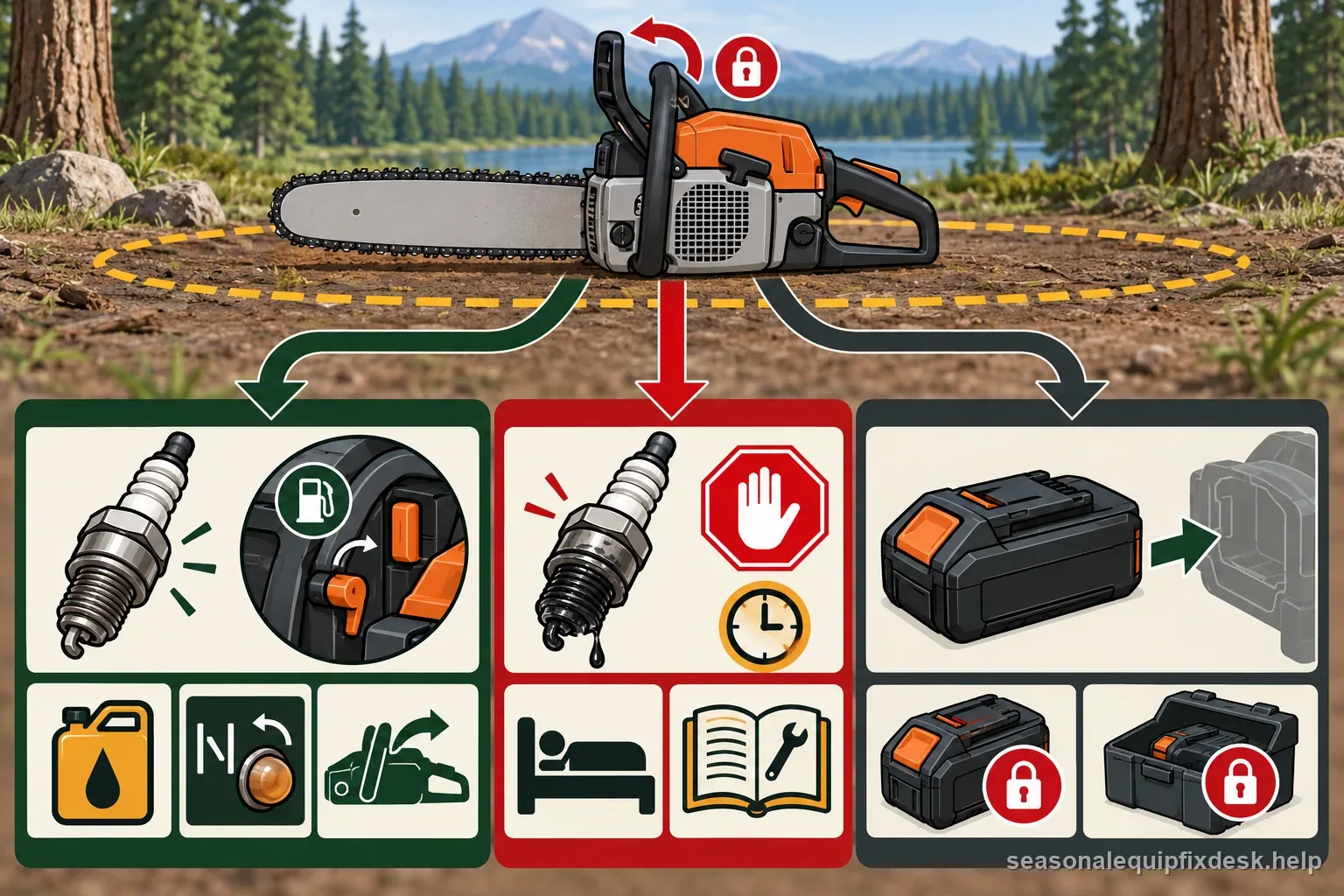
Husqvarna advises using plug condition as a clue: after several pulls, a dry electrode can indicate that fuel is not reaching the cylinder. From there, check fresh correct fuel, the pickup filter, visible fuel lines, air-purge behavior, and accessible connections. Brittle or cracked lines and a blocked filter can interrupt supply before the carburetor ever meters fuel.
Do not keep adding fuel through the intake to force a response. That can flood the engine, wash lubrication from a two-stroke cylinder, or erase the original dry-plug clue. If fuel-system disassembly goes beyond the owner-maintenance procedure, use model-specific service information.
A wet or fuel-smelling plug changes the next move
A wet plug means fuel has reached the cylinder and can indicate flooding. Move the controls to the model’s flooded or hot-start procedure, allow excess fuel to clear as directed, and avoid repeated full-choke pulls. Once the plug condition changes, write down that change instead of continuing until every branch looks the same.
If correct fuel and procedure still produce no start, spark becomes more important. Use only the manufacturer-approved spark test and keep ignition testing away from spilled fuel. A damaged, fouled, or incorrectly gapped plug should be serviced to the model specification rather than replaced with a random “equivalent.”
Battery saw: the start circuit begins at the pack and lockout
Husqvarna’s battery-chainsaw support checks the power trigger and lockout, verifies the battery is correctly seated and clicked into the holder, and then uses the start/stop control. A pack can show charge while still failing under load, but first rule out poor seating, a contaminated connector area, or a control sequence that never enabled the tool.
If the saw has LEDs or a display, record their pattern. Temperature protection, battery faults, or tool faults can look like a dead trigger. Try a known-good compatible charged battery only if the manufacturer allows that comparison; do not probe battery terminals or bypass an interlock.
| Engine-off observation | Likely branch | Safe next step |
|---|---|---|
| Gas saw plug is dry after the prescribed start attempt | Fuel delivery | Follow the model manual before opening the fuel system |
| Plug is wet or fuel-smelling | Flooded or ignition branch | Pause and use the manufacturer’s reset procedure |
| Recoil rope binds or stops unusually | Mechanical or compression service | Do not force repeated pulls; arrange service |
| Battery saw remains locked out with a compatible charged pack | Interlock or start circuit | Use authorized model-specific service |
Starter rope behavior can reveal a mechanical branch
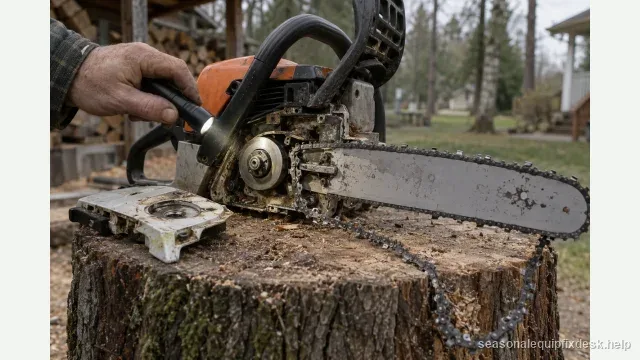
On a gasoline saw, a recoil rope that will not pull normally is not a carburetor symptom. With the engine disabled according to the manual, inspect for obvious starter damage and whether the chain, clutch area, or engine is mechanically bound. Do not force the rope or remove safety covers while repeatedly trying to start the engine.
Unusually easy pulling can also matter because it may suggest reduced compression. Compression testing and internal engine diagnosis belong after fuel and ignition evidence is preserved, not as the first guess after storage.
Storage history changes probability, not the diagnostic order
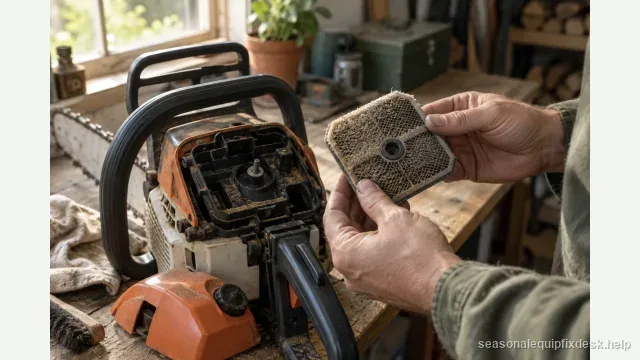
A saw that ran normally before sitting for months raises the probability of stale premix, aged fuel lines, a restricted filter, or carburetor deposits. That history is useful, but it does not prove the carburetor is bad. Replace questionable fuel with the exact mix required by the manufacturer and then observe whether the first-start behavior changes.
For battery saws, storage history instead raises questions about pack state of charge, temperature, battery health, and connector condition. Keep batteries within the temperature and charging limits in their manual; do not heat or cool a lithium pack with improvised methods to force a start.
Only retest after the cutting system is ready for a running saw
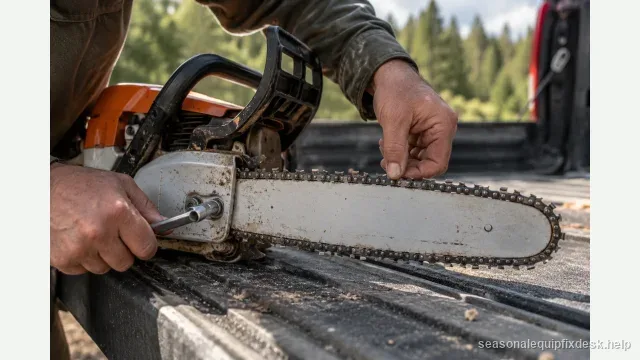
- Reinstall covers and secure the bar and chain correctly.
- Verify chain tension and lubrication before any cutting test.
- Use the manufacturer’s safe starting stance and keep bystanders clear.
- For a gas saw, confirm stable idle before releasing the brake and applying throttle.
- For a battery saw, confirm normal controls and no fault indication before a short clean-wood test.
A no-start repair is not complete just because the engine fires once. The saw must return to normal idle or motor control, the chain brake and lockout must work, and the chain must be correctly tensioned and lubricated before cutting.
- Gas or battery model and model ID
- Cold or hot start
- Control/choke/primer steps used
- Fresh fuel mix and storage history
- Dry or wet plug observation
- Chain brake and visible damage observations
Stop when the test requires defeating a safety device or opening the engine
Service is appropriate when the saw has no compression, repeated ignition failure with known-good model-correct parts, fuel leakage, a battery/tool fault that remains with a known-good pack, a seized starter/mechanical condition, or any damaged chain brake or lockout. Bring the exact first symptom—dry plug, wet plug, no spark, no crank, battery fault light—not just a list of replaced parts.