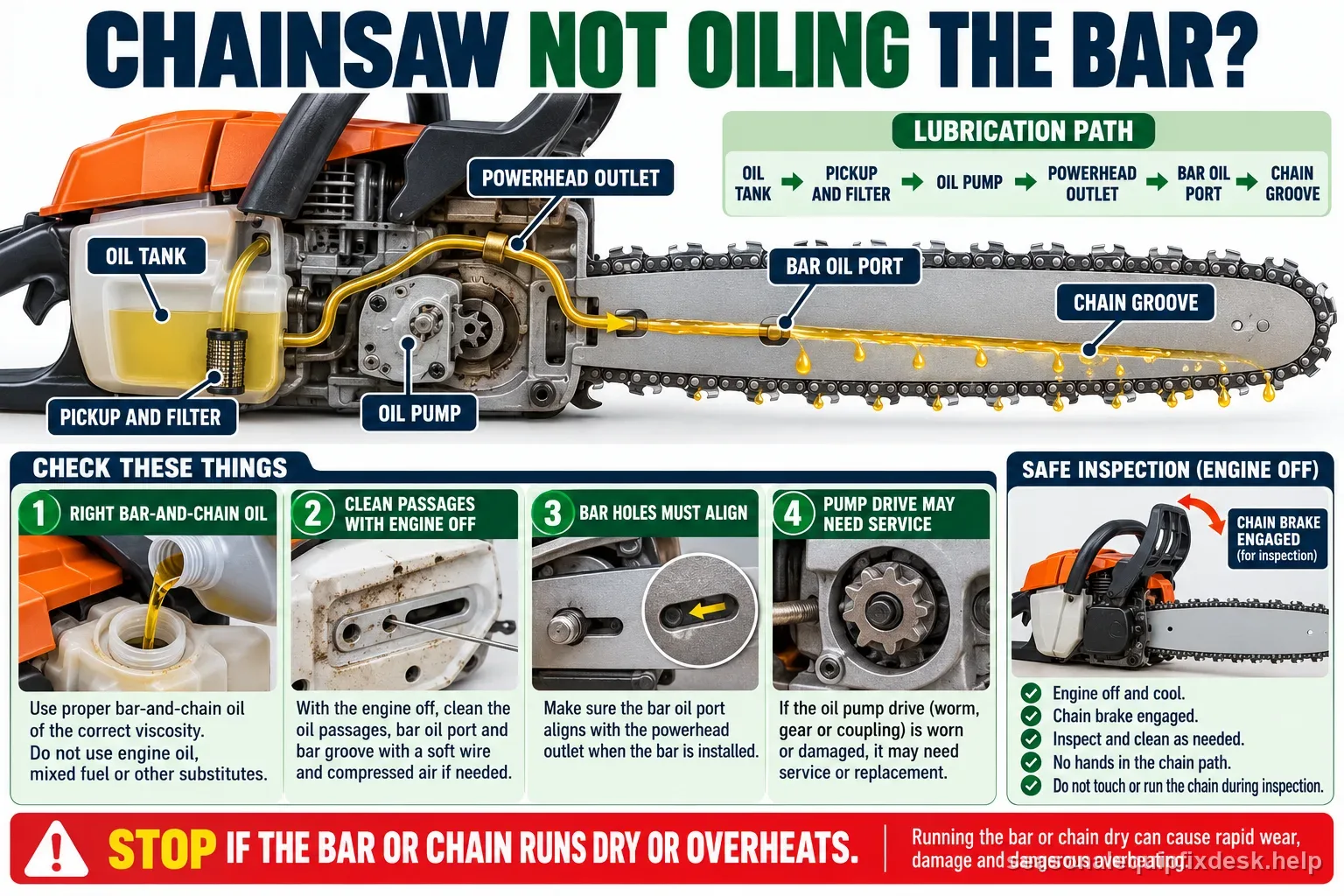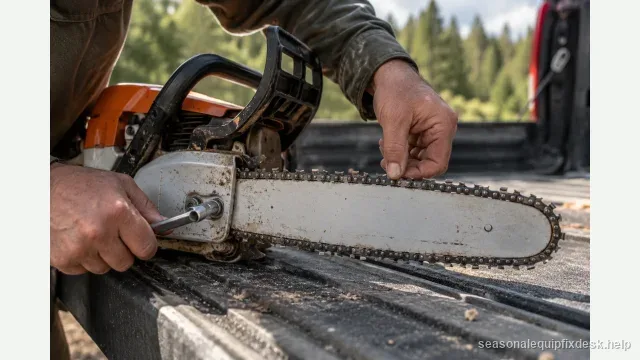
Quick answer: Treat a dry bar and chain as an oil-delivery fault, not a sharpening problem. Start with the oil tank and correct bar-and-chain lubricant, then check whether oil reaches the powerhead outlet and can pass through the guide-bar oil holes and groove. Husqvarna’s current support says a correctly oiling saw should have oil on the bar/chain and can show oil being flung off at full speed; it advises verifying the tank is filled and allowing time for the pump to feed the chain.
Poor lubrication can heat a chain and change how it behaves during a cut. Review the chainsaw tension checks alongside the oiling diagnosis, and let a hot chain cool before any adjustment.
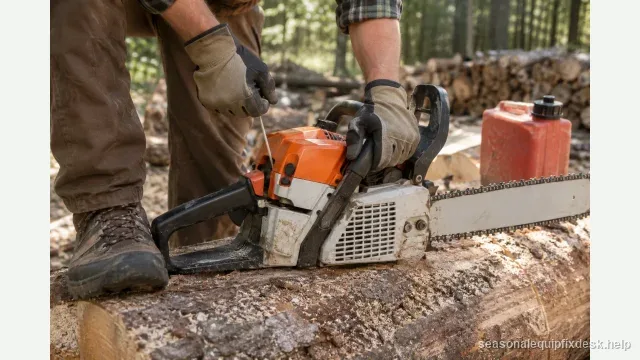
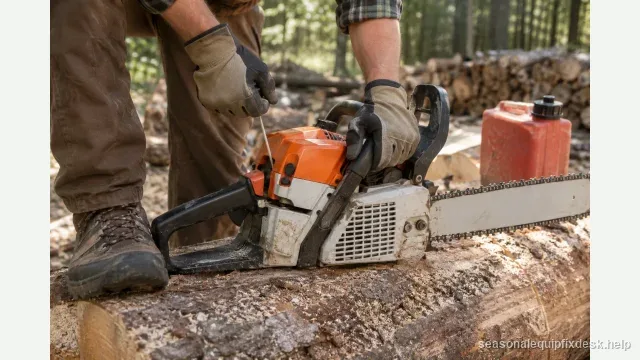
Do not keep cutting to “see if the oil starts.” A dry chain generates heat, accelerates bar and chain wear, and can produce smoke. Shut the saw off, let hot components cool, disable starting according to the model, and wear gloves before handling the chain.
Confirm the tank contains the right lubricant, not just “some oil”
Check oil level and cap condition first. Use the bar-and-chain oil grade or seasonal recommendation in the operator manual. Oil that is extremely thick for cold conditions may flow poorly; a fluid that is too thin or not intended for chain lubrication may sling off without providing the needed film.
If the tank emptied much faster than normal, look for external leakage before blaming the pump. Oil around the cap, hose area, underside, or storage surface can reveal a leak even when the bar stays dry. Some residual seepage can occur by design on certain saws, so compare with the model manual rather than assuming every oil spot is a failed hose.
| Observed result | Likely area | Next safe check |
|---|---|---|
| Oil level does not fall | Tank pickup, vent, or priming | Confirm correct oil and model-specific priming procedure |
| Oil reaches powerhead outlet, bar stays dry | Bar groove, oil holes, or alignment | Clean the removed bar and verify its passages and fit |
| No oil at powerhead outlet | Pickup, hose, pump, or pump drive | Stop after owner checks; arrange model-specific service |
A new or empty system may need time to prime
Husqvarna notes that after filling, the pump may need roughly thirty seconds at full operating speed to feed oil to the chain on the models covered by its support flow. Use the exact model procedure and only perform that running check with the bar/chain correctly installed, tensioned, and in a safe test area.
If the system was run completely dry, do not judge it after one brief blip of throttle. At the same time, do not hold a visibly dry chain at high speed indefinitely. If oil does not appear within the manual’s expected priming procedure, stop and trace the path mechanically.
Separate powerhead oil delivery from a blocked guide bar
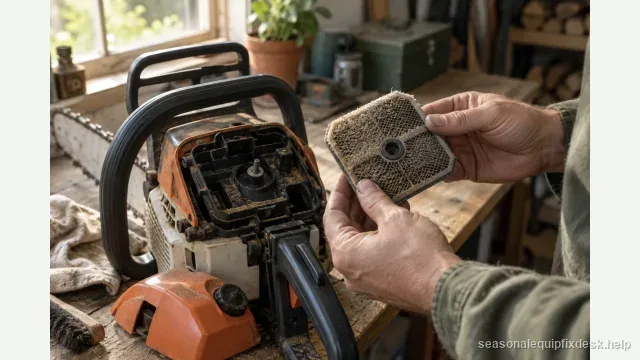
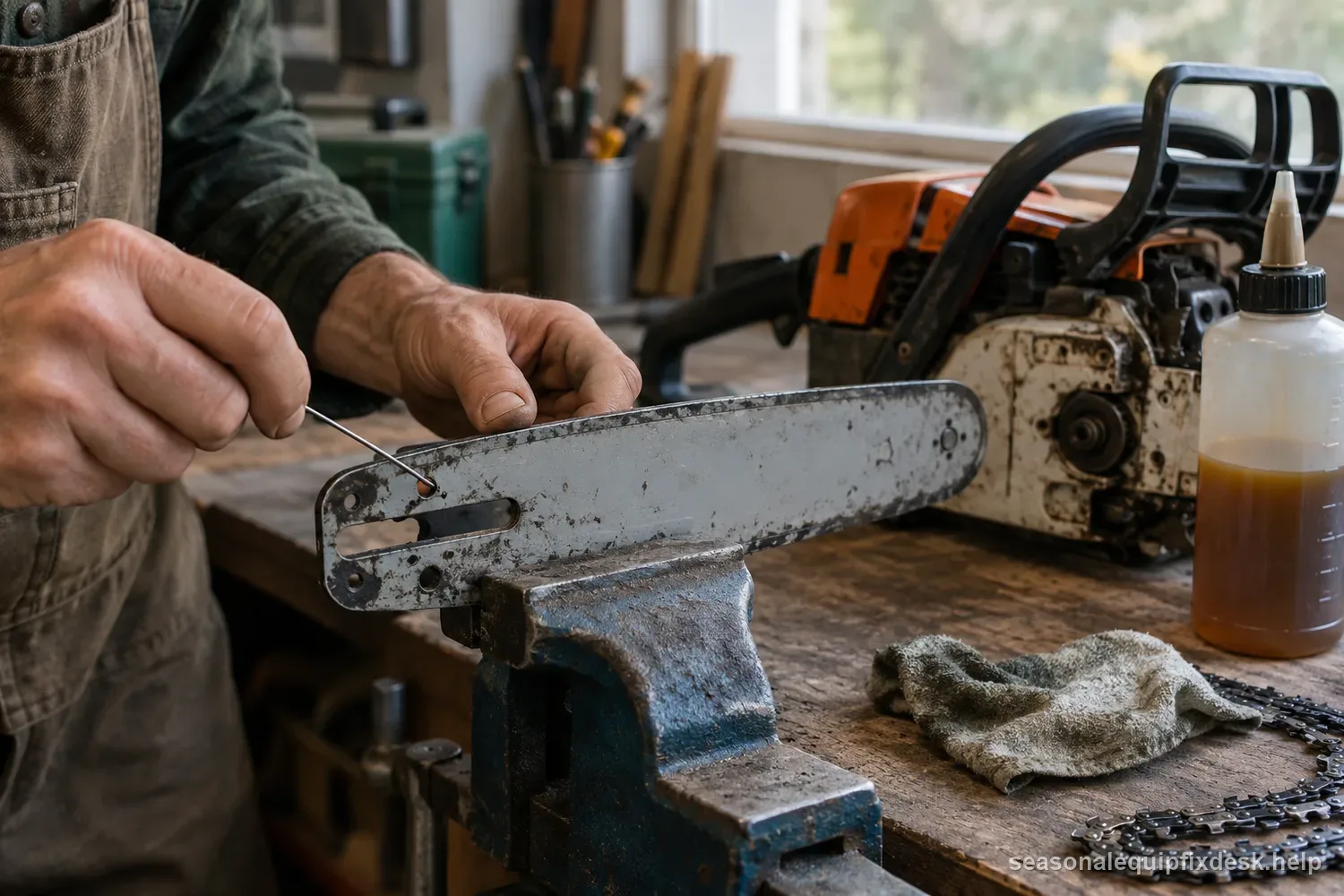
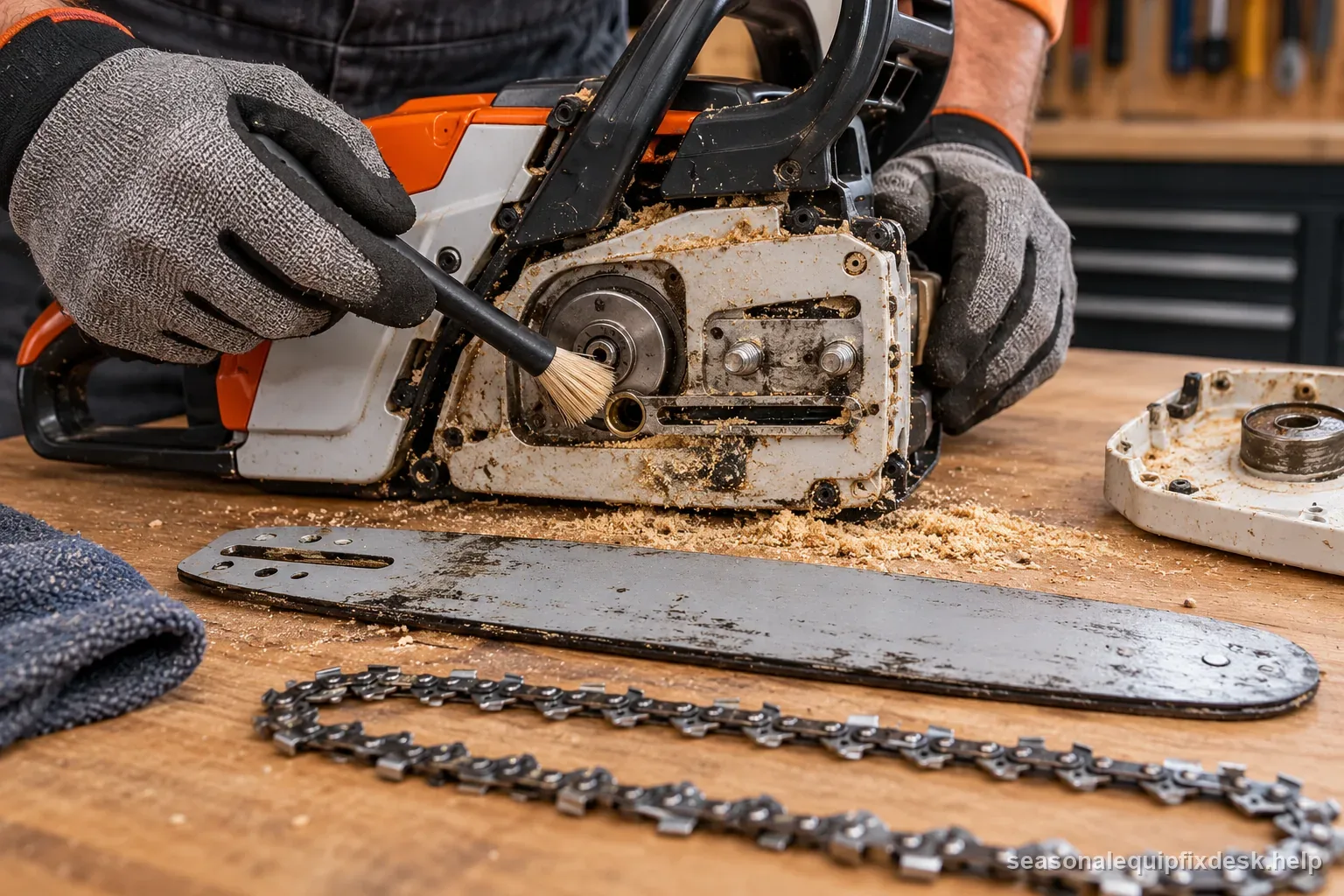
Remove the bar and chain only after the saw is safely disabled. Clean the bar groove and oil inlet holes. Packed sawdust mixed with sticky oil can block the small passage even when the pump is working. Inspect the matching oil outlet on the powerhead for debris without pushing dirt deeper into the system.
The useful question is where the oil stops. If the powerhead outlet produces oil according to the service check but the assembled bar stays dry, the bar holes, groove, fit, or alignment deserve attention. If no oil reaches the outlet, the fault is upstream in the reservoir, pickup, hose, pump, or drive.
Bar installation has to align the oil passages
Use the correct guide bar for the saw and make sure its oil hole lines up with the powerhead feed. A bar can physically bolt on yet have the wrong oil-port geometry. Also verify the bar is not installed with severe debris under the mounting face that prevents proper alignment.
If the bar is reversible, clean both sides and follow the manufacturer maintenance guidance when flipping it. Do not drill or enlarge oil holes to compensate for an uncertain bar fit.
Adjustable oilers should be checked at the specified setting
Some saws have an adjustable oiler; others do not. If yours is adjustable, return it to the manual’s baseline or operating-condition setting before concluding that the pump has failed. Do not force an adjuster beyond its stops or use an adjustment screw from another model as a reference.
A correct adjustment should change delivery in the expected direction. If the screw moves but output does not change, or if the saw has no owner-accessible adjustment, continue with the oil-pump path rather than disassembling the engine from generic instructions.
Pump-drive faults can leave the engine running perfectly
The oil pump may be mechanically driven by the clutch/sprocket area or another drive arrangement. A stripped drive gear, damaged worm, failed pump, disconnected hose, or blockage can stop lubrication without affecting engine starting or RPM. That is why a strong-running engine does not clear the oiling system.
Access to the pump drive often requires clutch or specialized disassembly. Use model-specific service information and tools. Incorrect clutch removal or reassembly can create a high-speed rotating failure that is more serious than the original oiling complaint.
Use heat, smoke, and bar color as stop signals
Husqvarna notes that poor lubrication can contribute to smoke and poor cutting. If the bar discolors from heat, the chain smokes, the drive links feel dry, or the chain tightens rapidly from heat, stop immediately. Do not add cutting pressure to force a dry chain through wood.
Inspect the chain and bar after any dry-running event. Overheated rails, damaged drive links, or a nose sprocket that no longer turns smoothly may require replacement even after oil delivery is restored.
- TankCorrect bar oil present; note whether level changes
- OutletUse the exact model’s safe check to see whether oil leaves the powerhead
- BarWith the saw stopped and disconnected, clear the groove and oil holes
- RetestReassemble and verify delivery using the manual’s method and priming time
A controlled oiling check comes before the next real cut
- Fill with the specified bar oil and clean the bar groove/oil holes.
- Reinstall the correct bar and chain with proper tension.
- Use the manufacturer’s safe oil-delivery check and expected priming time.
- Confirm oil appears on the chain/bar or is visibly thrown as the model guidance describes.
- Stop and recheck for leakage, heat, and normal chain movement before cutting wood.
If oil delivery is restored, make a very short clean cut and inspect again. A repair passes when lubrication remains present under use, not merely when one drop appears at the outlet with the bar removed.
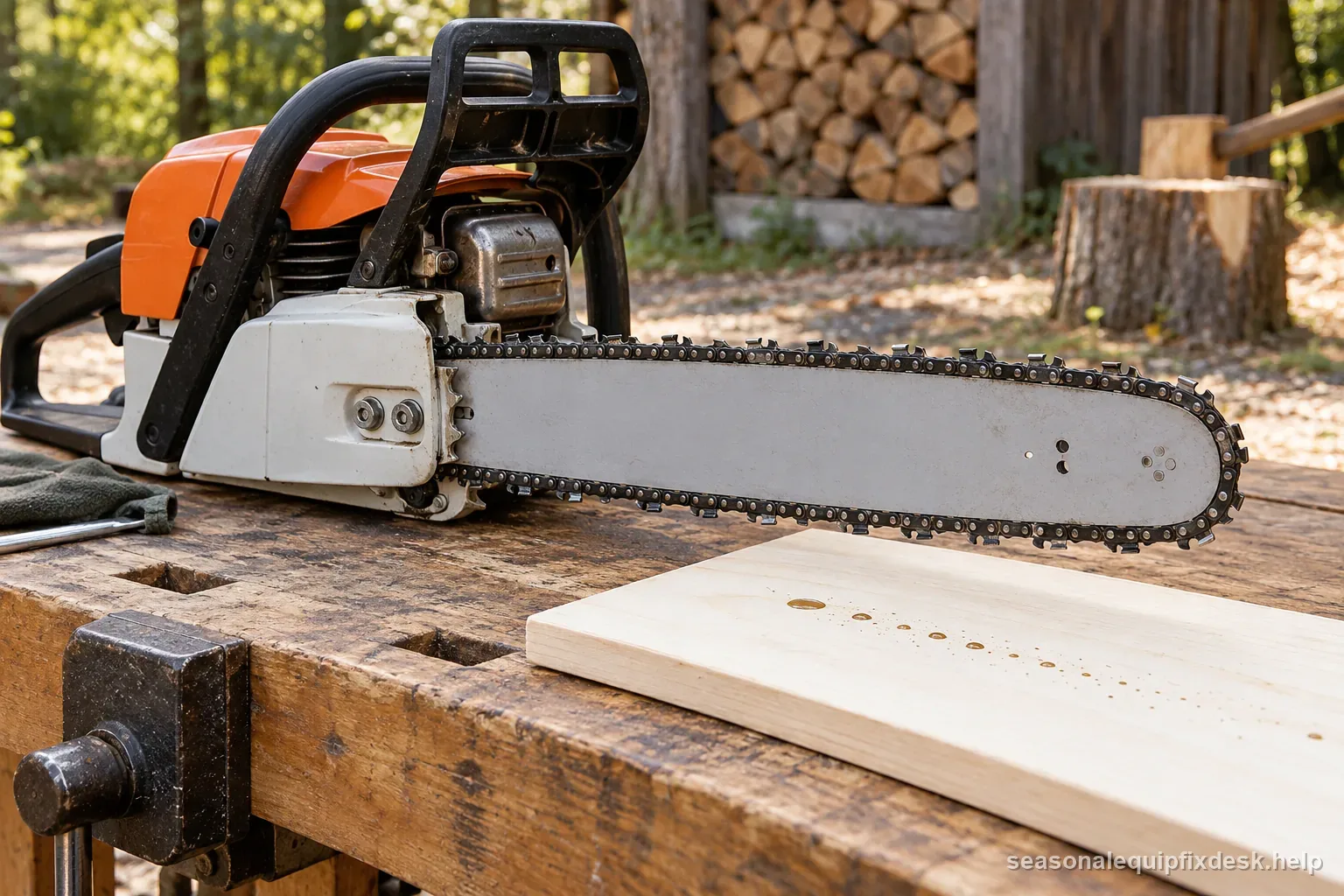
When the oil path belongs on the service bench
Escalate for no output after the tank, oil type, bar passages, alignment, and allowed adjustment have been checked; for a suspected pump/drive failure; for leaking internal hoses; or for clutch removal beyond the owner procedure. Also service or replace overheated chain/bar components before resuming work.
Bring the model number, oil used, whether the tank level falls during operation, whether oil appears at the powerhead outlet, and whether the bar holes were clear. Those observations identify the location of the delivery failure far better than “the chain looks dry.”
For crooked tracking, see cutter and rail checks.
For a throw, use chain-retention checks.