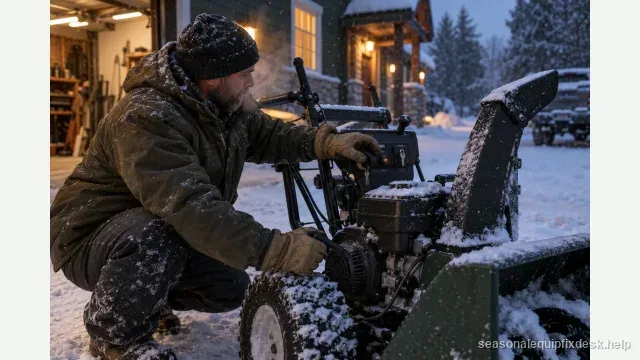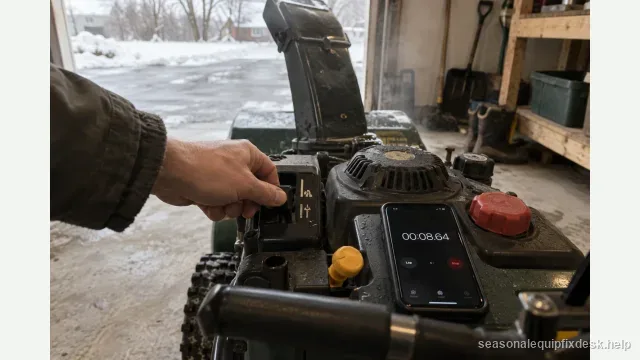
Quick answer: Remove the battery from the snow blower and check its model, charger compatibility, temperature, and indicator pattern against both manuals. Lithium-ion packs may pause charging outside their approved temperature range, especially after outdoor snow clearing. Let a dry pack return naturally to the manufacturer’s stated range indoors, then try the matched charger once. Do not heat, freeze, open, jump-start, or probe a battery.
First determine whether the battery is actually refusing to charge or whether the snow blower’s own status light reports a machine condition. Brands use different colors and blink sequences. An EGO SNT2400 manual, for example, gives an optimal charging range of 41°F to 104°F (5°C to 40°C) for its 56-volt batteries. That information applies to that product family, not every brand; the exact battery and charger manuals take precedence.
Make the equipment safe and identify the battery
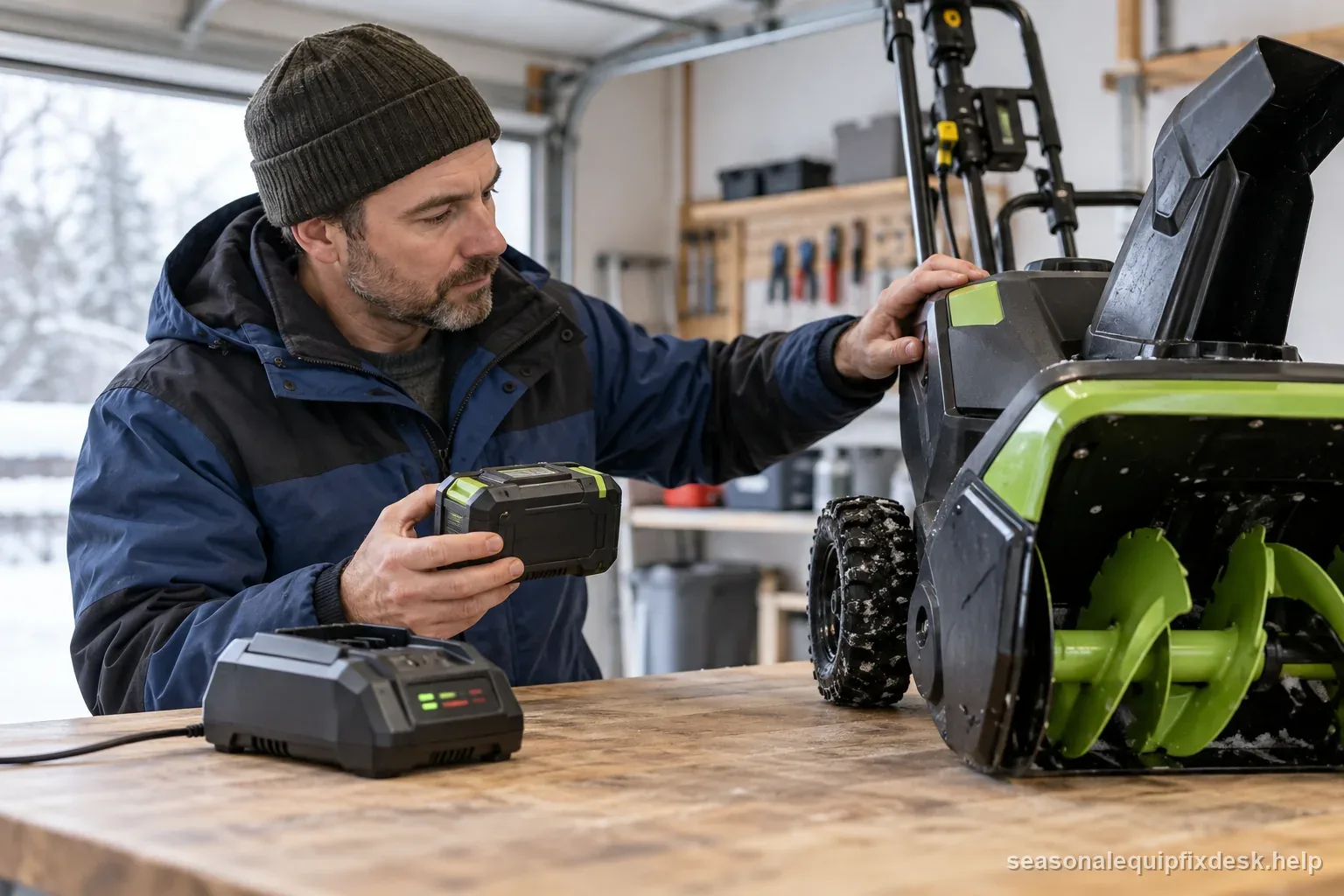
Switch the blower off, remove the battery, and wait for moving parts to stop. Keep the pack away from snow, standing water, loose metal, and direct heat. Read both labels and confirm the charger and battery are listed as compatible. A pack that physically fits may still have the wrong voltage, generation, or control system.
Charge on a dry, stable surface with ventilation around the charger. Do not charge a swollen, cracked, punctured, leaking, unusually hot, wet, or dropped pack. Keep it away from combustibles. Follow manufacturer service and disposal instructions for a damaged lithium-ion battery; do not put one in household trash or ship it without the applicable battery rules.
Read the charger indicator before changing anything
Write down the exact light color and whether it is steady, flashing, or off. Compare the pattern with the charger manual. It may indicate charging, a complete charge, a temperature pause, a pack fault, or no input power. A blink is not a universal error code. Repeatedly reinserting the pack does not correct a temperature or compatibility issue and can erase useful evidence.
Check that the outlet is dry and working using a normal external check. Inspect the cord and charger case for cuts, crushing, melting, or discoloration. Do not insert a tool into the charger or scrape contacts. If the manual identifies the pattern as a fault, use its named action; if it indicates temperature, let the pack recover passively. A warm outlet, damaged cord, or burning odor is a stop-use condition.
Let temperature recover without forcing it
A battery used in freezing weather can be below the charger’s permitted temperature even when the garage feels comfortable; a pack can also be warm after clearing heavy snow. Put it in a dry room at normal indoor temperature, away from heaters, stoves, direct sun, or a hot vehicle. Let it rest until it has naturally reached the manual’s approved range. Do not use a hair dryer, heat gun, radiator, hot water, freezer, or ice pack.
EGO’s SNT2400 manual lists 41°F–104°F (5°C–40°C) as the optimal charging window for its specified packs. EGO support also distinguishes cell temperature from outdoor air temperature and says very low temperature can prevent charging. These values are examples specific to the EGO system; use your own manual. If the battery is in range and still refuses to charge after one normal rest period, check compatibility and the documented fault code rather than repeatedly trying chargers.
Inspect exterior fit and condition only
With the pack cool and charger unplugged as the instructions require, look for visible moisture, debris, corrosion, cracks, or a broken latch around the exterior. Do not use liquid cleaner, metal picks, abrasives, or compressed air. If the manual permits wiping accessible surfaces with a dry cloth, follow it. A bent contact or debris inside the connector needs authorized service.
Seat the pack in the correct orientation until its latch engages; never force it or hold it with tape. Keep the charger flat and ventilated. Cross-testing may help only if both combinations are manufacturer-approved: if one compatible battery charges in the charger but another does not, the first pack may need evaluation. If multiple approved batteries fail in the same charger, the charger or outlet may be at fault. Do not borrow an unrelated charger just because its plug fits.
| Observation | Possible meaning | Action |
|---|---|---|
| Temperature warning after snow use | Pack is outside its charging range | Let it recover naturally to the exact manual’s range |
| No charger lights | No outlet power or charger fault | Check the external outlet and cord; do not open either |
| Fault pattern remains indoors | Battery or charger problem | Record the code and contact authorized service |
| Cracked, wet, swollen, or unusually hot pack | Possible battery hazard | Do not charge or use; follow manufacturer safety guidance |
| Pack charges but blower stays off | Machine indicator or interlock issue | Read the blower manual; remove the pack before external checks |
Follow one controlled check sequence
- Switch off the snow blower and remove the pack; keep both dry.
- Confirm that the battery and charger models are a listed match.
- Record the charger light pattern and consult both manuals.
- If the pack is too cold or hot, let it rest indoors away from direct heat or cold.
- Inspect only the outer case and cord; do not open or probe the battery, charger, or machine.
- Try one normal charge cycle. If the fault persists or damage is visible, stop and request authorized service.
Do not interpret one light as proof that the snow blower itself is broken. The pack charger and tool may have separate indicator systems. A machine may also refuse to start when a safety switch is not engaged or a pack is not seated; follow the snow blower manual and do not insert hands into the auger or chute during diagnosis. Remove all packs before clearing debris.
Two examples: a temperature pause and a persistent fault
Example 1: a cold battery after plowing. A pack comes indoors after use at 20°F and the matched charger displays a temperature warning. The owner records the pattern and lets it rest in a dry room. Once it naturally reaches the manual’s charging range, the charger begins its normal cycle. That fits a temperature pause; a heater is not needed.
Example 2: a fault after overnight recovery. A dry, undamaged, compatible pack rests in a normal indoor room, but the charger still shows its documented fault pattern. The owner records the code, checks the cord for exterior damage, and stops. Repeating insertion or testing an unrelated charger is not useful; the manufacturer or authorized center should evaluate the pack and charger.
What not to do with lithium-ion packs
Do not open the case, replace cells, bridge terminals, connect an automotive charger, use an unapproved universal charger, or apply outside voltage. Do not charge a pack with visible damage, unusual swelling, liquid, smoke, or chemical odor. If it becomes hot, smokes, or hisses, move away, avoid handling it, and follow emergency guidance. Protection circuits are safety devices; bypassing them may create fire or shock risk.
When to contact the manufacturer
Request support if a compatible battery will not charge after temperature recovery and one correct attempt, if a fault light returns, if the charger or cord is damaged, or if runtime has fallen sharply in normal conditions. Provide both model numbers, pack age, recent outdoor temperature, exact light pattern, snow blower model, and whether an approved second pack or charger behaves differently. EGO manuals direct users to the specified temperature range; other brands can differ.
Store packs as directed for the season, in a dry location and away from loose metal objects. A short log of the model, date, temperature, status light, and last successful charge helps distinguish a normal cold-weather pause from equipment failure without risking a damaged pack.