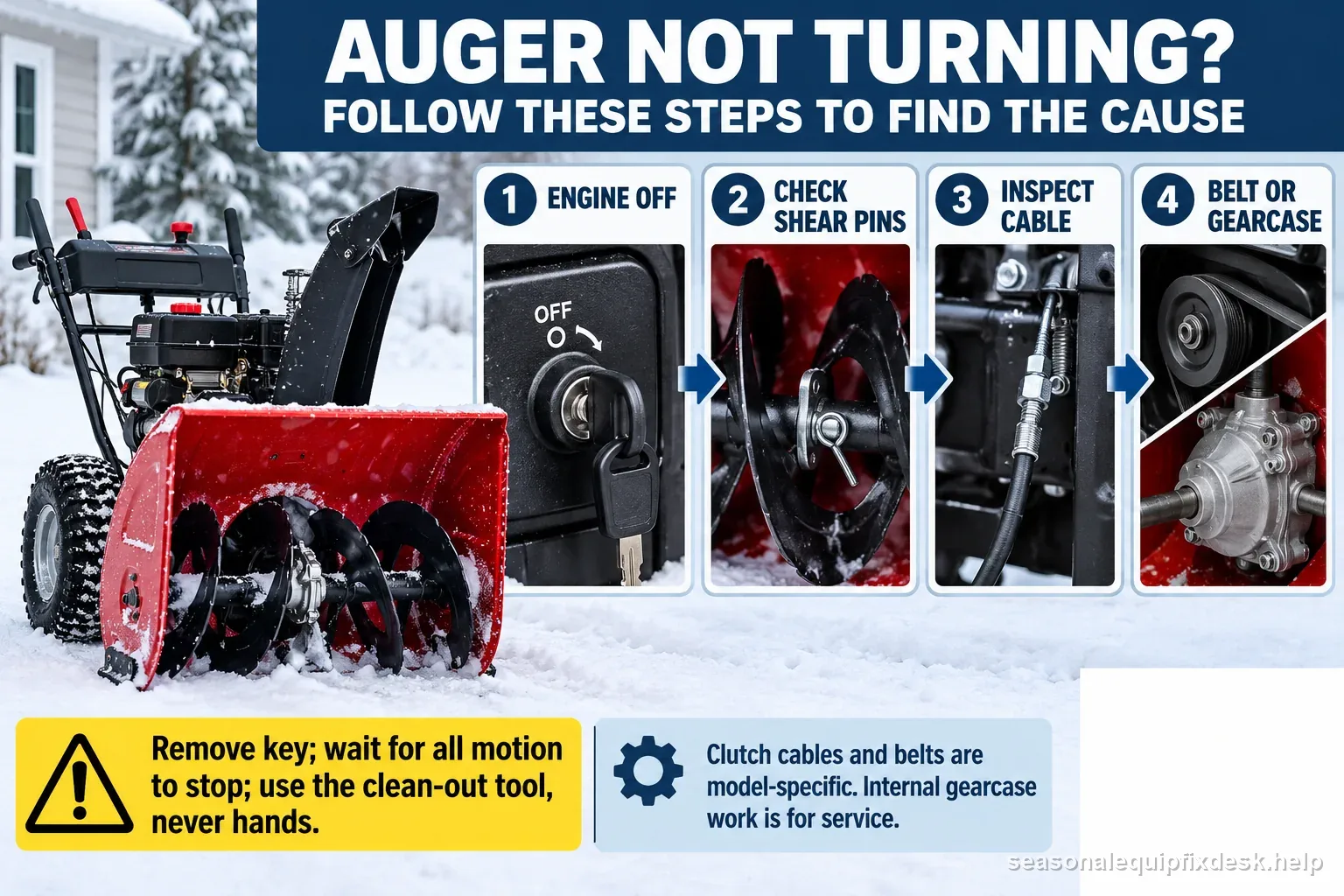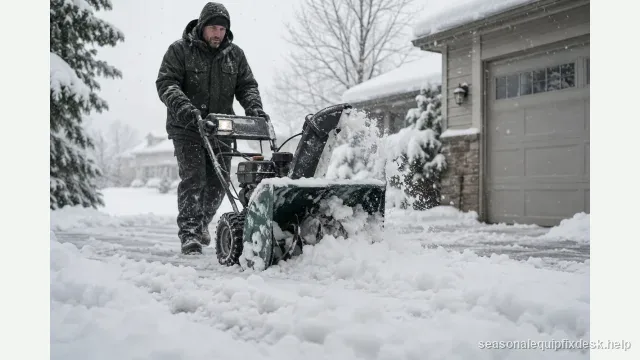
Quick answer: First determine whether neither auger section turns, only one side stops, or the auger turns but the impeller does not. Those patterns separate a simple shear-fastener problem from belt/control issues and deeper gearbox or shaft faults.
After repairing an auger fault, follow the snow-blower dry-run checklist for a brief, clear-area test and release confirmation.
Storage choices affect a snow blower’s next-season starting and fuel condition. Use the fuel stabilizer storage guide to compare label-directed treatment with draining when the engine manual calls for it.
A snow blower that starts but will not turn its auger has a different fault path from an engine that will not fire. The snow blower no-start checklist focuses on fuel, controls, plug clues, and safe retesting.
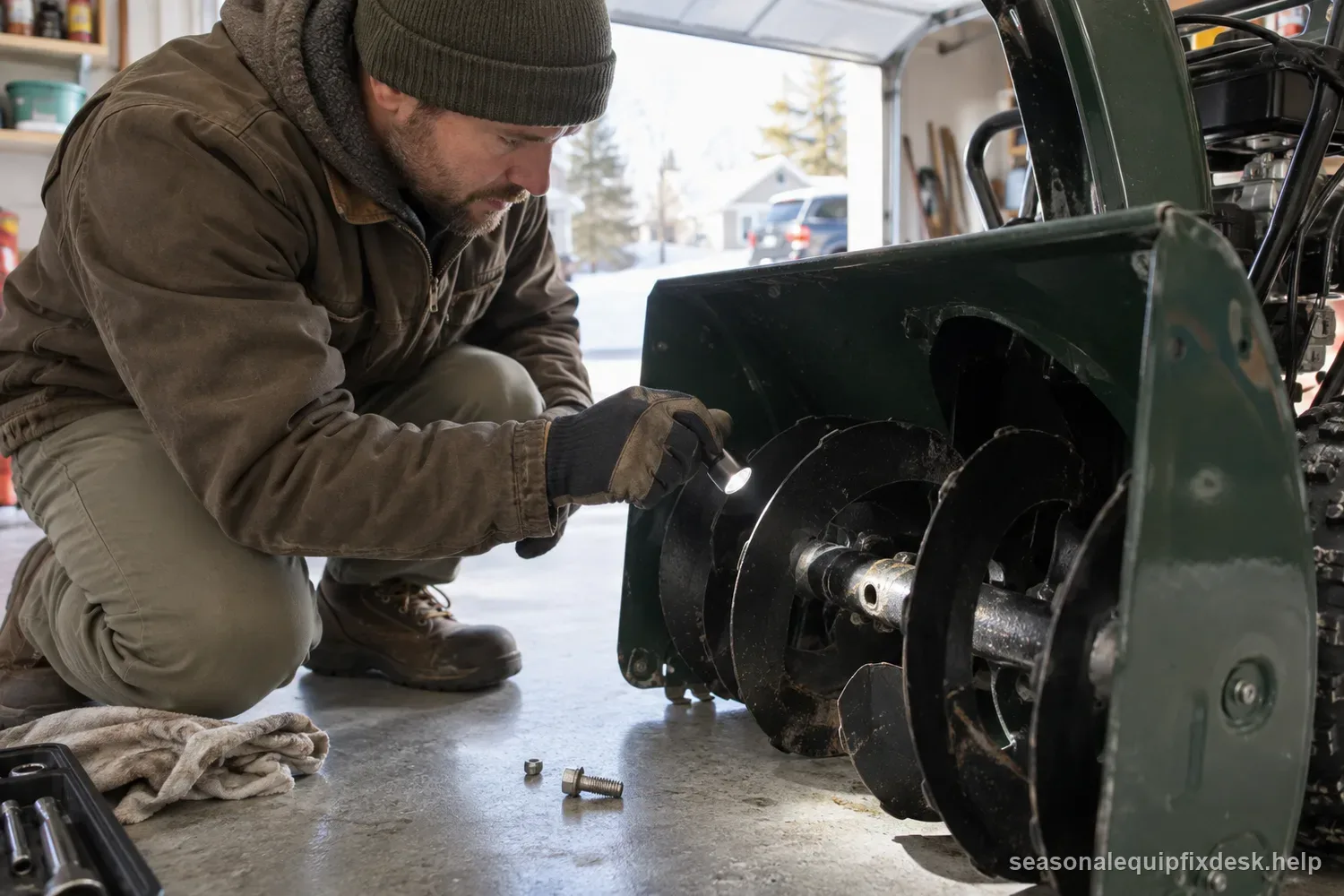
Before inspection, remove the ignition key, let every moving part stop, disconnect the spark-plug lead on gasoline machines, and use the clean-out tool—not your hands—to clear packed snow. Husqvarna’s current support instructions make that no-hands boundary explicit.
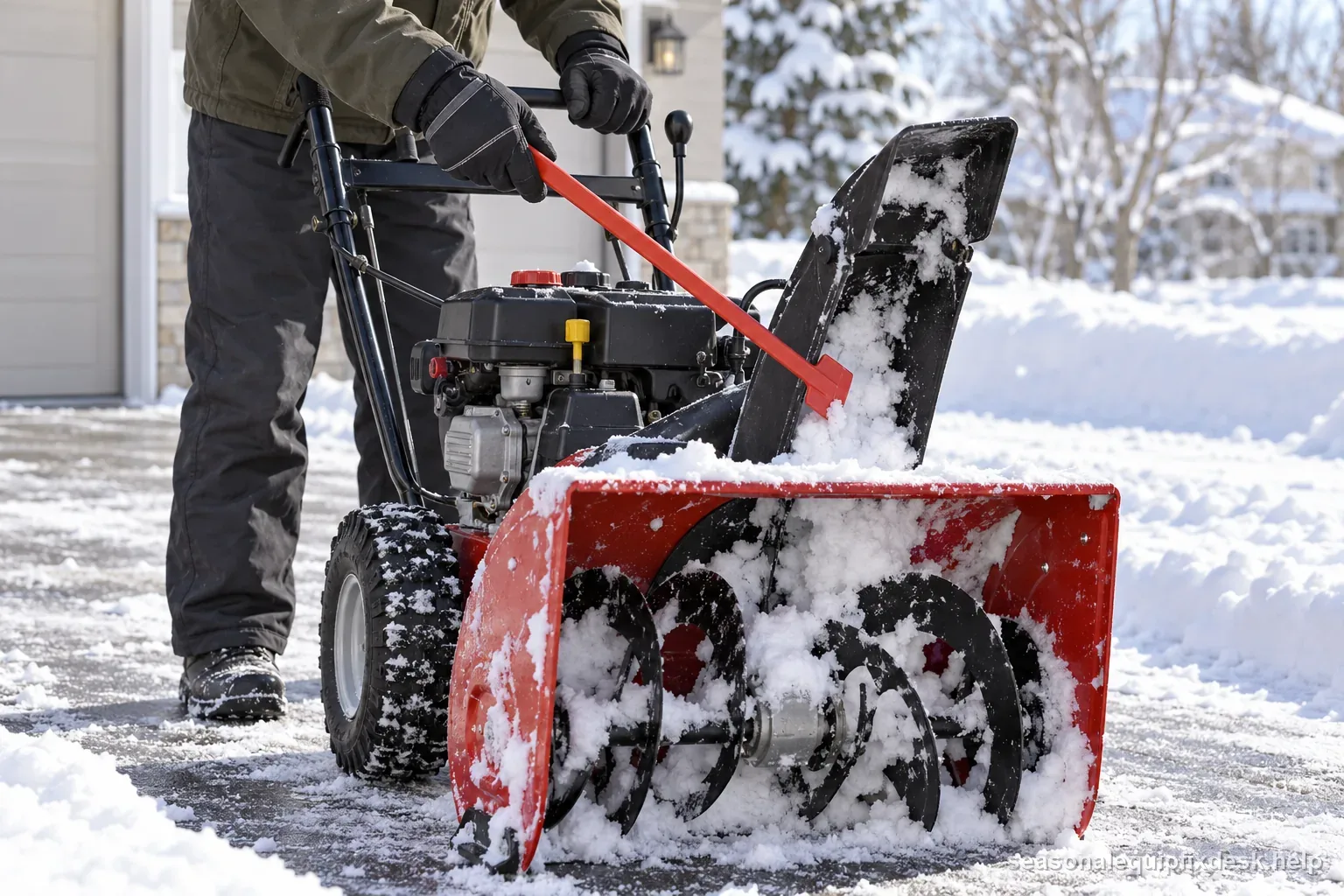
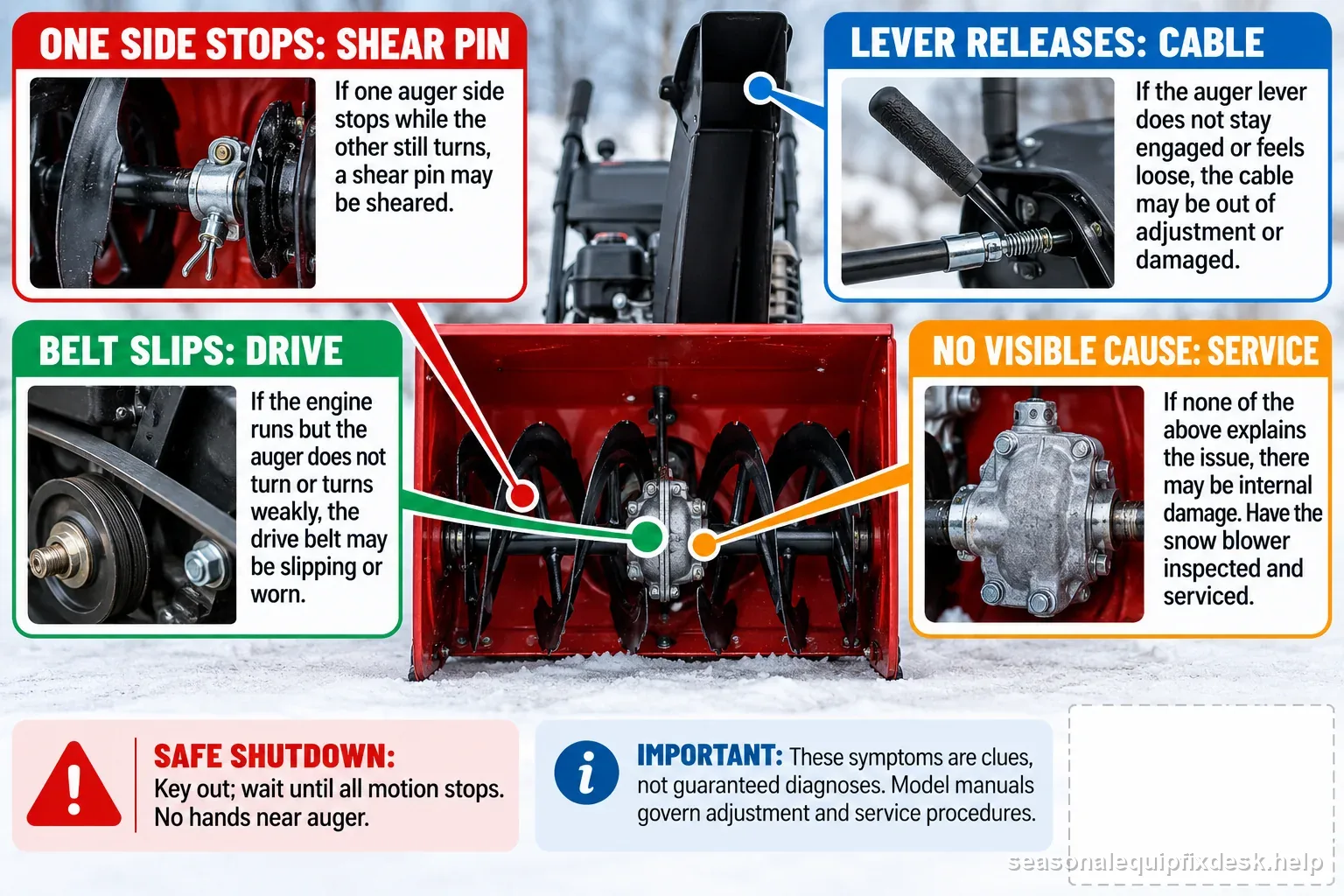
One dead auger section is a strong shear-pin clue
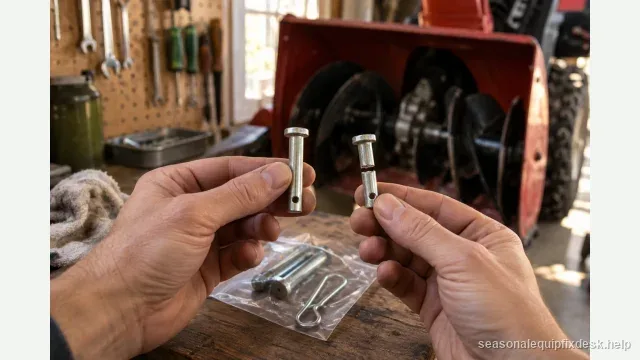
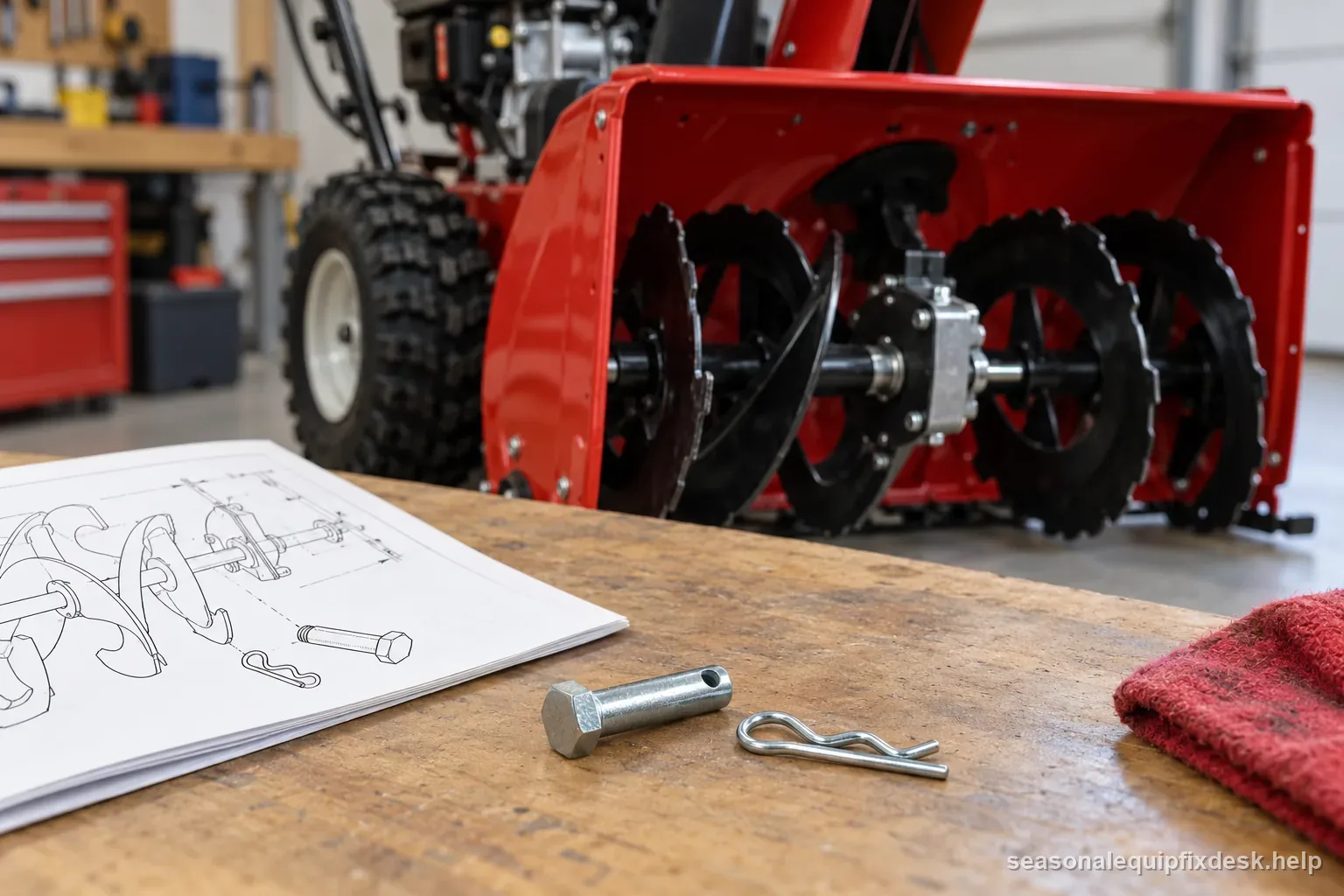
On many two-stage machines each auger section is protected by a sacrificial shear bolt or pin. If one side can rotate abnormally on its shaft while the other remains coupled, inspect that side’s shear fastener and holes. Use only the hardware specified for the model; ordinary hardened bolts can defeat the intended protection.
A broken pin is not always the whole repair. Look for the ice chunk, rock, bent flighting, seized auger tube, or housing contact that produced the shock. Replacing pins repeatedly without finding the load can transfer damage into the gearbox or shaft.
If both augers stop, watch the control path
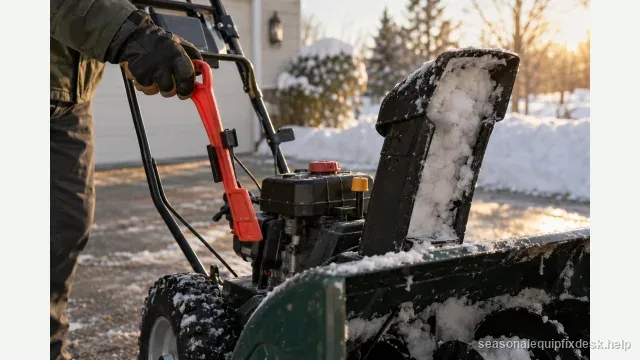
With the engine off, operate the auger control and watch the cable, idler, or linkage movement available from outside the guards. Too little travel can leave the belt slack. A control that feels suddenly loose after a jam can point toward cable, spring, or belt trouble.
Do not adjust the cable until the model’s specification is known. Too much tension can create a dangerous condition in which the auger does not stop promptly when the control is released.
Belt evidence lives under the guard—not in the snow
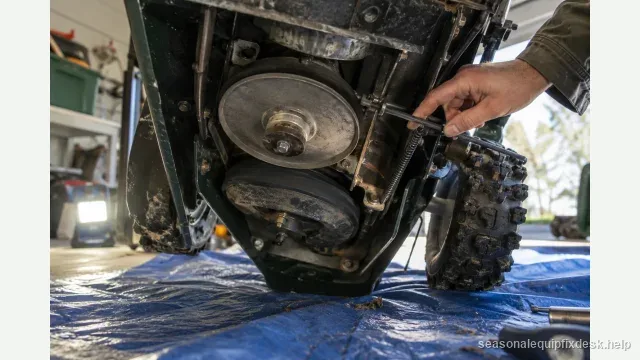
If the external control moves normally but neither auger nor impeller is driven, inspect the attachment belt following the manual’s shutdown and guard-removal procedure. A belt may be broken, thrown off a pulley, glazed, stretched, or prevented from tensioning by a damaged idler.
A belt that failed after an impact is evidence, not an invitation to install a tighter one. Check pulley alignment and free movement before fitting a replacement. Restore the cover before any powered test.
Auger versus impeller tells you where torque stops
Two-stage machines move snow through an auger first and an impeller second. If the augers rotate but the impeller is stationary, investigate the coupling between those systems rather than replacing the front shear pins. Some designs protect the impeller with its own shear hardware; others use a different connection.
Conversely, an impeller that turns while one auger half does not usually shifts attention forward toward that auger’s fastener or shaft. Exact construction varies, so confirm the parts diagram before disassembly.
When the gearbox becomes the suspect
Gearcase trouble moves up the list when correct shear hardware is intact, the belt and control deliver motion to the input, yet the auger shaft does not transmit torque normally. Roughness, leakage, cracked housing, metal contamination, or binding by hand with the engine isolated are reasons to stop owner-level troubleshooting.
Do not power-test a visibly cracked gearbox or bent shaft. A failed gearcase can lock abruptly and create another shear or belt event.
Separate packed ice from a drive failure before restarting
Wet snow can freeze around the auger housing or chute after a shutdown, while a hard object can stop one section suddenly. Before calling either a belt or a shear bolt bad, disengage the attachment, stop the engine, remove the key, and disconnect the spark-plug lead or battery only as the model manual directs. Wait for all motion to stop and use the supplied clean-out tool from the safe end of the chute. Never reach into the auger or impeller with a hand, even when the engine is off. If ice or debris will not clear without force, leave the machine off and let it thaw according to the manual; do not use a flame or strike the housing. Once clear, check for bent hardware or a broken shear pin and install only the specified replacement. A repeated jam means stop and inspect before restarting.
| Observation | Why it matters |
|---|---|
| Key-off hand rotation is blocked | Possible ice, a foreign object, bent flighting, or internal binding; do not force it. |
| Shear fastener is broken again | Find the impact or overload cause before replacing it; repeated failure can point to deeper damage. |
| Control releases but auger keeps moving | Stop use; cable or clutch setup needs model-specific correction before another run. |
Use the visible symptom to keep the diagnosis narrow. If only one auger section stopped, inspect the model's shear pins or bolts after shutdown. If both sections stop when the lever is released, the control cable, belt, clutch, or attachment drive may be the next branch. When the auger turns but snow does not discharge, packed chute material is a different obstruction; Toro says to use the clean-out tool, never a hand, and Ariens lists a frozen auger, obstruction, broken shear bolt, clutch adjustment, or slipping belt among possible causes on its models.
For any inspection, stop the engine, remove the key, wait for every moving part to stop, and disconnect the spark-plug lead if the manual calls for it. Do not reach behind a guard or test an auger by hand while the machine can start. A replacement shear pin must match the exact model specification; an ordinary bolt can defeat the designed break point. If a cable adjustment is permitted, use the illustrated procedure for that model and repeat the release test before operating. An auger that continues to turn after its control is released is a stop-use condition.
Prove the repair without loading it immediately
- Turn the serviced auger/impeller system by hand only where the manual permits and confirm there is no housing contact.
- Restore guards, clean-out tool, spark-plug lead, and correct shear hardware.
- Start from the operator position with drive and auger released.
- Engage the auger for only a few seconds with no snow and verify it stops when released.
- Make a short pass in light snow before returning to heavy or icy material.
If a new pin shears or the belt jumps during that light test, stop. The original obstruction, alignment problem, or binding has not been solved.
- Correct model-approved shear hardware installed
- Cause of jam/impact checked, not just the broken pin
- Belt cover and guards restored
- No-load engagement and release test completed from operator position
- Stop function confirmed before testing in light snow
What happened immediately before the auger stopped matters
A sudden stop after striking ice, gravel, a newspaper, or another hidden object raises shear hardware, bent flighting, housing contact, and belt shock higher than a gradual seasonal loss of engagement. By contrast, an auger that became slower over several storms is more consistent with cable travel, belt wear, or progressive drag. Preserve that history before taking covers off.
After any impact, inspect the auger and impeller housing with the engine off, key removed, spark-plug lead isolated where applicable, and all moving parts stopped. A new scrape mark or one section sitting at a different angle is more useful evidence than immediately fitting another belt.
The release test is as important as the engagement test
After a cable, belt, or shear repair, verify not only that the auger turns when commanded but also that it stops when the control is released. A cable adjusted too tightly or an incorrectly routed belt can create a new safety fault even though the original “won’t turn” complaint appears fixed.
Do this first with no snow and from the normal operating position. If the auger continues to drive after release, shut the machine down and correct the control or belt condition before any loaded test.
Do not confuse a stopped auger with a stopped engine attachment drive
Watch and listen from the operator position during the shortest safe no-load engagement test. If the engine note changes and the attachment belt or pulley system is clearly being loaded but one auger section does not move, the fault is downstream of the engine. If there is no attachment-drive response at all, the control, cable, belt, idler, or clutch path deserves attention before the gearbox.
This distinction prevents a common parts mistake: replacing shear hardware when torque never reaches the auger shaft, or opening a gearbox when a cable is not actually engaging the attachment. Shut down before any closer inspection and restore every guard before retesting.