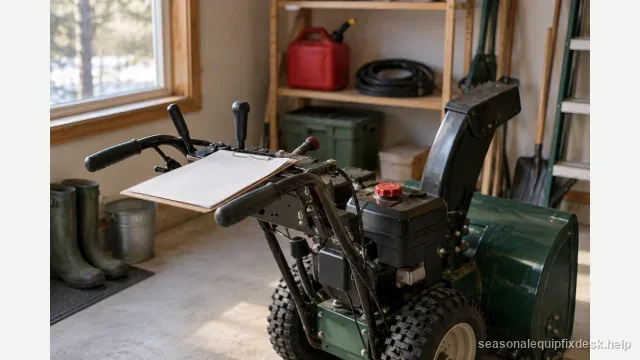
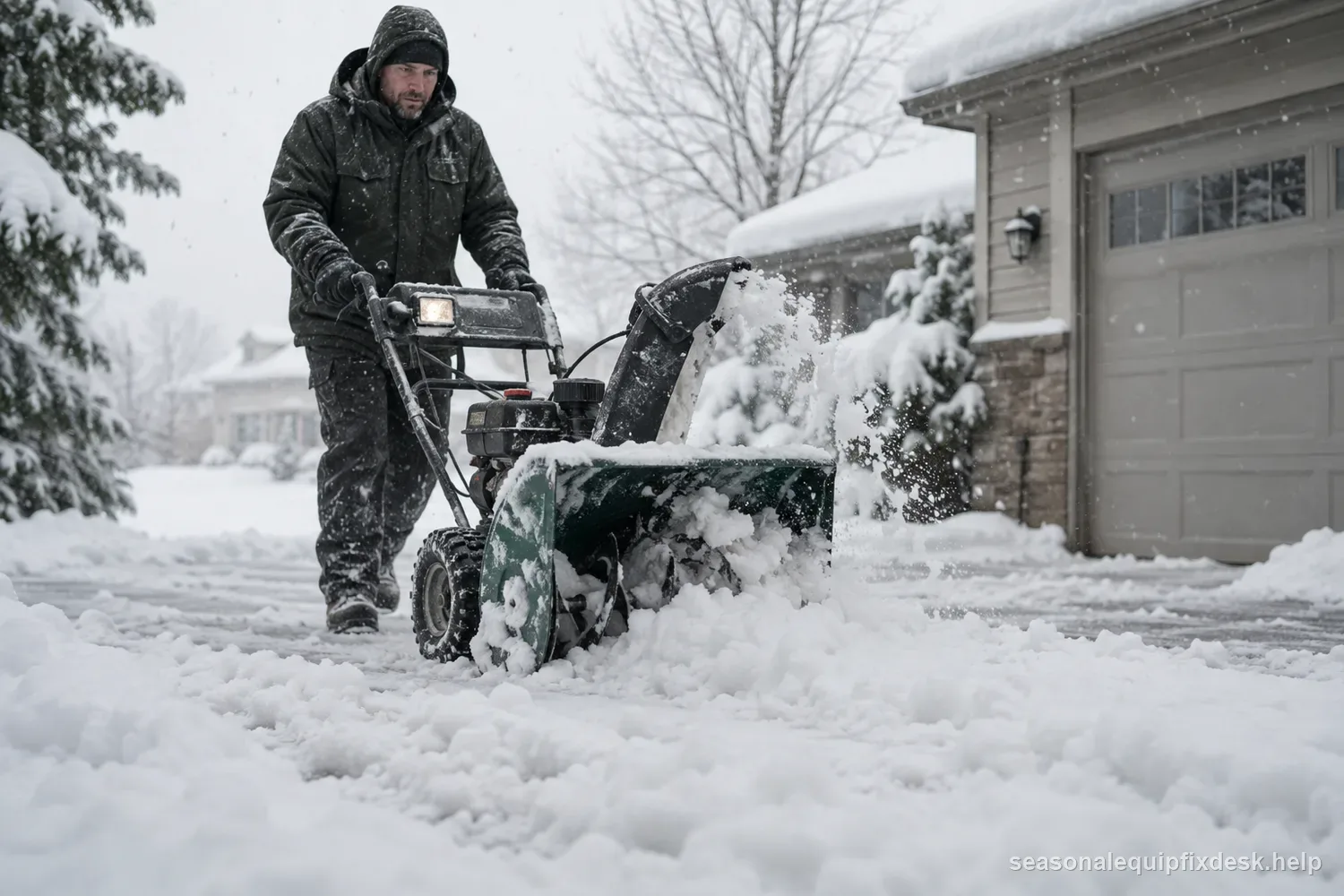
Quick answer: Weak throwing distance is not one fault. First decide whether the machine is processing too much wet snow, whether engine/impeller speed is low, or whether snow is leaking and recirculating because paddles, belt drive, or the discharge path cannot maintain velocity.
Safety: Keep hands out of the auger and discharge chute. Before clearing or inspecting, disengage the attachment, stop the engine, remove the key, wait for all movement to stop, and disconnect the spark plug lead as the manual directs. Use only the supplied clean-out tool; never run with a guard removed or reach into an unsupported machine.
Compare performance in a modest, consistent strip of snow before changing parts. Distance measured in one heavy end-of-driveway pile cannot be compared with dry powder on the next pass.
| What you observe | Likely branch | Next useful check |
|---|---|---|
| Throw improves in a narrower bite | Snow load or capacity | Reduce ground speed and intake width before parts replacement |
| Low throw with steady engine speed | Attachment drive, paddle/impeller wear, or restriction | Inspect the model-specific attachment path after shutdown |
| Engine speed drops under light snow load | Engine power or fuel/ignition problem | Diagnose engine speed before chute or impeller parts |
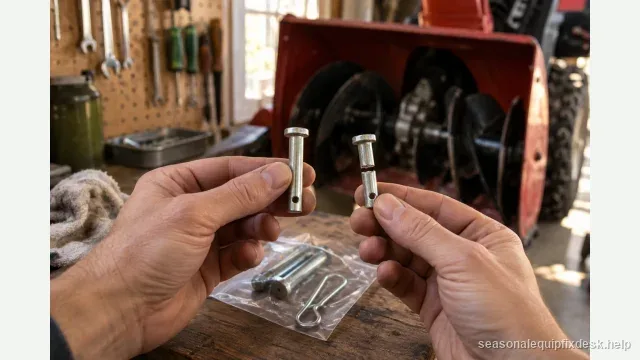
| Auger/impeller stops, binds, or contacts housing | Shear hardware, obstruction, bearing, or structural fault | Stop; clear only with the tool and service damaged components |
Snow condition can overwhelm a healthy machine
Wet, dense snow packs together and needs more power to accelerate through the housing. Reduce ground speed and take a narrower bite. If throwing distance recovers immediately, the machine may be healthy and the original complaint was a capacity mismatch.
If the chute repeatedly plugs, handle that as a clogging problem first. A partially blocked chute can make every downstream diagnosis look like low impeller performance.
Listen to engine speed before blaming the chute
For gasoline machines, weak engine speed under load reduces auger and impeller speed. Verify correct throttle position and engine health before adjusting snow-handling components. If RPM audibly collapses even in a light pass, return to fuel, ignition, air-flow, and engine-power diagnosis.
For battery machines, compare battery state, temperature limits, and any power mode specified by the manufacturer. Do not assume a cold lithium battery and a warm fully charged battery will deliver identical performance.
A slipping attachment belt loses throwing speed first
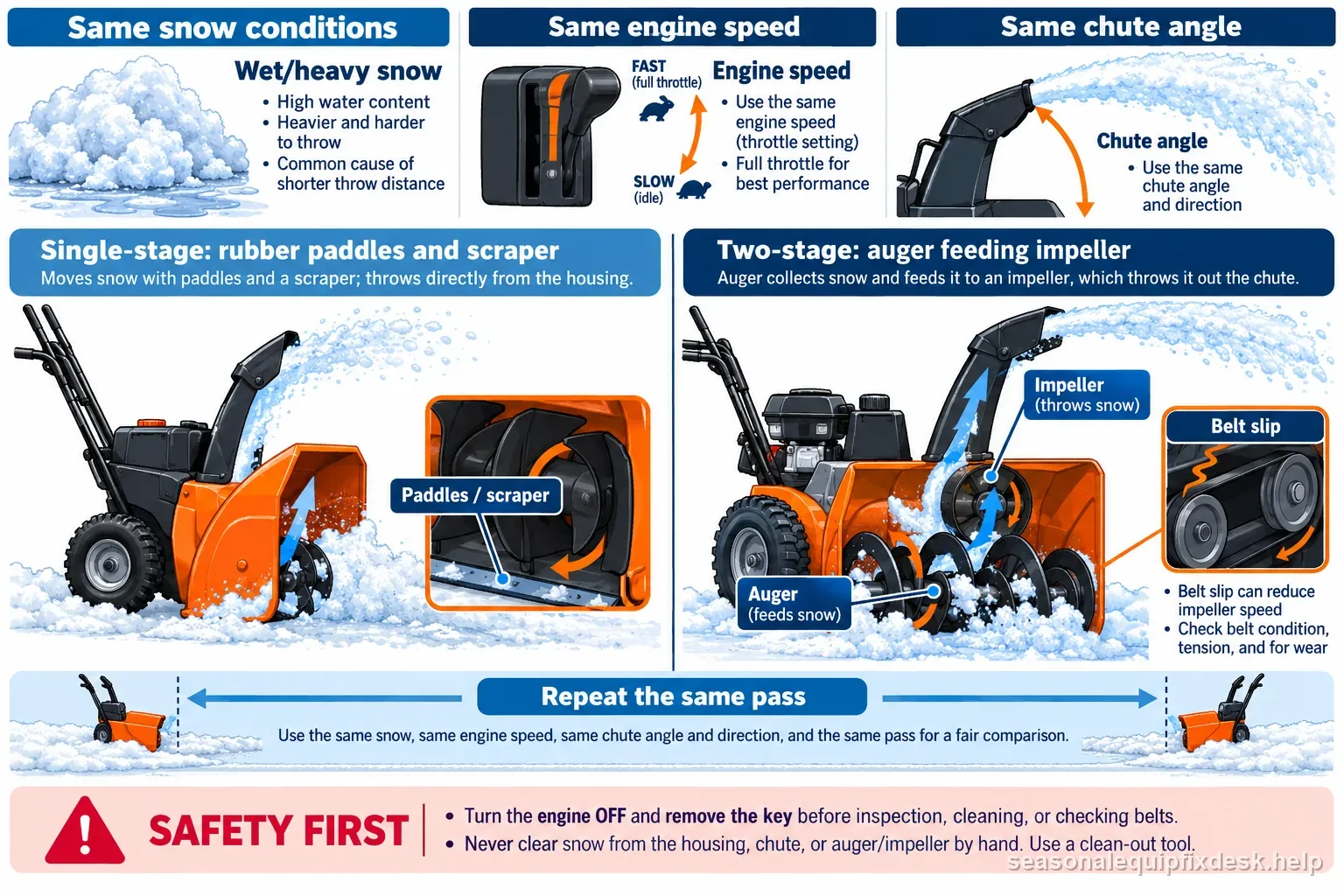
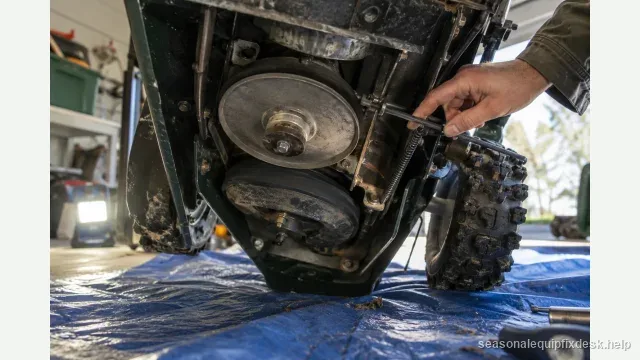
A glazed or loose attachment belt can still turn the auger in the driveway yet slip when the housing fills with snow. Look for belt dust, glazing, abnormal idler travel, squeal, or a clear speed drop as load rises. Inspect only with the machine shut down and ignition isolated.
Install the exact belt and set cable/idler tension to the model procedure. An over-tightened belt may keep the attachment partly engaged when the control is released.
Single-stage paddles and two-stage impellers fail differently
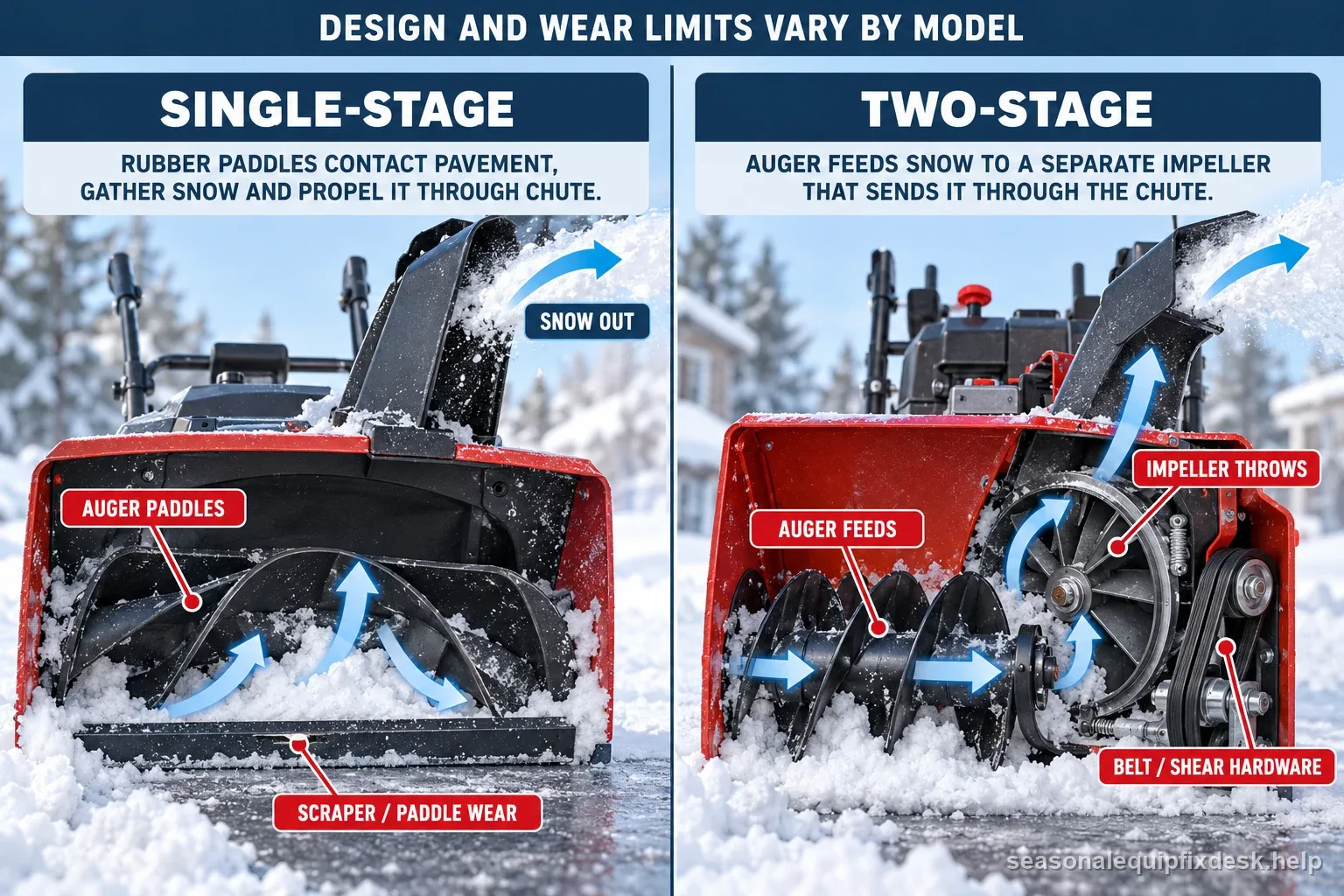
On a single-stage machine, worn rubber paddles and scraper clearance can reduce how aggressively snow is collected and accelerated. On a two-stage unit, the impeller and its drive are critical to discharge velocity. Treat these as different architectures rather than applying one “replace the auger” answer to both.
Use the parts diagram to identify which surfaces actually contact or accelerate snow on your model. A visual inspection for missing chunks, bent vanes, or excessive wear is more meaningful than a generic age-based replacement interval.
Chute angle changes distance, but it does not create power
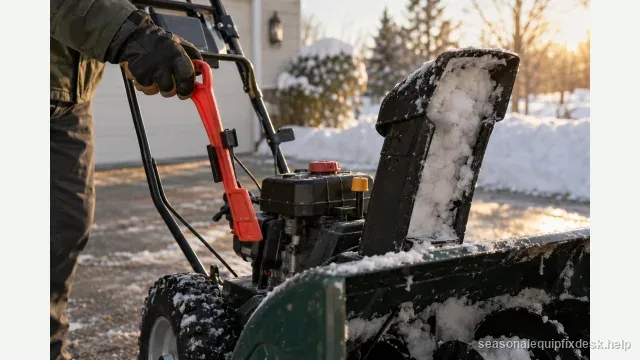
A low deflector throws snow down sooner; a higher deflector can extend the arc when conditions allow. Verify that the deflector reaches and holds the selected position. If the chute or deflector drifts under vibration, correct its cable or friction adjustment according to the manual.
Do not use chute adjustment to hide a machine that has lost impeller speed. If snow barely exits the housing with the deflector raised, return to belt, impeller, engine speed, and clogging checks.
Build a repeatable throw test
- Clear any obstruction with the clean-out tool and inspect the housing.
- Choose a short strip with uniform snow depth and density.
- Set the normal operating throttle or power mode and a fixed chute angle.
- Make one pass at moderate ground speed and note engine sound and discharge consistency.
- Repeat with a narrower bite. A major improvement from reduced load is diagnostic.
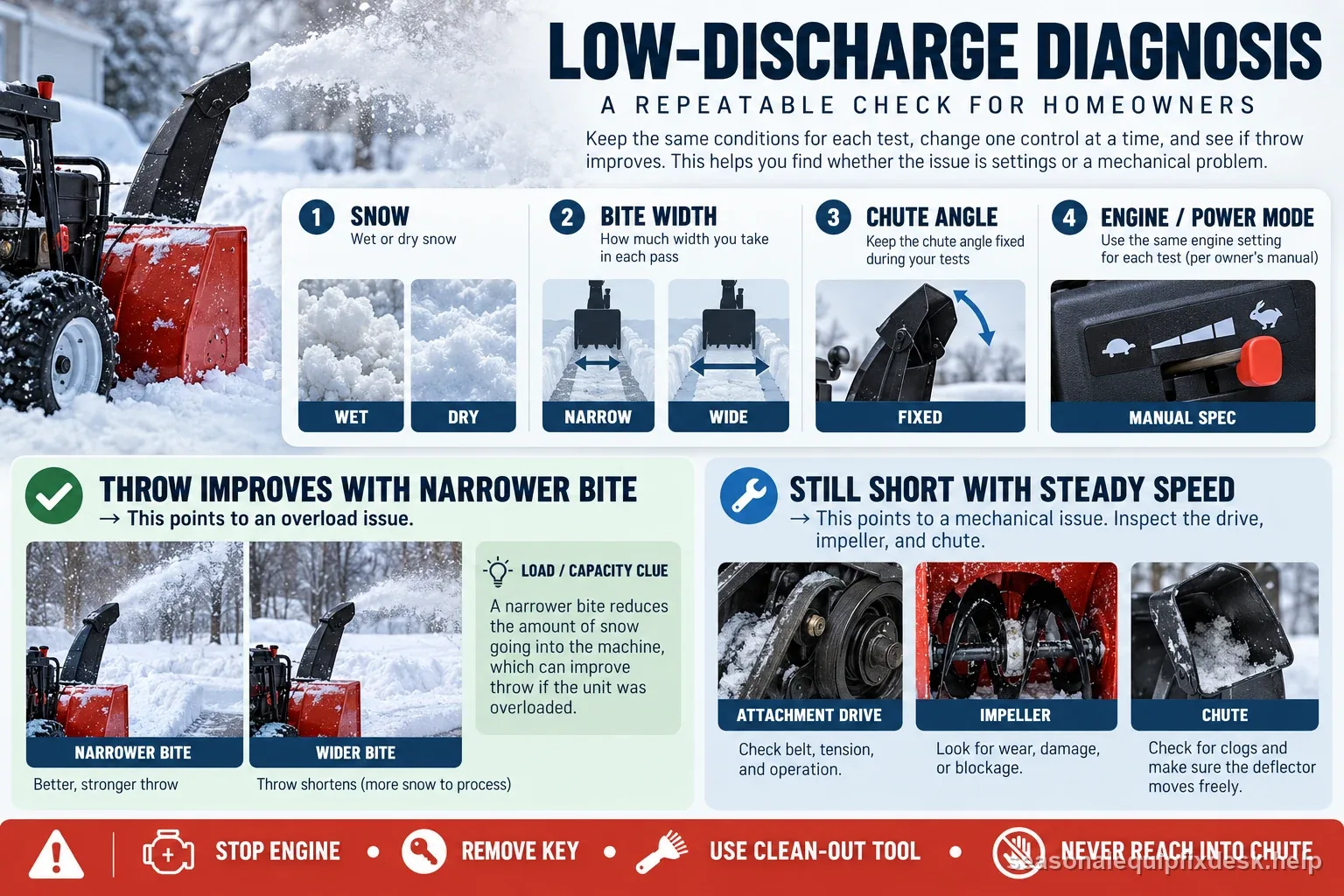
Do not chase an exact feet-of-throw number from another brand or model. The useful result is whether your machine’s discharge changed after a specific correction under the same snow conditions.
Damage that ends the test
Stop if the impeller contacts the housing, a shaft is visibly bent, shear hardware fails again, the attachment refuses to disengage, or a gearbox/bearing becomes hot or rough. Weak throw is inconvenient; a rotating assembly with structural damage is a safety problem.
Compare auger feed with impeller discharge on two-stage machines
On a two-stage snow blower, the augers can still feed snow toward the center while the impeller is losing speed or torque. That produces a machine that looks busy at the front but sends a short, heavy stream out of the chute. With the engine off and the machine made safe, inspect the attachment drive and impeller area for belt slip, obstruction, damage, or unusual resistance according to the model manual.
If the machine throws normally in light snow but collapses only in dense end-of-driveway piles, reduce ground speed and intake width before treating the symptom as a failed part. Capacity overload and mechanical loss can look similar until the test load is controlled.
- Single-stage or two-stage design and model/deck number
- Snow type, depth, and whether it is wet or packed
- Chute angle, power setting, intake width, and travel speed
- Whether engine speed stays steady as throw weakens
- Any belt dust, vibration, scraping, shear-pin failure, or blockage
Use the same snow and the same machine settings for a useful comparison
Throw distance comparisons are weak if chute angle, engine speed, ground speed, intake width, and snow condition all change at once. Pick a short clean section, use the normal full operating speed specified by the manufacturer, keep the chute setting fixed, and compare one narrow pass with one wider pass.
A large improvement from a narrower slower pass points toward load/capacity. Little change despite stable engine speed makes attachment speed, paddle/impeller condition, or discharge restriction more important. Stop if vibration, impact noise, or rotating contact appears during the test.
A change after a belt adjustment must include release behavior
If throw distance improves after correcting attachment-belt tension or cable travel, verify the attachment also disengages fully. Extra tension can mask slip while creating belt drag or continued rotation after the control is released. The correct result is both adequate attachment speed under normal load and normal stop behavior when the lever is released.
Also recheck for belt dust, glazing, heat odor, or a belt riding incorrectly in the pulley after the test. A temporary improvement followed by rapid slip is evidence that wear, pulley condition, routing, or alignment still needs attention.