Quick answer: Do not start with the carburetor. First identify what the starter is doing. A snow blower that will not crank has a different fault path from one that cranks normally but never fires, and both differ from an engine that fires only while primed or choked. Preserving that first symptom prevents a cold-weather starting problem from turning into several disturbed systems at once.
Once the engine passes its start check, use the preseason dry-run sequence to verify engagement and release before the first storm.
If the engine starts but the attachment does not engage, follow the separate snow blower auger troubleshooting steps and keep the engine-no-start path separate.
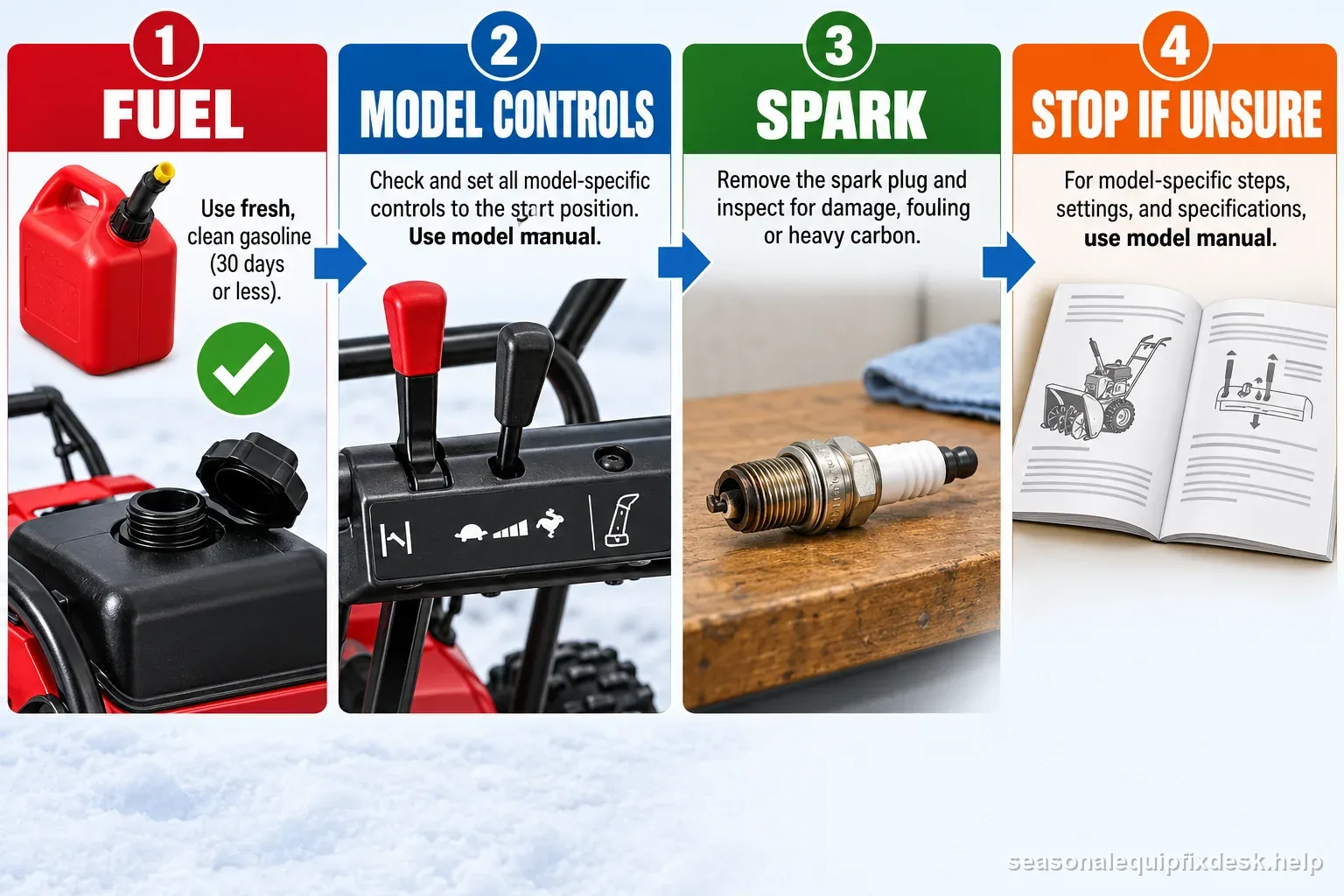
A generic guide cannot supply your model’s primer count, choke position, fuel specification, spark-plug gap, or electric-starter duty cycle. Those values belong to the operator or engine manual. The sequence below is about deciding which system deserves that model-specific procedure.
Four starting behaviors that change the diagnosis
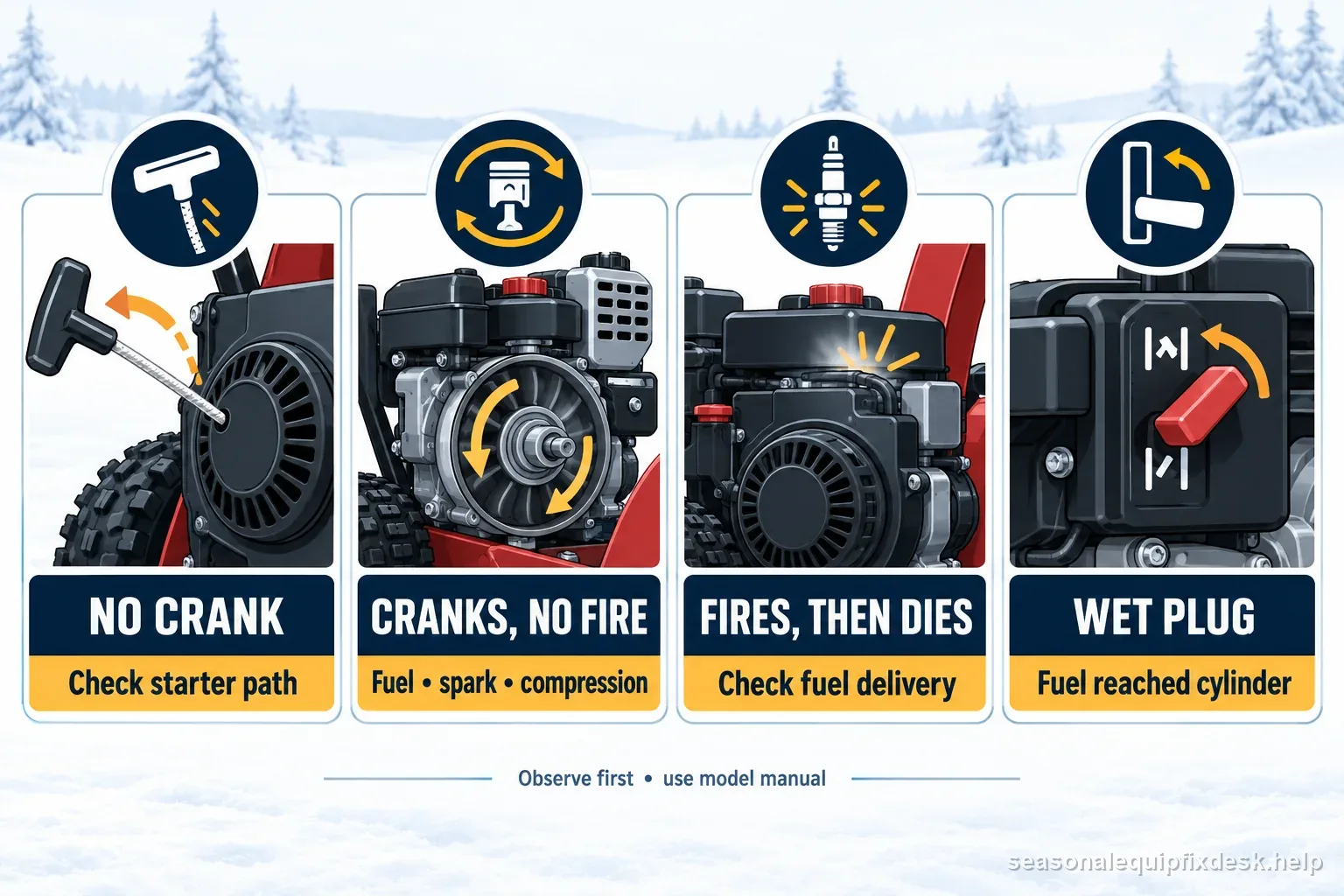
- Starter will not move the engine: inspect the start circuit or recoil mechanism before fuel work. On electric-start machines, verify the power source and cord arrangement exactly as the manual specifies.
- Engine cranks at normal speed but never fires: fuel delivery, flooding, spark, and compression become relevant.
- Engine fires briefly after priming or with full choke: that is useful evidence that the cylinder can combust; the fuel-metering path deserves attention before ignition parts are replaced.
- Engine starts, then quits as the choke opens: treat it as a run-quality/fuel-delivery complaint rather than a pure no-start.
| Observed behavior | What it suggests | Next useful check |
|---|---|---|
| Starter will not move engine | Starter path or mechanical resistance | Check the approved starting setup and stop if rotation is blocked |
| Cranks normally, never fires | Fuel, spark, or compression branch | Confirm model controls, then note whether the plug is wet or dry |
| Fires only after prime, then stops | Fuel metering or enrichment dependence | Use fresh fuel and the model manual’s fuel-system checks |
| Starts, quits as choke opens | Run-quality/fuel-delivery complaint | Record choke position and avoid repeated priming |
| Plug is wet after attempts | Fuel reached cylinder; flooding or ignition still possible | Stop cranking and follow the manual’s flooded-engine procedure |
Cold-start controls come before disassembly
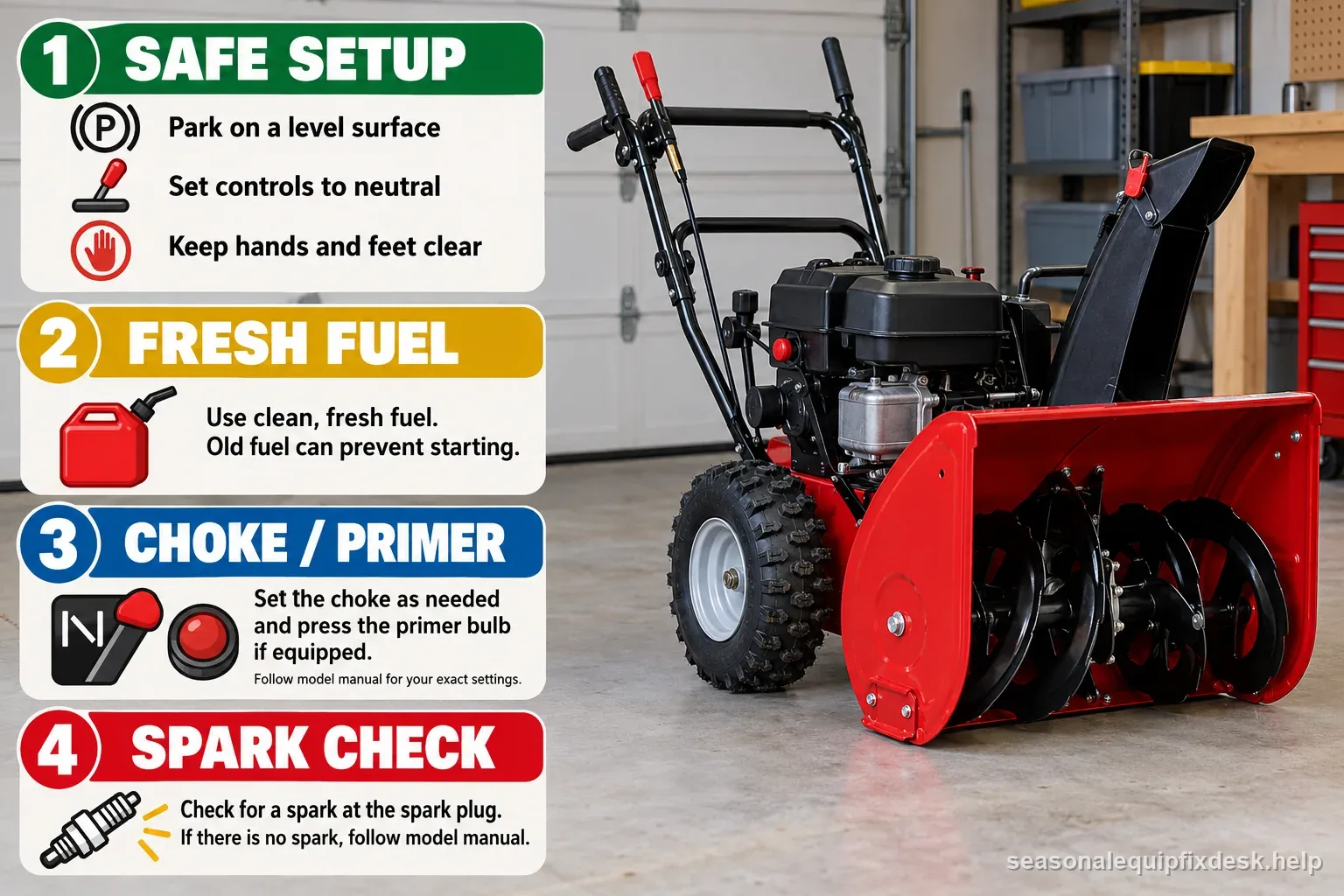
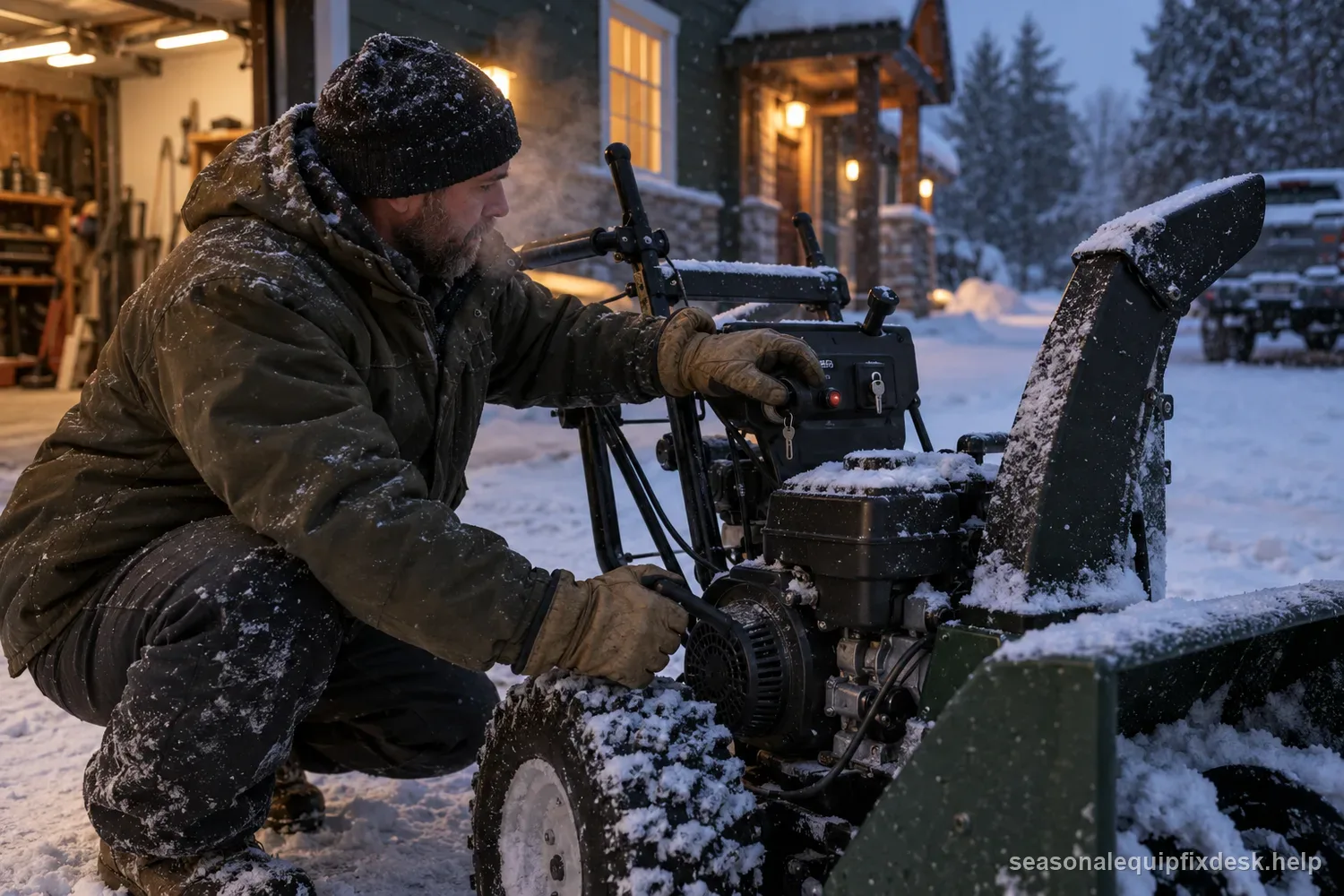
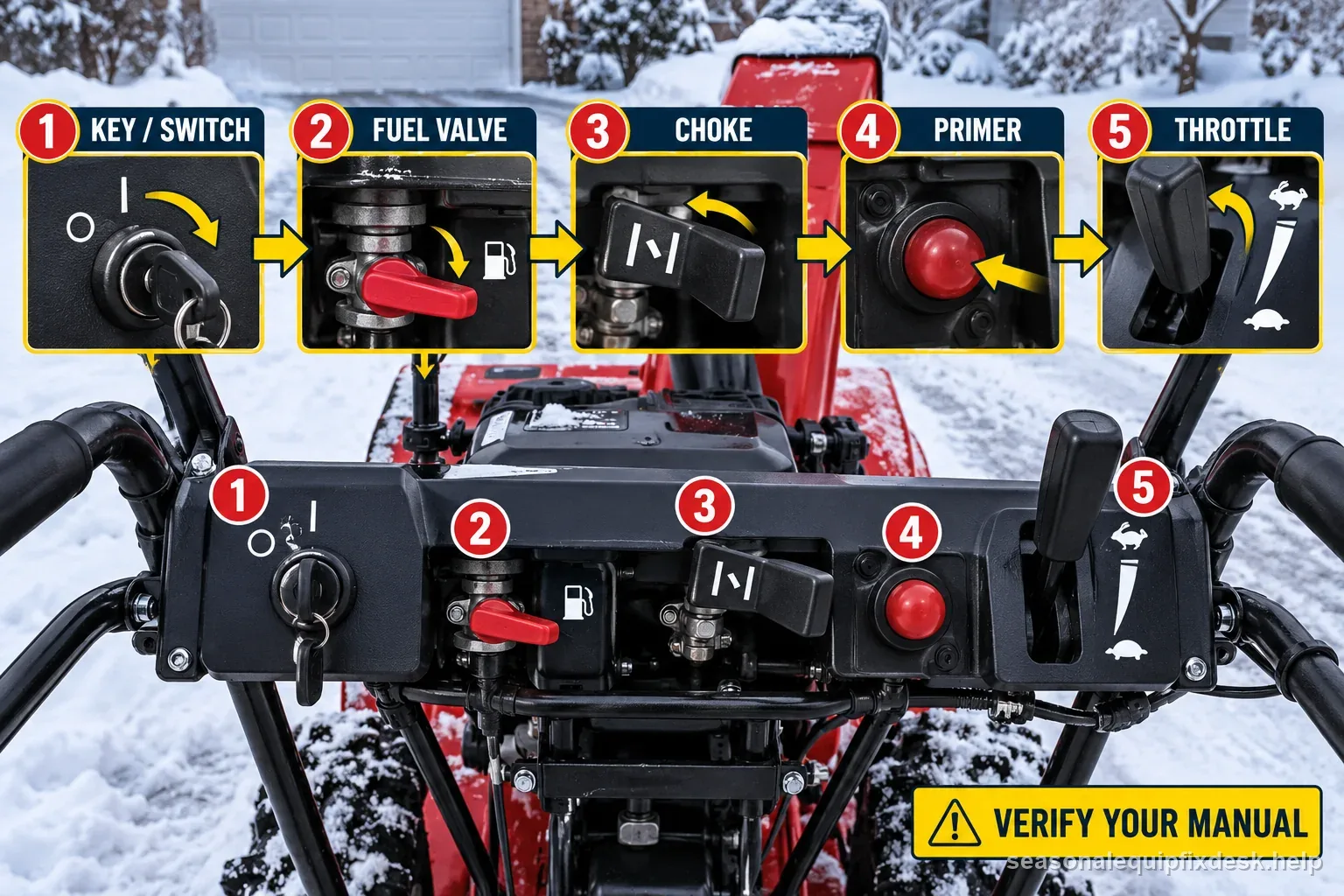
Set the machine on level ground with the auger and drive controls released. Confirm the key, fuel valve, throttle, choke, and primer are in the positions required by the exact model. A surprising number of “dead” snow blowers are simply being started with last season’s remembered procedure rather than the current machine’s instructions. Husqvarna’s troubleshooting guide also separates cold-start choke settings from a flooded-engine recovery, reinforcing why the exact manual controls this step.
Do not keep adding primer strokes after the engine is already flooded. If repeated attempts create a strong raw-fuel smell or a wet plug, stop cranking and use the manual’s flooded-engine procedure. Excess fuel can hide the original fault and makes later plug inspection less informative.
Use the spark plug as a fuel-delivery clue
After safe shutdown and with the spark-plug lead isolated, plug condition can help separate branches. Briggs & Stratton’s current snow-blower troubleshooting guidance notes that a wet plug suggests fuel is reaching the cylinder, while a dry plug points attention toward the fuel path. That is not a complete diagnosis, but it is more useful than replacing the plug solely because the machine is hard to start.
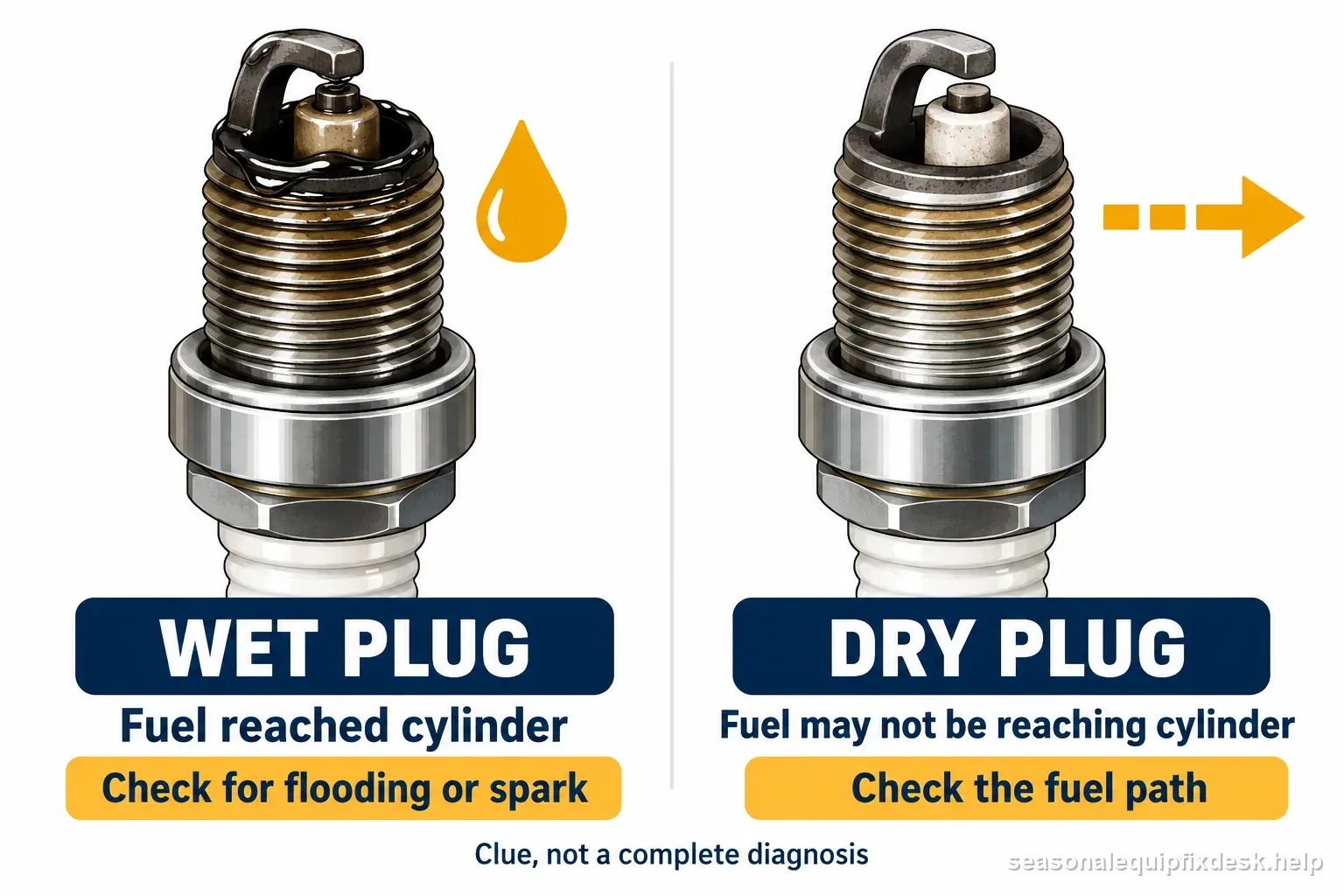
If the plug is fouled, damaged, or overdue according to the engine manual, service it to specification. If a proper spark test is required, use the approved tester and procedure; do not hold the lead against the engine with your hand or improvise an open-spark test around spilled gasoline.
Stored fuel can fail even when the tank is not empty
Fuel level answers only one question. Fuel that sat through the off-season can lose volatility or leave deposits in the small carburetor passages that matter most during starting. If the machine ran normally before storage and now fires only on prime or choke, stale fuel and restricted metering move higher on the list.
Drain, replace, stabilize, or otherwise handle fuel according to the engine and snow-blower manuals. Do not mix competing storage strategies from different brands. If fresh correct fuel reaches the carburetor and the engine still never fires, the next useful evidence is spark and mechanical condition—not another dose of cleaner.
When a carburetor cleaning is actually justified
A carburetor deserves attention when the evidence points there: fresh fuel is available, the engine has usable spark, starting controls are correct, and the engine either will not receive fuel or will run only on enrichment. At that point, inspect the bowl, jet, inlet, or diaphragm system only as far as the model’s service information supports.
Random mixture-screw turning is not a diagnostic shortcut. Some carburetors are fixed-jet or have emissions-controlled settings. If cleaning requires removing limiter caps, drilling passages, or guessing at baseline adjustments, stop and use the service procedure or a repair shop.
Mechanical resistance is a different kind of no-start
A recoil rope that suddenly stops hard, an electric starter that labors on a known-good supply, or an engine that cannot be rotated normally with the ignition isolated deserves a mechanical check before more starting attempts. Ice, a seized accessory, excessive liquid in the cylinder, or internal engine damage can all change cranking load.
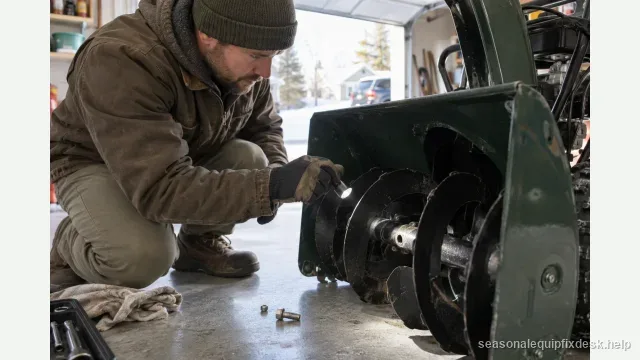
Never defeat the auger controls or reach into the housing to “free” a machine for a start test. The CPSC snow-thrower warning is especially important here: shut the engine off, wait for moving parts to stop, and use the clean-out tool rather than hands around the chute or auger.
| What happened | Diagnostic branch | Record next |
|---|---|---|
| Starter does not turn engine | Power, interlock, or mechanical bind | Control setup and whether the engine rotates |
| Engine cranks but never fires | Fuel, control, or ignition | Fuel history and plug clue if manual permits |
| Fires briefly then stops | Choke, fuel delivery, or operating condition | Exact timing and changed symptom |
A useful first-start retest
- Restore every guard, plug lead, cover, and control that was disturbed.
- Move the machine outdoors to its normal operating area and verify the auger and drive are released.
- Use the exact cold-start sequence once, without extra priming between attempts.
- If it starts, reduce choke as the manual directs and listen for stable running before applying snow load.
- If it does not start, record whether the symptom changed: no crank, dry-plug cranking, wet-plug flooding, brief fire, or stable idle.
That final observation is the handoff to the next repair decision. A shop can do much more with “cranks normally, plug stays dry, fresh fuel in tank” than with “I replaced the carburetor and spark plug and it still will not start.”
Write down whether the starter turns the engine before you decide which troubleshooting branch applies. No crank can point to the starter power source, connection, switch, or a mechanical bind. Normal cranking with no firing shifts attention to the model's starting controls, fuel condition, plug lead, and spark-plug condition. A brief start followed by a stall is a different clue from a wet plug after repeated priming. Toro's manual table lists stale or contaminated fuel, a loose lead, a damaged plug, poor connections, and overheating as separate possible causes, then directs the reader to its service boundary for faults that remain.
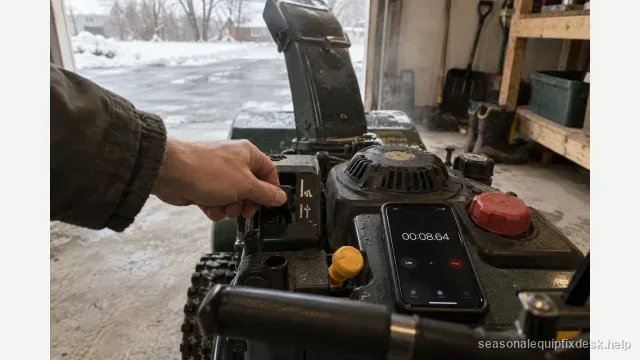
Use the primer, choke, throttle, ignition key, and electric starter only as your machine's manual describes. These controls vary by engine and temperature; copying a sequence from a different brand can flood the engine or keep the choke engaged after it fires. If using an extension cord for an electric starter, follow the manual's outdoor rating and connection instructions. Never run a gas snow blower in a garage to warm it or diagnose a no-start.
When the engine is cool, record the fuel's storage history and what the plug looks like only if the manual permits that inspection. Do not test ignition near spilled fuel or keep cranking after the starter's duty cycle. If the engine is mechanically locked, fuel leaks, wiring is damaged, or the approved external checks do not change the symptom, stop and use an authorized service channel. That preserves the machine's original evidence and avoids turning one complaint into a flooded or overheated second fault.
- Restore guards, covers, plug lead, and controls that were disturbed.
- Move outdoors; verify auger and drive controls are released.
- Use the exact model’s cold-start sequence once without extra priming.
- If it starts, reduce choke as directed and listen for stable running.
- If it does not, record the changed symptom and stop before another adjustment.
Do not erase the original symptom during repeated attempts
Limit cranking and priming to the duty cycle and procedure in the manual. Ten improvised start attempts can turn a dry-plug fuel-delivery clue into a flooded cylinder, overheat an electric starter, or run down a battery until the machine develops a second problem. If the symptom changes, stop and write down what changed before trying another adjustment.
For a machine coming out of storage, note ambient temperature, fuel age, whether it was stored drained or with treated fuel, and whether the engine fired at all on the first attempt. Those details make the next diagnosis more reliable than a list of parts already replaced.
For the matching drive or fuel symptom, see the ethanol percentage allowed by the engine manual.