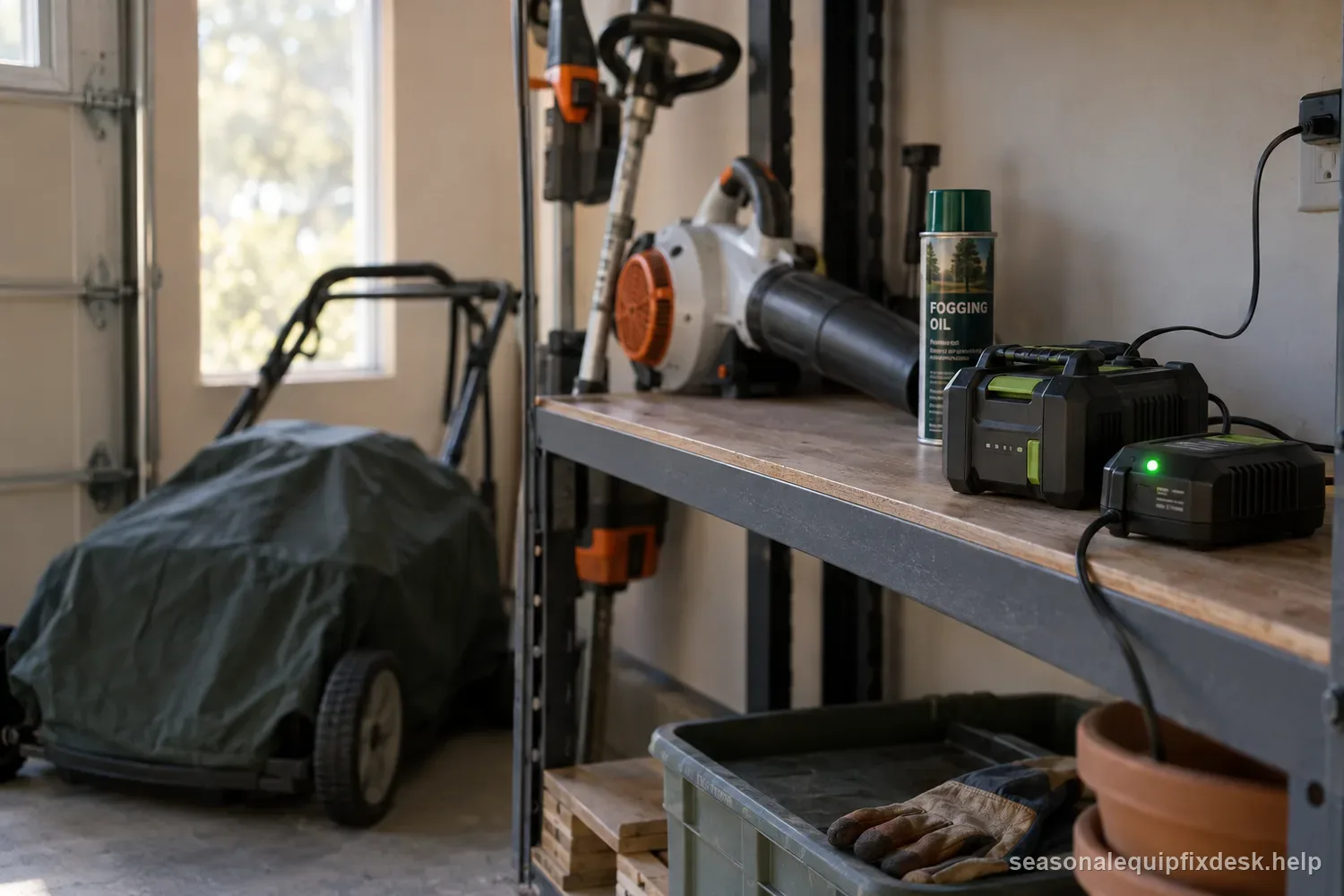
Quick answer: Good seasonal storage is a set of separate decisions: fuel, oil, battery, cleaning, corrosion protection, and the environment where the equipment sits. The fuel decision should come from the engine manual; the battery should not be forgotten on equipment that has one; and the machine should be stored clean and dry without creating a fire hazard. A single generic rule such as "always drain every tank" is too broad.
| System | Storage check | Model-specific note |
|---|---|---|
| Gas engine | Clean, inspect, service oil and filters as due | Stabilize or drain by engine manual |
| Battery mower | Clean, inspect; remove pack if directed | Use battery maker charge and temperature range |
| Two-cycle tool | Inspect cutting parts and air intake | Keep exact fuel/oil mix and storage steps |
| Storage area | Dry, secure, ventilated | Keep fuel away from ignition sources |
Choose one fuel strategy and finish it completely
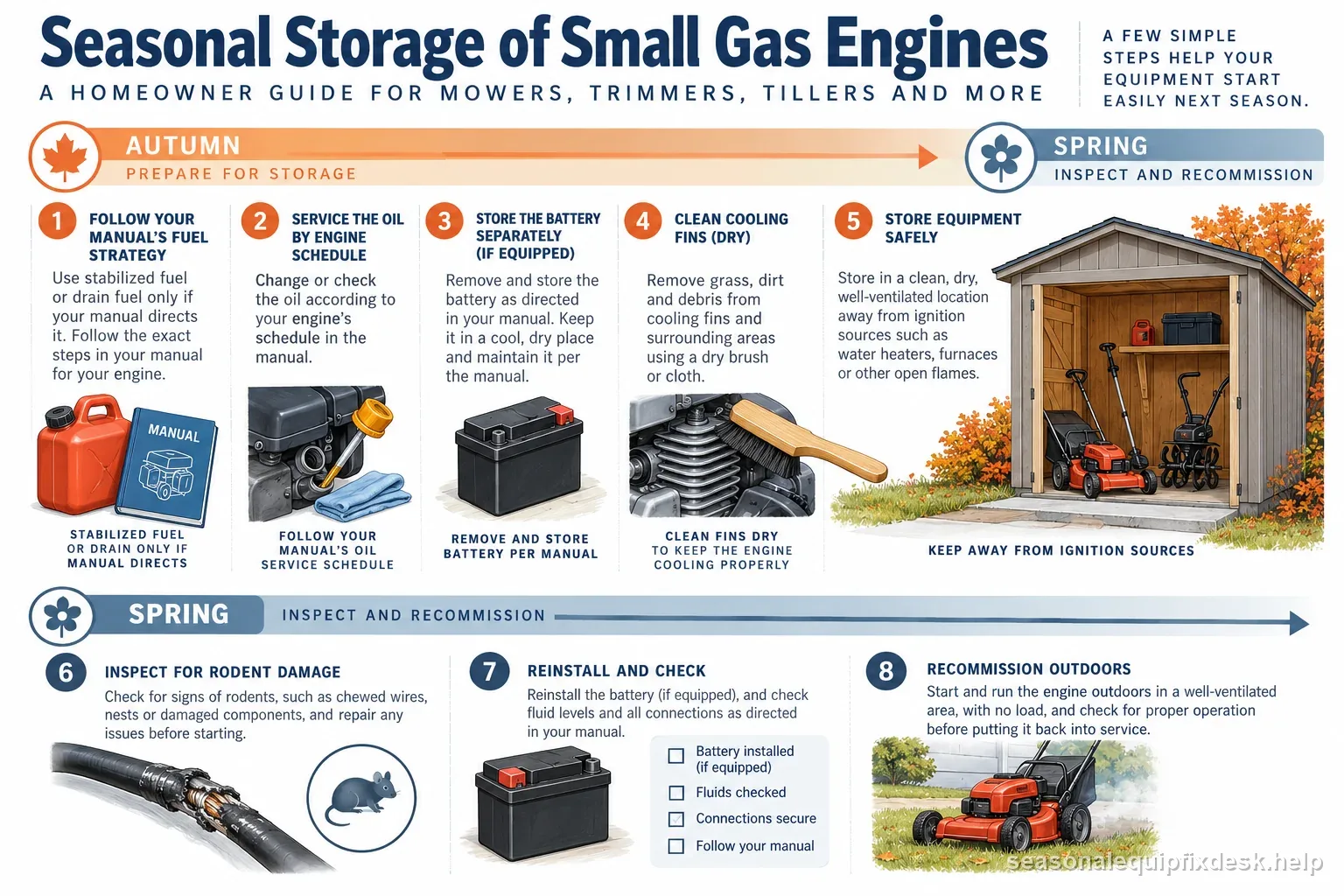
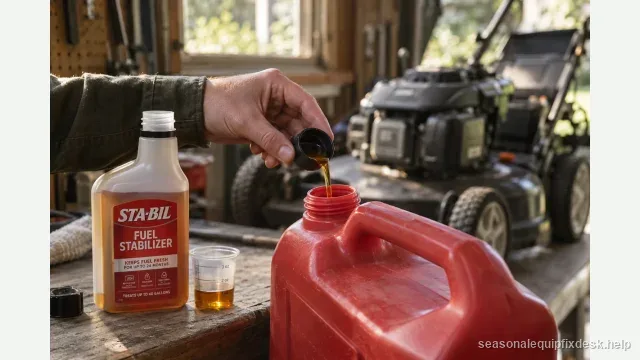
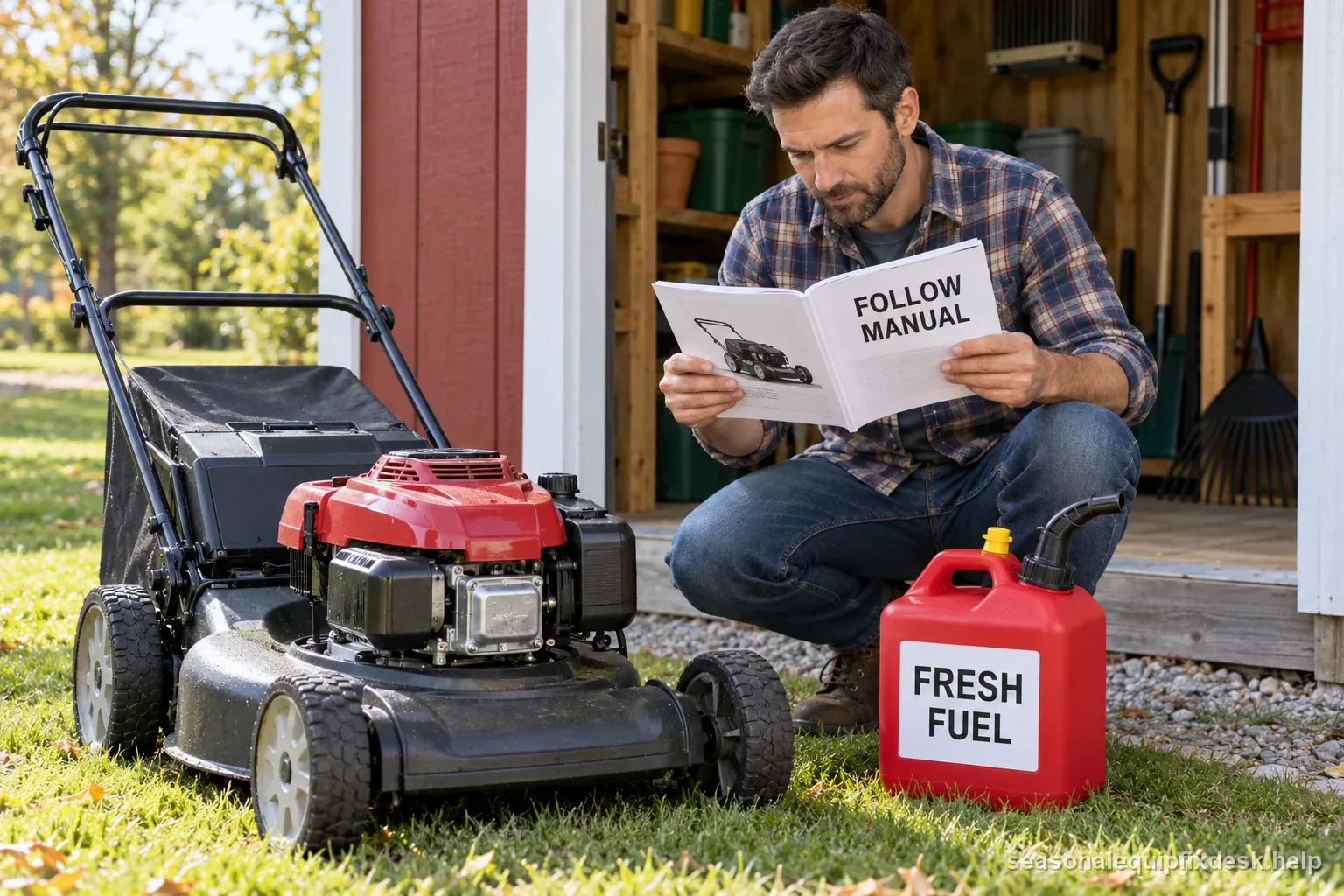
Some manufacturers support storing with fresh stabilized fuel circulated through the system. Others specify draining for certain machines, storage lengths, or fuel types. Briggs and Stratton currently describes a stabilized-fuel approach and a drain/run-dry alternative in its storage guidance. Use the exact engine manual and do not combine half of each method.
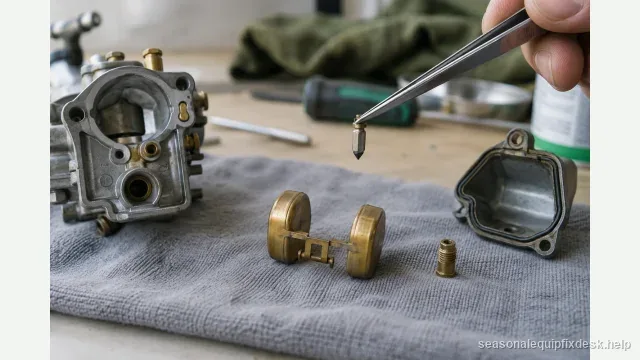
Whatever method you choose, label the machine or maintenance record with the date. Spring diagnosis is much easier when you know whether the carburetor was left with treated fuel, run dry, or simply forgotten.
Fuel compatibility still matters during storage
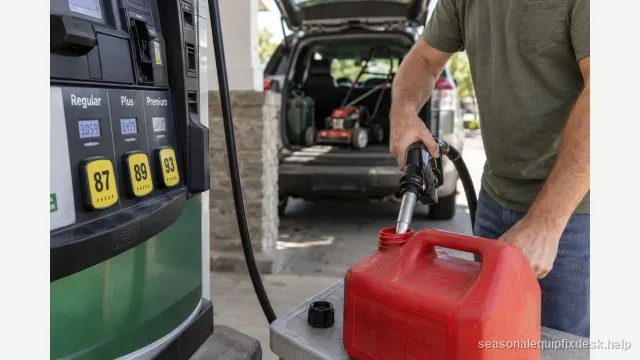
Stabilizer does not make prohibited fuel acceptable. EPA says E15 cannot be used in nonroad equipment engines such as lawn mowers and chain saws. Store only fuel that is within the engine maker's ethanol and octane limits.
Use approved containers, keep them closed, and rotate old fuel instead of endlessly topping off the same can. Fuel cans belong away from ignition sources and living spaces.
Oil service timing depends on the engine, not the calendar alone
If the manual calls for an oil change before storage, warm the engine enough for normal service, shut it down safely, and change oil and filter as specified. Briggs recommends warm-engine oil service in its storage checklist. Other engines may have different intervals or oil types.
Do not overfill in the name of storage protection. Record the viscosity and amount used so the spring level check has a reliable baseline.
Battery storage needs a plan for self-discharge
On machines with lead-acid batteries, disconnect or remove the battery if the manufacturer calls for it, clean terminals, and keep the battery in a cool dry place. Use an approved maintainer only when compatible with the battery chemistry and equipment instructions. Lithium packs often have different storage charge and temperature requirements.
Do not leave a damaged, swollen, leaking, or frozen battery on a charger. Treat battery condition as its own safety question, not just a starting inconvenience.
Clean cooling surfaces without forcing water where it does not belong
Remove grass, chaff, sawdust, and mud from cooling fins, guards, decks, and housings. Disconnect the spark-plug lead or battery as appropriate before reaching near blades or moving parts. Briggs specifically advises storing engines clean rather than packed with combustible debris.
Follow the equipment manual on washing. Bearings, electrical connectors, air intakes, and hot mufflers should not be blasted indiscriminately with water.
Corrosion prevention is mostly about dry metal and protected contact points
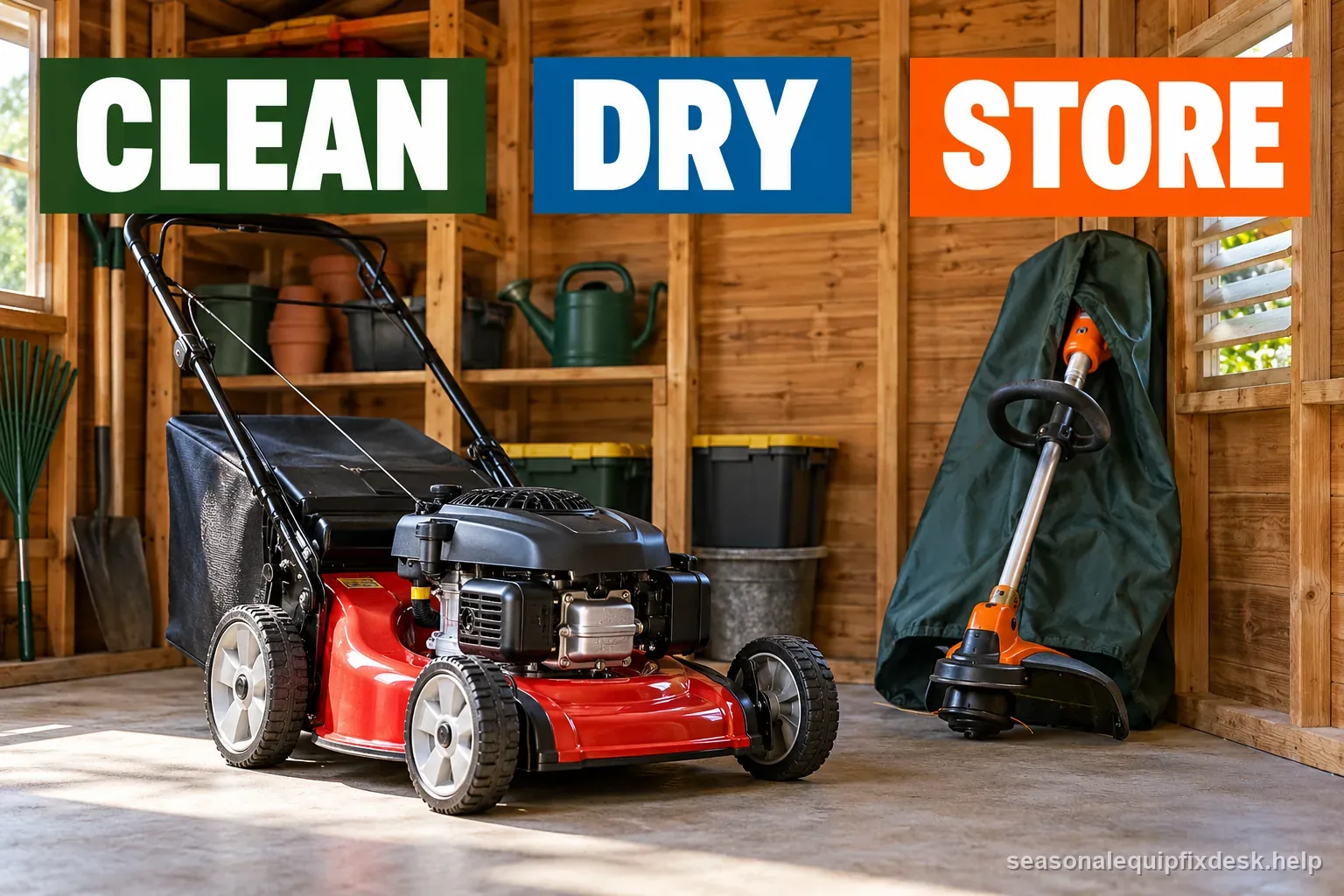
Dry the machine before covering it. Touch up exposed steel where the manufacturer permits, lubricate pivots and cables on the stated schedule, and protect bare shafts from rust. A tightly sealed plastic cover over a wet machine can trap the moisture you intended to keep out.
Do not store gasoline equipment beside an ignition source
Briggs warns against storage next to furnaces, water heaters, or appliances with pilot lights. Gasoline vapor and residual fuel make location a fire-safety decision. Shutoff valves and tank caps reduce leaks; they do not make a fuel system nonflammable.
Inspect for seepage before the machine disappears into the back of a shed for six months.
Create a spring-start tag while the fall details are fresh
Write down fuel method, oil service, battery action, any missing guard or damaged cable, and the date. Include one note about what not to do at first startup: for example, do not add fuel until confirming the tank was intentionally drained, or do not reconnect a battery until checking its charge and polarity.
Recommission in layers instead of starting under full load
In spring, inspect for rodent nests, cracked fuel lines, loose terminals, rusted controls, and leaks before starting. Verify oil and fuel, then run the engine at no load in the normal outdoor operating area. Listen for stable speed and watch for smoke or leakage.
Only after the engine itself passes should you engage blades, tines, pumps, augers, or hydraulic loads. That sequencing tells you whether a new symptom belongs to the engine or the equipment it drives.
- Initial symptom and conditions
- Controls, settings, and supply checked
- Inspection finding before adjustment
- Single change made and result
- Any stop condition or unresolved fault
Storage is successful when it preserves evidence as well as hardware
A machine that starts next season is the obvious goal, but the maintenance record matters too. If it does not start, knowing the fuel age, storage method, last oil service, and battery state eliminates several guesses immediately. That is the difference between a repeatable seasonal system and a yearly ritual of replacing whatever part is easiest to reach.
Seasonal instructions can conflict: one engine maker may prefer fresh treated fuel while another directs draining; battery packs also have their own storage temperature and charge requirements. Record the model and chosen method instead of applying one rule to every mower, trimmer, generator, or blower.
Rodent damage deserves a deliberate spring check
Stored outdoor equipment can attract nesting animals. Before reconnecting a battery or pulling a starter, inspect the blower housing, air intake, wiring, muffler area, and accessible cooling passages for nesting material or chewed insulation. Remove debris with the power source isolated and the engine cold. A blocked cooling path can overheat quickly even when the engine starts normally.
Chewed wires should be repaired correctly rather than twisted together as a seasonal shortcut. On machines with safety interlocks, damaged wiring can affect both starting and shutdown behavior. Treat an electrical repair as part of recommissioning before the equipment is placed under load.