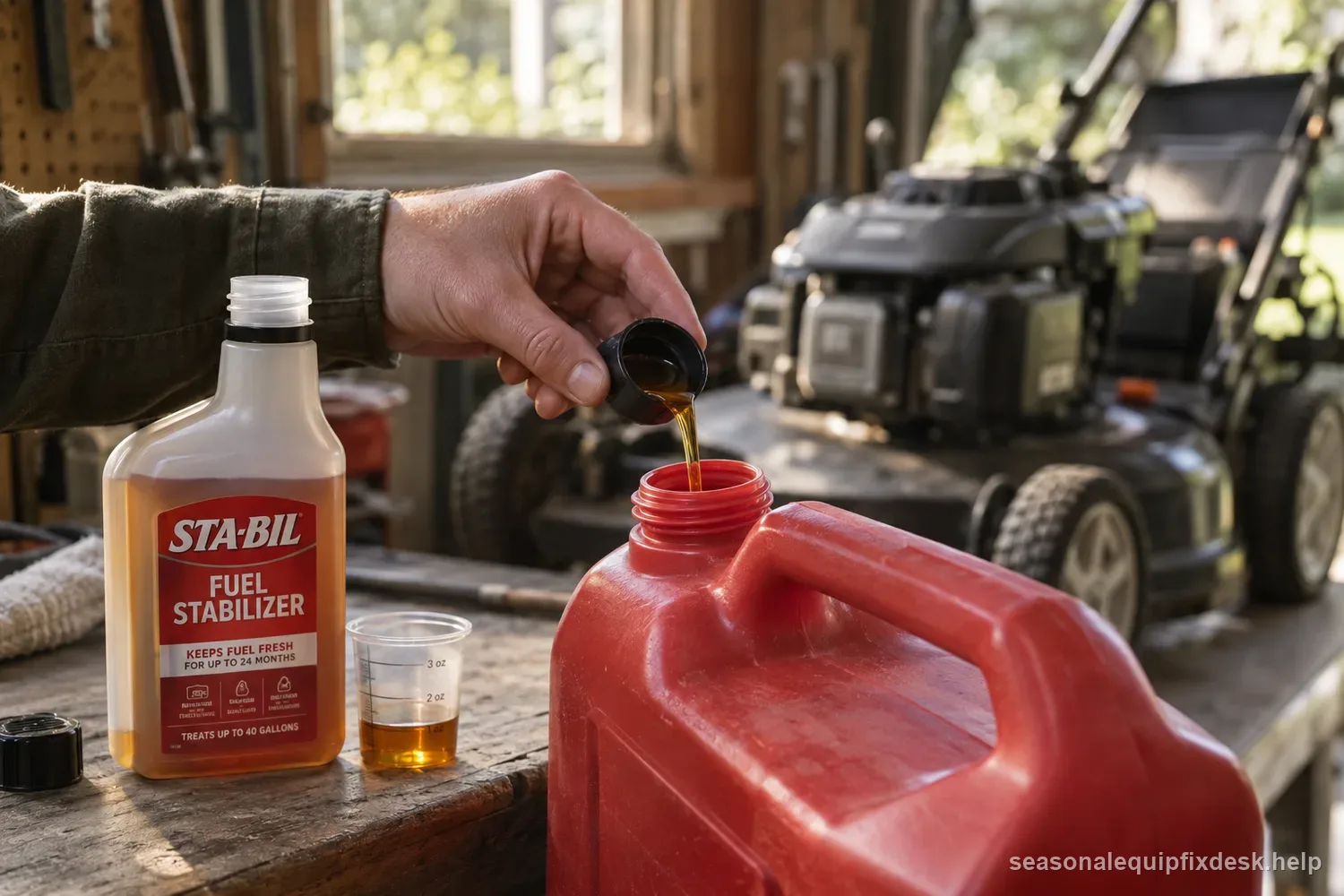
Quick answer: Fuel stabilizer is a preservation tool, not a repair chemical. Add the correct dose to fresh, permitted gasoline, mix it as the product directs, and run the engine long enough for treated fuel to reach the carburetor if the engine maker uses that storage strategy. Do not pour stabilizer into months-old problem fuel and expect the original volatility or cleanliness to return.
After storage, test each control without reaching into the attachment. The snow blower auger guide explains the safe shutdown and release checks.
Fuel left in storage can complicate a snow blower’s first start. Follow the snow blower no-start checks to distinguish fuel condition from control, ignition, or mechanical symptoms.
| Condition | Stabilizer role | Next action |
|---|---|---|
| Fresh permitted fuel | May preserve fuel when product and engine allow | Dose by label; circulate if required |
| Old or sour fuel | Cannot restore volatility or freshness | Replace and dispose safely |
| Water or phase separation | Does not remove contamination | Do not run; handle fuel safely |
| Carburetor deposits or leak | Not a repair chemical | Diagnose the fault separately |
| Published guidance | Scope | What to verify |
|---|---|---|
| Treat and circulate | Briggs & Stratton equipment guidance | Fresh permitted fuel, label dose, and engine procedure |
| Run 5 minutes after treatment | STA-BIL product directions | Current package label and safe outdoor operation |
| Drain carburetor for 2–12 months | Listed Honda EU generator models | Exact model manual and storage duration |
Decide on a storage method before adding anything
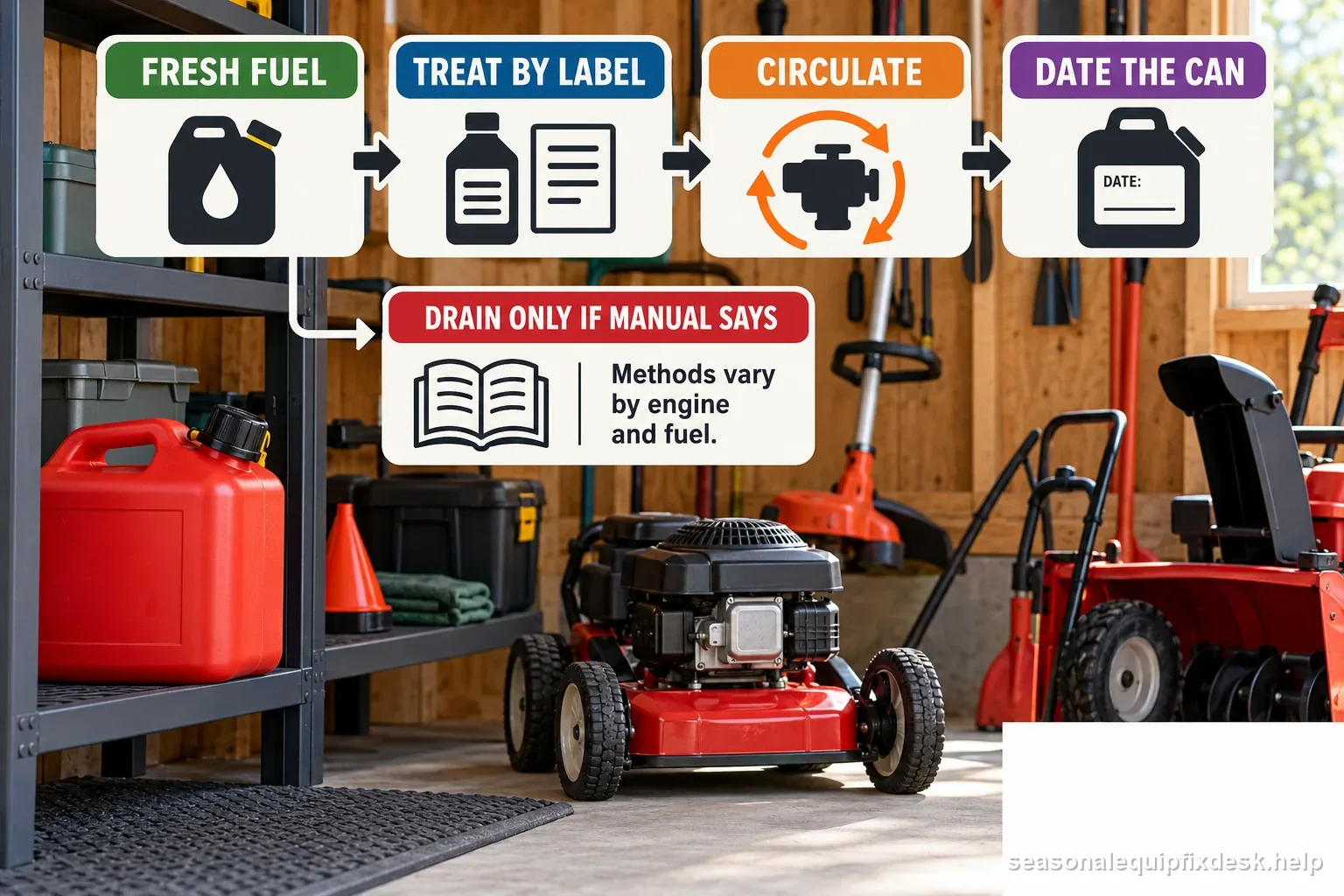
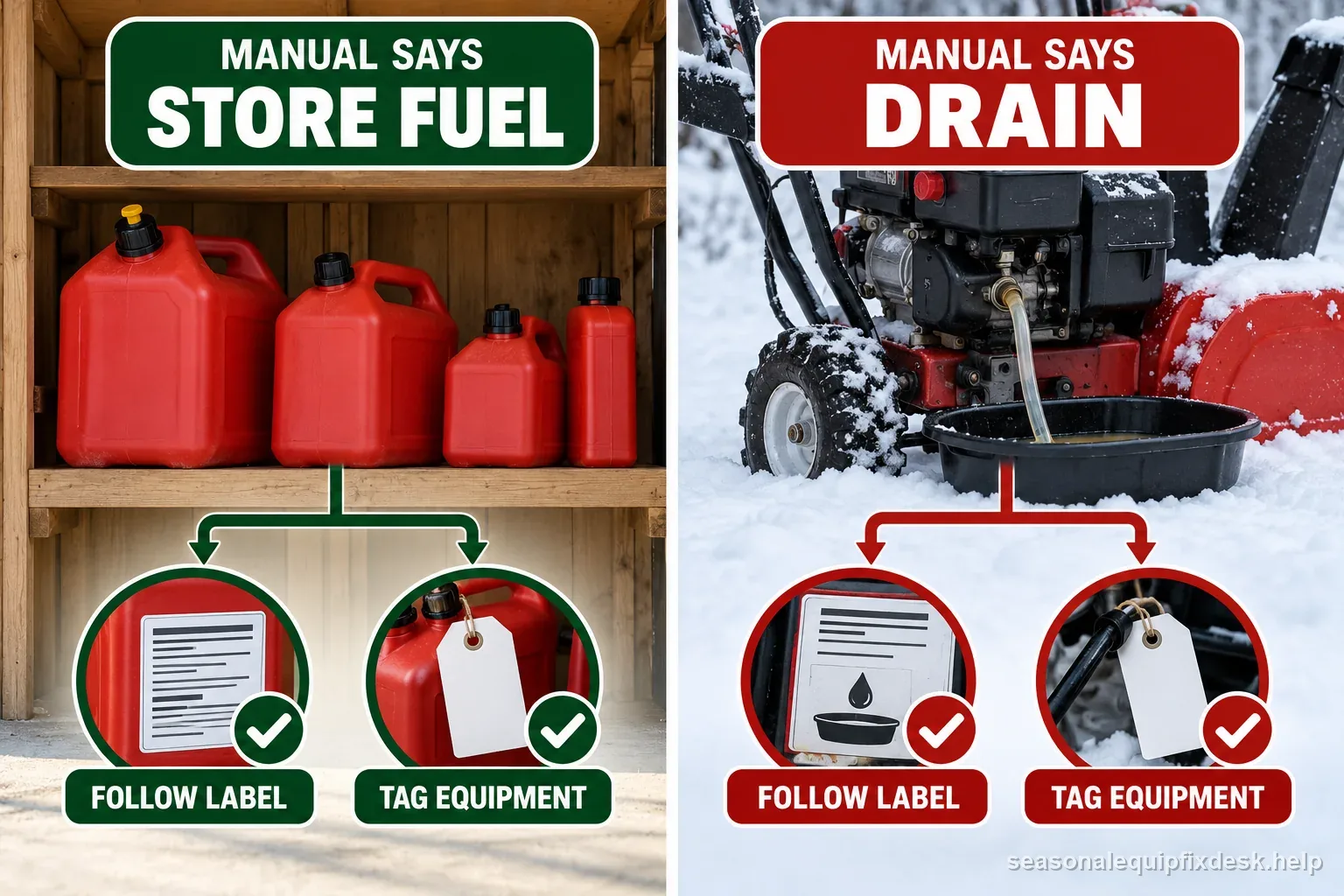
Read both the equipment and engine manuals. Some manufacturers recommend storing with a tank of stabilized fuel; others specify draining for certain machines, fuels, or storage durations. Briggs and Stratton's current U.S. storage guidance describes stabilized fuel circulated through the system and also gives a drain/run-dry alternative when stabilizer is not used or for certain alcohol-containing fuel situations.
The mistake is to mix methods: a full tank that never received stabilizer, or a drained tank with untreated fuel left in the carburetor, can preserve the very problem you were trying to prevent.
- Inspect and clean the equipment while it is dry.
- Choose one fuel plan and record how it was completed.
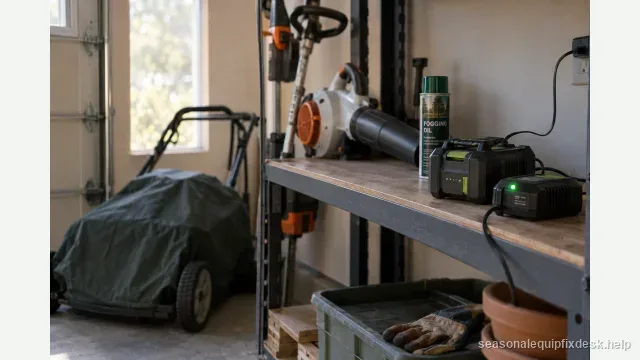
- Service oil, lubrication, or battery according to equipment type.
- Store the machine in a suitable dry location.
- Leave a spring-start note with unresolved wear or damage.
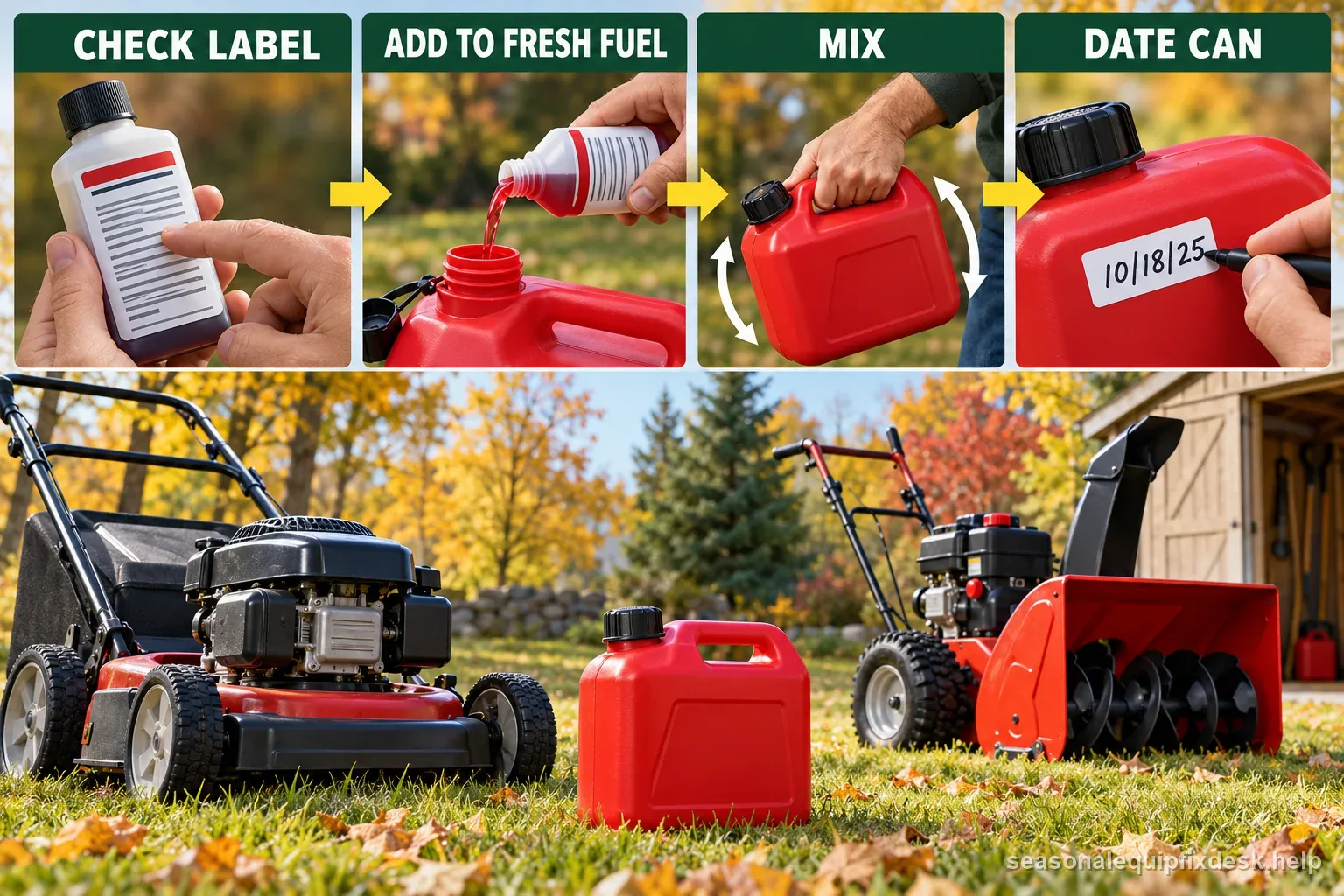
Stabilizer should meet fresh fuel, not rescue fuel
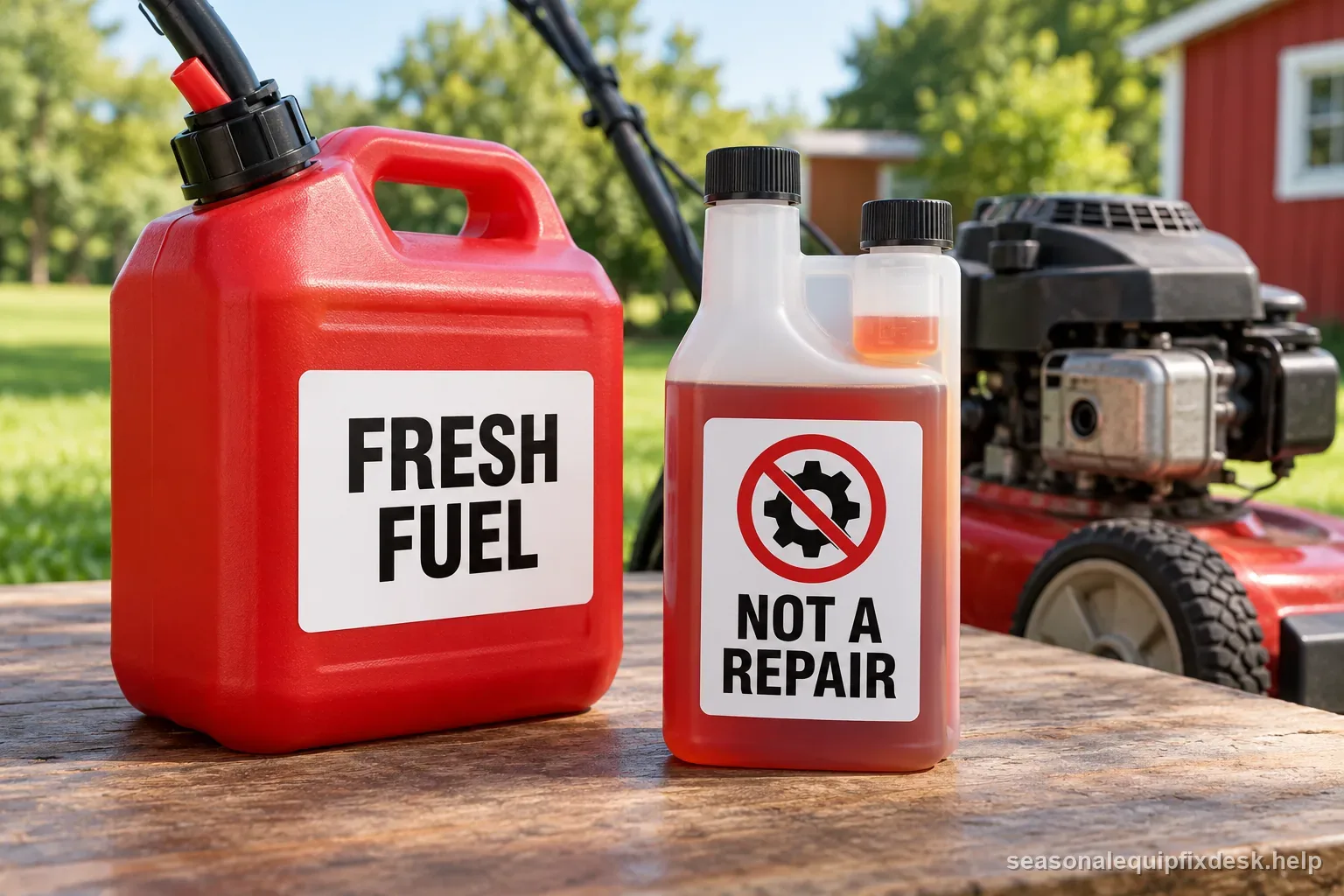
Start with gasoline that is still within the engine maker's freshness window and within the permitted ethanol limit. If the fuel is sour-smelling, visibly contaminated, phase-separated, or already causing poor running, replace it according to local disposal rules. Stabilizer slows future degradation; it does not remove water, dissolve all varnish, or restore lost volatility.
Measure by fuel volume, not by guess
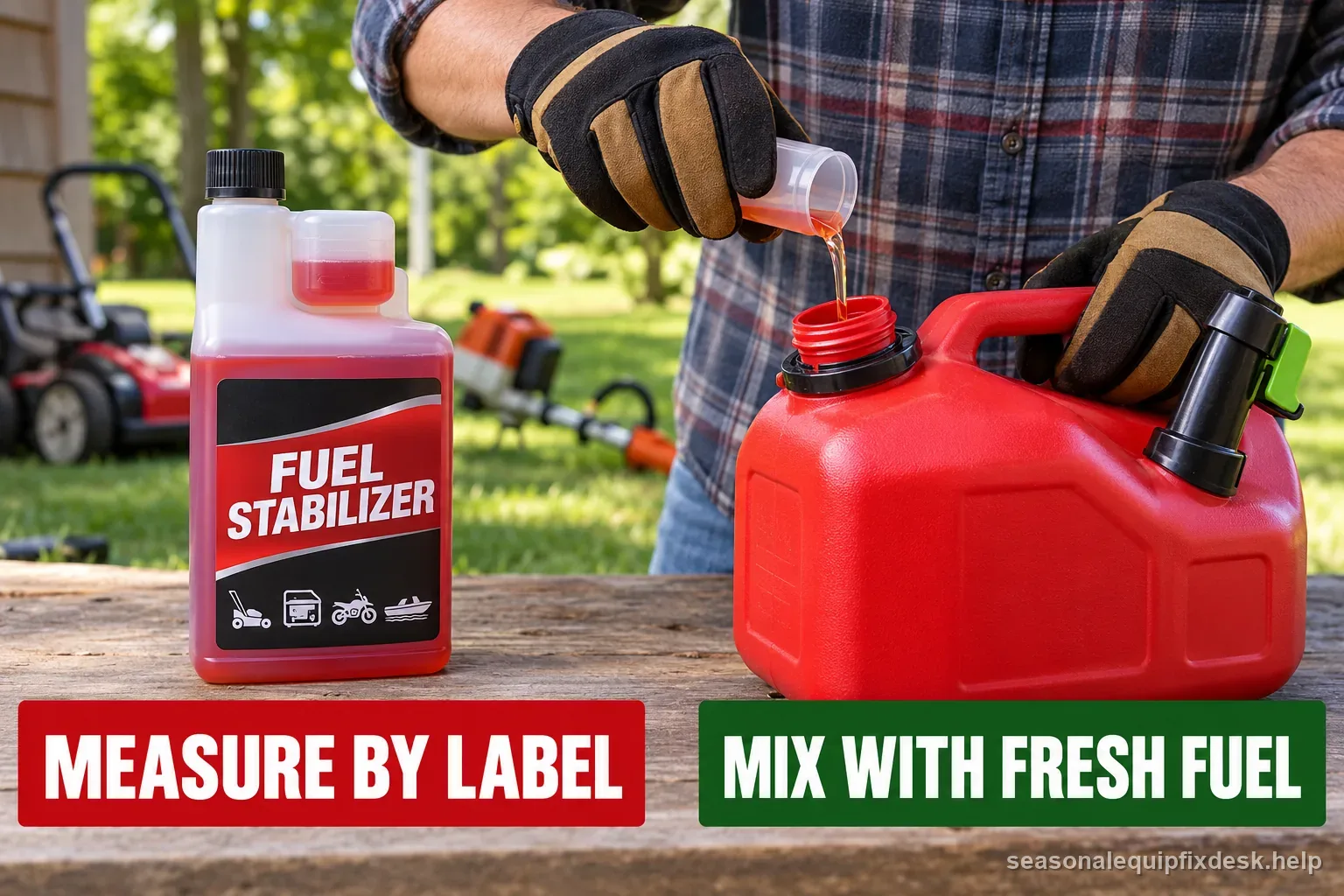
Use the stabilizer label's dosage for the actual amount of fuel being treated. More is not automatically better. Concentrated products can have very different ounce-per-gallon ratios, so an old measuring habit from another brand can be wrong.
Add the product where the label directs, then agitate or refuel in the recommended order to distribute it. Keep the stabilizer container capped and labeled; never store it in a drink bottle or an unmarked jar.
Circulation is what protects the carburetor on a treated-fuel plan
If the storage method calls for fuel to remain in the system, run the engine for the time stated by the manufacturer so treated gasoline reaches the carburetor and fuel lines. Simply dosing the tank and immediately shutting the machine off may leave untreated fuel in the bowl or passages.
Do this outdoors with normal ventilation and all safety guards in place. Do not run a generator or gasoline engine in a garage for the sake of circulating stabilizer.
A two-stroke premix needs both ratios correct
For chainsaws, trimmers, and blowers that use premix, maintain the specified oil-to-gas ratio while also dosing stabilizer correctly. Stabilizer does not replace two-stroke oil, and two-stroke oil does not preserve gasoline indefinitely. Mix smaller batches if that helps you use fuel within the maker's time limit.
| Method | Use when the owner manual says | Avoid this incomplete shortcut |
|---|---|---|
| Treat and store | Fresh fuel, label dose, then circulate if directed | Adding stabilizer to already stale fuel |
| Drain and run dry | Exact model procedure permits it | Leaving fuel in an unspecified carburetor |
| Use a different fuel product | Engine and product labels match | Assuming every engine accepts the blend |
Write the treatment date on the can
Stabilizer claims vary by product and concentration. Instead of remembering a vague "good for a year," write the treatment date, fuel type, and stabilizer product on the approved fuel can. Then follow the shorter of the product claim and engine maker's storage recommendation.
This also prevents old treated fuel from being topped up repeatedly until no one knows how old the oldest gasoline actually is.
Do not confuse storage protection with carburetor cleaning
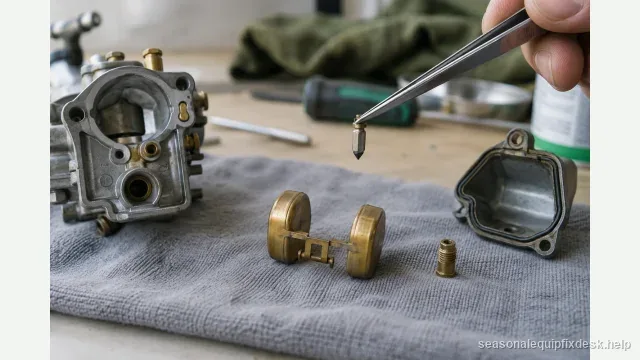
If an engine already surges, needs choke to stay running, or has a clogged main jet, stabilizer is not the primary repair. Diagnose the running fault. Briggs and Stratton's carburetor guidance treats deposits and restrictions as cleaning or service issues, not something that should be hidden by a heavier additive dose.
Spring startup is the test of the whole storage plan
Before starting, inspect the fuel system for leaks, cracked hoses, rodent damage, and stale odor. Verify oil level and safety controls. If the machine starts and runs normally, use the remaining treated fuel promptly rather than turning last season's fuel into next winter's storage supply.
If it starts poorly, record whether the problem is no fuel flow, flooding, choke-only running, or weak spark. That helps separate a storage-fuel problem from an unrelated ignition or mechanical fault.
Store fuel safely even when it is treated
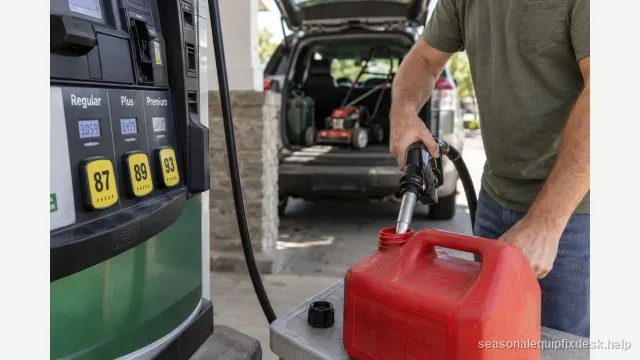
Stabilizer does not change gasoline into a nonflammable liquid. Use an approved container, keep it away from ignition sources and living spaces, and follow local quantity and disposal rules. If the machine manufacturer tells you to drain fuel, transfer it using safe equipment rather than siphoning by mouth.
- Initial symptom and conditions
- Controls, settings, and supply checked
- Inspection finding before adjustment
- Single change made and result
- Any stop condition or unresolved fault
Stabilizer choice should not override the engine maker's fuel rule
A bottle may say it is compatible with many gasoline blends, but the engine still controls which gasoline is allowed in the machine. If the equipment manual limits ethanol to 10 percent, an additive does not make E15 acceptable. Likewise, stabilizer does not correct the wrong octane or an incorrect two-stroke premix ratio.
For equipment shared by several people, write the permitted fuel and stabilizer dose on a maintenance card near the fuel can. That simple control prevents a common seasonal problem: one person carefully treats the correct fuel while someone else later tops the tank with an incompatible blend.
Storage instructions are not universal: Honda describes stabilizer use for certain storage periods and explicitly says it will not reconstitute stale fuel; Briggs and Stratton gives a treated-fuel plan and a drain-and-run-dry alternative for some fuel situations. Follow one complete plan from the equipment and engine manuals.
Stabilizer is a storage method, not a universal repair for fuel that has already gone stale or picked up water. The Briggs & Stratton storage directions distinguish its treated-fuel method from draining fuel, and say to follow the additive package directions and circulate treated fuel through the system. Its recommendation that treated fuel may remain stored for up to 24 months applies to its own products and engine guidance; it is not a blanket shelf-life promise for every additive, blend, climate, or small engine. Read both the stabilizer label and the engine manual before choosing a method.
Do not combine contradictory storage advice. One engine maker may specify draining, while another may permit treated fuel; the fuel blend and two-stroke oil ratio add further conditions. Never add stabilizer to a fuel container without measuring the package dose for the actual amount of gasoline, and never change a two-stroke premix ratio to compensate for storage. If fuel is untreated, contaminated, or older than the manual allows, do not expect an additive to restore it. Handle and store gasoline only in an approved container, away from ignition sources, and let hot equipment cool before refueling or service.
Two worked examples with label and model numbers
Product-label dose: STA-BIL’s opened directions say 1 ounce treats up to 2.5 gallons. For 2 gallons of fresh fuel, the proportional amount is 1 × 2 ÷ 2.5 = 0.8 ounce. Follow the current bottle label, then its stated 5-minute circulation step if the equipment manual allows that method.
Honda generator storage: For the EU1000i, EU2000i, and EU3000i Handi guidance, a planned 4-month rest falls in Honda’s 2-to-12-month category, which calls for draining the carburetor per the owner manual. Its 1-to-2-month path differs; never apply this example to another generator without its manual.
Do not store the treatment plan only in memory
Record the date, fuel quantity, product name, and dose. If the machine is sold or serviced before next season, that note lets the next person know what remains in the tank. It also prevents repeated dosing every time a small amount of fresh fuel is added to an already treated can.
Discard any unlabeled treated fuel whose age or contents cannot be verified.
If a splitter is losing hydraulic fluid, fuel stabilizer will not address that symptom; start with the safe leak-source checks.