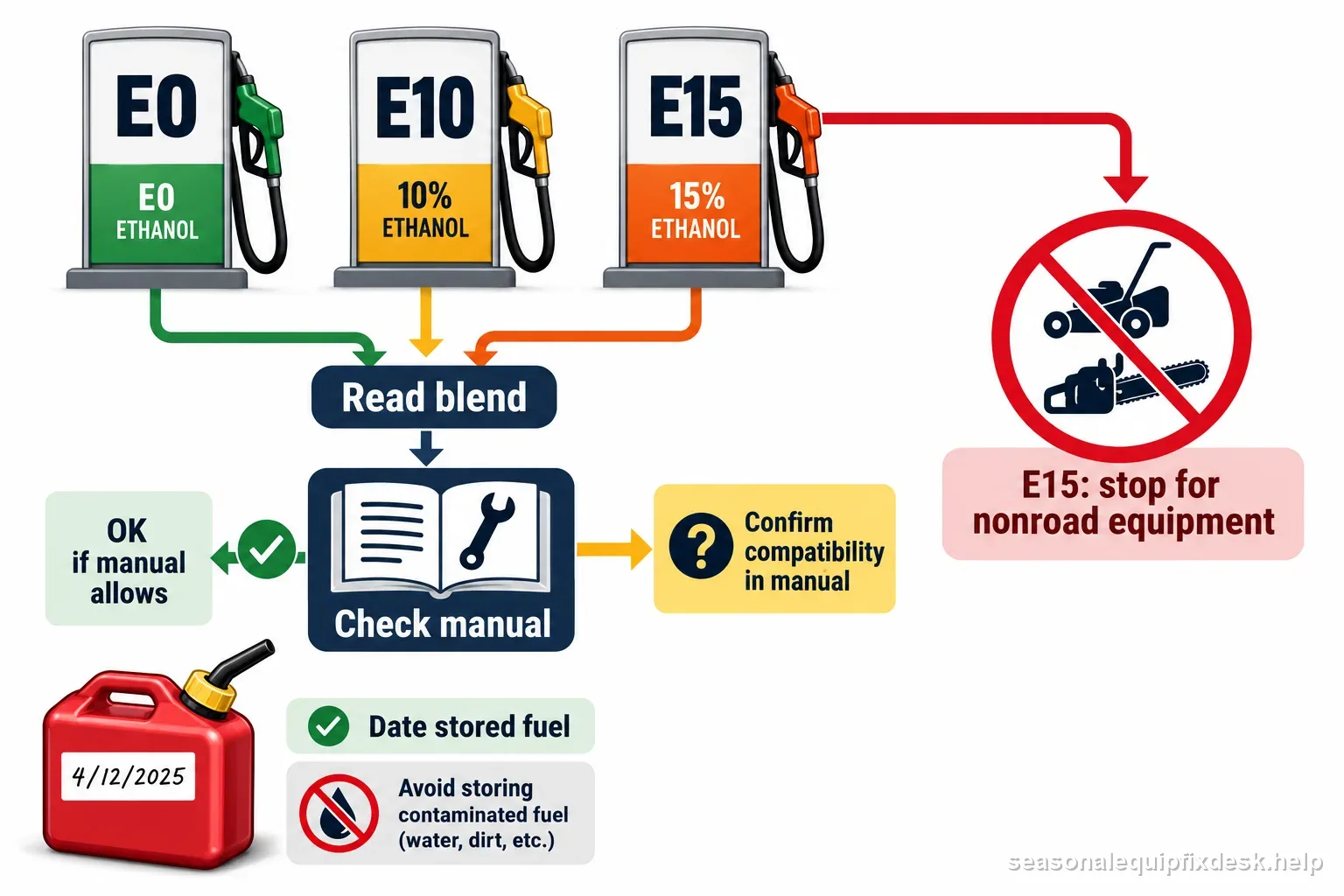
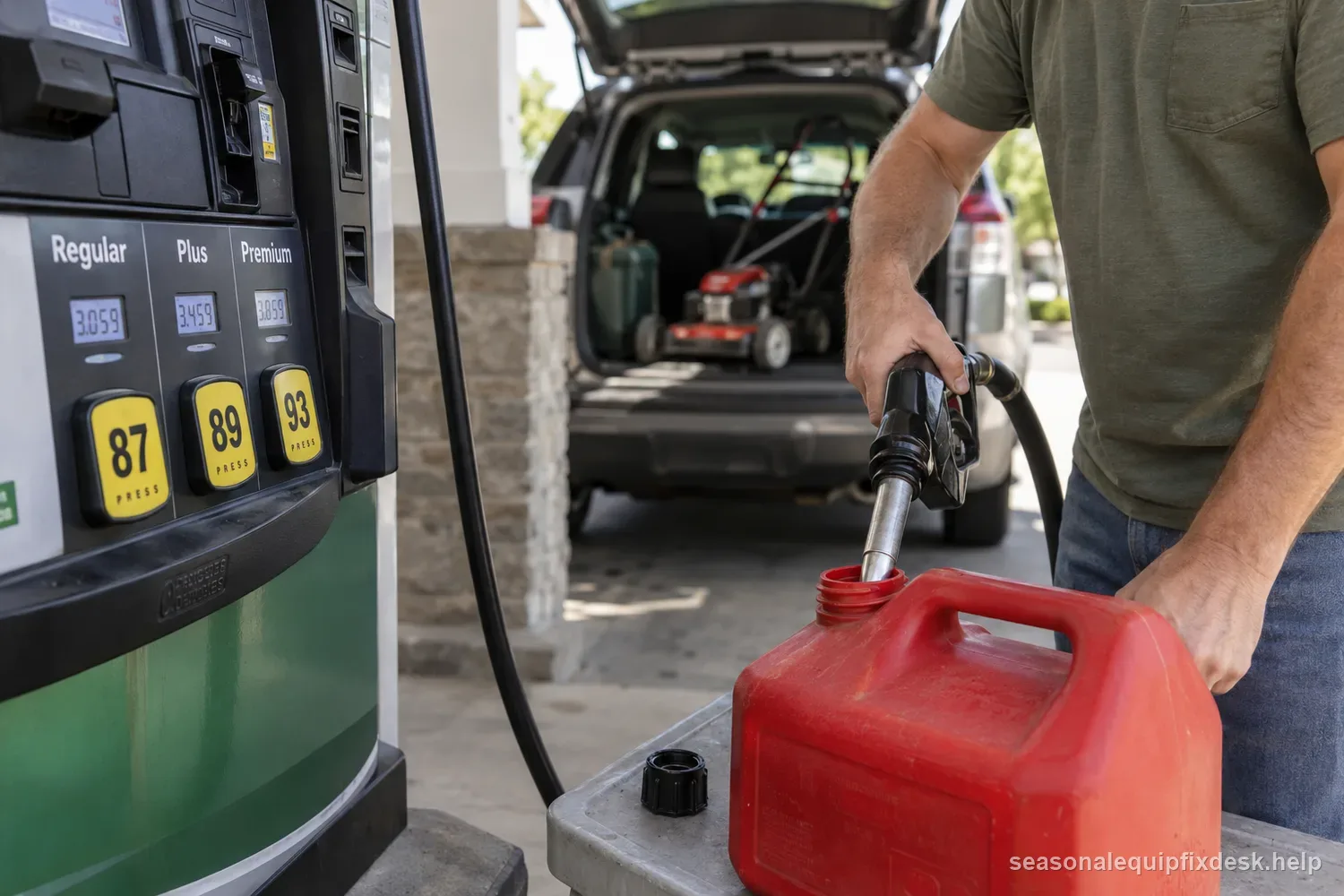
Quick answer: E10 is up to 10% ethanol; E15 is 15%. EPA excludes E15 from U.S. nonroad engines such as mowers and chainsaws. Compatibility and freshness differ: permitted E10 can still become stale or contaminated.
A gas blower that still will not start after fresh, correctly mixed fuel needs the leaf-blower starting checks, beginning with cold/warm sequence and primer behavior.
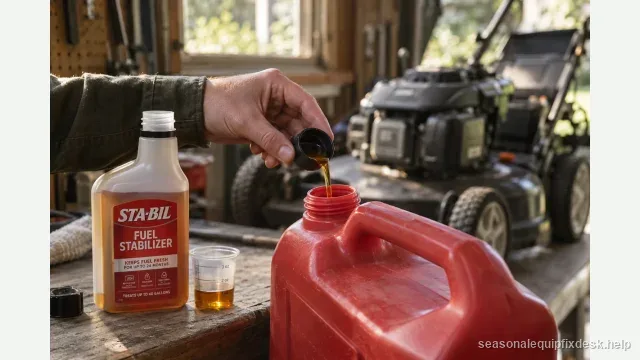
Fuel type and storage treatment solve different problems. Use the seasonal fuel-stabilizer checklist to plan storage using the engine and additive labels.
| Fuel question | Practical rule | Why it matters |
|---|---|---|
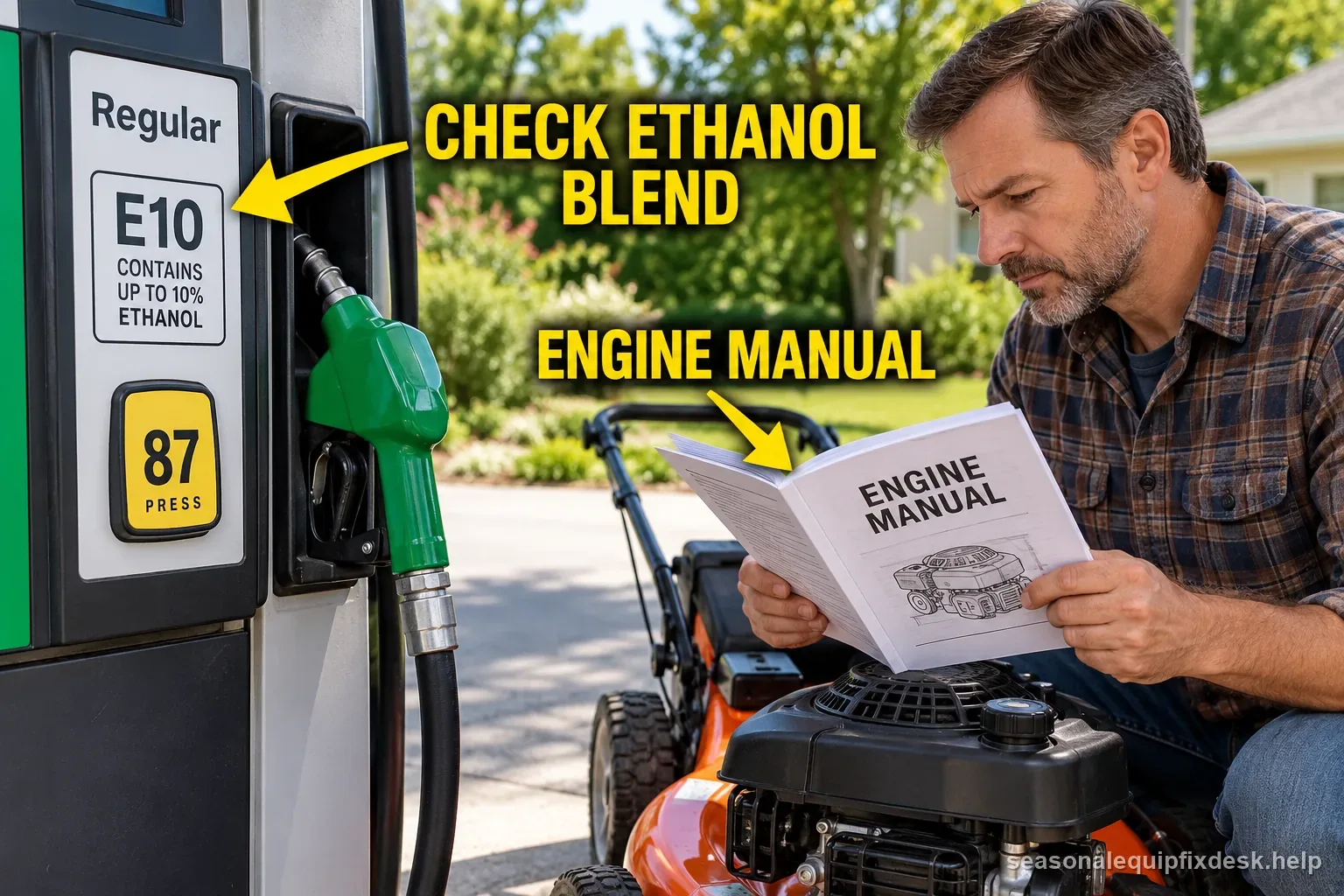
| E10 | Use only if the engine manual permits it | Many, but not all, engines allow up to 10% ethanol |
| E15 or higher | Do not assume approval; verify or avoid | Higher blends can exceed small-engine limits |
| Two-cycle fuel | Use exact oil ratio and permitted blend | Stabilizer does not replace lubricating oil |
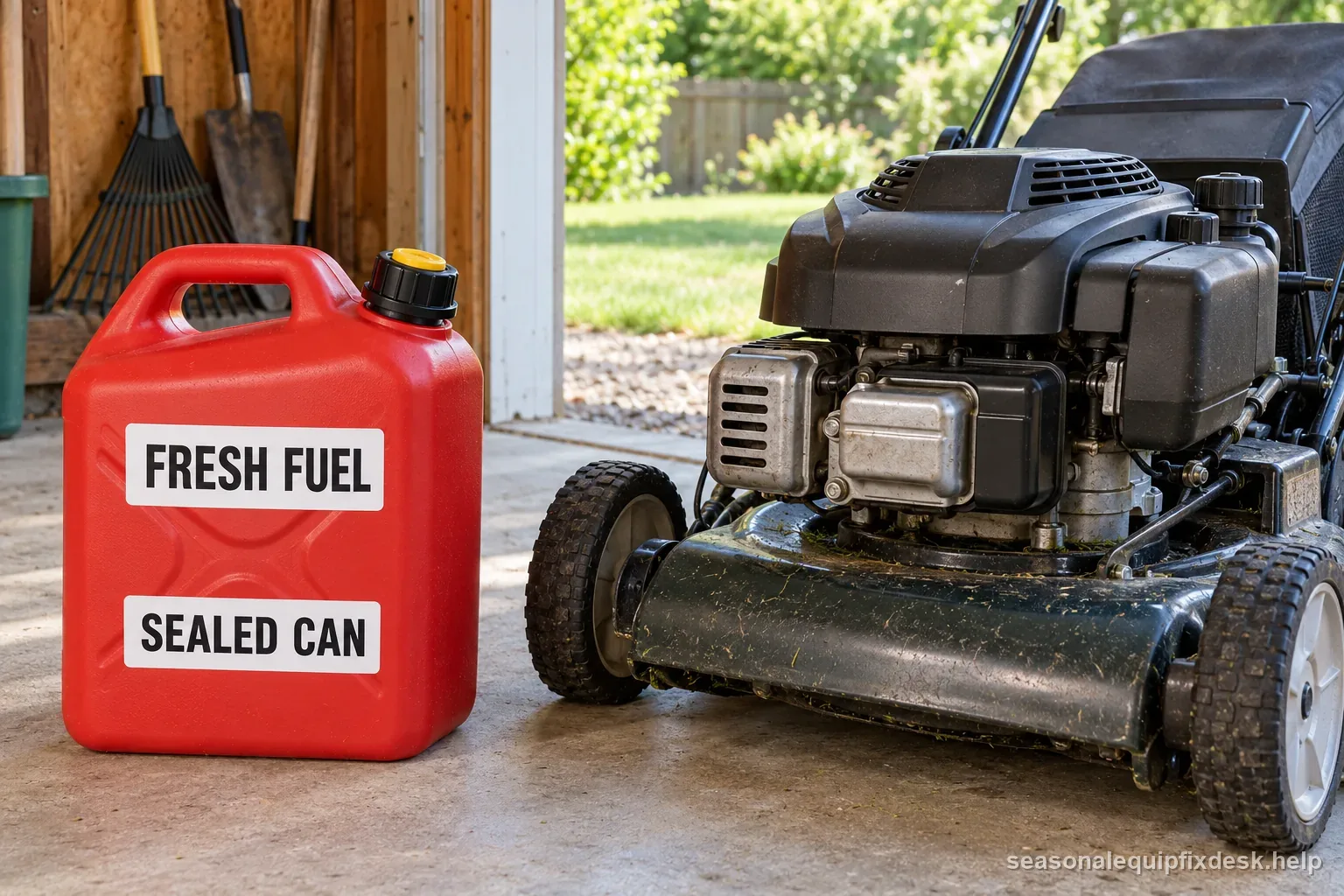
| Stored fuel | Keep fresh, sealed, labeled, and dry | Age and contamination matter alongside ethanol |
Two worked label calculations
These explain a U.S. pump label; they are not fuel-mixing instructions. Follow the exact engine manual and EPA equipment limits.
Worked example 1: Three gallons at E15 contain 3 × 0.15 = 0.45 gallon ethanol and 3 × 0.85 = 2.55 gallons gasoline. EPA does not allow E15 in nonroad equipment such as lawn mowers and chain saws, so this calculation does not make it suitable.
Worked example 2: At E10’s 10% upper limit, 2 gallons contain up to 2 × 0.10 = 0.2 gallon ethanol; the balance is at least 1.8 gallons gasoline. E10 is only suitable when the exact engine manual permits it; the fraction says nothing about freshness or oil mix.
The number on the pump is a compatibility limit, not a freshness grade
A label such as E10 describes ethanol content. It does not tell you when the gasoline was blended, how long it sat in a can, whether the container was sealed, or whether water entered. A machine can have the correct ethanol percentage and still run poorly on old fuel.
Likewise, fresh E15 is not made suitable for a lawn mower simply because it is fresh. EPA's current E15 guidance specifically excludes engines in nonroad equipment such as lawn mowers and chain saws.
Start with the equipment manual, not internet folklore
Many modern small engines permit gasoline containing up to 10 percent ethanol, but octane, vapor-pressure, two-stroke oil mix, and storage limits differ by manufacturer. Read the engine manual and any fuel-cap label. If the manual is stricter than a general article, the manual wins.
Do not assume that a flex-fuel vehicle rule applies to a generator, snow blower, pressure washer, or trimmer. They are different regulatory and engineering categories.
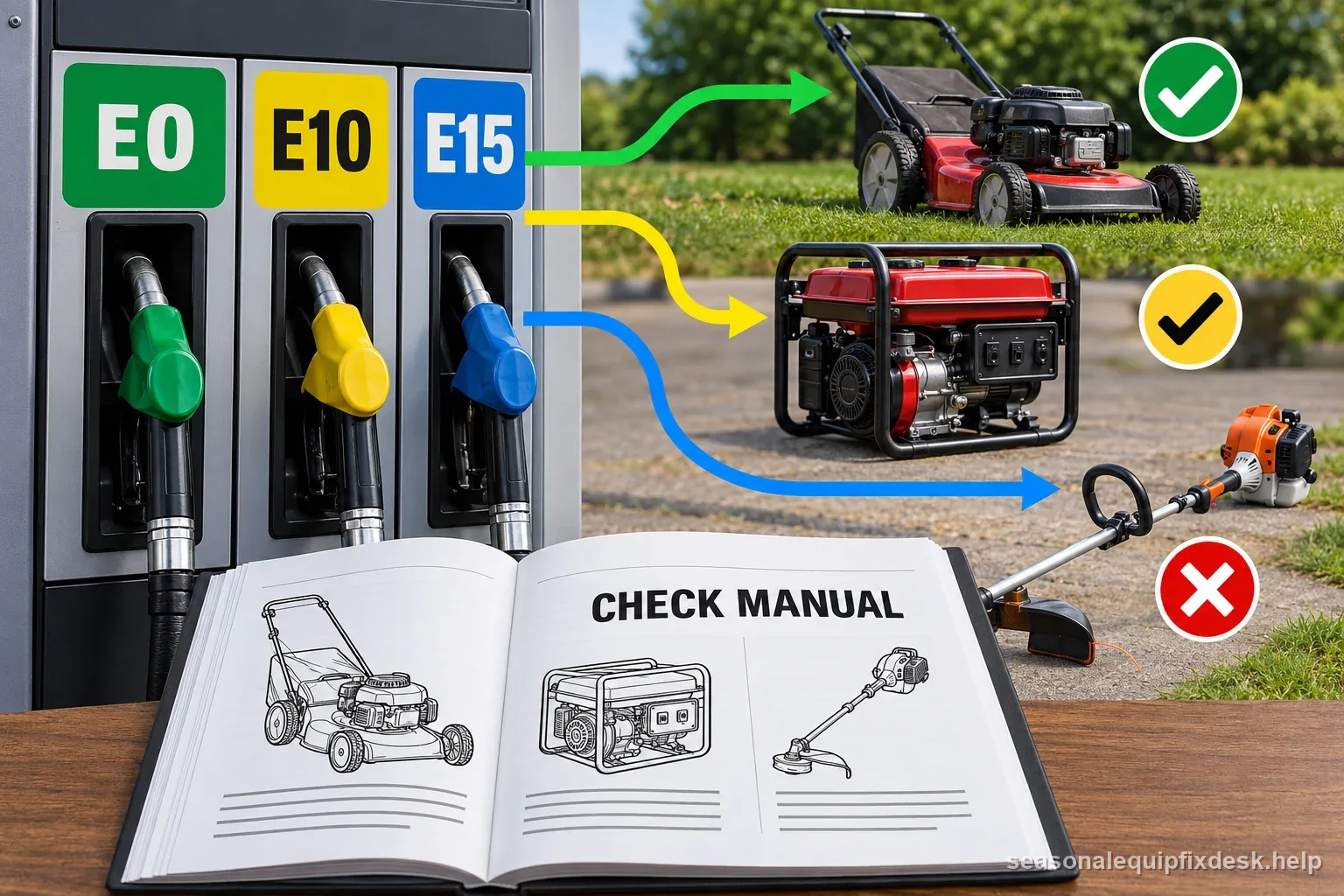
| Pump label | Blend meaning | Owner action |
|---|---|---|
| E0 | No ethanol stated on label | Check octane and manual limits |
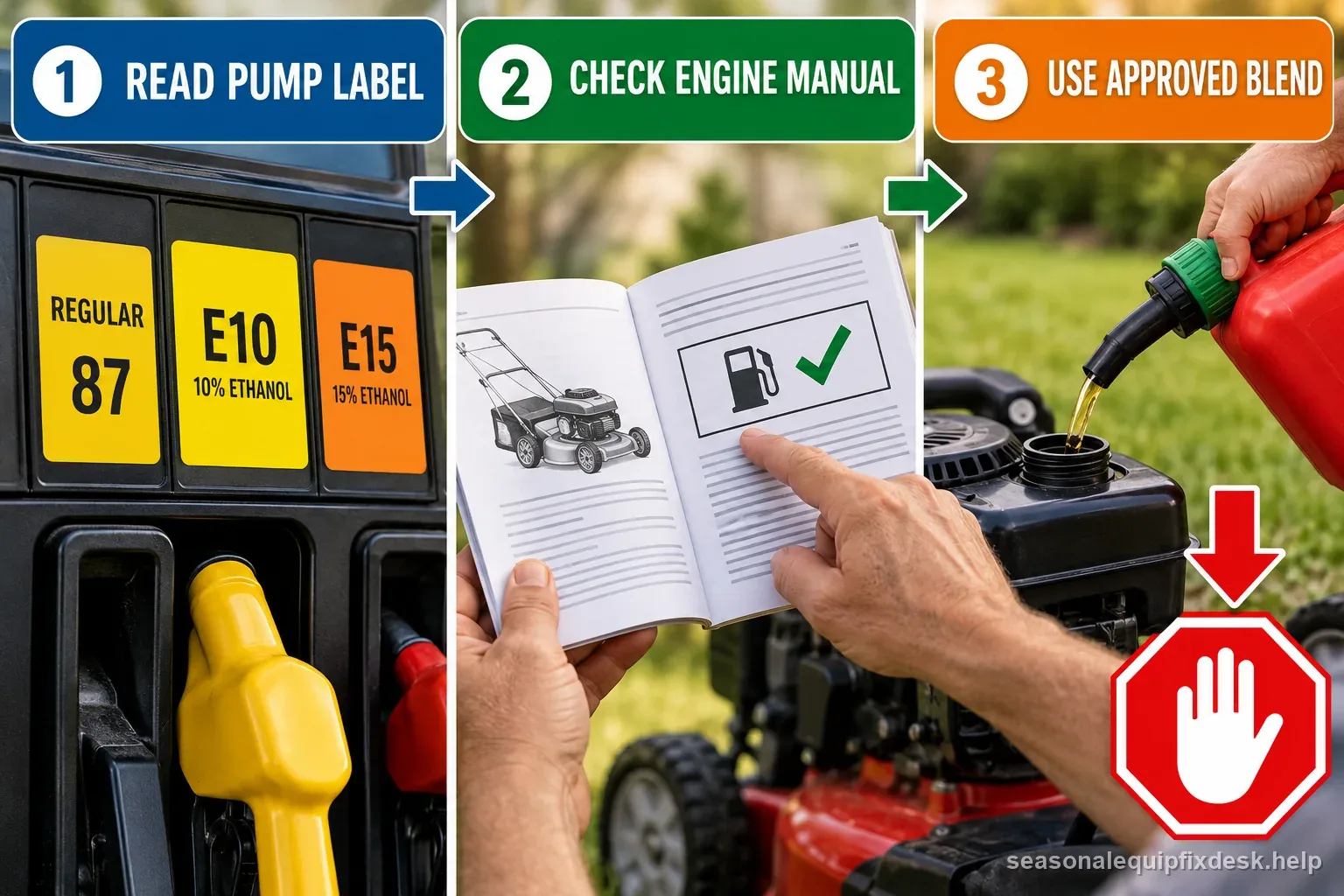
| E10 | Up to 10% ethanol | Use only if engine manual allows |
| E15 | 15% ethanol | Do not use in nonroad equipment per EPA guidance |
| Unclear label or mixed fuel | Compatibility is unknown | Do not fill until verified |
Fuel limits and storage directions belong to the exact engine manual; a higher octane number does not establish ethanol compatibility.
Water contamination is a separate storage risk
Ethanol is hygroscopic: it can associate with moisture. In a vented seasonal fuel system, that makes good container practices and turnover important. Water contamination can lead to corrosion and, under some conditions, separation of the fuel mixture into layers with very different composition.
The practical lesson is not to fear every drop of E10. It is to minimize storage time, keep approved containers sealed, and avoid letting partially filled outdoor cans cycle through months of humid temperature swings.
Old fuel leaves evidence in more than one place
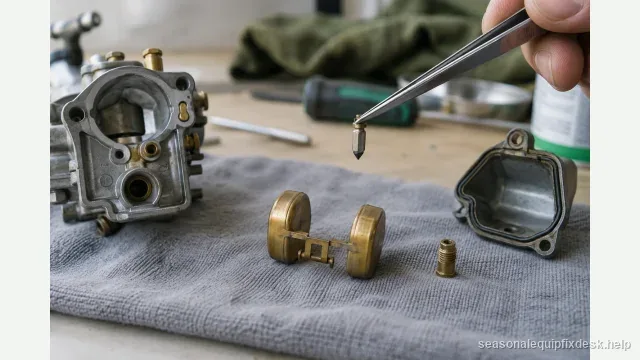
A machine that ran normally in the fall but will start only on choke in spring may have restricted carburetor metering. Gum or varnish can collect in small passages. Hoses and primer components can also age, though ethanol is not the only cause of every cracked fuel line.
Before blaming the blend, compare fuel age, smell, visible contamination, and whether fresh correct fuel changes the symptom. A diagnosis is stronger when the evidence changes with the fuel.
Two-stroke equipment adds a second ratio you must not confuse
On chainsaws, blowers, and trimmers that use premix, the gasoline's ethanol percentage and the oil-to-fuel ratio are separate specifications. E10 does not mean 10 percent oil. Use the exact oil ratio and oil type specified by the engine manufacturer, then make sure the gasoline portion is itself within the permitted ethanol limit.
Mix only an amount you can use within the maker's stated storage window. STIHL, for example, publishes freshness limits for its fuel mix; other brands differ.
Premium fuel is not automatically ethanol-free
Octane rating and ethanol content are separate. A premium pump can still dispense E10, and an ethanol-free grade can have an octane that may or may not meet the engine requirement. Read the dispenser label instead of using price as a proxy for composition.
Read the pump label before filling, because the same station can offer blends with different limits. EPA’s E15 guidance excludes nonroad equipment such as lawnmowers and chainsaws, while an engine maker may set its own maximum ethanol content and storage steps. Do not assume that a newer machine accepts every blend or that “premium” means ethanol-free; verify both the ethanol percentage and octane requirement in the manual for the exact engine.
For storage, choose one complete manufacturer procedure before the season ends: treated fuel, draining, or another model-specific method. Stabilizer does not restore gasoline that is already stale, and adding it cannot correct water contamination or a prohibited blend. Mark the container with the purchase date and blend when known, then follow local rules for disposal. If the wrong fuel went in, stop operation and get the manufacturer’s drain-and-refill instructions instead of diluting it by topping off.
Do not use E15 as a spring cleaning strategy
Higher ethanol content is not a carburetor cleaner for small equipment. EPA's prohibition exists specifically to prevent misfueling of nonroad engines and equipment. If a carburetor is dirty, service the carburetor and use permitted fuel rather than trying a stronger ethanol blend.
| Situation | What it means | Safe next step |
|---|---|---|
| E15 put in nonroad equipment | Blend exceeds EPA equipment limit | Do not start; follow manufacturer guidance or contact service |
| E10 in a manual that permits no more than E10 | Blend can meet ethanol limit; age and octane still matter | Check every fuel requirement in that manual |
| Premix or oil ratio uncertain | Ethanol percentage does not set lubrication mix | Do not start until the exact ratio is confirmed |
| Fuel old or contaminated | Correct blend does not make stale fuel usable | Use the maker's handling procedure |
Change one diagnostic condition at a time and preserve the original symptom. Repeated attempts can erase useful evidence or cross a stop condition.
Storage strategy should be chosen before the last tank is filled
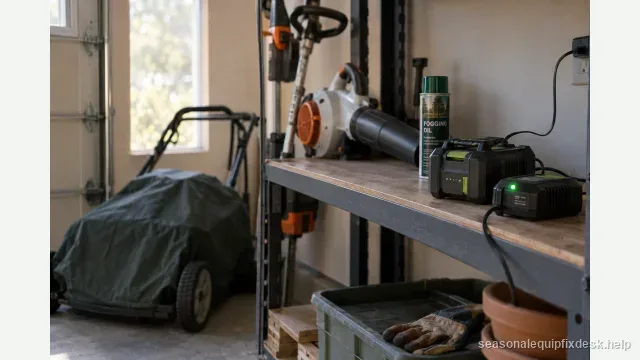
Some engine makers recommend fresh stabilized fuel circulated through the system; others allow or recommend draining for longer storage or particular fuel types. Briggs and Stratton currently describes both a treated-fuel approach and a drain/run-dry alternative in its storage guidance. Follow the exact equipment and engine manuals rather than combining half of each method.
When misfueling happens, stop before it becomes a troubleshooting experiment
If you realize E15 or another prohibited fuel was added to a nonroad machine, do not keep operating it to see whether it "seems fine." Consult the manufacturer for the correct drain and refill procedure. Avoid spills, work away from ignition sources, and dispose of unwanted fuel through an appropriate local program.
If poor running remains after correct fresh fuel is restored, then diagnose the actual symptom: fuel delivery, spark, compression, or mechanical load. The label on the old gasoline should not become a permanent explanation for every future problem.
Storage instructions are not universal: Honda describes stabilizer use for certain storage periods and explicitly says it will not reconstitute stale fuel; Briggs and Stratton gives a treated-fuel plan as well as a drain-and-run-dry alternative for some fuel situations. Follow one complete plan from the equipment and engine manuals.
Ethanol discussions often overstate one mechanism. E10 does not automatically phase-separate merely because it absorbs some moisture; free water or condensation can still contaminate fuel, and fuel age remains a separate concern. Use the exact engine manual rather than a blanket claim that every E10 engine requires ethanol-free gasoline.
- Pump ethanol label read
- Exact engine limit checked
- Two-cycle oil ratio confirmed separately
- Fuel age and condition checked
- Misfuel or contamination stop boundary noted
Check the label before the next fill
Use this short checklist:
- Read the pump ethanol label.
- Check the exact engine manual limit.
- Verify any two-cycle oil ratio separately.
- Check fuel age, storage, and contamination.
- Stop if an unapproved blend went into the tank.
Water-contaminated fuel should not be diagnosed by color alone
Visible layers, cloudiness, rust, or debris are strong reasons to replace fuel, but apparently clear gasoline can still be old or outside specification. If contamination is suspected, drain the system using the manufacturer procedure into an approved container rather than repeatedly adding fresh fuel on top. Clean the tank or carburetor only when the service information supports that work.
After refilling with correct fresh fuel, run a controlled test. If the symptom remains unchanged, stop blaming ethanol percentage by default. Ignition, compression, governor operation, blocked cooling, or mechanical load can produce similar poor-running complaints and deserve their own evidence.