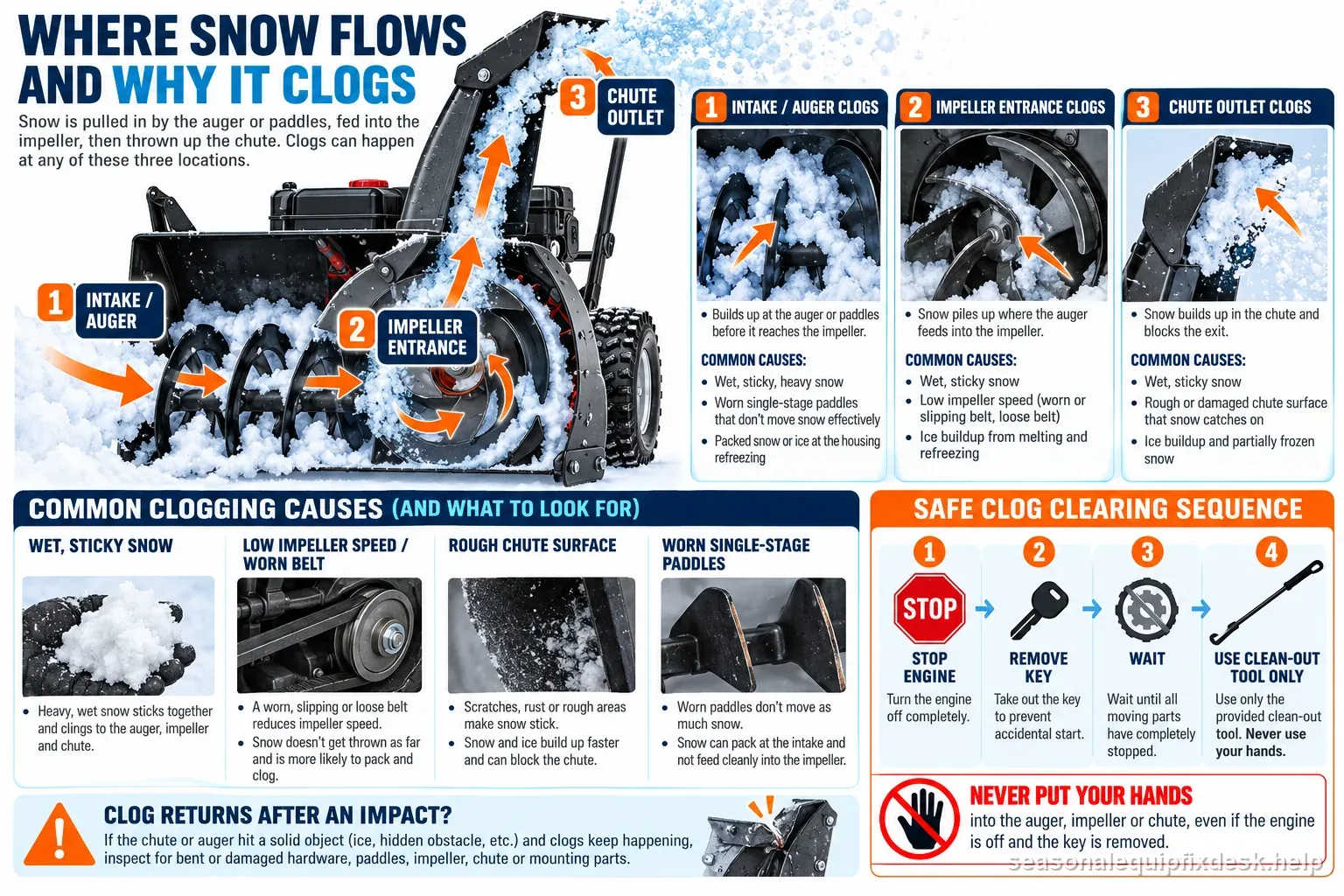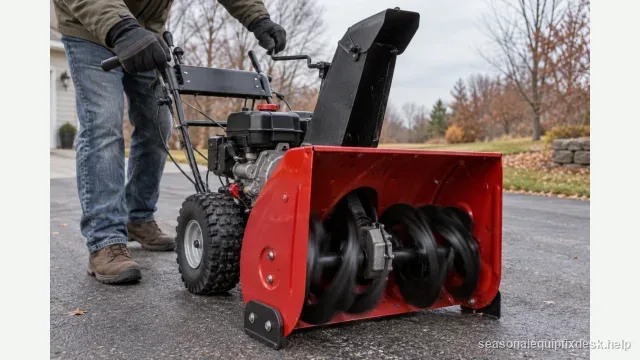
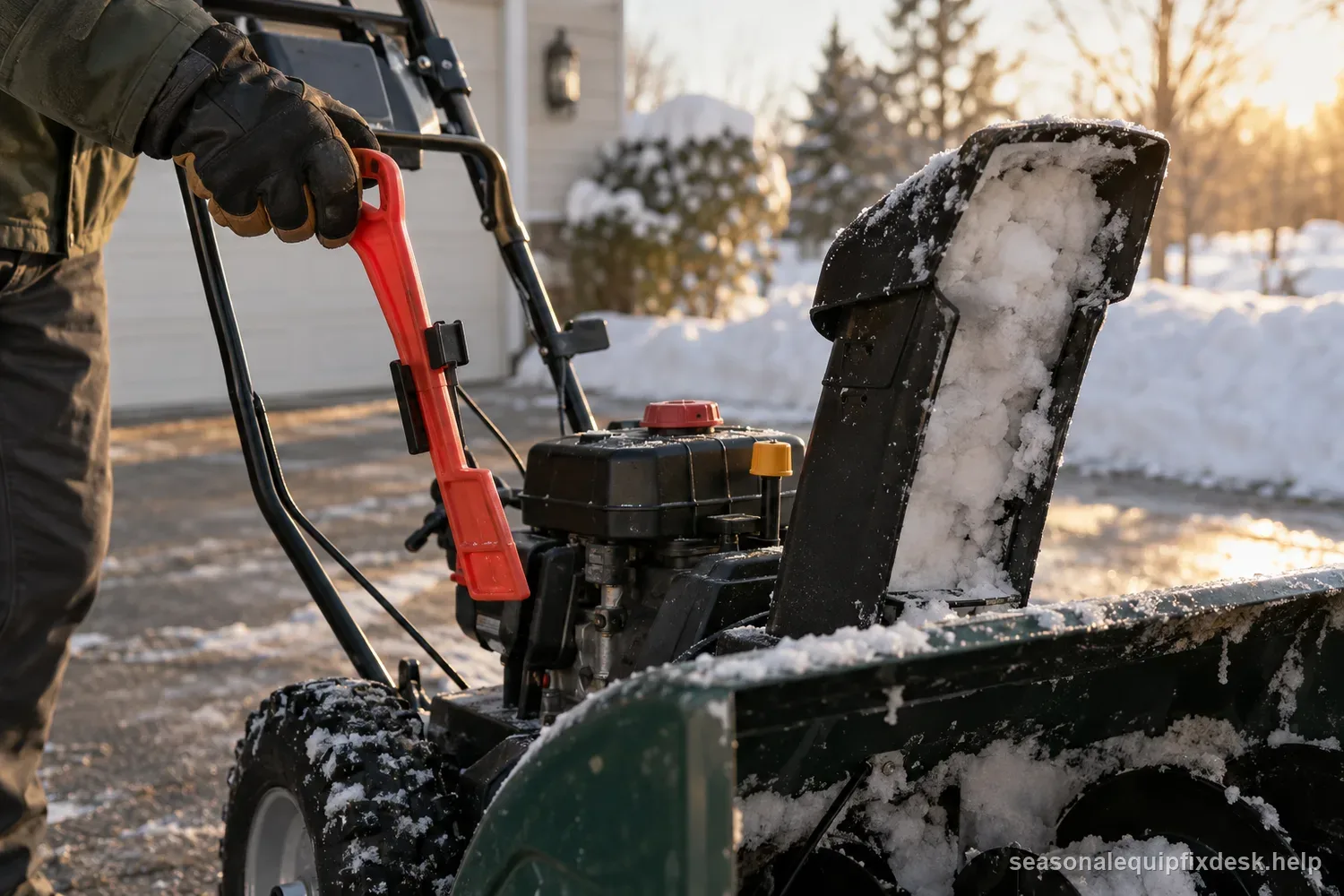
Quick answer: Repeated chute clogs in wet snow are usually a flow problem, not proof that the engine or gearbox is failing. Start with snow density, feed rate, chute cleanliness, and impeller/paddle speed. Never reach into a clogged chute, even after the engine stops; use the machine’s clean-out tool after all moving parts have stopped.
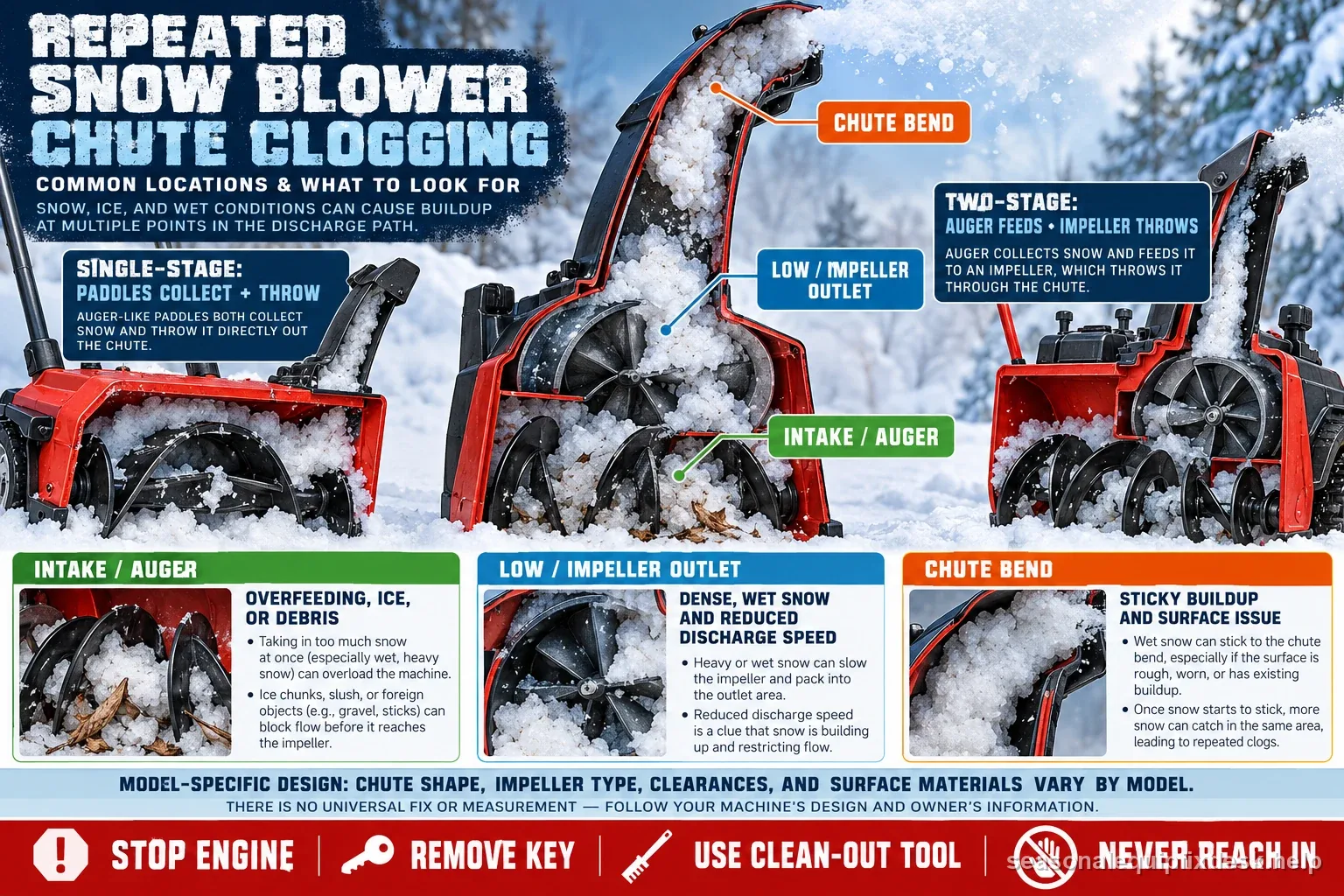
The most useful question is where the plug begins: at the intake, around the impeller, or higher in the chute. That location tells you whether snow is being overfed, insufficiently accelerated, or sticking to the discharge surface.
| Where clog starts | What it can suggest | First safe response |
|---|---|---|
| Intake or auger housing | Overfeeding, ice, debris, or a stopped auger | Stop and inspect externally after isolation; use the clean-out tool |
| Impeller outlet | Dense wet snow or reduced discharge speed | Use a narrower bite; compare engine and attachment speed |
| Chute bend or deflector | Sticky buildup, surface damage, or restricted chute setting | Clear safely and check for roughness or damage |
| After an impact, with vibration or contact | Bent or loose rotating parts | Stop testing and arrange service |
Wet snow needs smaller bites and continuous flow
Heavy slush compacts when the machine is pushed faster than the auger and impeller can move it. Slow the ground speed, take less than a full-width pass, and keep the machine moving steadily rather than ramming into the pile and stopping.
End-of-driveway snow is often denser because plows have compressed it and mixed in road moisture. If clogging occurs only there, compare a narrower pass before disassembling the machine.
A rough chute gives sticky snow somewhere to start
With the machine shut down, inspect the housing and chute for frozen residue, rust scale, peeling coating, burrs, or a dent that catches wet snow. Remove ice and debris using non-damaging methods approved by the manual. A clean, smooth path cannot fix low impeller speed, but it removes one obvious place for a plug to anchor.
Avoid improvised flammable or incompatible sprays inside the housing. If the manufacturer approves a surface treatment, use that product and procedure only.
Low impeller speed turns slush into a plug
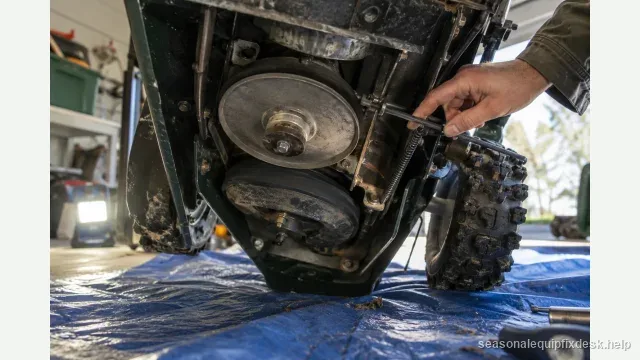
A slipping attachment belt, loose control cable, weak engine speed, or damaged impeller can let the system ingest snow faster than it ejects it. Watch for an audible speed drop, belt squeal, or a discharge stream that weakens before the chute blocks.
If the machine throws dry snow normally but clogs instantly in modest wet snow, compare belt and impeller condition under load. Do not tighten the auger cable beyond specification; the attachment must still disengage cleanly.
Single-stage machines need healthy paddles and scraper geometry
On single-stage snow throwers, rubber paddles do much of the work of gathering and accelerating snow. Severe wear can reduce feed and discharge performance. The scraper also affects how the machine meets the surface. Inspect wear indicators or service limits in the model manual rather than using a generic measurement.
A two-stage machine uses a separate impeller, so the same symptom points to different hardware. Identify the architecture before ordering parts.
- Release auger and drive controls; stop engine and remove key
- Wait until every moving part stops
- Disconnect spark lead or battery as the model manual directs
- Use the supplied clean-out tool; keep hands and feet out of chute
- Inspect for the cause before restarting; stop for impact damage or binding
Clear a clog without creating an injury
- Release auger and drive controls and shut off the engine.
- Remove the ignition key and wait until every moving part has stopped.
- Disconnect the spark-plug lead when the manual calls for it before service.
- Use the supplied or equivalent clean-out tool from the operator side; never insert a hand or foot.
- After clearing, inspect for the object or condition that started the blockage before restarting.
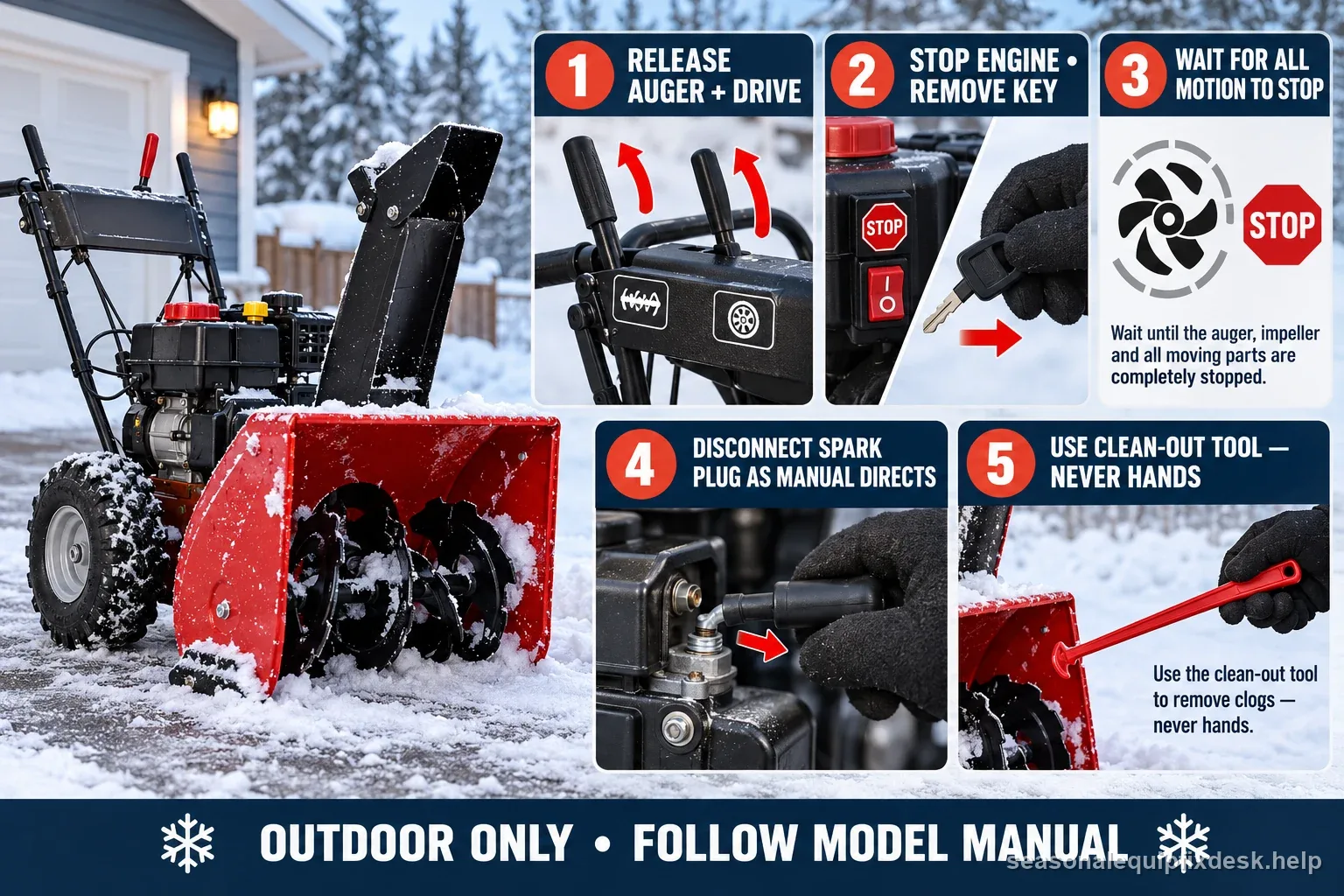
Stored mechanical energy can remain in a jammed impeller or auger. The fact that the engine is off does not make a packed chute safe for hand clearing.
The clog pattern is your final diagnostic note
After a correction, make a short pass with a reduced bite. Record whether snow now exits continuously, whether the engine holds speed, and whether the plug location changed. If clogging persists in moderate snow with a clear chute and normal speed, inspect the belt, paddles/impeller, and housing alignment more closely.
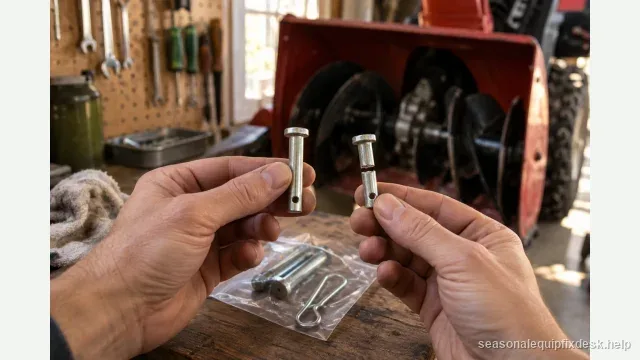
Stop if an impeller vane is bent into the housing, the attachment control does not release, or repeated shear failures suggest an unresolved obstruction.
| Plug location | Possible clue | Next safe check |
|---|---|---|
| Intake / auger housing | Overfeeding, ice, debris, or auger interruption | Stop and inspect externally after isolation |
| Low at impeller outlet | Dense wet snow or reduced discharge velocity | Take a narrower bite and note whether engine speed holds |
| Chute bend / deflector | Sticky buildup, surface damage, or restricted position | Clear with tool and inspect for roughness or damage |
| After impact with vibration | Bent or loose rotating parts | Stop testing and arrange service |
Where the plug begins tells you more than how often it happens
After shutdown and safe clearing with the clean-out tool, look at where packed snow first formed. Material packed low near the impeller outlet suggests discharge velocity or very wet snow; a bridge higher in the chute can point more toward sticky surfaces, a tight bend, or a deflector position that restricts flow. Photographing the plug location before clearing can make a repeated pattern obvious.
Do not polish, grind, coat, or modify the chute with an unapproved product just because snow sticks to it. Some coatings can attract dirt, affect plastics or paint, or create a maintenance issue the manufacturer never intended. Fix speed, damage, surface roughness, and operating technique first.
A clog after every stop-and-go pass can be an operating clue
Wet snow is more likely to settle when the machine is repeatedly stopped while the auger remains packed. In heavy conditions, use the feed technique recommended by the manufacturer and avoid overfilling the housing. Let the machine clear the material already inside before shutting the attachment down when the situation allows it safely.
If the chute plugs even in light dry snow at normal engine speed, technique alone is no longer a satisfying explanation. Inspect attachment speed, paddles or impeller condition, belt drive, and housing damage before the next storm.
Repeated clogging after an impact needs a hardware inspection
If the problem began immediately after the machine swallowed a branch, stone, newspaper, or hard ice chunk, do not assume the snow suddenly became too wet. With the engine secured against starting, inspect the impeller, auger flighting, discharge opening, chute base, and surrounding housing for new bends, cracks, looseness, or fresh contact marks.
A slightly bent impeller blade or displaced component can reduce discharge velocity without preventing rotation altogether. New vibration or metallic contact after the impact is a reason to stop testing and obtain service rather than continuing to pack snow into the chute.