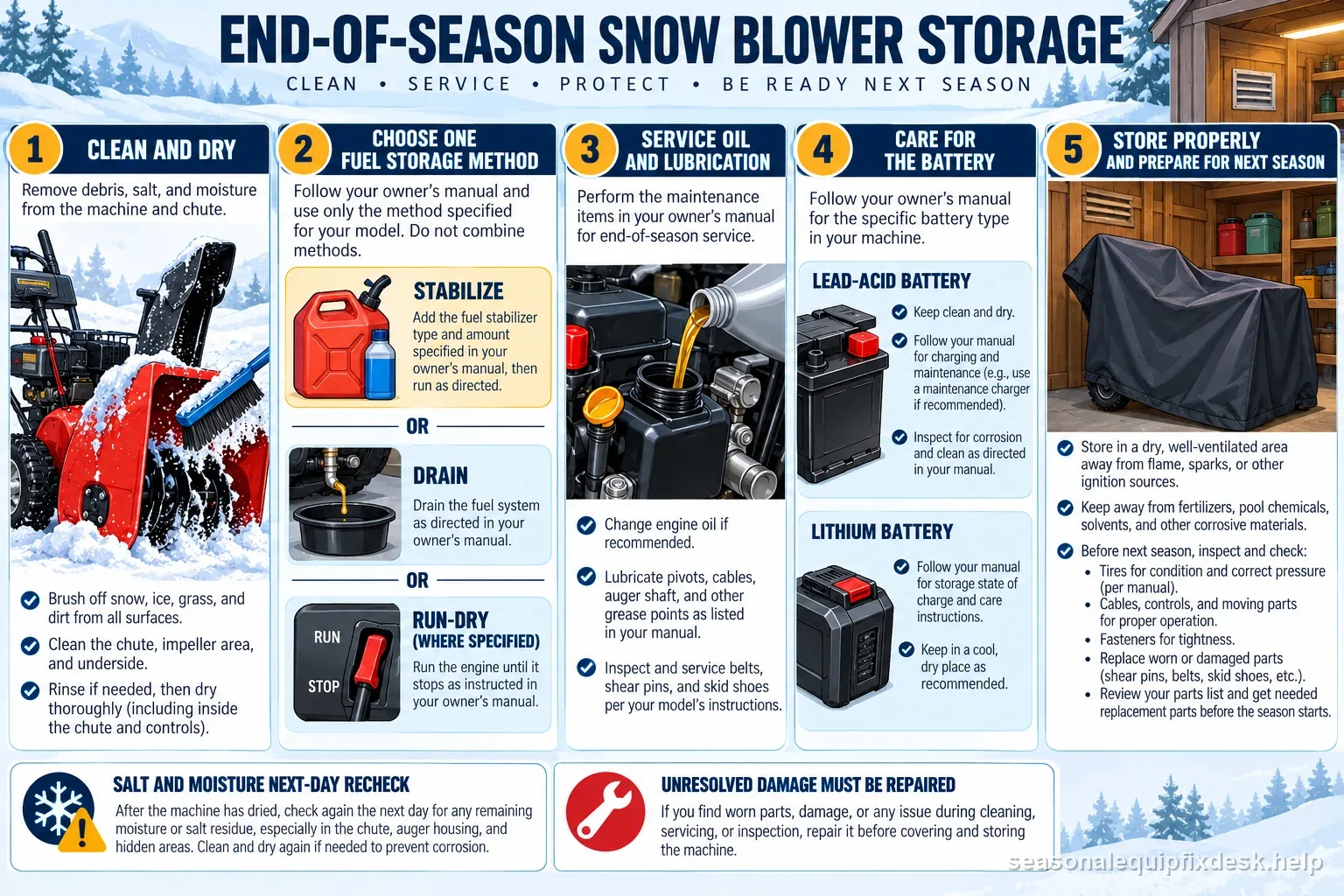
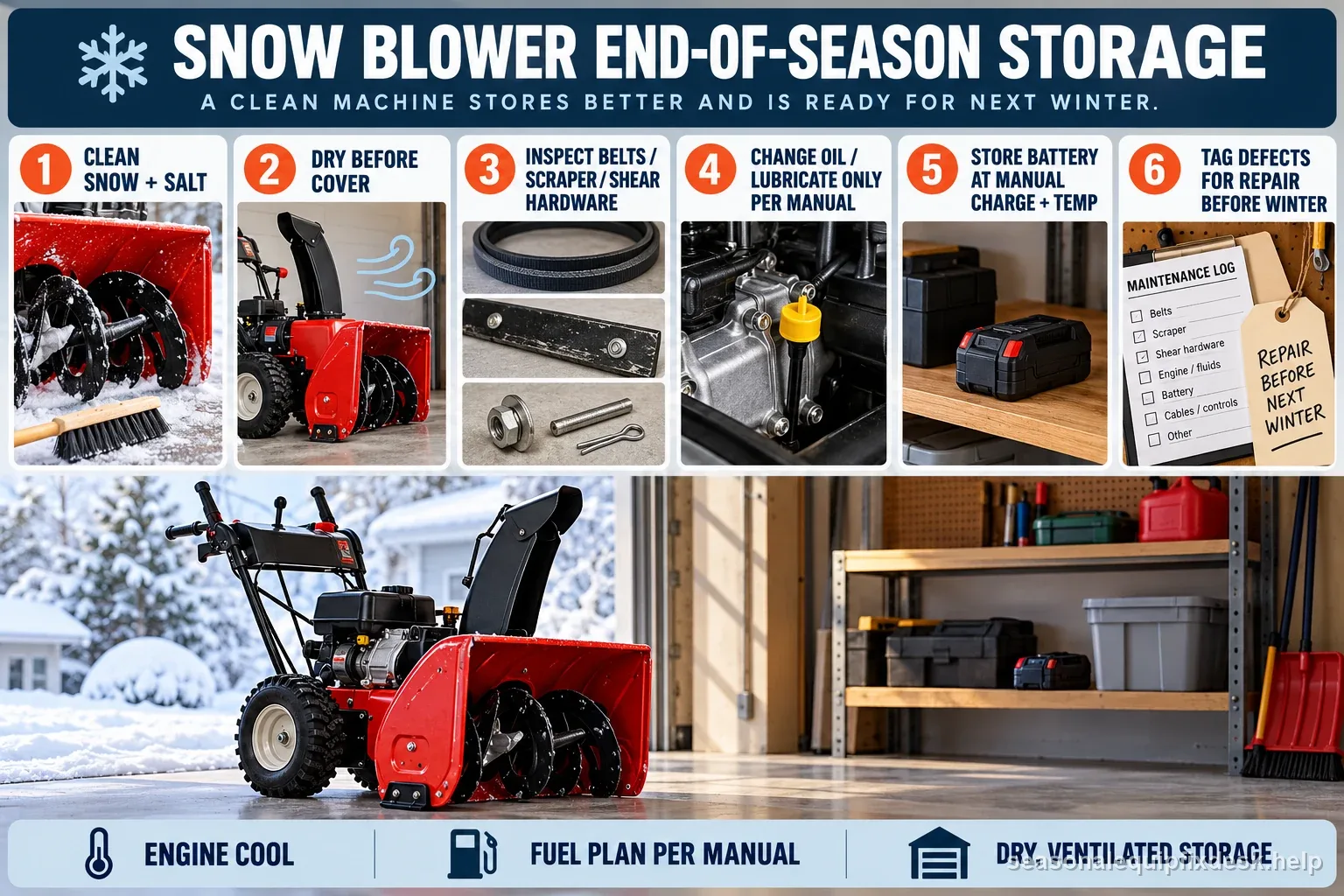
Quick answer: Storage is a preservation job, not a generic “pour in stabilizer and cover it” checklist. Clean and dry the snow path, choose the fuel-storage method specified for the engine, service corrosion-prone moving parts, protect the electrical system, and leave a written note about defects that should be fixed before the first storm.
The preseason dry-run guide checks controls and interlocks after storage without claiming snow-load performance.
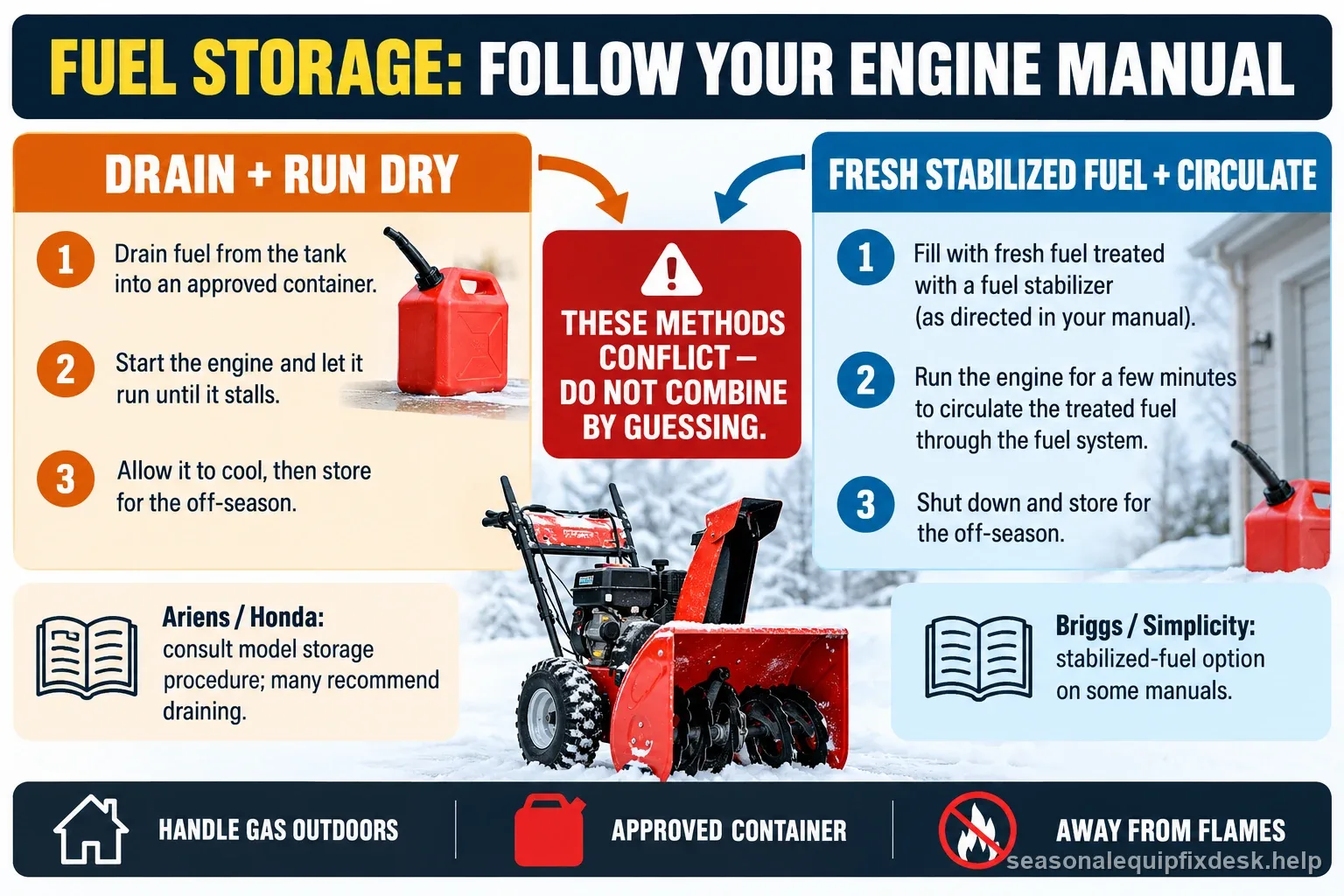
Fuel safety: Drain or treat gasoline only outdoors, with a cool engine and an approved container, away from flame, pilot lights, or sparks. Never store a fuel-filled machine in a poorly ventilated enclosure. Follow the machine and engine manuals before handling fuel.
| Fuel plan in the manual | Owner action | Important limit |
|---|---|---|
| Drain tank/system and run dry | Use the manual’s drain procedure and approved outdoor container | Do not leave residual fuel or tip the machine unless specified |
| Fresh stabilized fuel remains | Use fresh fuel and labeled stabilizer amount; circulate only as directed | Stabilizer does not restore stale fuel; follow duration and storage limits |
| Unclear or conflicting guidance | Find the exact engine and equipment manual or ask a dealer | Do not mix methods or infer from another brand |
Fuel advice is intentionally not universal here. Ariens currently recommends draining the fuel system for its snow-blower storage procedure, while Briggs & Stratton publishes a stabilized-fuel storage approach for outdoor power equipment. Your engine and machine manuals decide which method applies.
Start storage with a dry machine
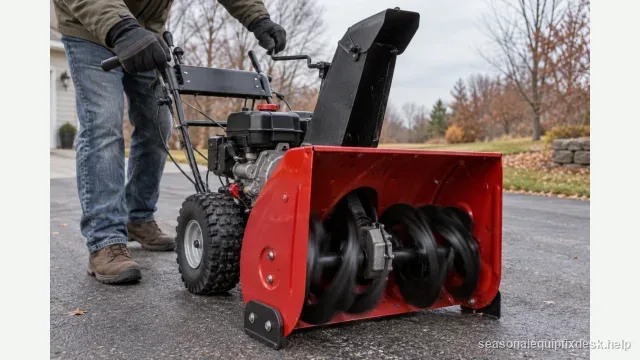
Brush or wash away packed snow, salt, grit, and grass-like debris from the housing, chute, scraper, and frame using the cleaning method allowed by the manual. Dry the machine before covering it. Trapped moisture under a cover promotes corrosion and can freeze controls the next time the temperature drops.
Touch up bare steel if the manufacturer provides a coating procedure. Inspect the scraper, skid shoes, paddles, belts, shear hardware, and chute controls now, when parts are not urgently needed.
Pick one fuel plan and follow it completely
If your manufacturer instructs you to drain the tank and carburetor, follow that sequence and dispose of fuel properly. If the engine maker calls for fresh stabilized fuel to remain in the system, use the specified stabilizer amount and run long enough to circulate treated fuel.
Do not combine contradictory advice such as partially draining old fuel, topping it with an unknown additive, and assuming the carburetor is protected. Label the date and fuel treatment so next season begins with known history.
Oil and lubrication belong to the off-season decision
For four-stroke engines, check the manual for oil-change timing and grade. Completing an oil change before storage can leave the engine ready for winter, but the correct fill level and procedure are model-specific.
Lubricate axle, auger-shaft, chain, gear, chute, or control points only where specified. Ariens’ storage guidance, for example, includes several lubrication locations on applicable models. Keep grease away from friction discs, belts, and brake-like surfaces that depend on dry friction.
Battery care differs by battery type
Electric-start lead-acid batteries and removable lithium packs do not share the same storage requirements. Follow the battery manufacturer’s temperature, charge-state, and charger guidance. Disconnect or remove the battery only if the manual instructs it, and never store a damaged or swollen pack.
For corded 120-volt starter systems, inspect the starter cord/receptacle area and store cords dry. Do not leave an extension cord permanently connected to the machine.
Do not hide unresolved damage under the cover
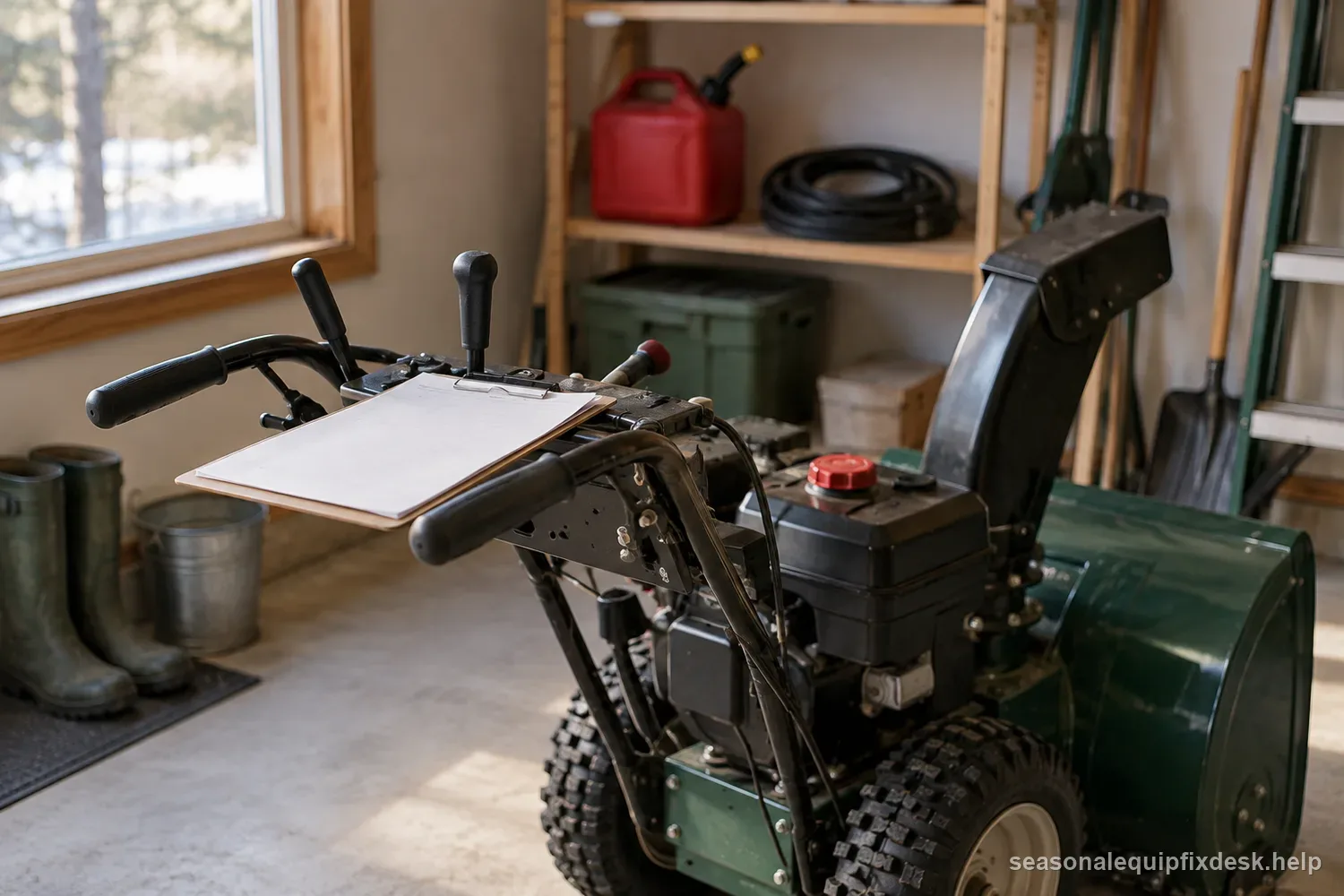
A cracked belt, leaking gearcase, bent auger, weak traction cable, recurring shear failure, or hard-start history should be tagged now. Write the model and serial number plus the symptom on a card or maintenance log. Six months later, “needs drive cable adjustment” is much more useful than remembering only that the machine acted strange during the last storm.
If the unit needs dealer work, off-season scheduling often gives you more time to obtain correct parts than the day before a forecast snow event.
Choose the storage location deliberately
- Use a dry, ventilated space away from ignition sources and excessive moisture.
- Let the engine and muffler cool fully before placing a cover.
- Keep children from keys, fuel, batteries, and controls.
- Avoid resting the machine in a position that strains cables, leaks fluids, or deforms tires/paddles.
- Keep the clean-out tool attached to the machine so it is present next season.
Your first-storm checklist starts before the storm
Several weeks before expected winter use, remove the cover, inspect for rodent damage or corrosion, restore the battery/fuel system according to the manual, check tire pressure or track condition, and verify all controls return correctly.
Start outdoors, in an open area, and test auger and traction separately using the owner manual. The best storage plan is the one that gives you a predictable first start—not a beautifully covered machine with last year’s unresolved defect still waiting inside.
Salt and hidden moisture deserve a second look the next day
Snow-removal equipment often carries salty slush into seams, skid-shoe mounts, scraper fasteners, wheel hubs, and the lower frame. A machine that looked dry immediately after the final storm may weep water from packed areas later. Recheck it after it has fully thawed and dried, then address exposed metal or lubrication points using the manufacturer’s maintenance instructions.
Leave the chute in a neutral position that does not hold water and make sure the clean-out tool is present. Do not wrap a still-damp machine tightly in non-breathing material.
- Model/serial number and exact fuel method used
- Fuel date, treatment or disposal, and container location
- Oil change, lubrication, and wear inspection completed
- Battery type, stored location, and manual charge/temperature plan
- Defects, parts ordered, and service needed before first snow
Record consumables and wear parts before they become an emergency
Write down belt condition, scraper and skid wear, shear-pin stock, spark-plug type, oil grade, and the model/serial number while the machine is in front of you. If a wear part is already close to its limit, replace or order it during the off-season rather than discovering the shortage during the first storm.
This is also the time to note unusual noises, weak throwing distance, slow traction, or a hard-start pattern. Storage should preserve a known machine state, not bury an unresolved diagnosis until winter.
Rodent and cable damage belongs on the preseason inspection
A long storage period can introduce faults that were not present when the machine was parked. Before adding fuel or connecting a battery, inspect accessible wiring, primer lines, control cables, air-intake areas, and nesting-prone spaces for chewing or debris. Do not reach blindly into enclosed areas where sharp edges or animals may be present.
If insulation, fuel line, or a safety-control cable is damaged, repair it before the first start. A storage checklist is successful only if it catches off-season changes as well as preserving the condition from the last storm.