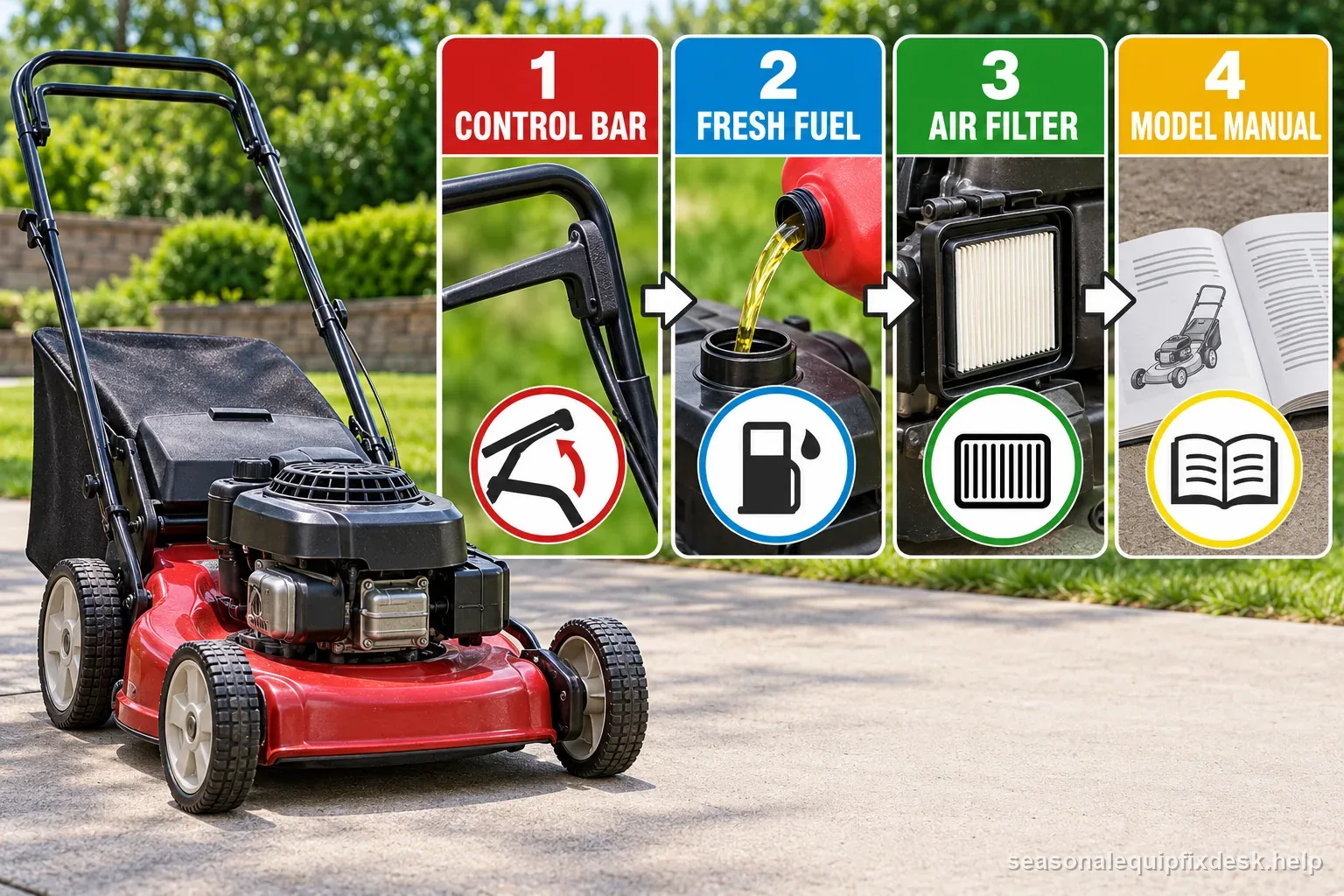
Quick answer: Separate a mower whose starter rope will not move normally from one that cranks freely but never fires. Then check the operator-presence control, fuel condition, spark-plug evidence, and air path. A walk mower does not need six random “causes”; it needs a sequence that follows what the engine is actually doing.
Stored fuel can affect a mower’s first start after a long break. See the seasonal fuel-stabilizer guide for treated-fuel versus drain-per-manual storage choices.
If the mower is battery-powered, use the battery/safety-key startup path instead of gasoline-engine checks. Do not apply carburetor advice to an electric drive system.
| What happens | Likely direction | First useful check |
|---|---|---|
| Rope is suddenly hard to pull | Blade/deck binding or internal mechanical resistance | Disconnect ignition and inspect obstruction or impact damage by the manual |
| Rope pulls normally; engine never fires | Fuel, ignition or air path | Fuel age, plug evidence, filter and choke setting |
| Fires briefly, then dies | Fuel metering or choke/primer behavior | Use the model-specific prime/choke procedure; avoid repeated extra priming |
| Battery mower is silent | Pack, key or operator-control interlock | Charge/seat the compatible pack and follow the maker’s status indication |
| Started after a blade strike? | Blade adapter, crankshaft timing or brake damage possible | Stop; do not keep pulling until the mechanical path is checked |
A hard or locked starter rope changes everything
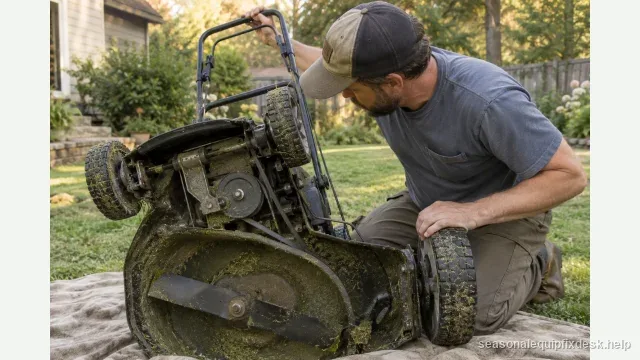
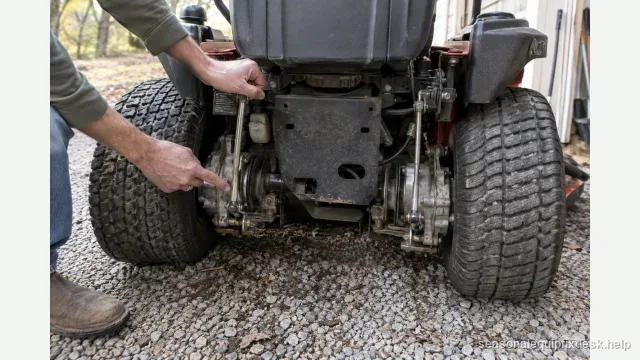
Disconnect the spark-plug lead and confirm the blade area is safe before investigating unusual cranking resistance. Packed grass, a blade striking an object, a bent blade adapter, liquid in the cylinder, or internal engine trouble can make a pull start feel mechanically locked.
Do not brace the mower and yank harder. If the crankshaft or blade cannot move as the manual says it should with ignition isolated, mechanical inspection comes before fuel or spark work.
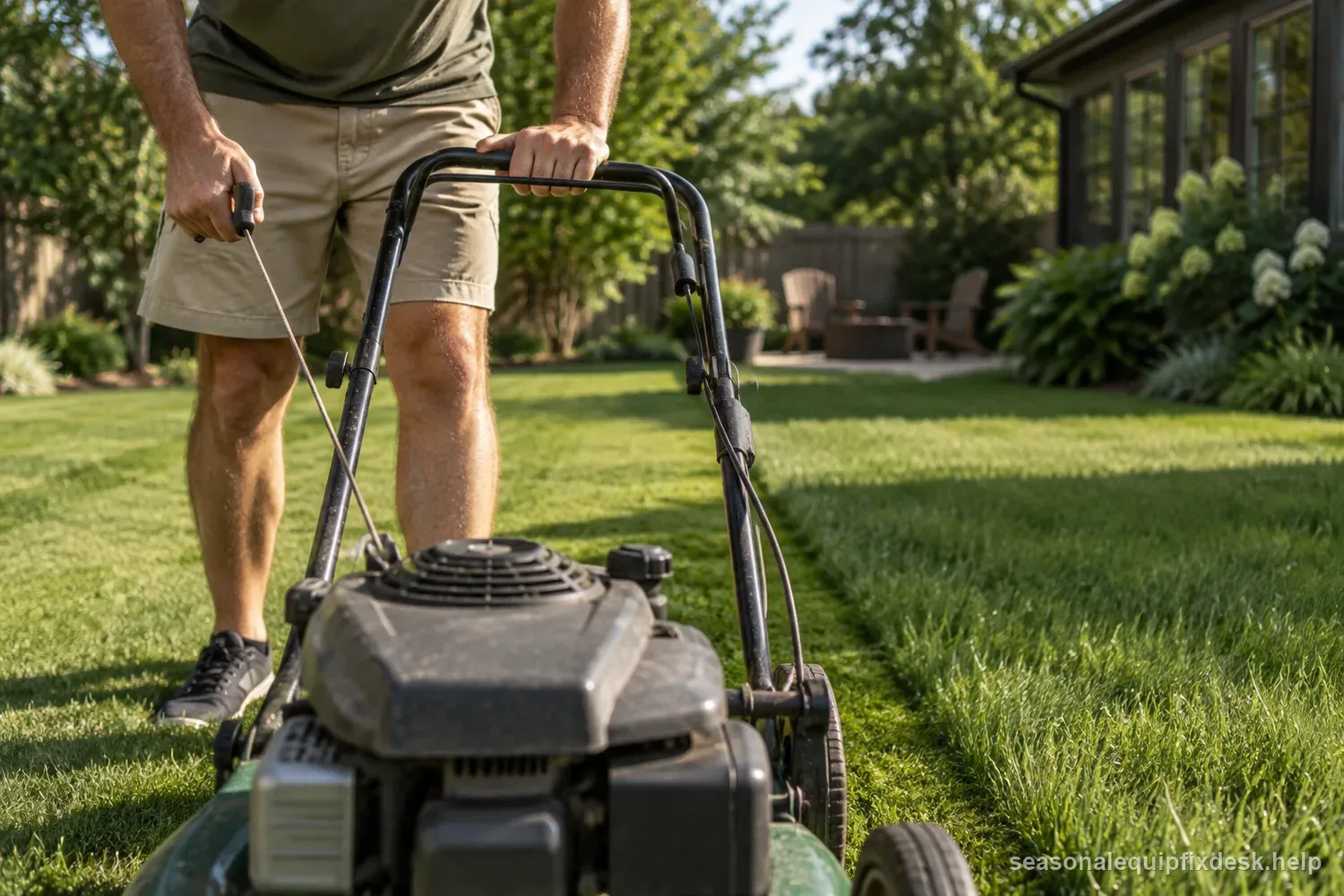
The control bar is part of the start system
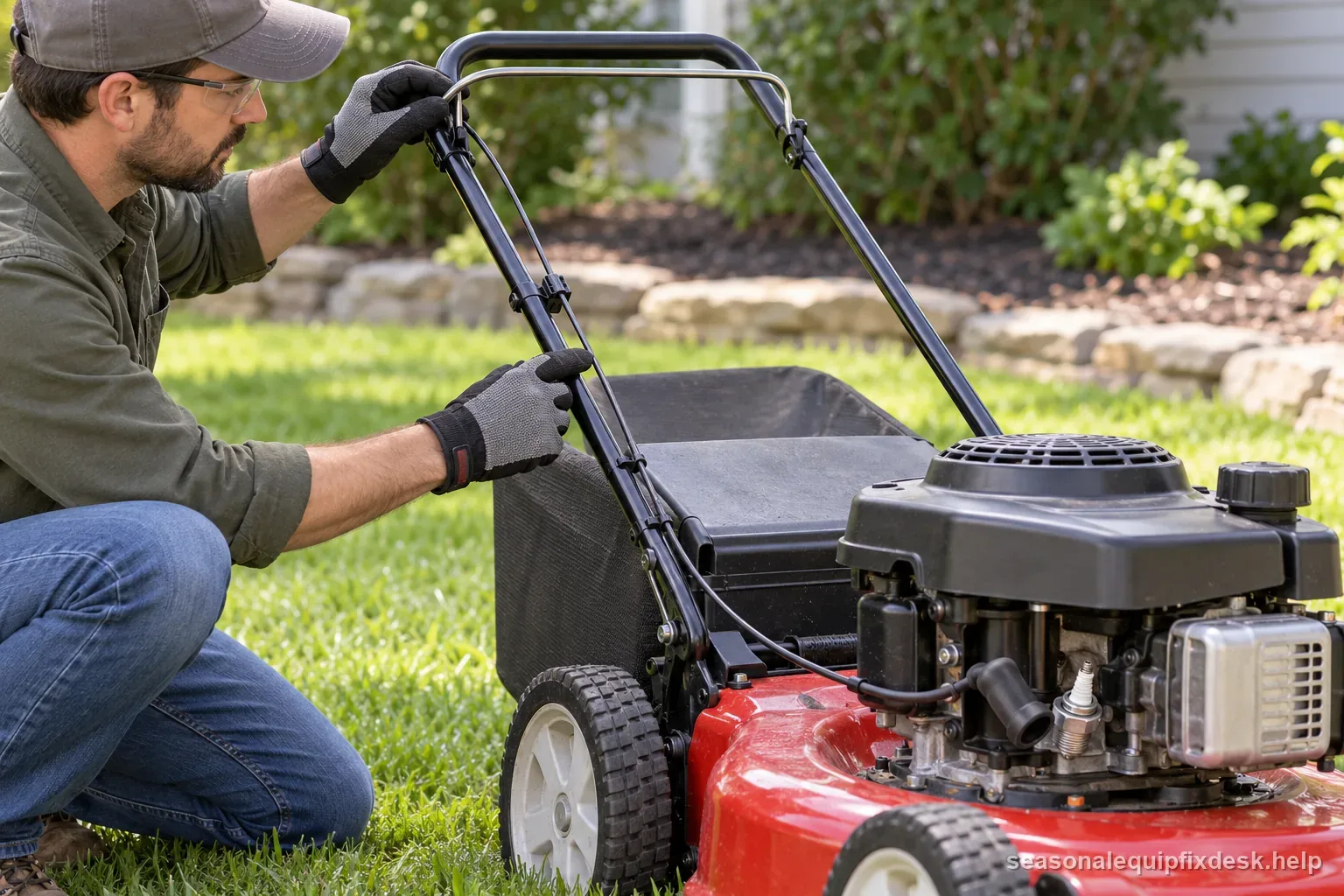
Many walk mowers use an operator-presence or engine-brake control that must be held correctly before the engine can run. A cable that does not move the brake/stop mechanism through its full travel can mimic ignition trouble.
Inspect the external cable and handle movement, but do not tie the bar down or bypass the stop function. A mower that starts only after a safety control is defeated is not repaired.
Fresh fuel is more important than “there is gas in it”
If the mower sat through the winter, identify how old the fuel is and whether it was stored using the engine maker’s procedure. Husqvarna’s walk-mower manuals list stale or water-contaminated fuel among no-start causes; Briggs and Stratton likewise treats fuel condition as an early small-engine check.
Replace questionable fuel with the correct fresh fuel. If the engine starts briefly on prime and then dies, follow the fuel-metering path rather than swapping an ignition coil without evidence.
Read a wet or dry spark plug in context
A dry plug after repeated normal cranking suggests fuel may not be reaching the cylinder. A wet, fuel-smelling plug can indicate flooding or that fuel delivery is present but combustion is not occurring. Neither observation alone proves a bad carburetor or bad ignition.
Service the plug to the correct type and gap. If the next step is a spark test, use an approved spark tester and keep fuel vapor away from the test area.
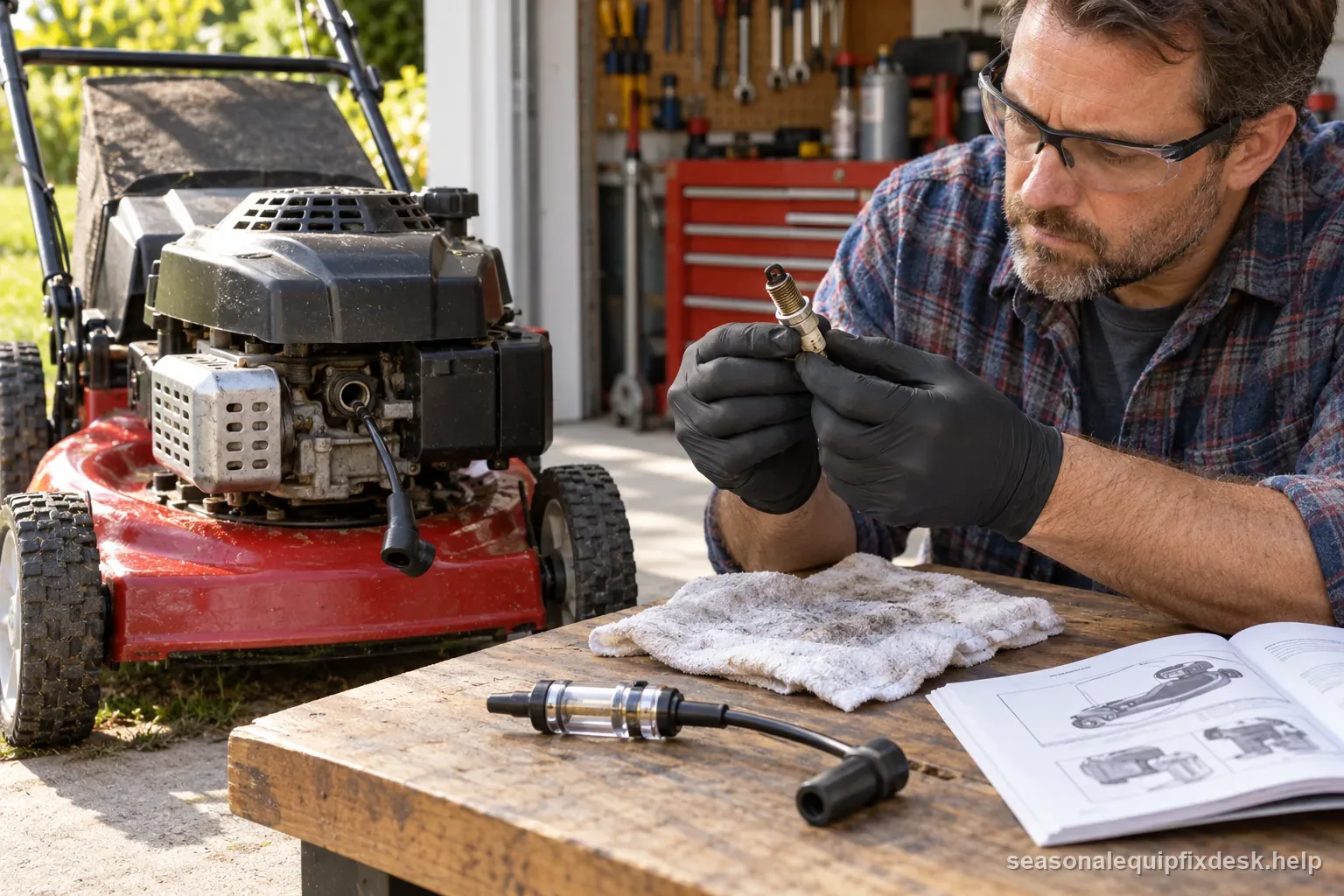
Air filter and choke problems show up differently
A severely dirty filter can enrich the mixture and reduce starting/running quality. Inspect or replace it according to the engine manual rather than starting the mower with the filter removed as a routine test. Check that automatic or manual choke linkages are free and return as designed.
If the engine starts cold but floods when warm, verify that the choke is opening rather than continuing to add primer or choke.
| Rope or engine symptom | Likely direction | Next safe check |
|---|---|---|
| Rope suddenly hard to pull | Deck drag or mechanical resistance | Stop; disconnect ignition and follow the model manual |
| Rope pulls normally; no fire | Fuel, air, control, or ignition clue | Check control bar, fresh fuel, filter, and plug lead |
| Starts then stalls | Fuel delivery, choke, or load | Record when it stalls before changing parts |
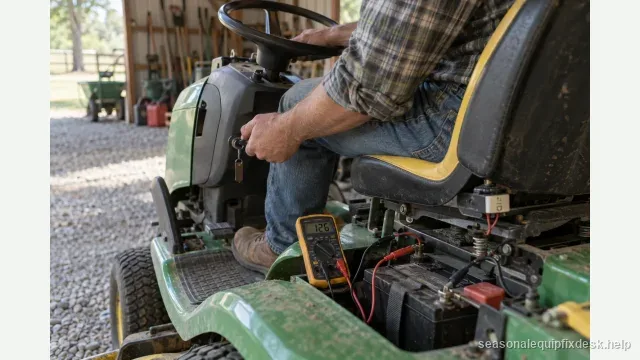
Electric-start and battery mowers need their own branch
On a gasoline mower with electric start, a weak battery or disconnected starter circuit can prevent cranking even though the engine itself is healthy. On a battery mower, confirm a charged compatible pack, battery seating, safety key, handle/start interlocks, and any temperature or error indication specified by the manufacturer.
If the electrical system smells burned, the battery is damaged, or a connector is melted, stop. Do not bridge a safety interlock to prove that the motor can run.
Use the starter-rope feel as a branch point instead of treating every no-start the same. If the rope is suddenly locked, stop and look for a deck obstruction or impact-related mechanical problem before checking fuel. If it pulls at its usual speed but the engine never catches, verify the control bar is fully held, then check fuel condition, the air-filter element, and the plug lead in the order allowed by the owner’s manual. Toro’s troubleshooting table separates an empty tank, closed shutoff valve, incorrect choke position, stale or contaminated fuel, a faulty plug, a disconnected lead, and a dirty fuel filter rather than calling all of them “bad gas.”
Keep the operator-presence system intact during any test. Do not tie the control bar down, bypass a safety switch, or reach under the deck to make cranking easier. If grass or debris may be blocking the blade, turn the mower off, disconnect the spark-plug lead, and follow the exact tilt and clearing directions for that model. A rope that remains unusually difficult to pull, a blade that will not turn as expected, or an engine that stops inconsistently is a stop-and-service condition, not a reason to pull harder.
After a basic check, make one controlled restart attempt using the correct cold or warm procedure. Record whether the engine never fires, fires briefly, or runs only with choke. That pattern helps distinguish fuel delivery from ignition and mechanical load without adding a second fault through repeated improvised tests.
A clean final test
- Move the mower to open ground and inspect the blade area for debris.
- Restore the spark-plug lead, battery, covers, and filter.
- Use the exact normal starting procedure once.
- If it starts, let it stabilize before engaging self-propel or entering tall grass.
- If it fails, record whether the engine is mechanically hard to turn, cranks without firing, floods, or fires briefly.
That symptom is the basis for the next repair. Do not erase it by changing fuel, plug, carburetor, cable, and coil all at once.
- Confirm the control bar is held as the operator manual describes.
- Stop if the starter rope suddenly becomes hard to pull.
- Record whether the engine never fires, fires briefly, or stalls.
- Keep the blade-area safety interlock intact during every test.
Hot-start failure and cold-start failure are not the same complaint
If the mower starts normally from cold but refuses to restart after ten or twenty minutes of cutting, capture that pattern before cleaning the carburetor. Heat can change ignition components, vapor behavior, valve clearances, and mechanical drag. A cold-only no-start points more strongly toward starting controls, choke/primer behavior, stale fuel, or basic fuel and spark availability.
When testing a hot-restart problem, let the mower sit the same amount of time between controlled attempts and avoid adding extra prime or choke unless the manual requires it. Otherwise the test introduces flooding and stops being comparable.
Do not tie down the operator-presence bail, bridge a switch, or use starting fluid as a universal test. If the mower starts but will not stop when the control is released, do not mow.
Blade and brake condition can affect starting load
A mower that struck a root, stone, edging, or other object immediately before it became hard to start needs a mechanical inspection. With the spark-plug lead disconnected and the machine handled exactly as the manual permits, check for a bent blade, damaged blade adapter, packed deck, or brake mechanism that is not releasing correctly when the operator control is held.
Do not keep pulling against a rope that suddenly became much harder after an impact. A normal-feeling rope with no combustion belongs on the fuel/spark path; an abnormal cranking load belongs on the mechanical path first.
After the engine fires, verify the stop function before mowing
A successful start is not the only acceptance test on a walk mower. Release the operator-presence control as the manual directs and confirm the engine and blade system stop normally. If a cable was adjusted during diagnosis, a mower that now starts but does not stop correctly has gained a more serious safety problem.
Only after both start and stop behavior are normal should you make a short cutting test. Listen for new vibration and verify the engine does not stall as soon as the blade is loaded by ordinary grass.
For the matching drive or fuel symptom, see E10 and E15 compatibility for mower engines.