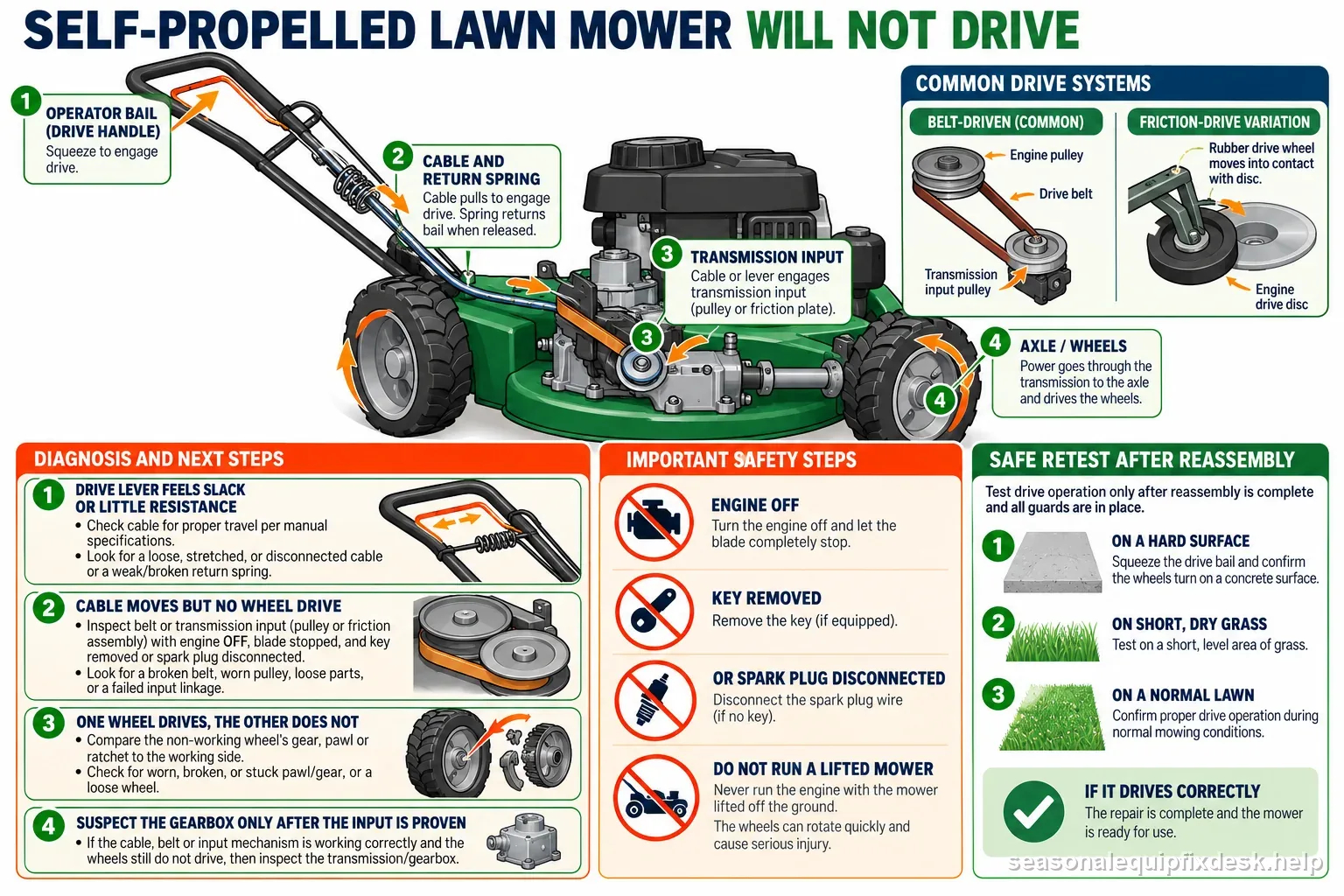
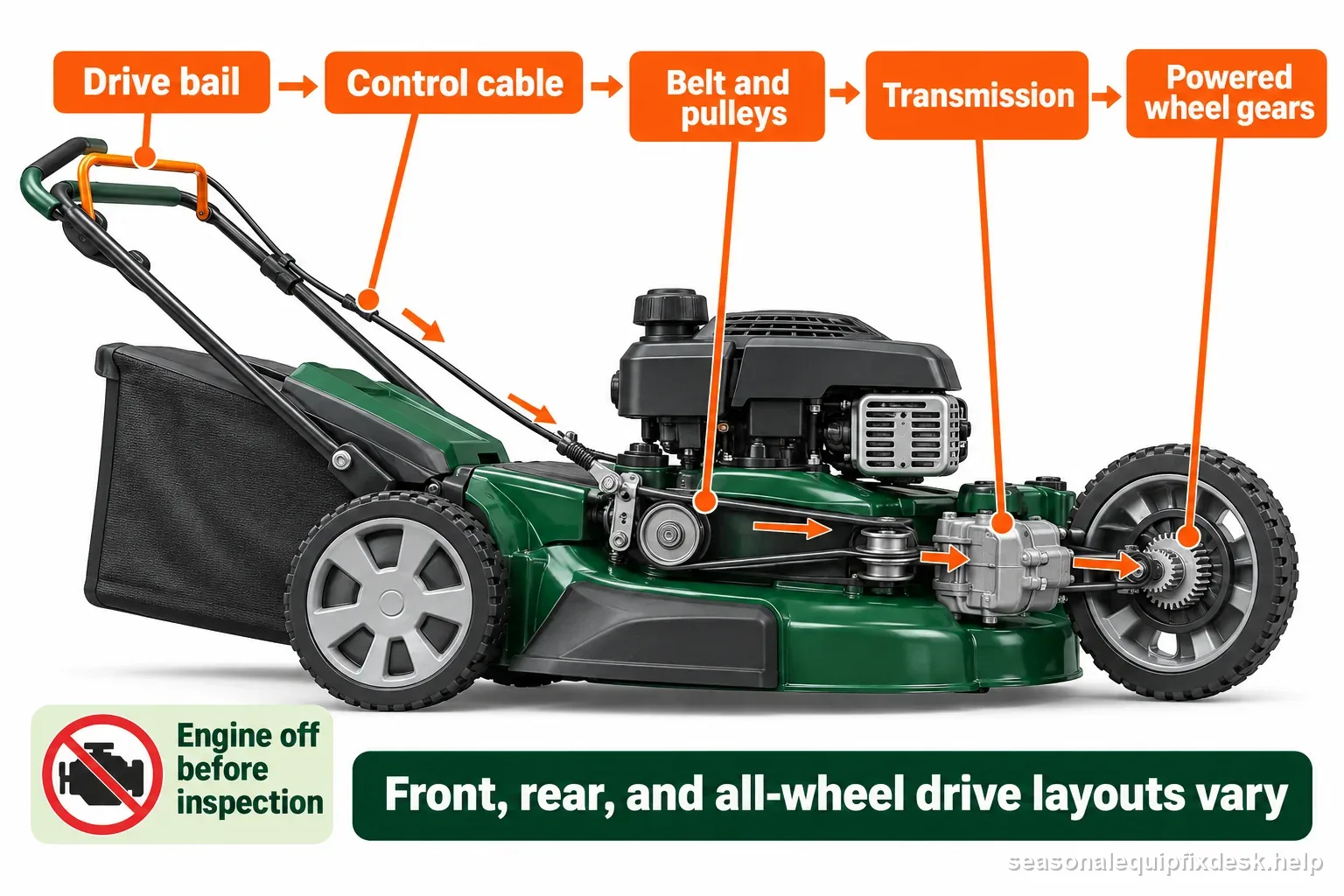
Quick answer: When the engine sounds normal but the mower no longer pulls itself, do not jump straight to “bad transmission.” First watch what changes when you squeeze the drive bail: does the cable actually move the transmission arm, does the belt tighten and turn, and do the drive wheels try to rotate? Those observations separate a control problem from a belt problem and a wheel-gear problem without dismantling the whole drive system.
If a walk-behind mower also refuses to start, separate the engine complaint from a drive-system fault. The push mower no-start steps begin with the control bar, fuel condition, and filter before deeper engine work.
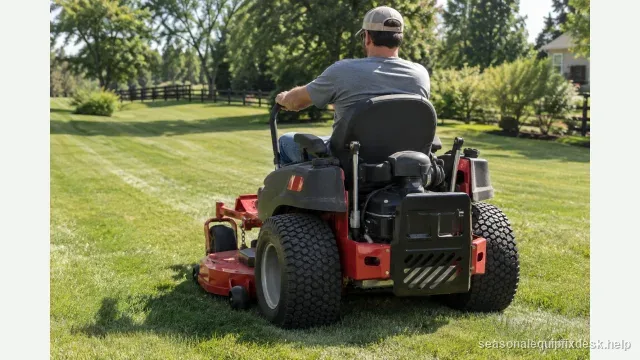
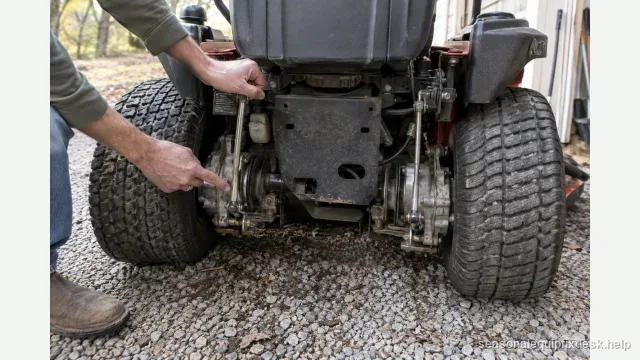
This zero-turn checklist is model-specific to paired steering levers and hydro bypasses; a walk-behind self-propel system uses a different drive path. See the zero-turn mower drive system that will not move guide for the matching checks.
The exact routing, cable adjustment, wheel gear design, and belt-service procedure vary by model. Husqvarna’s support flow even branches by front-, rear-, or all-wheel drive, so the wheel set that is supposed to be powered matters before any parts are ordered.
| Observation | Possible meaning | Next step |
|---|---|---|
| Handle feels loose | Control cable or linkage | Check external travel with engine off |
| Cable moves, mower stays still | Belt, transmission, or engagement | Use model-specific inspection steps |
| One wheel turns unevenly | Wheel gear, axle, or debris | Compare wheels after safe shutdown |
| Drive changes when lifted | Traction load or engagement | Do not test on slope; use level ground |
| Observation | Possible meaning | Next step |
|---|---|---|
| Drive changes when lifted | Traction load or engagement | Do not test on slope; use level ground |
| One wheel turns unevenly | Wheel gear, axle, or debris | Compare wheels after safe shutdown |
| Cable moves, mower stays still | Belt, transmission, or engagement | Use model-specific inspection steps |
| Handle feels loose | Control cable or linkage | Check external travel with engine off |
Start with the symptom the operator can feel
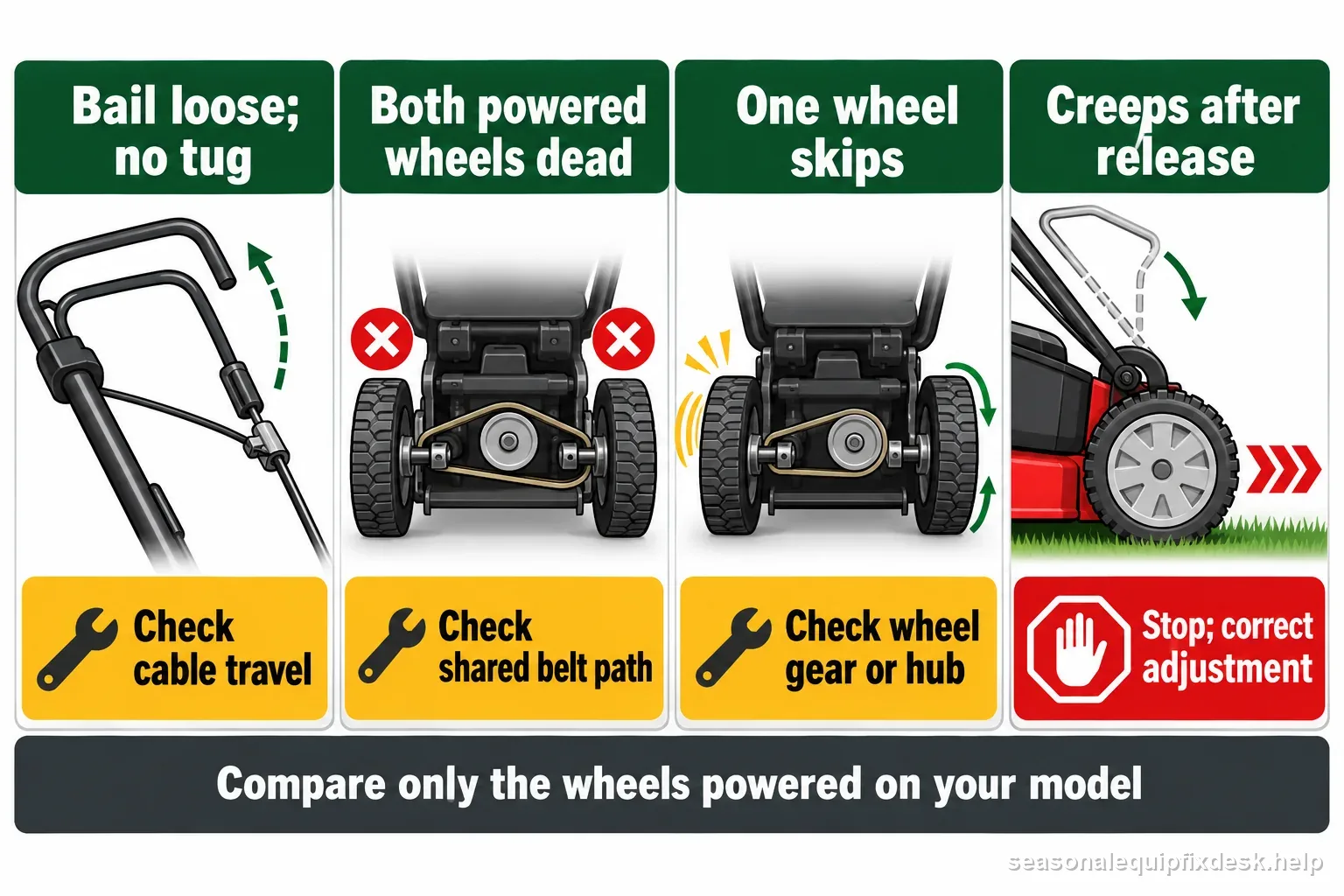
- Bail feels loose and the mower never tugs: cable stretch, a disconnected cable end, or a drive-control arm that is not reaching its travel is plausible.
- Bail feels normal but both powered wheels stay dead: watch the belt/input side next; a common drive component can stop both wheels together.
- One powered wheel slips while the other works: inspect that wheel hub, pinion, key, or axle-end hardware before blaming the gearbox.
- Mower pulls on pavement but not in grass: the drive may be weak rather than completely absent; belt slip, cable travel, worn wheel teeth, or an overloaded/dragging wheel becomes more useful than a binary “works/does not work” label.
| Observed pattern | First branch to check | Interpretation |
|---|---|---|
| Drive bail loose; cable or lever barely moves | Cable anchor, sheath, or control linkage | The drive command may not be reaching the engagement arm |
| Both powered wheels stay dead | Shared belt, pulley, or transmission input | A common path can stop both driven wheels together |
| One powered wheel skips while the other pulls | Wheel gear, key, hub, or axle end on the weak side | A one-wheel symptom is not proof the gearbox has failed |
| Mower creeps after the bail is released | Cable preload or disengagement fault | Stop use; more tension can worsen unintended movement |
A safe lift-and-observe test tells more than guessing
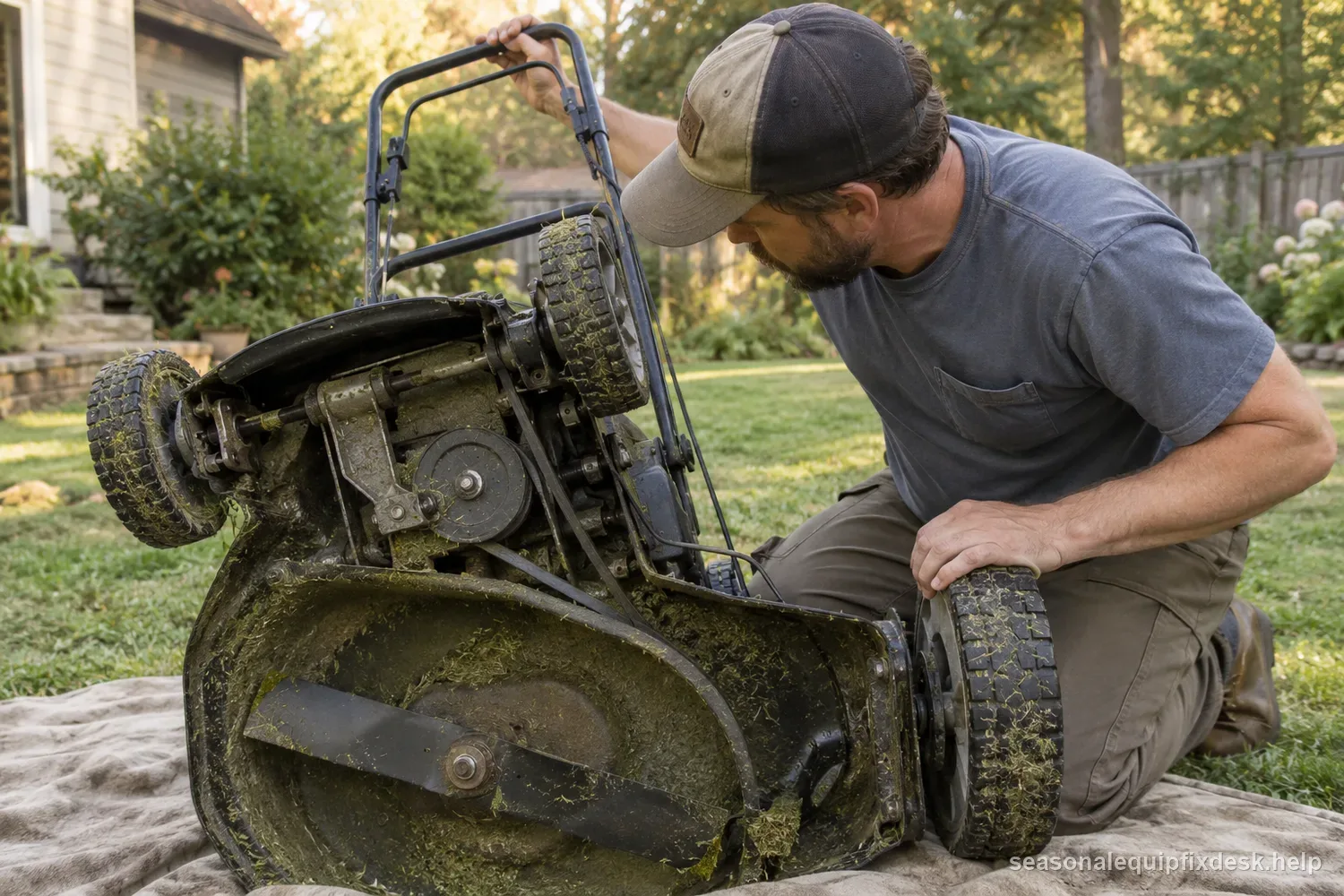
Shut the engine off, remove the spark-plug lead or battery key as appropriate, and let the blade stop completely before tipping or lifting the mower. Follow the manual’s direction for which side may be raised on a gasoline mower so fuel and oil do not migrate where they should not. Never put hands near the blade or drive mechanism while the engine is running.
With the machine safely supported and the drive area visible, inspect for wrapped grass, a missing belt cover fastener, obvious belt derailment, cracked belt material, or a cable housing that has popped out of its bracket. The goal is not to disassemble yet; it is to see whether the command from the handle can physically reach the transmission input.
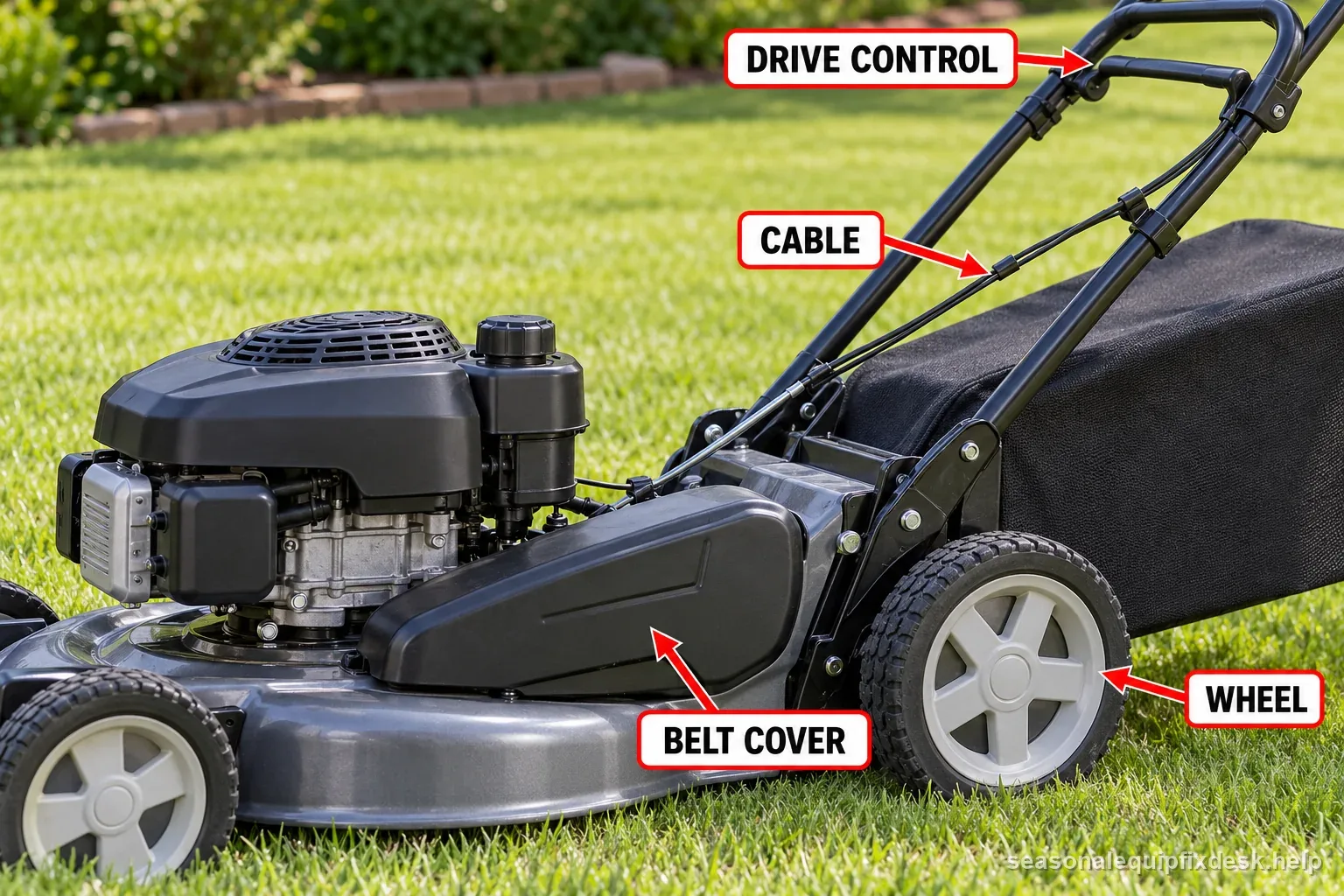
Cable travel: compare the handle end with the transmission end
Squeeze the drive bail with the engine off while watching the cable sheath and the lever it pulls. A cable can look intact at the handle yet have a broken inner wire, a slipped anchor, or too much free play to move the lever through its full range. If the lever barely moves, a belt replacement will not restore drive because the belt is never being commanded into the working position.
If your manual provides a drive-cable adjustment, use its specified free play or reference marks. Do not remove all slack simply to make the mower “pull harder.” Too much preload can keep the drive partially engaged when the bail is released, creating a runaway or wheel-creep hazard.
Belt evidence is different from cable evidence
A drive belt that is off a pulley, glazed, cracked, oil-soaked, or excessively slack can let the engine run perfectly while the transmission input receives little or no torque. Look for rubber dust and polished pulley surfaces as secondary clues. If the belt path disappears under guards or requires significant disassembly, use the model procedure; Husqvarna’s current consumer support directs owners to a dealer for drive-belt replacement on some petrol mower designs.
Do not spray belt dressing or lubricant onto the drive belt. A self-propel belt depends on friction. Contamination can turn a marginal drive into a slipping one and makes the before/after test meaningless.
| What you see with the engine off | Likely branch | Next safe check |
|---|---|---|
| Cable lever barely moves | Control or cable | Check the sheath anchor and travel against the model manual |
| Belt is loose, damaged, or off a pulley | Belt and pulley path | Inspect only an accessible, isolated path; stop if guarded service is required |
| Input turns but one wheel skips | Wheel hub, key, or gear | Compare left and right wheel-end hardware |
| Input turns but both outputs stay still | Internal transmission | Record the observations for model-specific service |
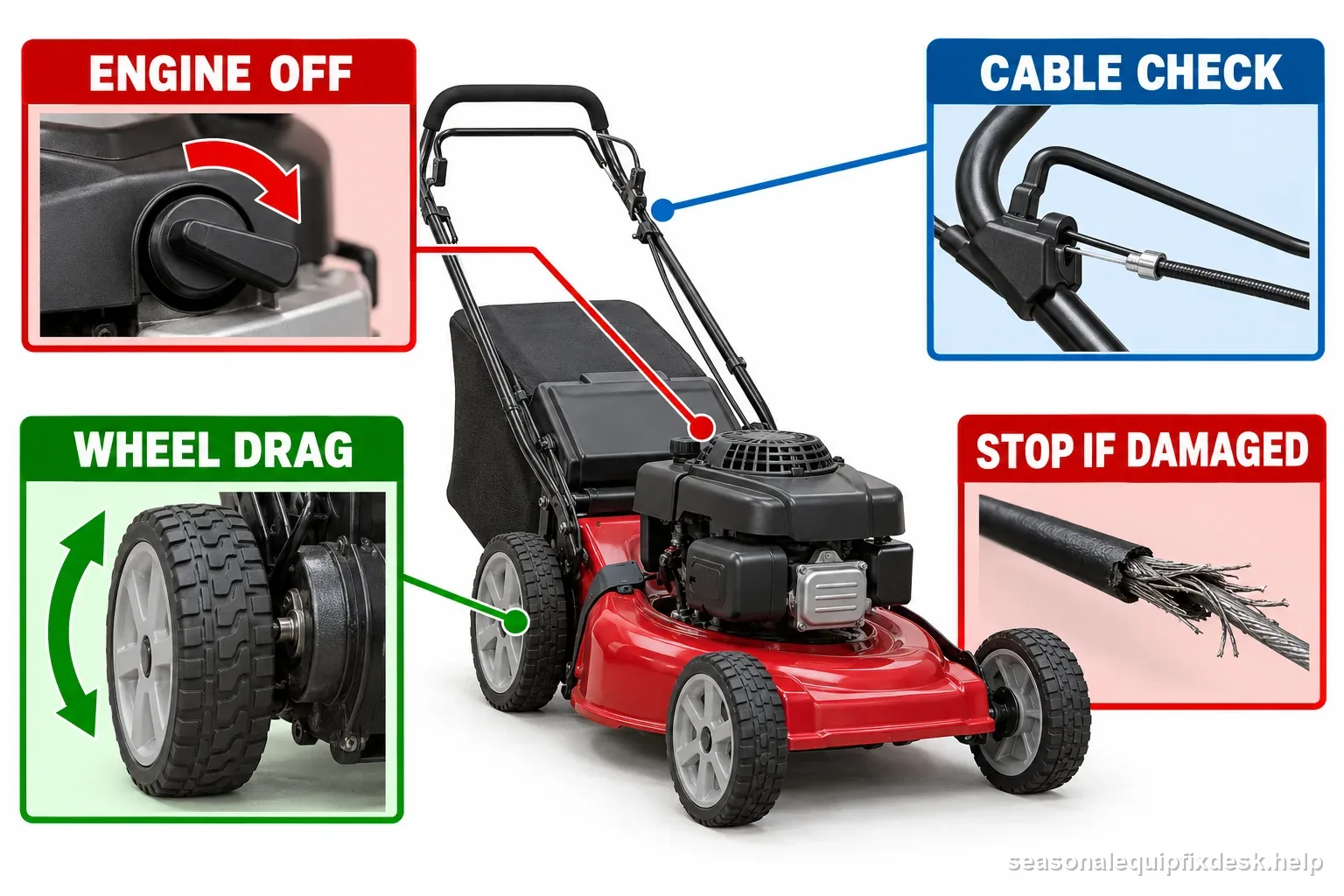
When one wheel is the liar
Many walk-behind self-propel systems transmit power through wheel pinions, internal wheel teeth, axle gears, or pawls. If the transmission shaft turns but a wheel does not drive, remove that wheel only after isolating ignition and note how the washers, keys, gears, and dust covers are stacked. Rounded plastic wheel teeth can create a rhythmic skip under load; a missing key or stripped hub can make the wheel free-spin even though the gearbox is healthy.
Compare left and right rather than assuming both sides should look identical after years of wear. If only one side has metal dust, a cracked hub, or teeth with visibly rounded drive faces, that asymmetry is useful evidence.
Do not condemn the gearbox until its input is proven
The expensive branch begins only after the command and input are known good: the cable reaches full travel, the belt follows the correct path and turns the transmission pulley, wheel hardware is intact, yet the output does not drive. At that point the internal gearbox or transmission becomes plausible. Opening sealed reduction or transmission assemblies without a service procedure can turn a repairable unit into a parts puzzle.
A useful shop handoff is specific: “drive bail moves the arm fully; belt turns the input pulley; left and right wheel gears are intact; axle output does not turn.” That is far more diagnostic than “self-propel stopped.”
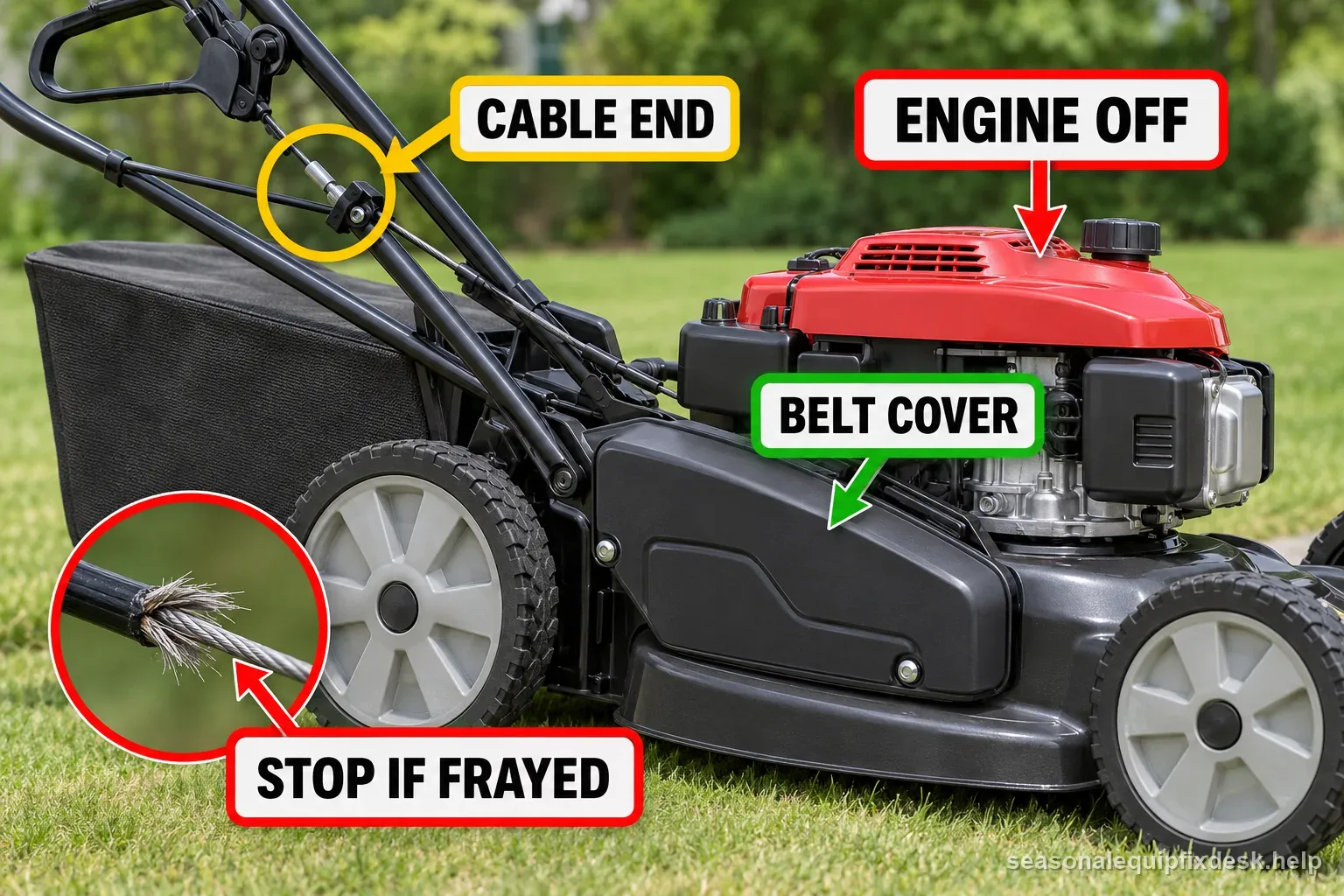
Illustrative diagnosis path; shut off and isolate power before inspection.
Retest on three surfaces, not just in the garage
- Reassemble every guard and wheel fastener, reconnect ignition, and start on a clear flat area.
- Confirm the mower rolls freely with the drive released and does not creep.
- Engage self-propel on pavement or a firm driveway and note whether both powered wheels pull evenly.
- Try a short strip of normal grass. A repair that works only with the deck unloaded may still have belt slip or marginal cable travel.
- Release the bail while walking. Drive should disengage promptly; delayed release is not an acceptable “stronger adjustment.”
- Reinstall every guard and wheel fastener; reconnect ignition only after reassembly.
- Start on a clear, flat area and confirm the mower rolls freely with drive released.
- Engage self-propel briefly on pavement and confirm only the intended wheels pull evenly.
- Try a short normal-grass strip only if the pavement check is controlled.
- Release the bail while walking; stop if drive creeps or disengages slowly.
Patterns worth writing down before buying a transmission
- Loose bail + short lever travel = control/cable branch.
- Full lever travel + belt not moving = belt/pulley path.
- Input shaft moving + one wheel skipping = wheel/hub/gear branch.
- Input moving + both outputs absent = internal transmission branch becomes credible.
- Drive fades only under thick grass = look for slip, drag, or load sensitivity rather than treating it as a complete mechanical disconnect.
If a drive repair requires blade-area access, significant spring preload, or a belt path the owner manual does not expose, stop at the inspection stage. A self-propel system is convenient, but its control must still release reliably after any repair.
Two illustrative drive records
These sample observations show how to record a symptom; they are not repair tolerances.
Example 1: one wheel set pulls, the other slips
On a mower identified in its manual as front-wheel drive, Dana records that the front wheels turn on 2 of 3 short, controlled passes across dry level grass, but the machine slips on the third. With the engine off, the cable end visibly moves. Dana checks the front wheel-drive gear and debris path before suspecting the transmission; the count is only an observation, not a pass rate.
Example 2: drive stays engaged after release
After a manual-directed cable adjustment, Luis releases the drive bail, but the mower continues pulling about 1 foot. Luis stops, shuts the engine off, and does not continue mowing. That observation points to a disengagement problem; the model procedure or service must restore free rolling before use.
Check the drive response with the mower stopped
With engine off, remove the key or disconnect the plug lead as the manual directs, then wait for motion to stop. Check handle travel and exposed cable for damage; do not reach beneath the deck or open the belt cover. If the manual allows, compare wheel movement and confirm any freewheel control. Do not force a wheel or adjust cable without model instructions. Record when drive fails for service.