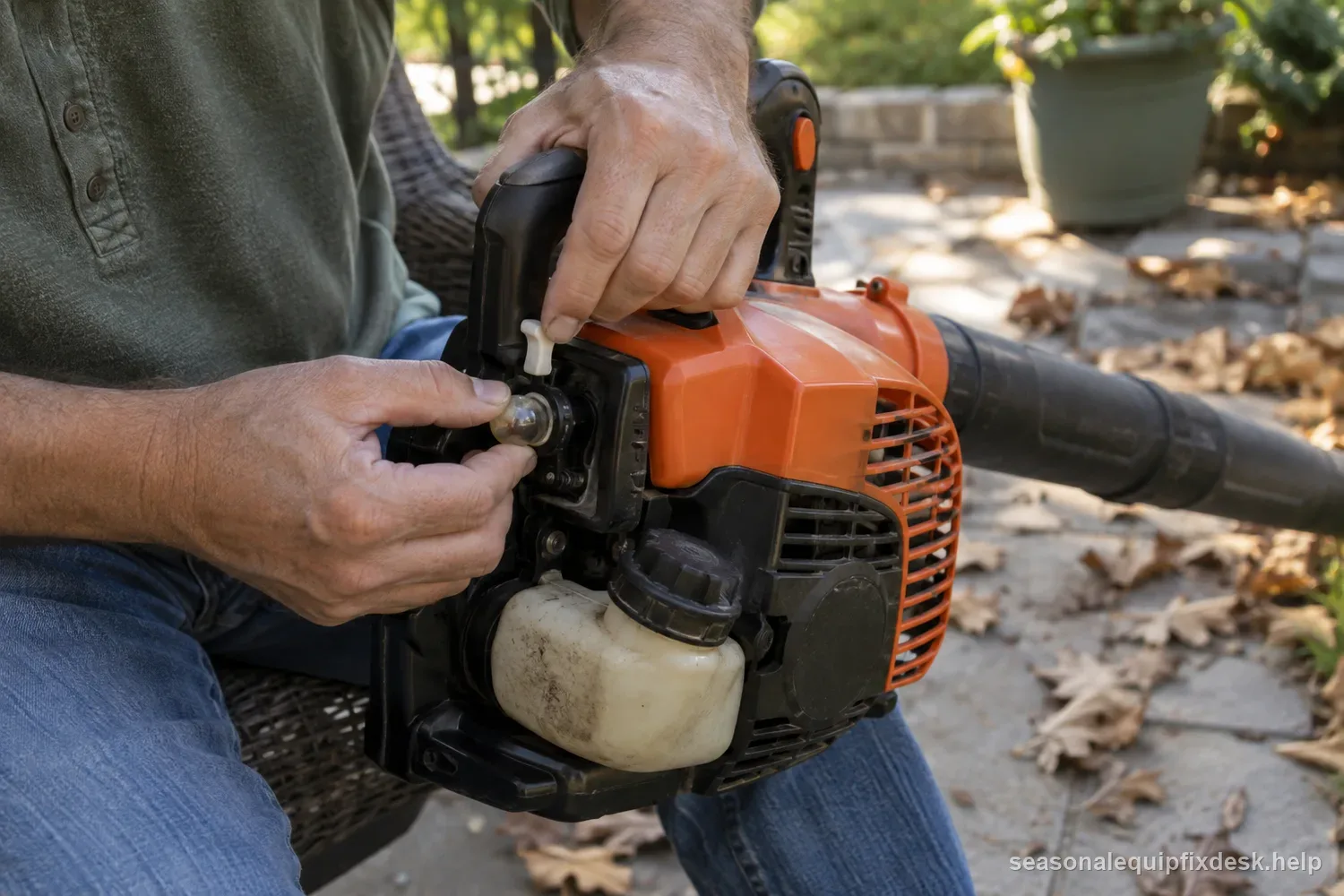
Quick answer: A gas leaf blower no-start is easiest to diagnose while the original symptom is still clean. First use the exact cold- or warm-start procedure for the model, then decide whether the engine never fires, fires only with choke, smells flooded, loses fuel at the purge bulb, or has abnormal starter resistance. Those behaviors point to different systems and are more useful than replacing the carburetor because the blower sat over winter.
Start and test the blower outdoors with the nozzle clear of people, loose debris, and objects. Let the muffler cool before fuel-system work, and disconnect the spark-plug lead before touching the fan/impeller area or other parts the manual identifies as hazardous.
| What happened | Record | Next safe step |
|---|---|---|
| No pop | Cold or warm; primer and choke sequence | Check fresh correct mix and model controls |
| Fires, then fades | Choke position and elapsed time | Use the manual transition; avoid repeated full choke |
| Wet plug or fuel smell | Fuel leak, plug state, prior priming | Stop priming; follow flooded-start directions |
| Hard recoil | Sudden change from normal feel | Stop; inspect mechanical resistance per manual |
| Observation | Possible clue | Next move |
|---|---|---|
| Fires once, then stops | Choke transition or continued fuel flow | Follow the model transition and record it |
| Wet plug after priming | Flooding may be present | Stop adding fuel; use the flooded-start method |
| Suddenly hard recoil | Mechanical resistance | Stop pulling and get model-specific help |
Cold and warm starts are not the same sequence
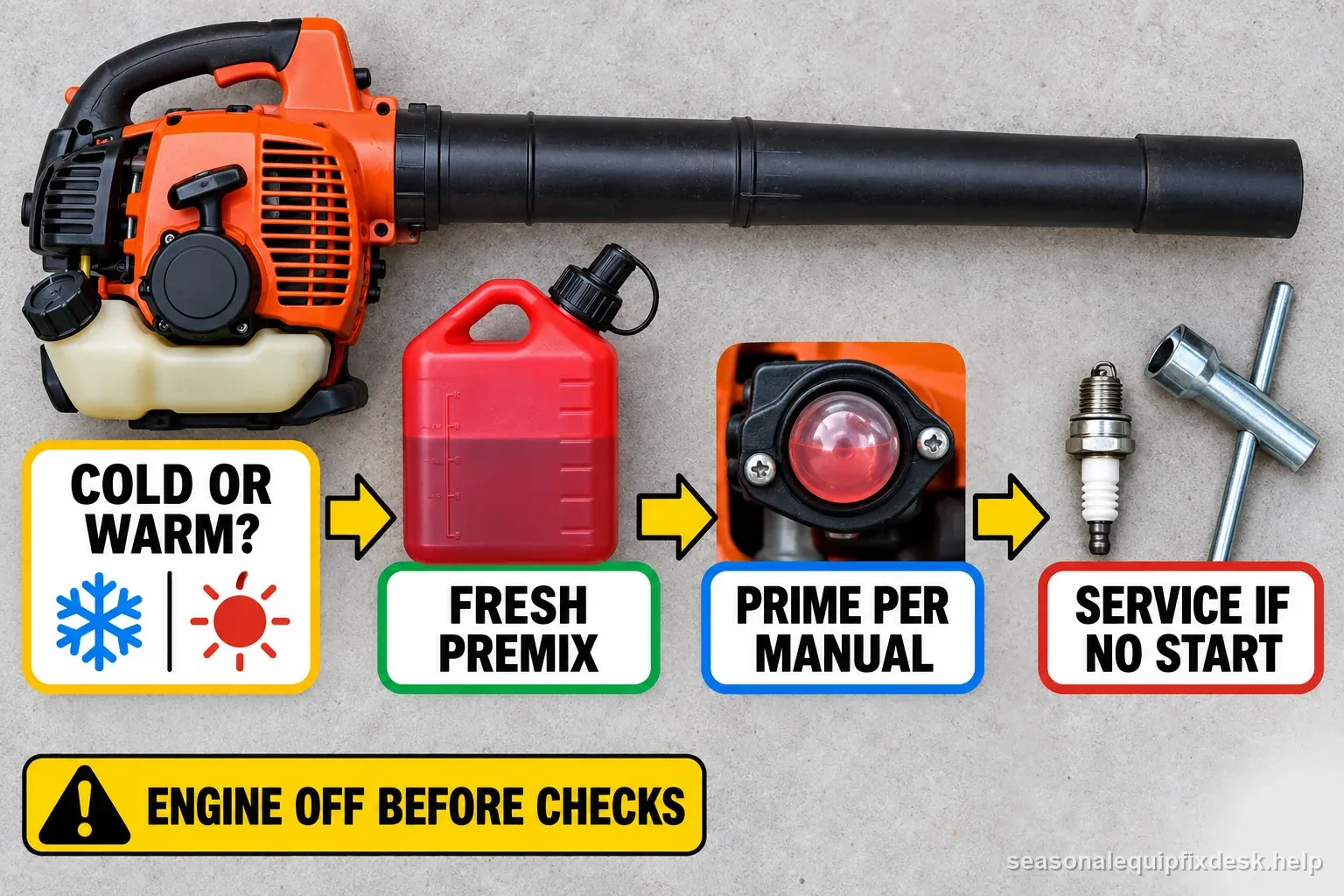
Husqvarna’s current petrol-blower guidance uses an air-purge/primer and choke sequence for cold starts, then changes the procedure for a warm engine; its supported models call for 10 primer presses. That number and control layout are not universal. Your model may differ, so use its manual. The important diagnostic point is to stop repeating full choke after the engine has already fired or warmed.
If the engine pops once on choke and then quits, move the choke as the manufacturer directs and continue the start procedure. Keeping full choke after that first fire can flood the engine and turn a correct starting clue into a wet-plug no-start.
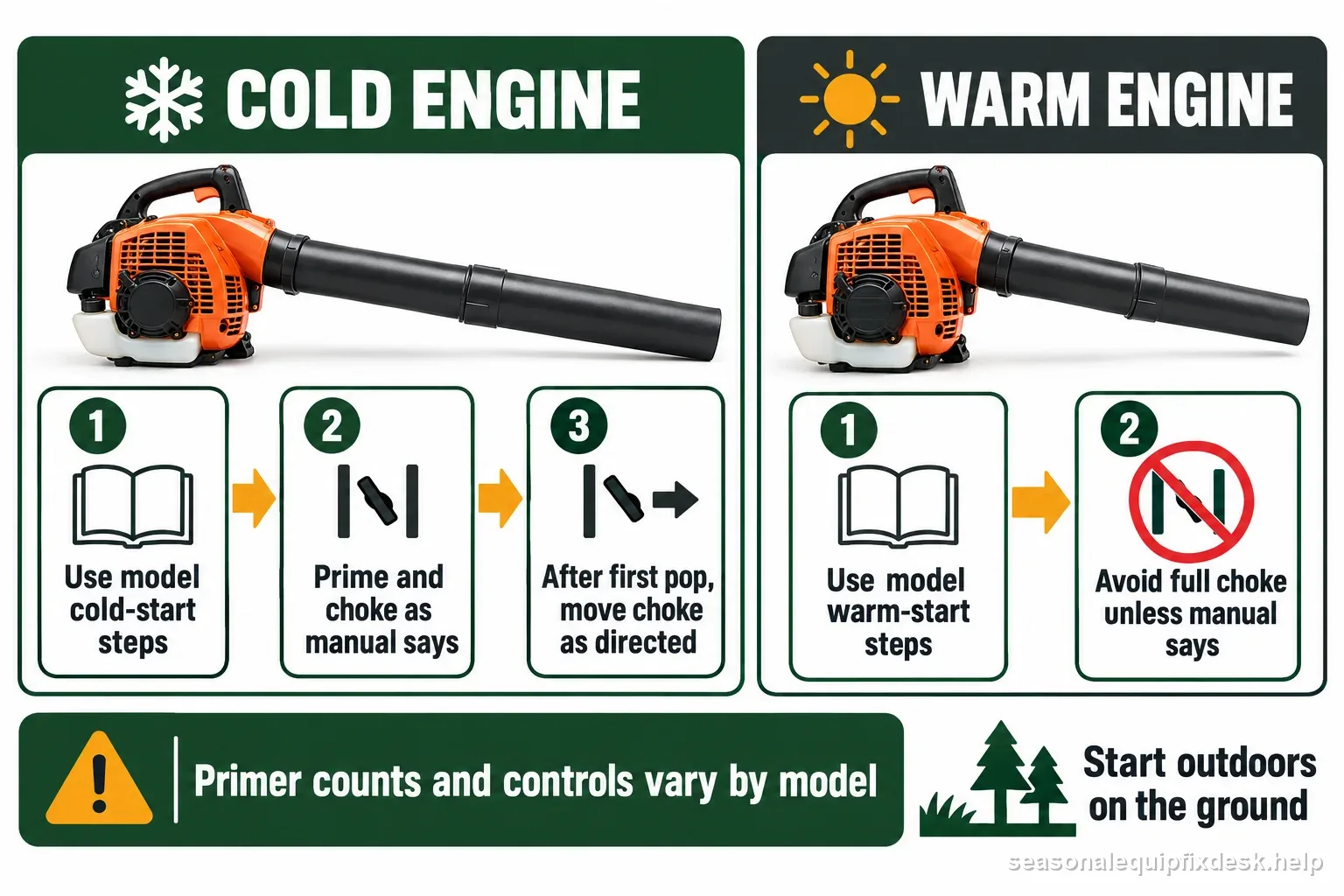
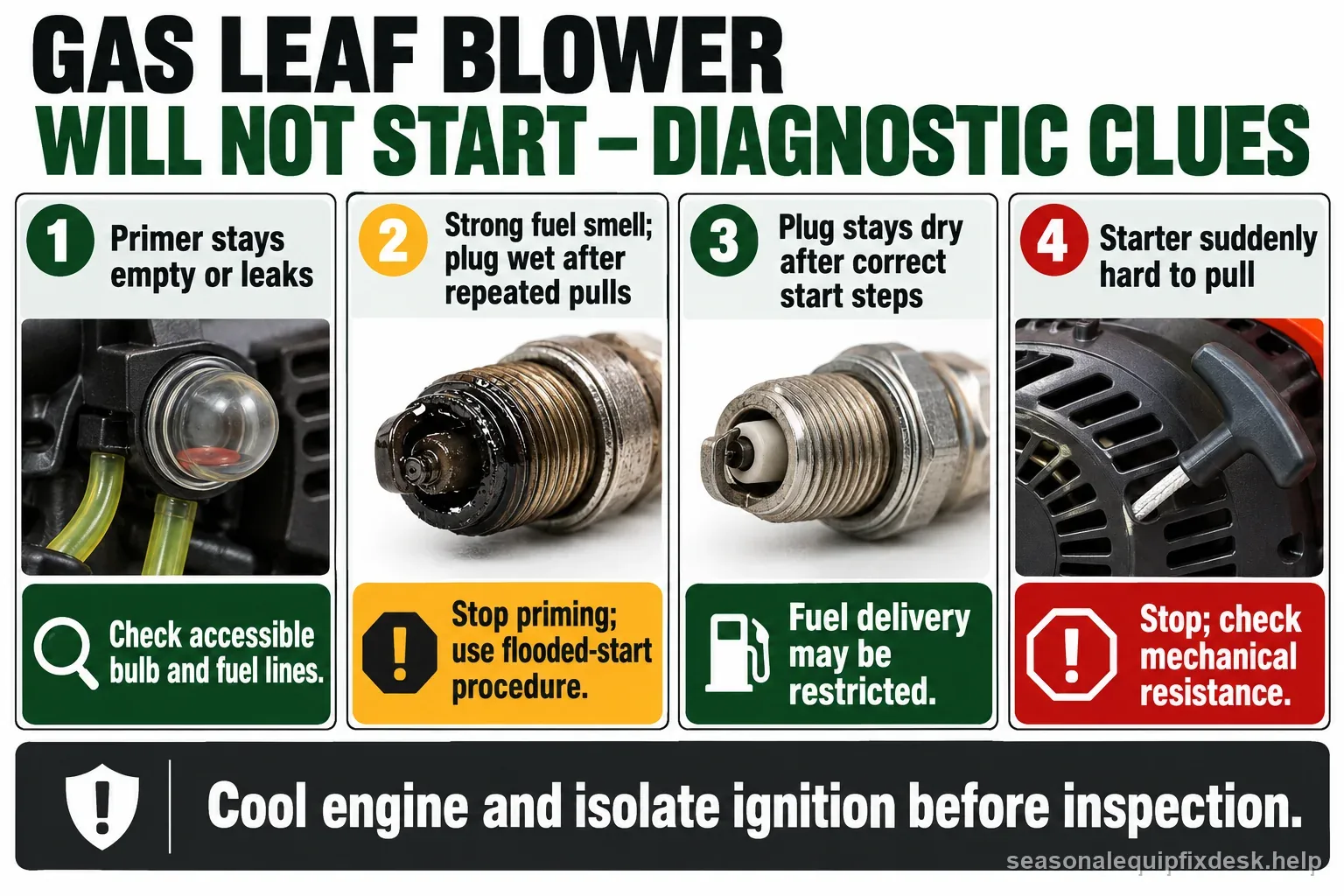
| Observed result | What it may indicate | Next safe step |
|---|---|---|
| Cold engine; no pop after correct model procedure | Fuel, spark, air, or mechanical cause remains open | Confirm fresh correct fuel and record primer/choke behavior |
| Fires once on choke, then quits | Choke transition or fuel delivery clue | Move the choke only as the manual directs; avoid repeated full-choke pulls |
| Strong fuel smell or wet plug after repeated pulls | Flooding becomes more likely | Stop priming and follow the model flooded-start procedure |
| Bulb stays empty, or plug stays dry after correct steps | Fuel pickup, line, filter, bulb, or metering branch | Inspect accessible fuel path only after cooling and ignition isolation |
| Starter suddenly becomes hard to pull | Mechanical resistance may be present | Stop pulling and inspect recoil/engine resistance per manual |
Flooding has a smell and a history
Repeated priming, repeated full-choke pulls, or a fuel-wet spark plug makes flooding more plausible. Stop adding fuel and follow the model’s flooded or warm-start procedure. Do not remove the plug and create open sparks near spilled gasoline or fuel vapor.
If the blower starts after the excess fuel clears, the repair may be procedural rather than mechanical. Note the primer count, choke position, ambient temperature, and whether the engine was already warm so the same flooding pattern is not recreated next time.
Fresh premix matters after seasonal storage
A two-stroke blower needs the fuel/oil mixture specified by its manufacturer. Old or incorrectly mixed fuel can make starting and acceleration unreliable and can leave deposits in small carburetor passages. Replace questionable premix with known-correct fresh fuel before condemning ignition or carburetor hardware.
Do not add extra two-stroke oil as a starting aid. A richer oil ratio changes combustion and is not the same thing as choke enrichment. Measure the mix accurately or use approved premixed fuel if the manufacturer permits it.
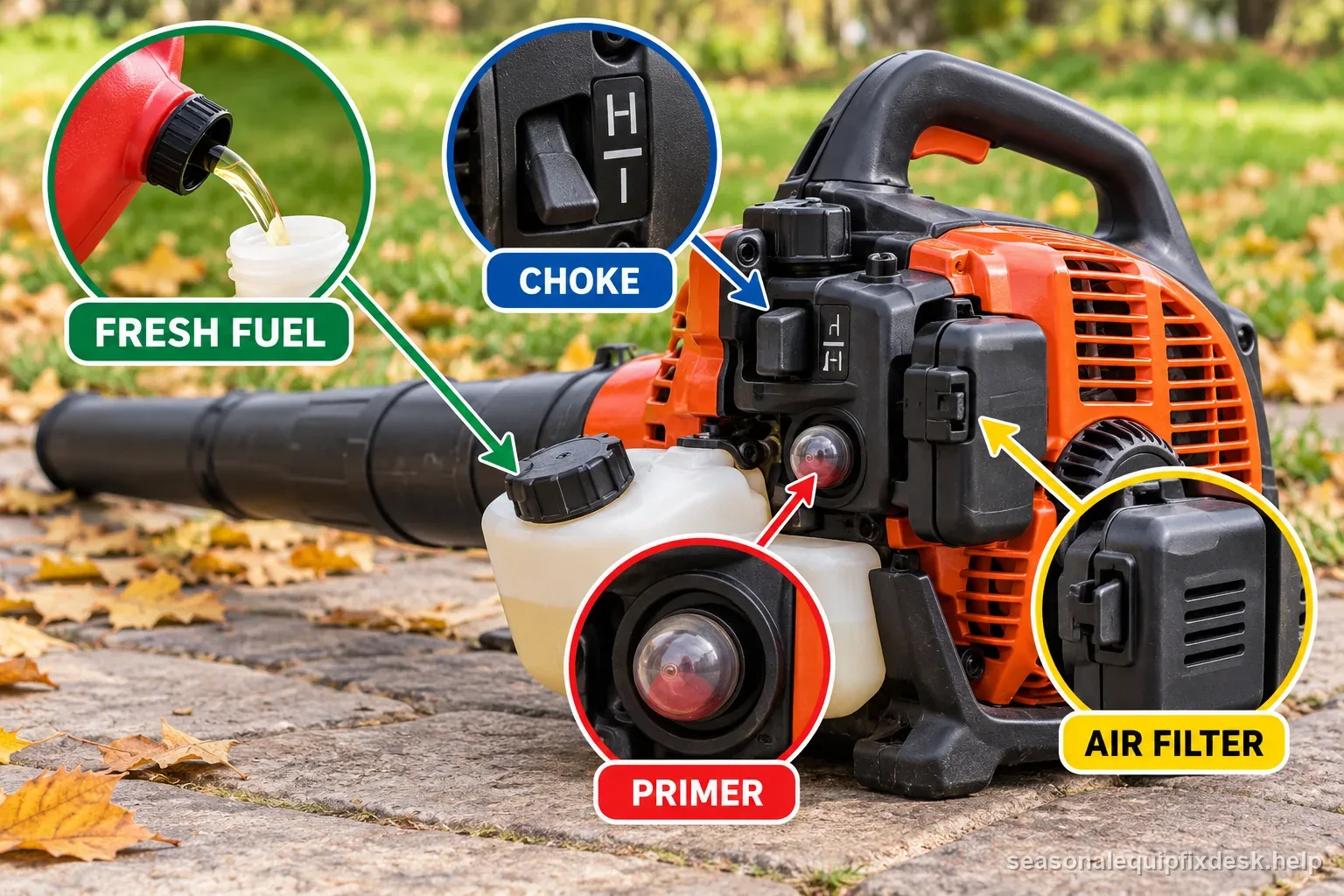
The purge bulb can show whether fuel is moving
Watch the air-purge or primer bulb during the correct priming sequence. If it never draws fuel, stays empty, shows persistent bubbles, or leaks, inspect accessible fuel lines, the pickup filter, bulb, and connections. Cracked or hardened lines can admit air or leak fuel even if the tank is full.
If the bulb fills normally but the plug remains dry after proper starting attempts, the carburetor metering path becomes more important. If the plug is wet, continued priming is the wrong direction.
Spark is checked after fuel behavior has been recorded
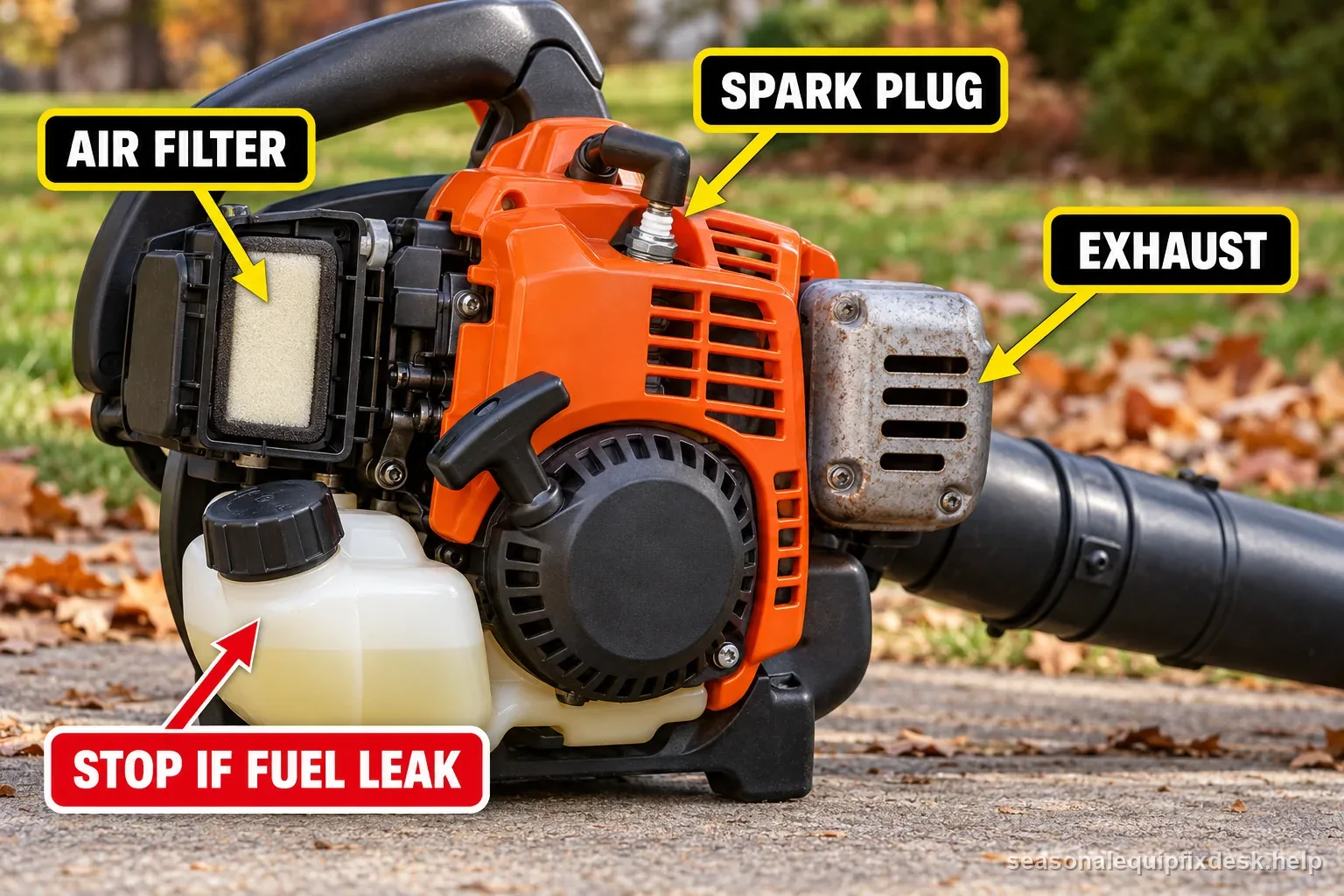
Inspect the plug for fouling, damage, and the model-specified gap. Use the manufacturer’s safe spark-test method if required. A new plug is not proof of good ignition; cap connection, coil behavior, stop-switch wiring, and hot ignition faults can still matter.
A wet plug after repeated cold-start pulls supports a flooding possibility, while a dry plug after a correctly primed attempt can point toward fuel not reaching the cylinder; neither observation alone proves a carburetor fault. Let the engine cool, use the exact model’s start and flooded-engine steps, and do not spray starting fluid or adjust mixture screws as a shortcut. STIHL’s blower guidance separates cold-start sequence, fuel mix, and plug/air-filter checks; its timing and fuel limits are brand- and model-specific. STIHL’s blower FAQ also recommends checking the filter, cooling fins, and plug under its manual.
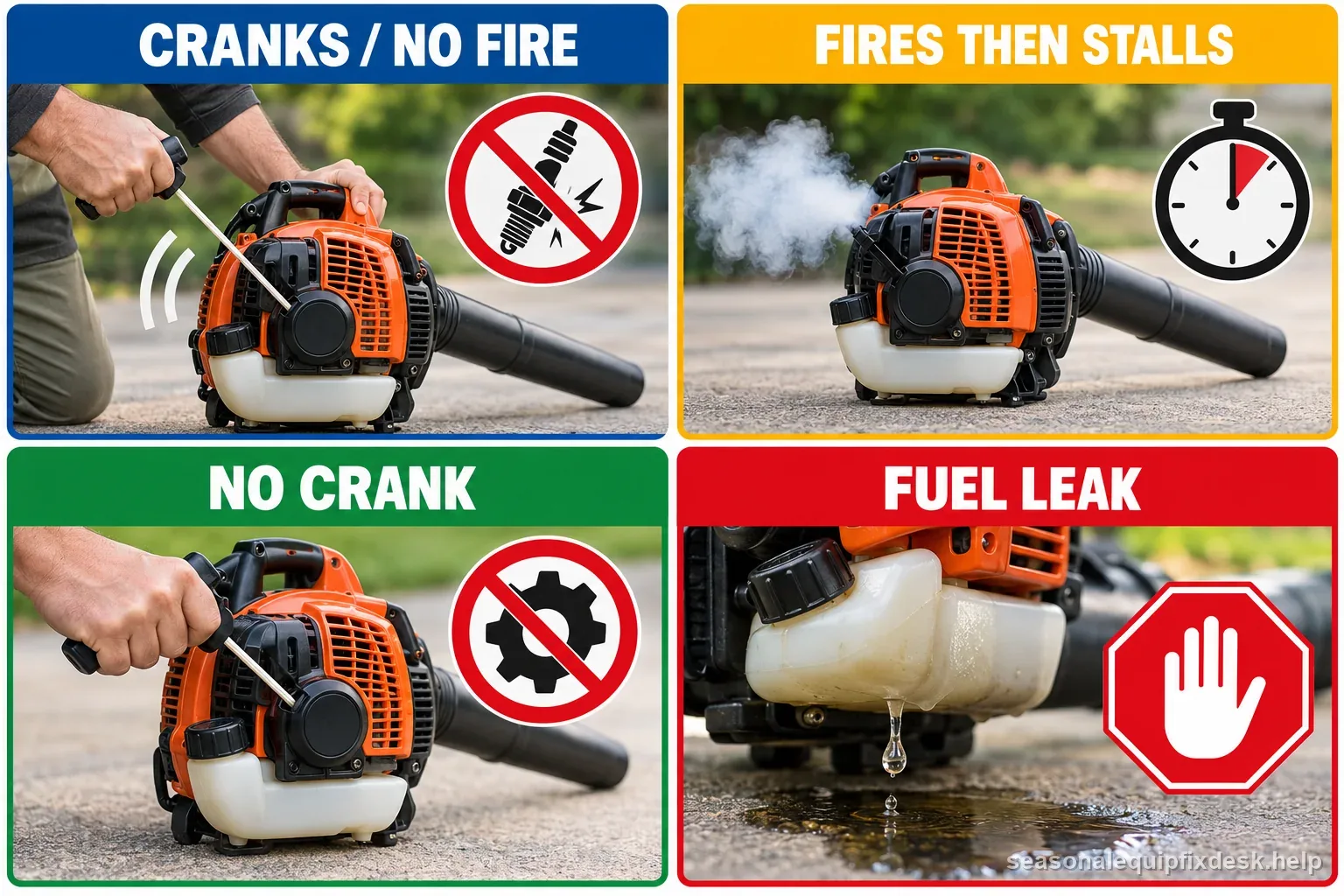
Any visible fuel leak, damaged fuel line, loose plug boot, or abnormal heat is a stop condition. If the engine starts only after changing to fresh correctly mixed fuel, note the fuel age and ratio rather than assuming the carburetor is repaired. See small-engine fuel limits before selecting another blend.
If the stop switch or control circuit is visibly damaged, do not bypass it to force a start. Safety and shutdown controls need to work normally when the blower returns to service.
| First-attempt clue | What to note | Why it helps |
|---|---|---|
| Never pops | Correct cold/warm start sequence used | Keeps fuel and ignition branches open |
| Fires only on choke | Choke position when it fades | Separates transition/fuel-delivery clues |
| Starts then dies | Idle, throttle, or heat-soak condition | Helps distinguish airflow, fuel, and hot-fault patterns |
| Starter feel changes | Normal, unusually hard, or no engagement | Flags mechanical inspection before more pulls |
A hot-weather no-start can be different from a cold-morning no-start
Husqvarna’s current blower support includes a hot-fuel procedure for some models and advises cooling the product out of direct sun before retrying. If the blower starts cold, works normally, then refuses to restart only after heat soak, preserve that pattern. It is different evidence from a machine that has been dead since storage.
Do not cool a hot engine with water or open the fuel system immediately next to the hot muffler. Follow the waiting/cooling procedure in the operator guidance.
Starter-cord feel can rule the carburetor out of the first branch
If the recoil does not engage the engine, the rope stays loose, or the engine suddenly becomes very hard to rotate, stop fuel troubleshooting. Inspect the starter mechanism and mechanical resistance according to the manual. Forcing the rope can damage the recoil or hide a seized/blocked condition.
Normal resistance with repeated no-fire keeps the diagnosis in fuel/ignition/compression. Abnormally low resistance can warrant compression evaluation after external checks are complete.
Retest the blower without using yard debris as a diagnostic load
- Refit covers, secure the plug lead, and verify the intake/nozzle path is clear.
- Use fresh correct premix and the exact temperature-appropriate start sequence.
- Let the engine warm as the manual directs without repeated choke cycling.
- Confirm clean throttle response in a clear outdoor area.
- Only then use the blower under normal airflow load and watch for stalling or fuel leakage.
A repair passes when the blower starts predictably hot and cold, idles/runs normally for its design, responds to throttle, and has no fuel leak or control fault. One lucky start after twenty pulls is not a reliable fix.
- Record whether the engine never reacts, pops once, starts then fades, or has abnormal recoil feel.
- Confirm the correct fresh fuel and oil mix or separate-oil setup for the exact model.
- Use the model cold-, warm-, or flooded-start sequence once, changing one condition at a time.
- Let hot parts cool and isolate ignition before inspecting the plug or accessible fuel components.
- Stop for fuel leaks, persistent no-spark, or sudden mechanical resistance.
Record the first start attempt before repeated pulls change it
On the first proper attempt, note whether the engine never reacts, pops once, sputters only on choke, or starts and immediately fades. That single observation is often more diagnostic than the tenth pull because repeated priming and choke use can turn a fuel-starved engine into a flooded one. If you are troubleshooting after storage, write down the fuel age before replacing it so you know whether fresh fuel actually changed the symptom.
Two worked examples: use the manual and the symptom log
Model-specific sequence: Husqvarna’s supported petrol-blower guidance calls for 10 primer presses on listed models. If the exact model is covered, record those 10 presses and follow its cold-start choke sequence; a different model’s manual controls if it gives another count.
Illustrative log, not a timing threshold: A cold blower fires once and fades after about 5 seconds. After cooling, the operator follows the exact warm-start instructions and records that it does not fire again. That changed pattern is more useful to service than calling the carburetor failed; retain fuel age, choke position, and plug condition.
When to stop before carburetor surgery
Seek model-specific service for persistent no-spark, fuel leakage, suspected compression loss, a carburetor that needs internal metering diagnosis beyond owner maintenance, hot-only ignition failure, or abnormal mechanical resistance. Bring the exact starting behavior and whether the purge bulb and plug were dry or wet; those clues prevent the next technician from starting over.
For a gasoline model, use the separate battery-first cordless blower checks only when the tool uses a battery pack.
If the engine runs but the unit is in vacuum mode and will not pick up leaves, follow the leaf-vacuum suction path separately from the no-start checks.
For the matching drive or fuel symptom, see the fuel-blend limits for small engines.