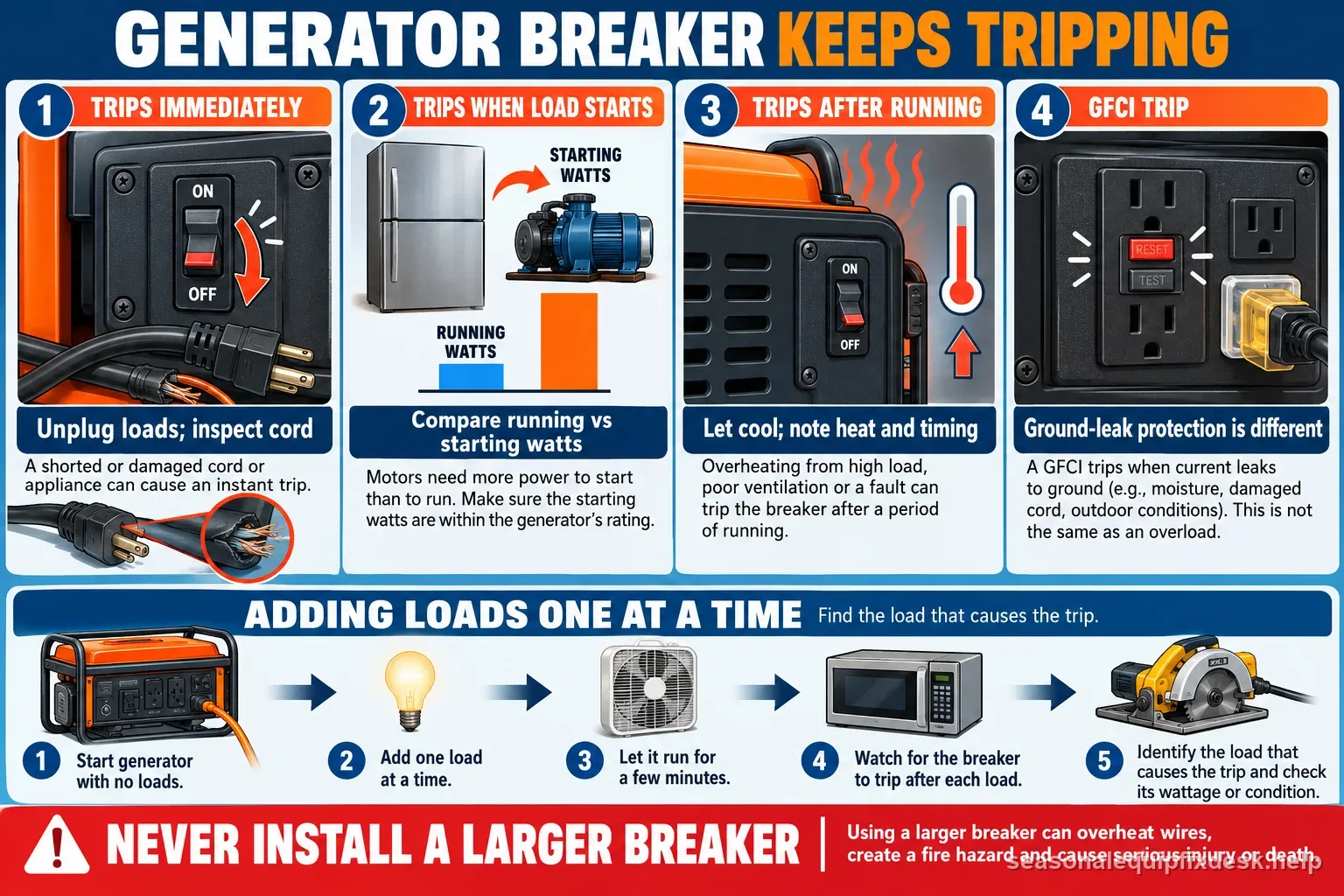
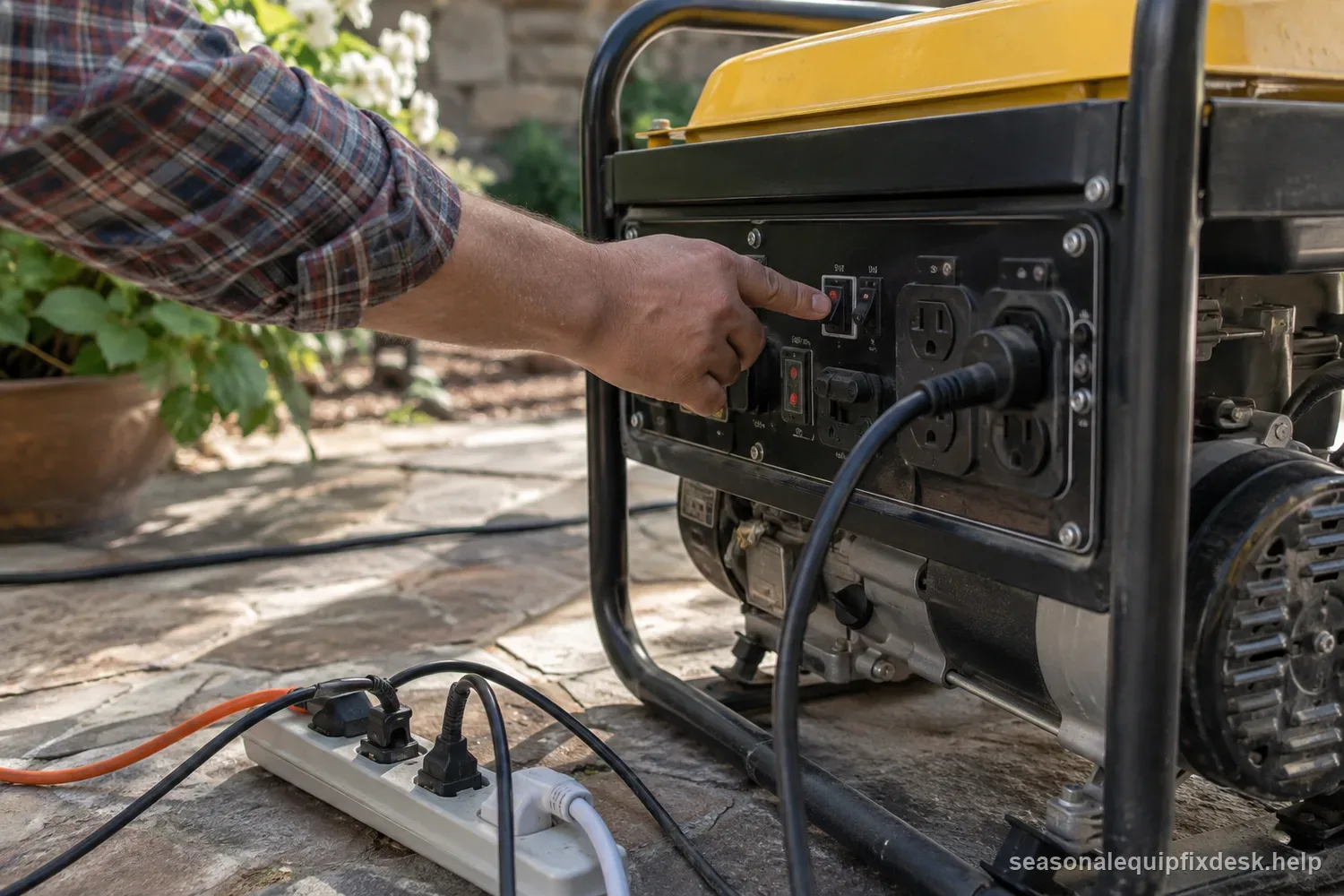
Quick answer: A breaker that keeps opening is not a nuisance to defeat. It is telling you the circuit saw a short circuit, overload, or another condition beyond what the protection is intended to carry. Unplug everything, let the breaker cool if required, reset it once according to the manual, and add loads one at a time while recording when the trip occurs.
If the breaker stays set but every receptacle is dead, follow the generator no-output checks for breaker, GFCI, cord, and known-load isolation.
A tripping breaker needs its own stop-and-diagnose path; do not keep resetting it to force a transfer. The transfer switch guide explains which external status to record before service.
Honda generator manuals state plainly that the AC breaker/protectors switch off for a short circuit or significant overload and that the appliance and circuit load should be checked before reset. That should be the governing rule for this diagnosis.
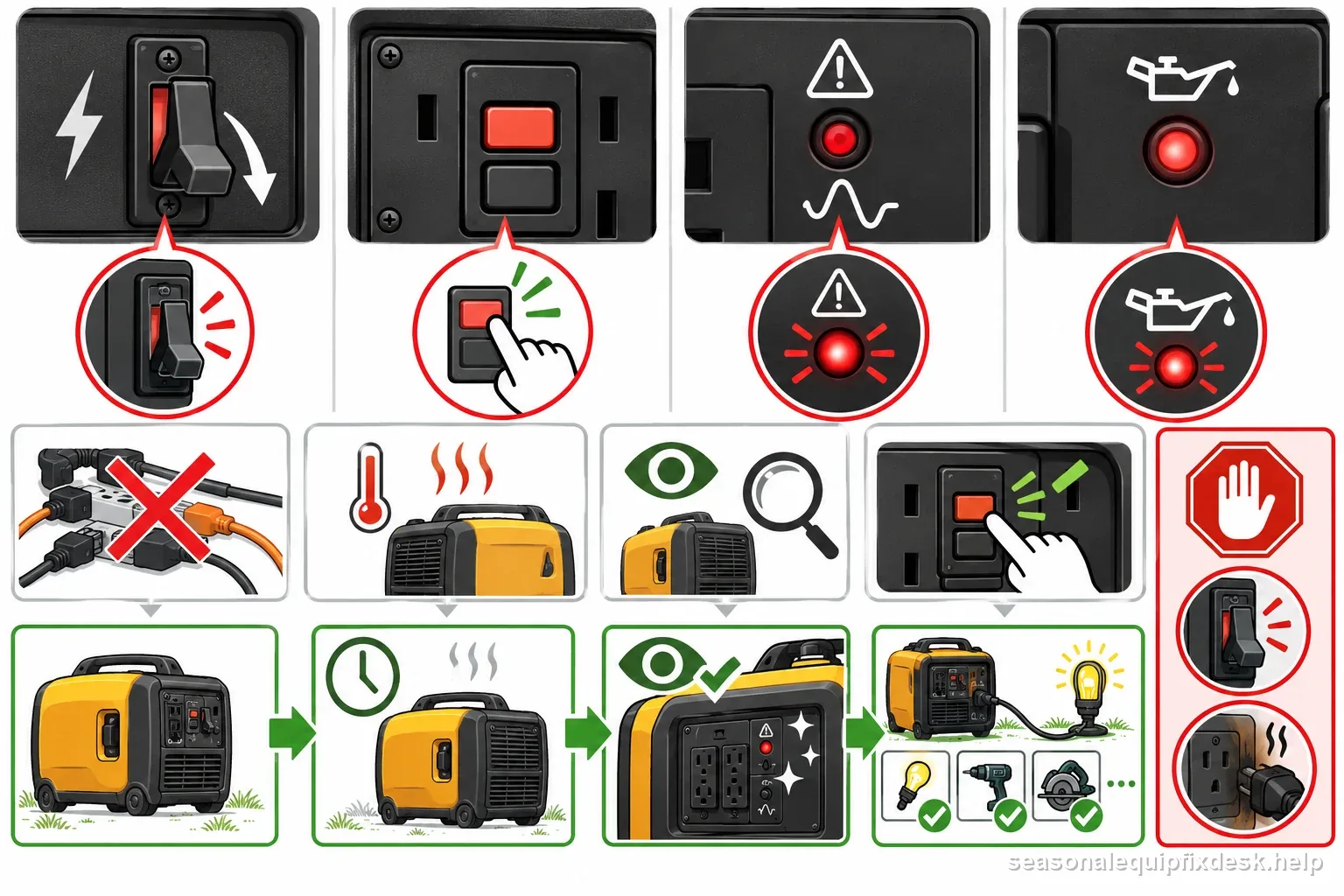
| What visibly tripped | What it protects against | First safe distinction |
|---|---|---|
| Breaker handle or push-button protector | Overcurrent/short circuit on its circuit | Remove external loads; inspect for damage from outside |
| GFCI reset button | Current imbalance to ground | Follow the exact manual’s GFCI procedure |
| Red inverter overload light | Electronic output overload/protection | Use the model reset sequence and record the light |
| Engine shuts down | Engine protection or fuel/heat fault | Separate engine shutdown from lost AC output |
Never replace, bypass, or upsize a protective device to keep power flowing. A repeated trip with no connected load is a service stop.
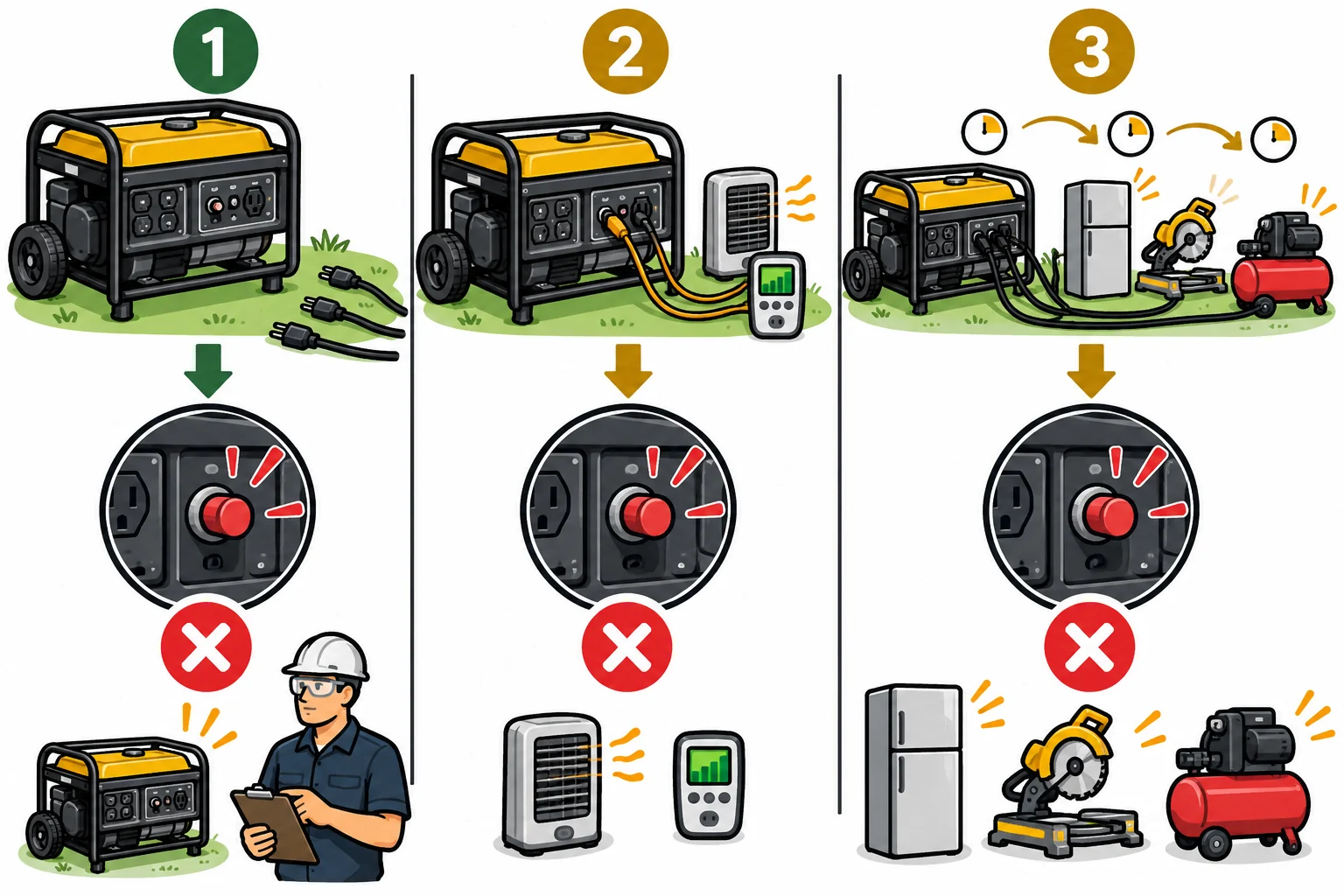
Trip timing divides the problem into three useful groups
- Trips instantly with nothing connected: stop. A generator-side electrical fault or damaged protection device needs service; do not keep cycling it.
- Trips instantly when one appliance or cord is connected: isolate that load, adapter, or cable and do not reconnect it until inspected.
- Trips only when a motor starts: compare starting surge with the generator/receptacle capacity.
- Trips after several minutes: sustained overload, poor connection heating, cord sizing, or a thermal breaker responding to heat deserves attention.
Use running watts and starting watts for different questions
A refrigerator, air conditioner, well pump, compressor, or power tool can draw a brief startup current several times its steady running demand. Two appliances may fit under the generator’s running-watt rating yet overlap their starting surges and trip a branch protector. Stagger motor starts and use manufacturer watt/current data rather than guessing from appliance size.
Also respect the rating of the specific receptacle and protector. A generator may advertise a high total wattage while an individual 120-volt outlet remains limited by its own breaker and connector rating.
A damaged cord can create a trip before the appliance even starts
Inspect outdoor extension cords for crushed sections, cut insulation, burned plug blades, missing ground prongs, loose female connectors, and evidence of water entry. CPSC recommends heavy-duty outdoor-rated cords whose wattage rating exceeds the connected load. Replace damaged cords; tape is not a reliable repair for conductor damage.
If the trip follows one cord across multiple known-good appliances, the cord is the common factor. If the same appliance trips the generator when plugged directly into a suitable receptacle, the appliance or its startup demand becomes more suspect.
GFCI trip and overcurrent breaker trip are not interchangeable
Some generator panels have both overcurrent protection and GFCI protection. A GFCI can trip from leakage to ground even when total current is below the breaker rating. Wet connectors, damaged insulation, certain faulty appliances, and extension-cord leakage can therefore create a trip that is not solved by reducing watts alone.
Dry and inspect equipment safely; never defeat the equipment grounding conductor or use a three-to-two-prong adapter to stop a GFCI from opening.
| What opened | Likely branch | Safe next step |
|---|---|---|
| Receptacle breaker trips instantly | Cord, appliance, or short fault | Unplug loads and inspect only visible, disconnected cords |
| Trips at motor startup | Starting watts exceed available output | Compare nameplate starting demand with generator rating |
| Trips after running | Heat, load, ventilation, or equipment fault | Let equipment cool and record timing before service |
| GFCI test/reset trips | Ground-leak protection | Treat separately from an overcurrent breaker |
Delayed trips deserve a heat check after shutdown
If the generator carries the load for several minutes before the breaker opens, shut down and inspect plugs, receptacles, cord ends, and adapters for discoloration, softened plastic, odor, or loose fit. Resistance at a poor connection creates heat. Do not touch suspect connectors while energized, and allow components to cool before handling.
An undersized long extension cord can also waste voltage and heat under load. Use the cord gauge/length guidance required for the appliance and generator rather than selecting by physical thickness alone.
Never solve repeated tripping with a bigger breaker
The breaker rating is part of the generator’s electrical protection design. Installing a higher-rated breaker, wedging a reset button, or holding a breaker on removes protection from wiring and receptacles that may not be able to carry the extra current. A breaker that trips below its documented load after the external load and cord are proven good should be tested/replaced with the specified part by qualified service.
A controlled load ladder finds the trigger
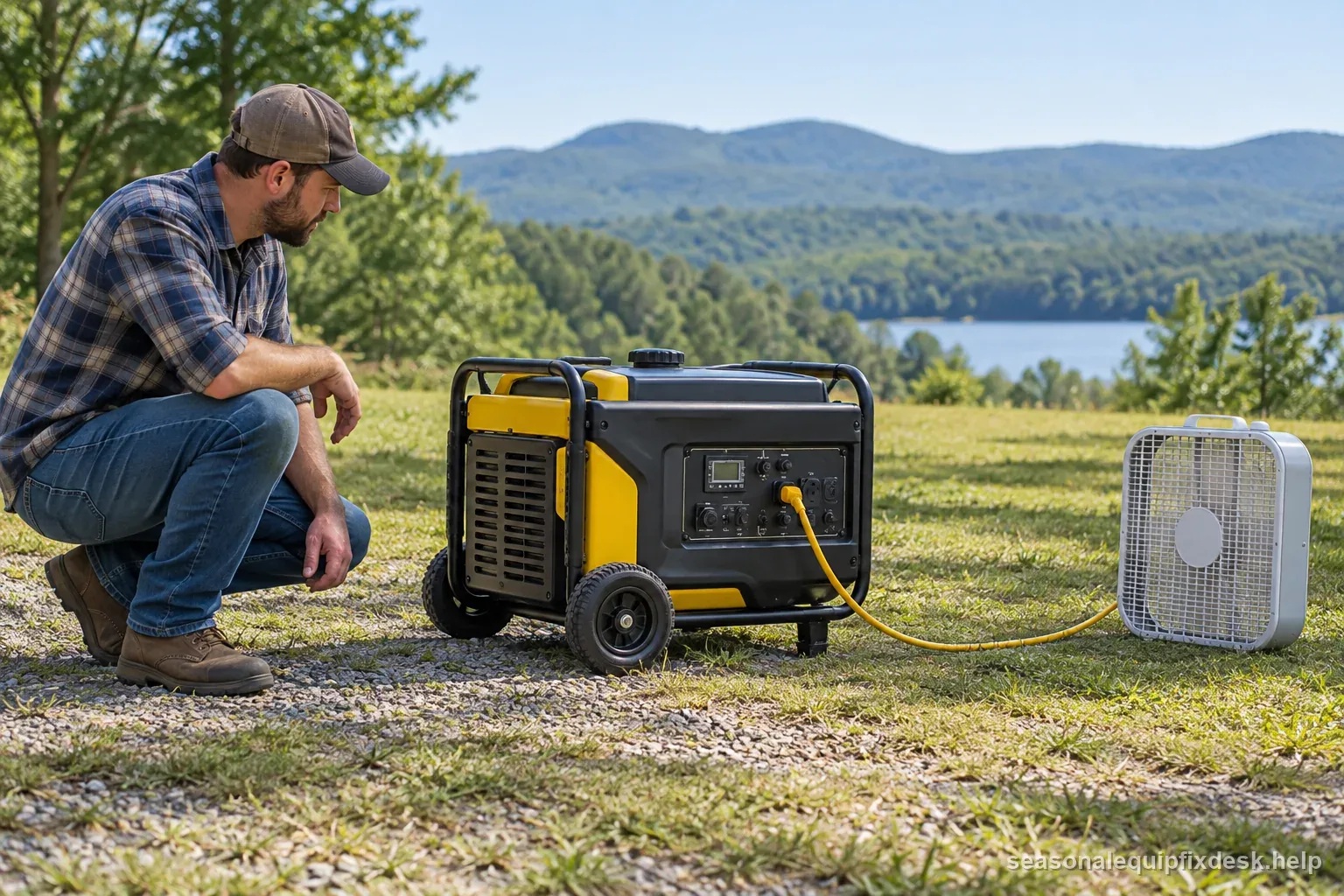
- Set the generator outdoors in a dry safe operating location and disconnect all loads.
- Start and stabilize it, then verify the breaker stays set with nothing connected.
- Connect one modest known-good resistive load and wait long enough to reproduce a delayed trip.
- Add the next load separately, writing down running watts/current and whether it contains a motor.
- When a trip occurs, remove the last-added load and repeat only if the manual permits and there is no sign of a short, heat, or damage.
- If the breaker trips with no load or with a clearly safe known-good load, stop and service the generator rather than continuing the ladder.
- Protection device that operated
- No-load result
- Cord/device connected at trip
- Running and starting load estimate
- Visible heat, odor, or damage
- Manual reset tried once or service called
Home wiring is not a load-testing shortcut
Never connect a portable generator to a wall outlet with a male-to-male cord. CPSC warns that generator backfeeding creates electrocution and fire hazards and can endanger utility workers and neighbors. If you need to supply household circuits, use properly installed transfer equipment and follow the generator/transfer-system instructions.
What to bring to an electrician or generator technician
Record the generator model, the exact breaker/receptacle that opens, whether GFCI also trips, each connected load, trip timing, and whether any plug or cord heats. “Trips after 8 minutes with a 1,500-watt heater on the 20A receptacle” is actionable; “breaker is weak” is not.
Stop immediately for visible arcing, melted plastic, burning odor, repeated no-load trips, wet electrical components, or a breaker that will not reset mechanically. Those signs move the job out of routine load management.
Balance multi-receptacle loads by the panel, not by total nameplate watts
Some generators divide available power across receptacles, legs, or protectors. Two loads can be acceptable in total yet overload one protected branch if both are connected to the same circuit. Use the panel diagram and manual to learn which receptacles share protection and whether a 120/240-volt model has leg-loading limits. Moving a load is appropriate only when the manual supports that distribution and the appliance connection remains correct.
If a breaker trip appears only after adding several loads, write down which receptacle each load uses. That map can reveal a branch overload that a simple “total watts” calculation misses.